
Join the Joey'z Family!

Most advice about blackout curtains for living room spaces starts with “buy the darkest fabric you can find.” That's the wrong starting point. Blackout fabric can reduce glare, improve privacy, and make a television easier to watch, but it won't automatically create total darkness or a cooler room.
The result depends on the lining, window coverage, mounting position, safety design, and how your room is used. A living room needs flexible light control, not the atmosphere of a sealed cave. Here's how to choose curtains that work in real homes, including rooms shared by children, pets, renters, and guests.
Blackout curtains don't turn every living room into a pitch-black box. Light can still enter around the sides, above the rod, beneath the hem, through nearby uncovered windows, and from adjoining hallways or rooms. The fabric may block most visible light while the installation leaves the room noticeably bright.
That's why the useful target is controllable light and glare reduction, not an unrealistic promise of perfect darkness. A west-facing window may need serious afternoon protection, while a north-facing room might only need privacy and softer daylight. The same curtain can look dramatically different depending on the window's depth, frame design, wall clearance, and rod placement.
The wider blackout-curtain category is now a substantial home-furnishing market. It was valued at USD 10.46 billion in 2024 and is projected to reach USD 13.30 billion by 2032, implying a 3.6% compound annual growth rate during the forecast period, according to Intel Market Research's blackout curtains market estimate. That scale reflects demand for privacy, light management, and comfort across bedrooms, media spaces, and shared living areas.
A quality panel can tame reflections on a television, reduce the visual harshness of afternoon sun, and make a street-facing room feel more private. It can't stop ambient light from entering through another window, and it won't fix a poorly sealed frame or an undersized curtain.
Practical rule: Buy blackout curtains for the level of control you need, then spend equal attention on coverage and hardware.
A large consumer survey found that 88% of people who bought blackout shades or curtains in the previous year said the purchase was somewhat or very effective at improving sleep, as reported in IndexBox's market analysis. That finding helps explain their popularity, but a living room usually calls for a less extreme setup. For daytime rooms, partial blackout can preserve a welcoming glow while reducing glare and outside visibility.
For practical guidance on selecting window treatments by room and function, see Joey'z quality window coverings guide.
Fabric names can be misleading. Blackout performance comes from construction, not just from a dark color or a product title. A thin polyester sheer marketed as “blackout” will disappoint because visible opacity, lining density, and edge coverage all matter.
Triple-weave polyester is the sensible starting point for many living rooms. A panel around 280 GSM is commonly positioned as a substantial midweight construction and may block roughly 85% to 90% of light, but those figures come from the supplied product-planning data rather than the verified evidence available here, so treat them as buying categories, not guaranteed test results. Foam-backed fabric with an acrylic coating is denser and can offer stronger visible-light control, while a separate blackout liner gives you more flexibility if the decorative face fabric matters.
The table below is a practical comparison, but the percentages and price ranges requested for these categories aren't supported by the verified data. I'd compare samples in your own room rather than trust a universal number.
| Fabric/Lining Type | Light Blocking % | Weight (GSM) | Best For | Price Range |
|---|---|---|---|---|
| Triple-weave polyester | Varies by construction and fit | Around 280 GSM is a useful midweight reference | Everyday glare control and privacy | Varies by retailer |
| Foam-backed fabric | Often stronger than basic woven panels | Varies by coating and face fabric | Bright windows and screen glare | Varies by retailer |
| Layered curtain with blackout liner | Depends on liner, overlap, and installation | Combined weight varies | Flexible daytime and evening use | Varies by retailer |
| Velvet with dense backing | Naturally substantial, but seams and gaps still matter | Varies by pile and backing | Formal rooms and stronger light control | Varies by retailer |
| Linen blend | Usually needs a liner for serious light control | Varies by blend | Soft texture with moderated daylight | Varies by retailer |
A white thermal backing can create a cleaner exterior appearance and reflect some solar radiation. A dedicated blackout liner gives the face fabric a more decorative role, while an integrated triple-layer panel keeps the construction compact and easy to install.
Velvet usually feels denser than linen because of its pile and weight, but it can still leak light at the edges. Linen blends look relaxed and attractive, though they generally need a proper liner if the window faces strong sun. Darker face fabrics may make a room feel visually dimmer, but surface color alone doesn't guarantee better thermal performance.
For a living room used all day, I prefer a textured face fabric with a reliable liner. It looks residential rather than theatrical and gives you a better balance between privacy, glare management, and daytime comfort.
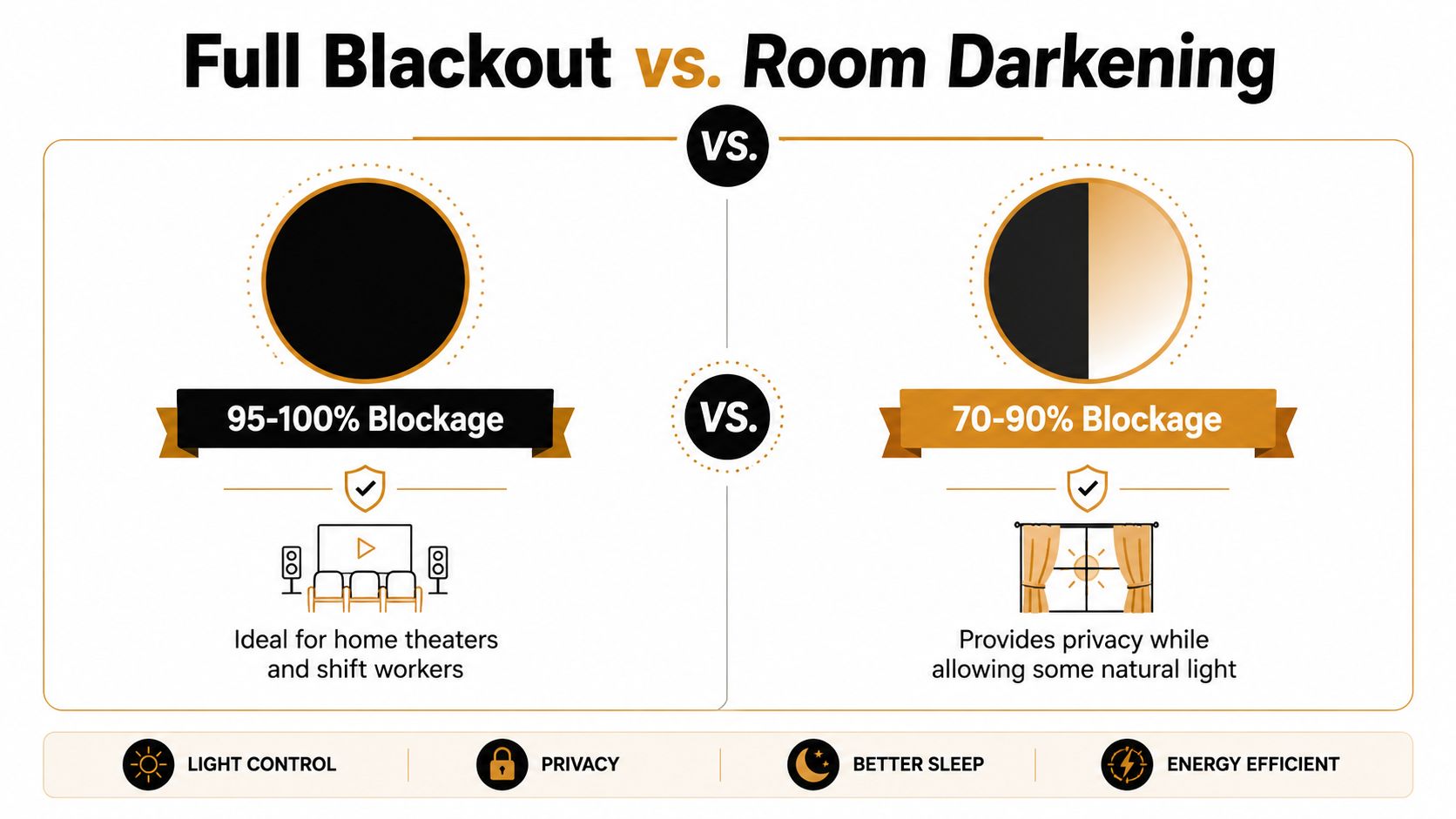
Choose full blackout for a media-focused room. Choose room darkening for a living room that needs to remain pleasant during the day. That decision should follow how the room functions, not the promise of total darkness on the package.
Full blackout panels suit severe screen glare, west-facing windows during sunset, and living rooms that also serve as guest sleeping areas. Room-darkening curtains fit shared spaces where privacy and softer daylight matter more than complete light removal. In practical terms, full blackout is commonly rated at 95% to 100% blockage, while room darkening is commonly rated at 70% to 90%. Verify the result through the panel's construction and a fabric sample, because edge gaps and installation can change the experience.
| Living Room Scenario | My Recommendation | Why |
|---|---|---|
| West-facing room used for evening movies | Full blackout, with careful side coverage | The setting sun can strike the screen when you want to watch |
| South-facing room used for daytime gatherings | Room darkening or layered curtains | You'll reduce glare while keeping natural light |
| Living room that becomes a guest room | Blackout panels with a softer decorative face | Sleeping guests benefit from stronger light control |
| Bright room with occasional screen use | Room darkening with a liner | The room remains usable between viewing sessions |
A room-darkening panel usually feels more natural in a primary living area. It lowers reflections, supports nighttime privacy, and keeps breakfast, reading, and conversation comfortable during the day. Blackout fabric controls glare well, but it does not automatically make the room cooler. Thermal performance depends on the lining, window exposure, and how completely the treatment covers the opening.
For households choosing furniture alongside curtains, compare living room seating options before fixing panel placement. Sofas, futons, and chairs may limit how far the panels stack beside the frame.
Cordless shades offer another route for households prioritizing safer window treatments in shared spaces. Joey'z guide to cordless room-darkening shades explains that alternative to full-length drapery.
Most disappointing blackout installations fail at the edges, not in the middle of the fabric. A premium panel can't compensate for a rod that's too short or a curtain that stops inside the window frame.
Start with the recess width. Measure at the top, middle, and bottom because older walls and frames aren't always square. Use the widest measurement, then add 8 to 12 inches of total overlap, or roughly 4 to 6 inches per side, so the closed panels extend beyond the frame.
The supplied installation guidance calls for extending the rod 3 to 5 inches above the frame, while general curtain-fitting advice often uses a higher placement. In practice, mount as high as the architecture allows without creating an awkward gap at the ceiling, and prioritize a continuous seal around the window.
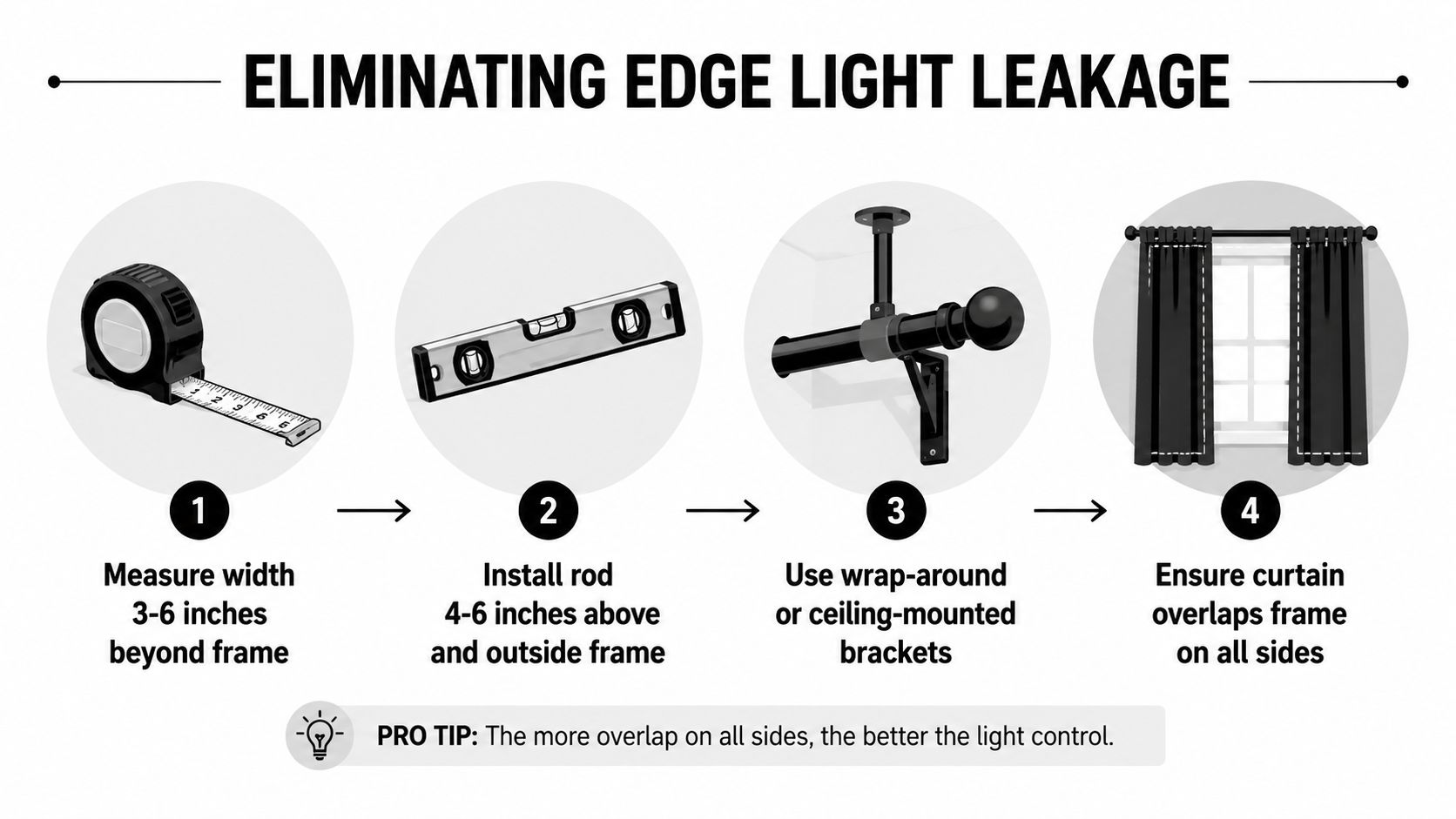
A ceiling-mounted track usually seals better than standard wall brackets because it keeps the fabric closer to the opening. A wraparound or French-return rod is worthwhile for side light, especially in media rooms. Magnetic tie-backs can hold the panel against the wall, while a pelmet or valance can close the top gap.
The double-rod trick works well when you want daytime flexibility. Put a sheer panel on the inner rod and the blackout drape on the outer rod, leaving enough clearance for the heavier panel to close fully.
Before buying oversized hardware, review this heavy drapes curtain rod guide. Joey'z window measurement guide can help you verify the numbers before drilling.
Watch the installation demonstration for a visual reference:
Cordless operation is no longer a decorative upgrade. It's a buying requirement for family living spaces, particularly where children, pets, renters, or visitors may be present.
In the United States, a 2024 rule requires new window-covering products sold there to be cordless, use inaccessible cords, or use approved tensioning devices, according to Budget Blinds' overview of the 2024 cord-safety regulations. The U.S. Consumer Product Safety Commission says accessible operating cords longer than 8 inches pose an unreasonable strangulation risk to children 8 years old and younger.
The risk is serious enough that the CPSC reports an average of about nine children under age five die each year in strangulation incidents involving corded window coverings, and recommends cordless products wherever a child may be present, as stated in its GoCordless safety release. Canada's corded-window-covering rules came into force in 2021, creating a national safety framework, as explained by Health Canada.
| System Type | Typical Cost Range | Ease of Daily Use | Safety Rating | Best For |
|---|---|---|---|---|
| Wand-operated traverse rod | Varies by hardware | Easy for frequent opening and closing | Safer when no accessible loop cord exists | Busy family rooms |
| Spring-loaded cordless shade | Varies by product | Quick and simple | Prefer compliant, inaccessible operation | Smaller windows |
| Motorized track | Varies by installation | Excellent for large panels | Strong choice when cords are absent | Wide windows and accessibility needs |
| Corded tie-back or loop system | Varies | Convenient but risky | Avoid where children may be present | Not my recommendation for shared rooms |
Check the listing for clear operating details, not just a “child safe” badge. Looped decorative tie-backs can also create hazards, and a cord-free curtain can still be awkward if the panels are too heavy to move.
For a shared living room, I'd choose a wand-operated rod or motorized track before I'd spend extra on a more fashionable fabric. Safety, reachability, and daily usability matter every time the curtains move.
The short answer is sometimes, but blackout fabric alone doesn't guarantee meaningful energy savings. A curtain can block visible light and still perform modestly against heat if it has poor edge coverage, no reflective backing, or sits too close to the glass.
Thermal performance depends on three things: the backing, the gap between the curtain and window, and the seal around the perimeter. A study on curtain systems found that a ventilated air gap improved thermal performance, while related coverage notes that curtains perform best when they cover the window broadly, extend from wall to wall and floor to ceiling where practical, and use thermal backing. See the curtain-system research paper for the technical discussion.
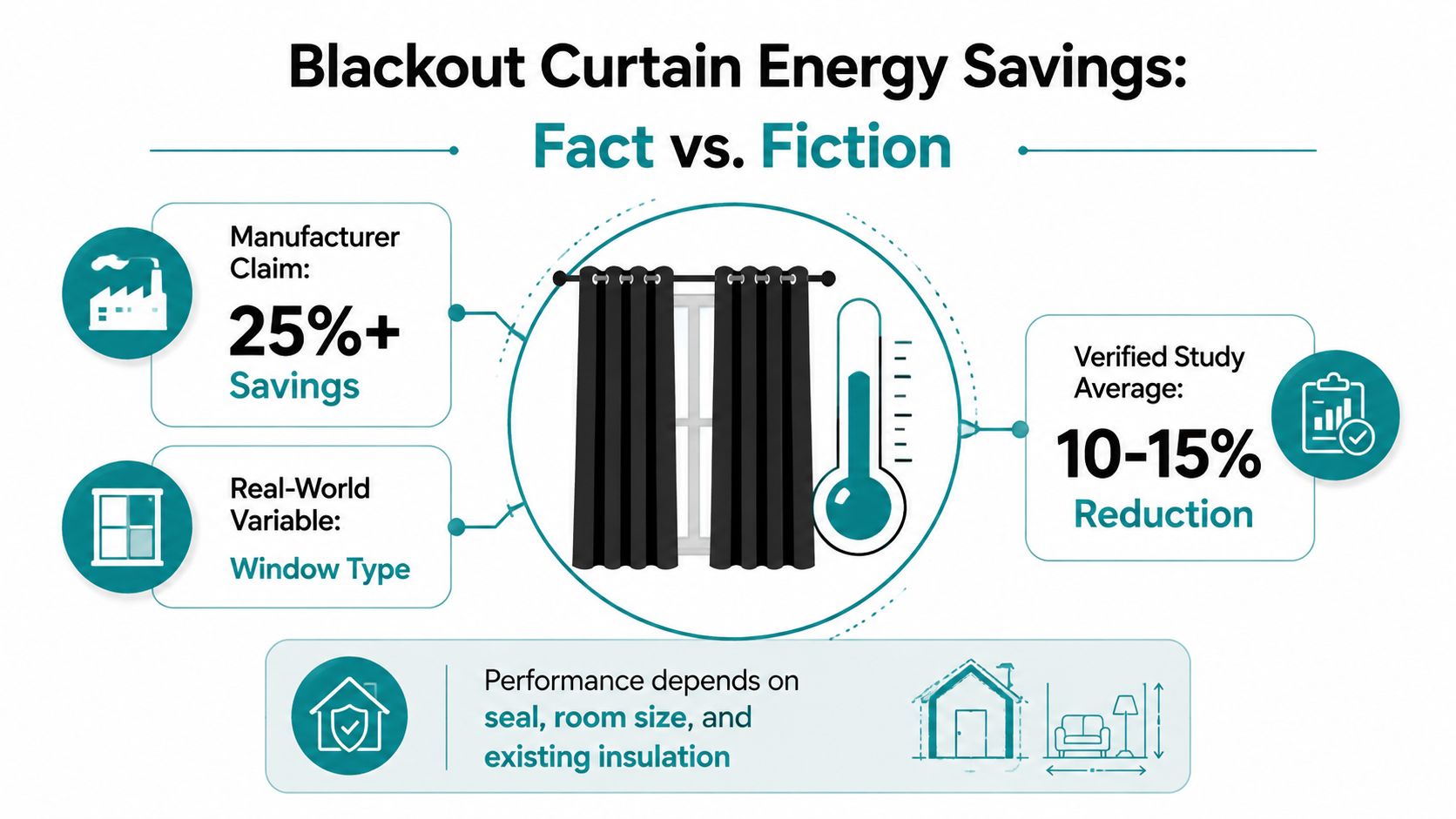
A white or reflective backing can help manage solar exposure more effectively than a dark decorative face. Acrylic foam, triple-weave fabric, and foil-lined constructions behave differently, and the result still depends on the window, wall, climate, and existing insulation.
A ventilated gap can help, but don't create a loose, flapping installation and call it insulation. The curtain needs enough space to avoid pressing against the glass while still closing tightly around the window.
Buyer's test: If a product promises lower bills, ask what happens at the top, sides, and bottom. A 99% visible-light claim says little about infrared heat or winter drafts.
Use a simple payback check before paying a premium. Compare the added curtain and hardware cost with the comfort improvement you expect, then consider your window orientation and how often the panels will stay closed. If the room has major air leaks, repairing those may matter more than upgrading from one blackout fabric to another.
Layering a sheer with a lined outer panel can create a useful air buffer and gives you better control throughout the day. It won't turn a weak window into a high-performance one, but it's more honest and flexible than trusting a single “energy efficient” label.
Blackout curtains need gentler care than ordinary decorative panels because coatings and dense linings can crack, separate, shrink, or lose their shape. Start with the sewn-in care label. It overrides generic laundry advice.
Vacuum heavy drapes regularly with a brush attachment, especially if you have pets. Dust settles into textured faces and dark fabrics show hair quickly. For spills, blot immediately with a soft cloth and mild detergent solution. Don't scrub aggressively, since friction can disturb the surface or push the stain deeper.
Foam-backed curtains often need extra caution because machine washing can damage the foam layer. Triple-weave fabrics may also require professional or label-approved cleaning rather than an improvised wash cycle.
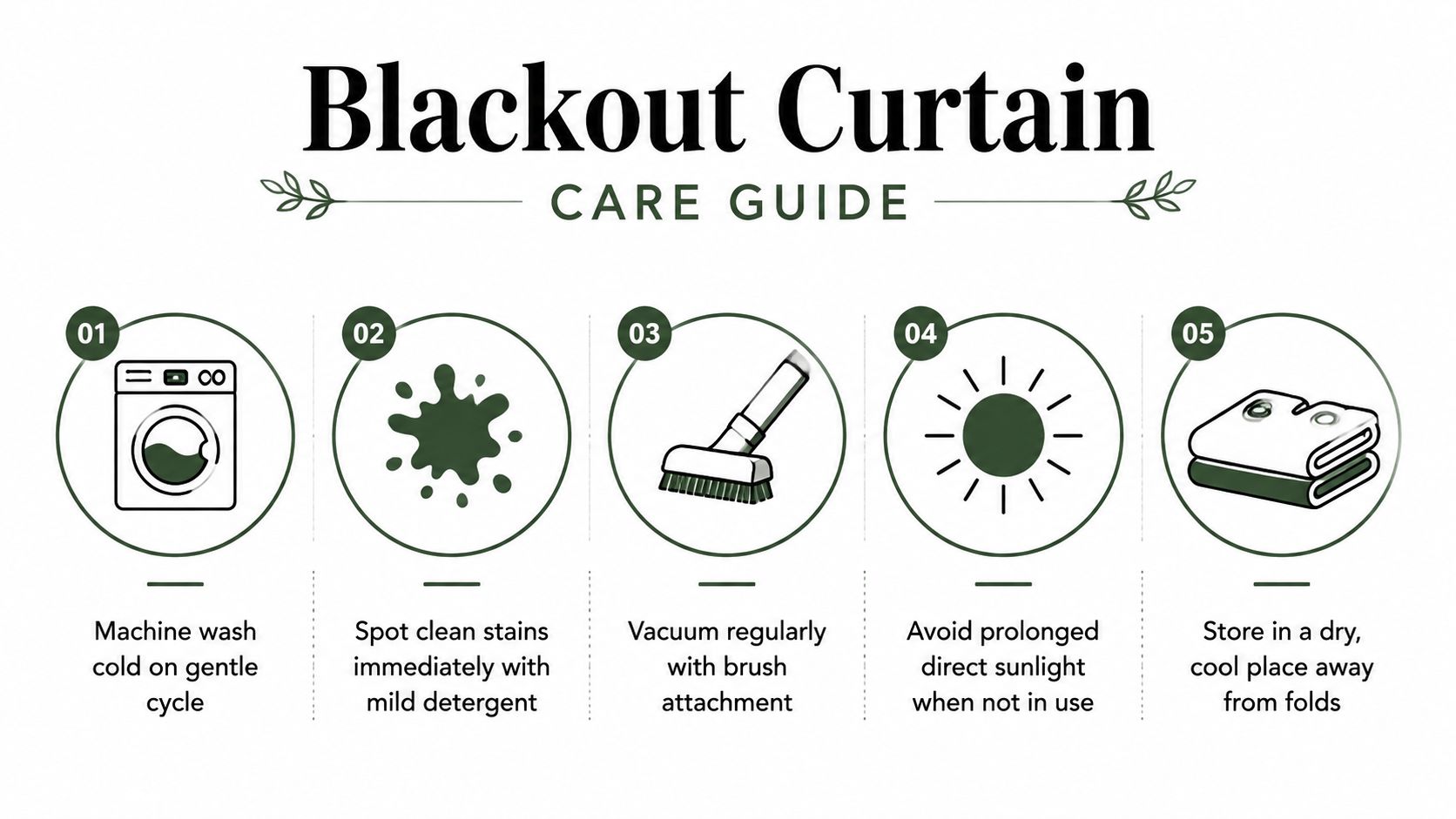
Sun-facing windows deserve an honest inspection. If the backing becomes brittle, peels, develops pinholes, or separates from the face fabric, cleaning won't restore its performance. Rotate panels when the design allows, keep them dry during storage, and fold them loosely in a cool place rather than compressing coated surfaces.
A good purchase starts with the room, not the product thumbnail. Take a west-facing living room used for evening films. That room deserves stronger panels, generous side overlap, and hardware that closes near the wall. A south-facing room used for meals, reading, and conversation usually benefits more from room-darkening fabric or a layered setup.
Be suspicious of listings that provide no lining description, no operating details, and no usable measurements. “Blackout” without construction information is a marketing word, not a performance specification. Ask whether the panel is sold individually or as a pair, whether the backing faces the window, and how the product should be cleaned.
Budget for the rod, brackets, rings, track, and installation. A curtain that fits the window but sags on weak hardware is a false economy. Renters can use removable solutions where suitable, but large, heavy panels still need secure support and careful weight limits.
For homes where low-maintenance styling matters, these easy-care interior ideas in Chennai offer useful inspiration for keeping textiles practical as well as attractive.
Joey'z Shopping offers blackout curtains, window treatments, and related home-decor options with product descriptions and browsing tools designed for comparing styles and functions. Visit Joey'z Shopping to review living-room curtain options, check construction details, and choose a safer installation approach before you order.