
Join the Joey'z Family!

Yes, you can wash most curtains, and it's one of the fastest ways to brighten a room and improve your home's air quality. But success depends entirely on the fabric and following that all-important care label. Ignoring it is the quickest way to end up with shrunken or damaged drapes.
This guide will walk you through exactly how to determine if you can wash your curtains, the best methods for machine and hand washing, and how to dry them for a flawless, wrinkle-free finish.
Think of your curtains as giant air filters. They hang there day after day, trapping everything from dust and pollen to pet dander and city grime that wafts in through open windows. Over time, that buildup doesn't just look dull; it can genuinely impact your home’s air quality.
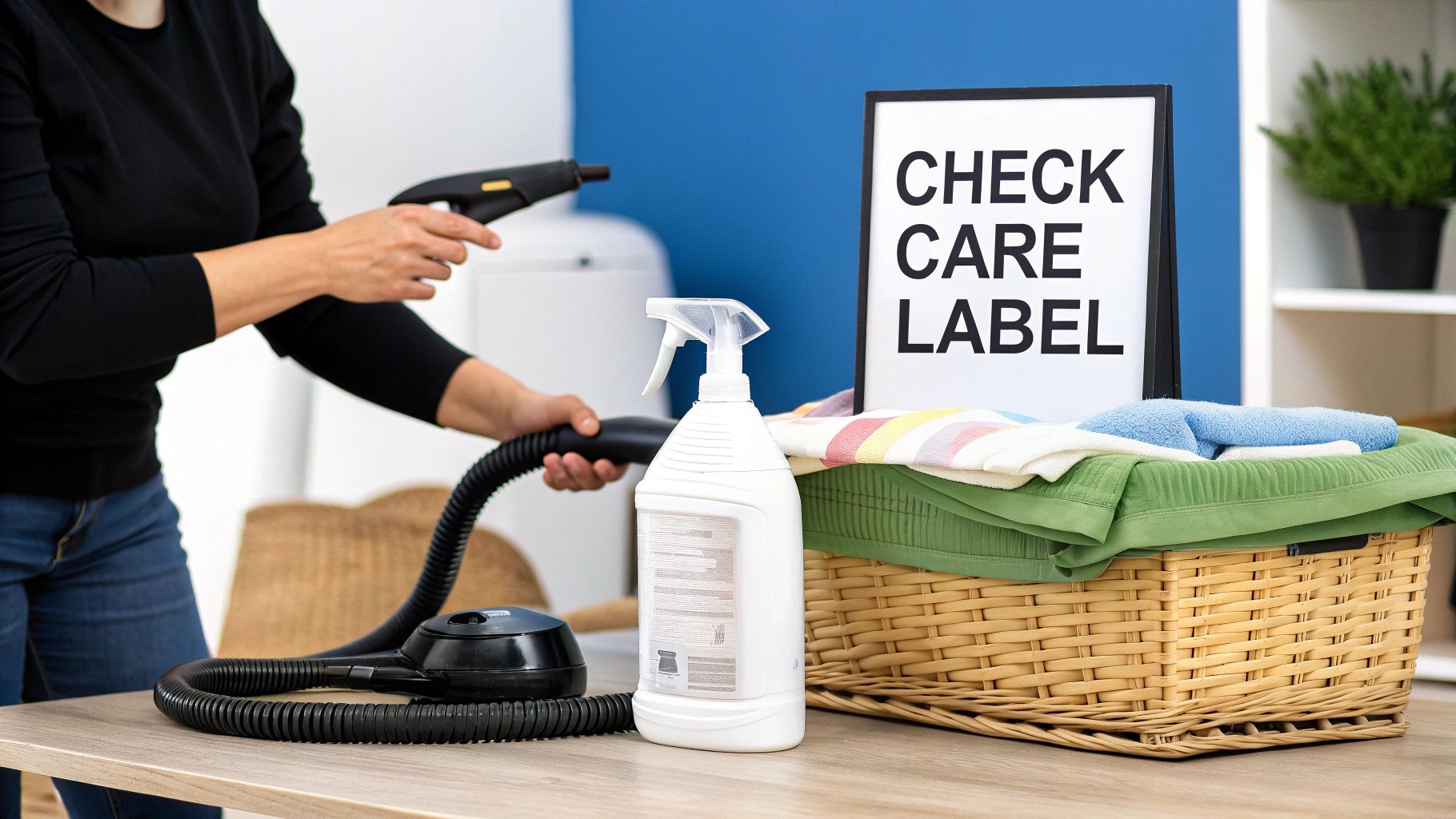
This isn't just a hunch. The global market for curtain cleaning services is projected to reach USD 2.1 billion by 2032, a clear sign that homeowners are realizing how dirty their drapes can get. Studies have even shown that unwashed curtains can harbor significantly more dust mites and pollen than clean ones, making regular washing a key part of a healthy home. You can learn more about the rise in professional fabric care and its market trends.
Expert Tip: Before washing, take your curtains outside for a vigorous shake to dislodge loose dust. For an even deeper pre-clean, use your vacuum’s soft brush attachment and gently run it from top to bottom. This simple prep makes the wash far more effective.
Jumping straight to the wash cycle without a bit of prep is a recipe for shrunken, faded, or torn curtains. Trust us, spending a few minutes now will save you from a major laundry headache later. These are the essential first steps the pros always take.
First, tackle the loose dust and debris. Curtains are magnets for dust, pet hair, and pollen. Washing them while they're caked in this grime just creates a muddy mess. The easiest fix? Take them outside for a good shake—you’ll be surprised at what comes off.

For a more thorough approach, grab your vacuum’s upholstery or soft brush attachment. Gently run it down the length of each panel, front and back, while the curtains are still hanging. This quick pass ensures the water and detergent can work on actual stains, not just a layer of surface dust.
This next step is absolutely non-negotiable for the safety of both your curtains and your washing machine. You must remove all hardware before washing.
This includes:
Taking a moment to unhook everything might feel tedious, but it prevents the kind of catastrophic rips and machine damage that can't be undone. Think of it as cheap insurance for your window treatments.
Before washing new or brightly colored curtains, you need to check if the dye will bleed. A colorfastness test takes two minutes and can save you from turning an entire load of laundry a murky, disappointing color.
Here's how to do it: Find an inconspicuous spot, like a corner of the back hem. Dampen a small area with water and a tiny bit of your detergent. Wait a minute, then blot the spot with a clean white cloth. If any color transfers, the dye isn't stable. This means the curtain should be dry-cleaned or washed completely alone in cold water. Understanding different curtain cloth types can also give you clues about how their dyes might behave.
When the care tag gives you the green light, your washing machine is the most efficient tool for refreshing your curtains. This method is ideal for durable fabrics like cotton, polyester, and many common blends. The key to success is using the right settings to be effective without being harsh.
For nearly any machine-washable curtain, cold water is the best choice. It significantly reduces the risk of shrinking and helps prevent colors from fading. Hot water is too aggressive and can weaken fabric fibers, causing damage you can't undo.
Treat your curtains like a load of your most delicate laundry. You want to avoid any rough action that could stretch, snag, or ruin the fabric.
Here are the ideal settings:
Shrinkage is a valid concern with any large textile. The advice on how to wash covers without shrinking applies here, too—cold water and gentle cycles are the universal rule for prevention.
Insider Tip: Never cram the washing machine. Wash one large panel or two smaller ones at a time to give them space to move. An overstuffed machine leads to wrinkles and an uneven clean.
Not all curtains are the same. A breezy sheer panel requires a different touch than a heavy cotton drape.
For lightweight or sheer curtains, place them in a large mesh laundry bag before washing. This adds a layer of protection against snags and tears inside the drum.
Heavier curtains made from thick cotton or canvas can usually go directly into the machine. However, be mindful of their weight when wet—they absorb a lot of water. Washing too many at once can throw your machine off balance during the spin cycle. One heavy panel at a time is always the safest bet.
Not every set of curtains can handle a trip through the washing machine. For anything delicate, ornate, or with a questionable care tag, a gentler approach is essential. If your curtains are made of silk, sheer voile, lace, or some delicate linens, hand washing is the safest bet.
While hand washing a large curtain panel might sound daunting, using your bathtub makes it manageable. The biggest mistake is twisting or wringing the fabric. When curtains are soaked, they're heavy, and wringing them out stretches and permanently distorts the fibers.
Hand washing is more about a gentle soak than aggressive scrubbing.
This flowchart gives you a quick visual guide for deciding on the best cleaning method for your curtains.
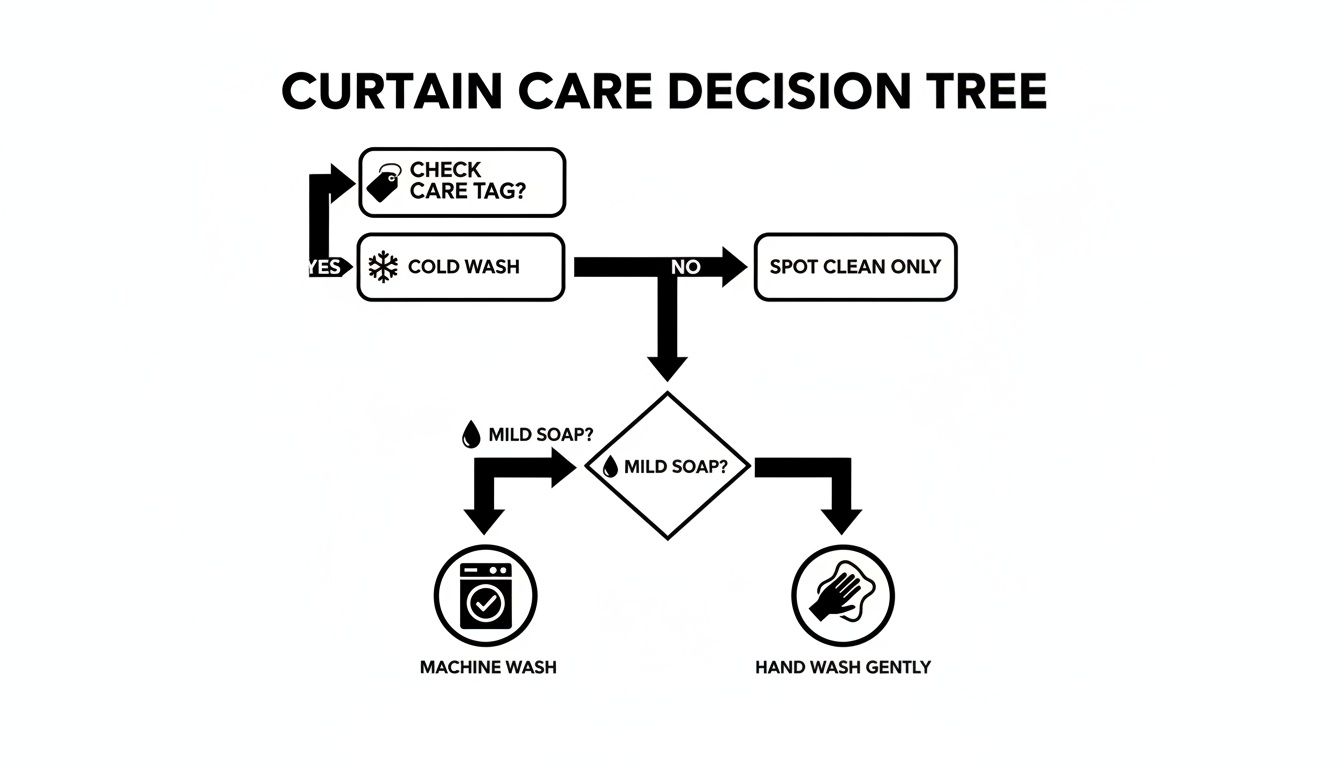
As you can see, whether using a machine or your hands, cold water and mild soap are the golden rules for protecting your fabrics.
This table breaks down the best approach for common curtain materials to help you make the right call.
| Fabric Type | Recommended Method | Why This Method Works | Common Mistakes To Avoid |
|---|---|---|---|
| Cotton & Polyester Blends | Machine Wash (Gentle Cycle) | These are durable, everyday fabrics that can handle a machine's gentle cycle. Cold water prevents shrinking or fading. | Using hot water, which can cause shrinkage. Overloading the machine, which leads to wrinkles and poor cleaning. |
| Lace, Sheer Voile, & Silk | Hand Wash | These fabrics are delicate and can easily snag, tear, or lose their shape in a machine. Hand washing gives you full control. | Wringing or twisting the fabric, which stretches it out. Using harsh detergents that can damage delicate fibers. |
| Velvet, Wool, & Taffeta | Dry Clean Only | Water can permanently ruin the pile on velvet, shrink wool, and cause water spots on taffeta. Professionals use solvents that clean without damage. | Attempting a DIY wash at home. This is a recipe for disaster and will likely ruin the curtains. |
| Blackout (Coated Lining) | Spot Clean or Professional | The coated backing can peel, crack, or disintegrate in a washing machine. Some can be hand-washed, but check the tag. | Putting them in the dryer, which can melt the lining. Machine washing without checking the care instructions first. |
When in doubt, the gentlest option is always the safest for keeping your curtains looking beautiful for years to come.
While hand washing works for many delicate materials, some fabrics have a strict dry-clean-only policy. Trying to wash these at home is a gamble you don't want to take.
Materials like velvet, wool, taffeta, or anything with a thermal or coated blackout lining can be permanently damaged by water. A home wash can ruin velvet’s plush texture, shrink wool beyond recognition, or cause special linings to peel apart.
A professional cleaner has the right solvents and equipment for these materials. Specialized methods like steam cleaning curtains can also be a great professional alternative to refresh and sanitize them without full immersion.
The professional dry-cleaning market is a massive USD 78.52 billion industry for a reason—much of it is dedicated to specialty items like curtains. While professional cleaning may cost more upfront, it's a small price to pay to protect your investment in high-end window treatments.
Getting your curtains clean is only half the battle. The drying and rehanging steps are where a good wash becomes a great finish. Unfortunately, this is also where things often go wrong, leading to a shrunken, wrinkled mess.

Let's be clear: your tumble dryer is not your friend. The intense heat is the fastest way to set permanent wrinkles, shrink fabric, and ruin delicate linings. When it comes to curtains, air-drying is always the safest and best approach.
You don’t need any fancy equipment to air-dry curtains properly.
This rehanging trick is a game-changer for heavy drapes. It saves you space and does most of the wrinkle-releasing work on its own.
Even with the best drying method, a few stubborn creases might remain. If you use an iron, start on the lowest heat setting and test a hidden spot first. A key pro tip is to always iron curtains on the reverse side to protect the fabric’s color and finish from direct heat.
For a foolproof alternative, a handheld garment steamer is your best friend. Steaming curtains while they hang is fast, effective, and eliminates the risk of scorching the fabric. For more tips, check out our guide on how to get wrinkles out of curtains.
Taking the time to dry curtains correctly is crucial. Proper care ensures materials like polyester can last for over 50 wash cycles, but one bad spin in a hot dryer can ruin them. These final steps make the difference between curtains that are just clean and curtains that look beautifully finished.
Here are direct answers to some of the most common questions we get about curtain care.
The short answer is every 3 to 6 months. This is the ideal frequency for most homes to keep dust and allergens at bay. However, you should wash them more often (every 2-3 months) if you have pets, smokers, or people with allergies in the home, or if the curtains are in a kitchen exposed to cooking odors. To dive deeper, you can learn more about developing a curtain cleaning schedule in our complete guide.
It depends entirely on the care label. Many blackout curtains have a special lining that can peel, crack, or melt in a washing machine. Always check the tag first. If it allows machine washing, use a cold, gentle cycle with a slow or no-spin option. When in doubt, hand wash gently in cold water or consult a professional dry cleaner.
The best and safest method is using a handheld fabric steamer while the curtains are hanging. This gently removes creases without the risk of scorching. Alternatively, you can hang them in the bathroom during a hot shower; the steam will help the wrinkles fall out. Rehanging curtains while they are still slightly damp also allows gravity to do the work for you.
It's best to avoid the dryer completely. The high heat is the primary cause of shrinkage, permanent wrinkles, and damage to special linings. Air-drying is always the superior method. If you absolutely must use a machine, select a no-heat, air-fluff setting for only 10-15 minutes to remove initial moisture before hanging them to finish drying.
At Joey'z Shopping, we believe beautiful window treatments should be easy to care for. Our wide selection of curtains is chosen for both style and durability, helping you keep your home fresh and inviting. Explore our collection of high-quality curtains today!