Join the Joey'z Family!

Getting the perfect fit for your new blinds comes down to two simple things: a good tape measure and a little know-how. Forget the guesswork—we’ll walk you through how to measure for blinds with total confidence, ensuring a flawless, professional-looking result. This guide covers the exact steps for both inside and outside mount blinds, so let's get you ready to order.
Table of Contents
Before you pull out that tape measure, you need to make one critical decision: will your blinds be an inside mount or an outside mount? This choice dictates every measurement you'll take and defines the final look.
This table breaks down the key differences to help you choose the right style for your home.
| Feature | Inside Mount | Outside Mount |
|---|---|---|
| Aesthetics | Clean, minimalist, built-in look | Creates illusion of a larger window; can hide trim |
| Light Control | Small light gaps on the sides are possible | Offers maximum light blockage and privacy |
| Best For | Showcasing attractive window molding | Windows that are not perfectly square or have shallow frames |
| Measurement | Requires precise width, height, and depth measurements | More forgiving; measurements are less complex |
While measuring for blinds and curtains share some similarities, the process for curtains involves different considerations around rod placement and fabric drape. We dive deeper into these techniques in our guide on how to measure a window for curtains perfectly. Understanding general size measurement principles is also a huge help for all sorts of home projects.
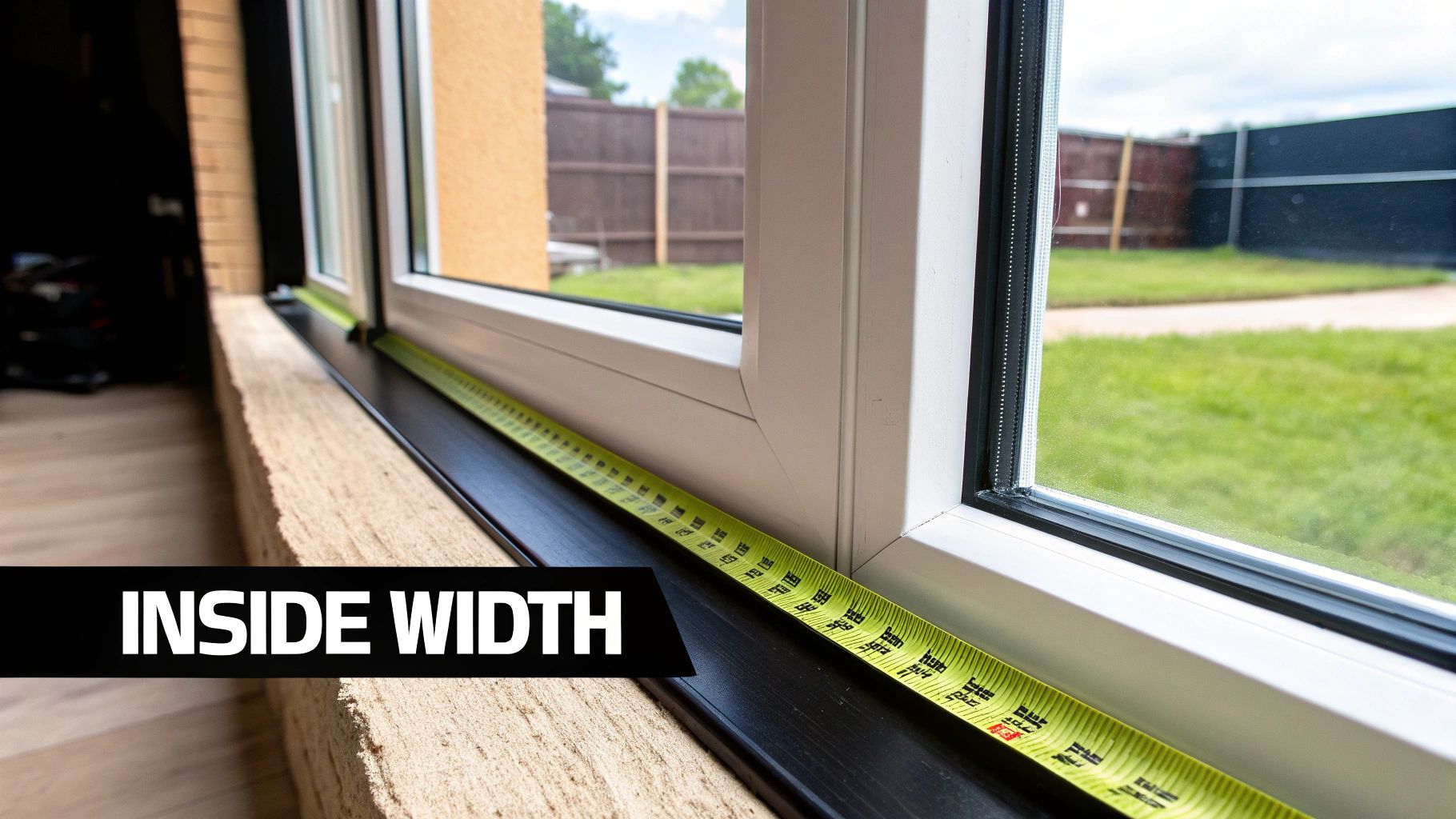
An inside mount gives you that polished, custom-fit appearance by setting the blinds neatly within the window's frame. To achieve this sleek finish, precision is key. The short answer? Always measure in three places for both width and height.
Step-by-Step Instructions:
Why is measuring in three spots so important? Because windows are almost never perfectly square. Years of a house settling can cause frames to bow slightly. This three-step check is our expert trick for catching those imperfections and guaranteeing a perfect fit.
Crucial Tip: Always provide the exact window opening measurements to your supplier. Never round up or down, and do not make any deductions yourself. The manufacturer will automatically make the small, necessary adjustments (usually 1/4" to 1/2") to ensure the blinds fit and operate smoothly inside the frame.
Choosing the right blind style is just as important as the measurement. Explore our collection of blinds to find the perfect match for your home's aesthetic.
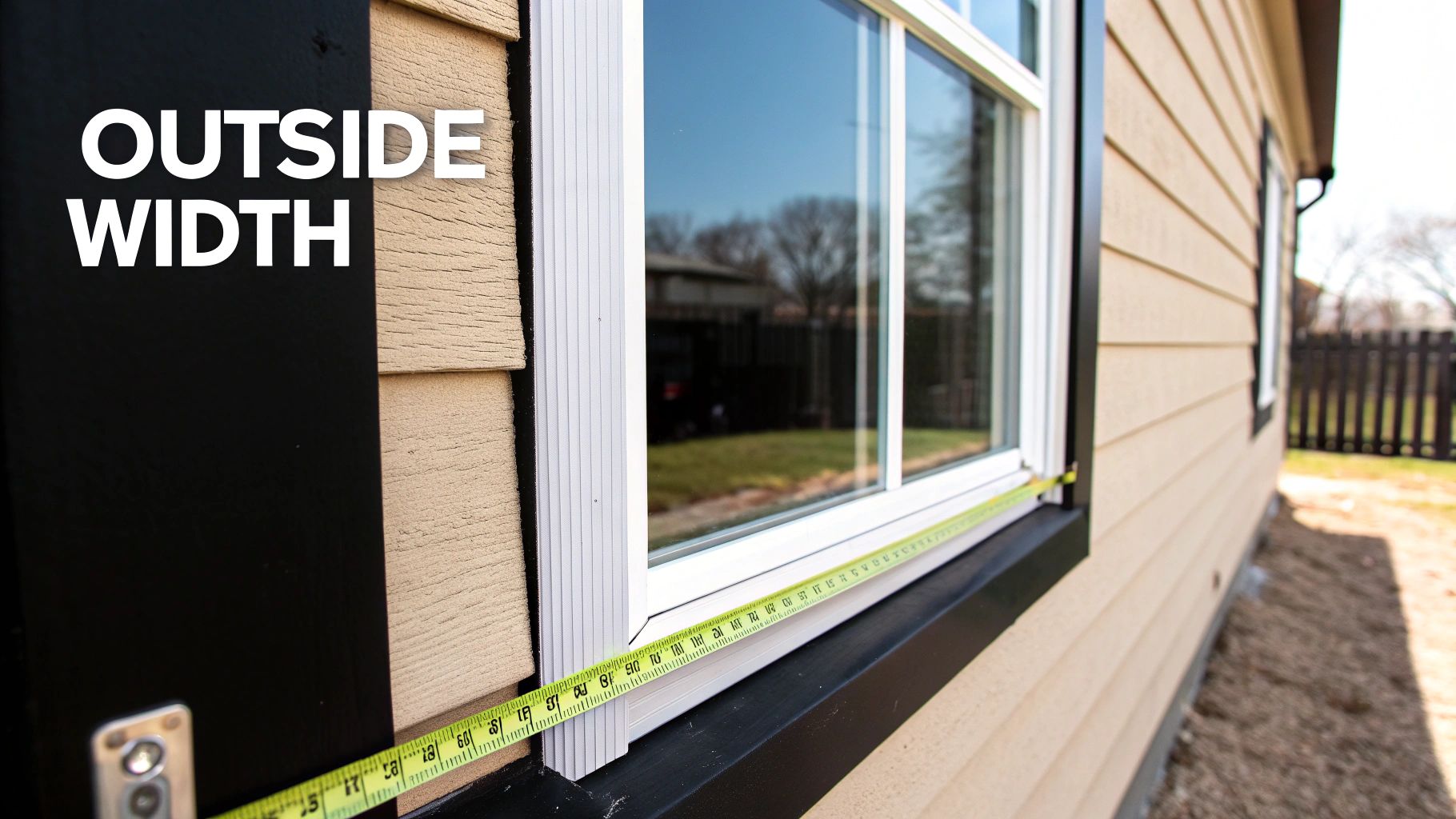
Outside mount blinds are a fantastic solution for making a window appear larger, hiding unattractive trim, or achieving maximum light blockage. The key to this style is the "overlap"—the amount the blind extends beyond the window opening.
Step-by-Step Instructions:
The right measurements are the foundation of a great window treatment strategy, a topic we explore in our guide on how to choose window treatments.
A tiny measuring mistake can lead to a big headache. I've seen even experienced DIYers fall into a few common traps. Knowing what to watch for is half the battle.
The global window blinds market is projected to grow significantly, reaching over $3.5 billion by 2030, according to a market analysis by Global Growth Insights. This growth is driven by consumer demand for custom, perfectly-fitted solutions, making accurate measurements more important than ever.
You don't need a massive toolbox for this job. Being prepared with a few key items makes the process smooth and accurate.
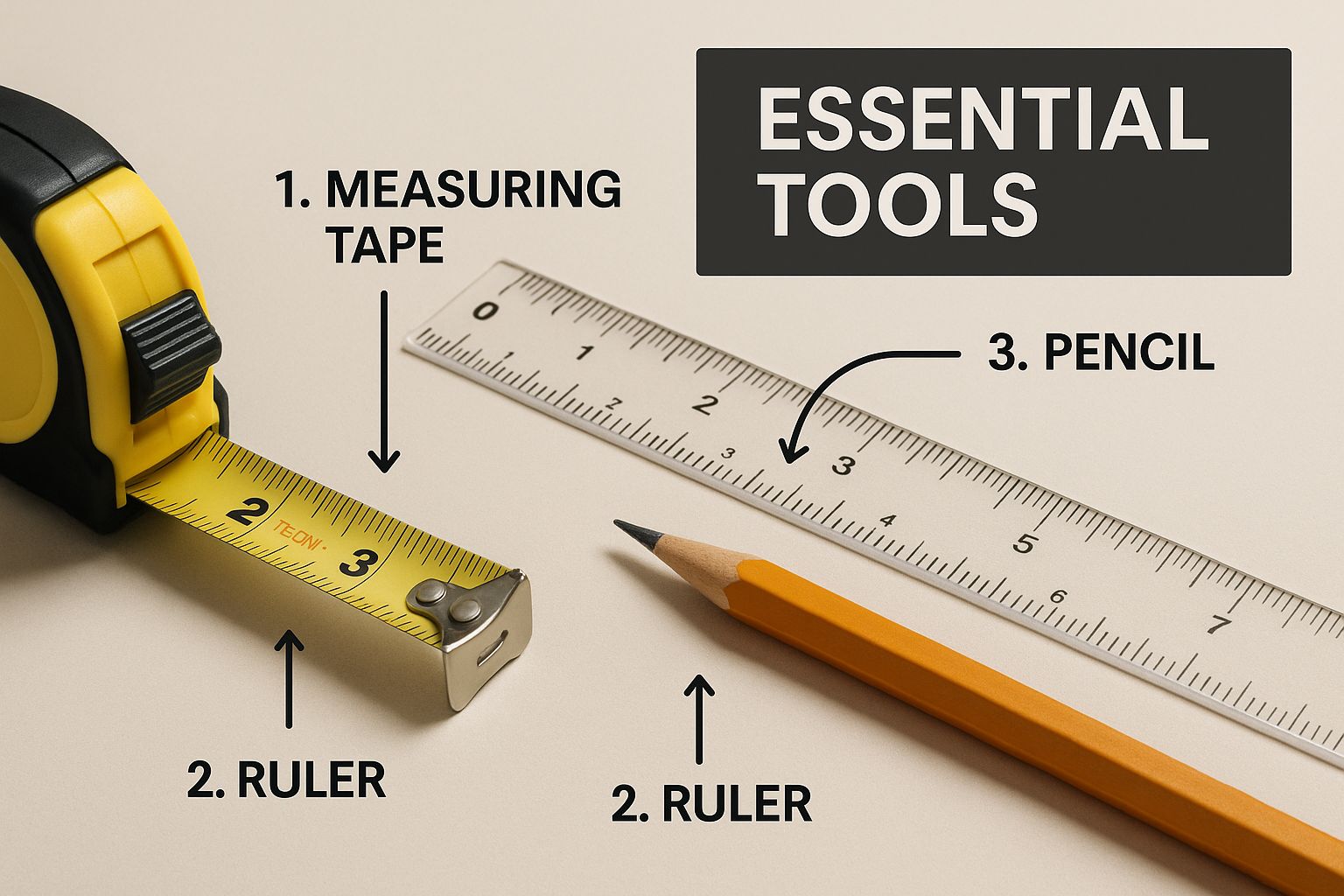
Having these essential installation tools ready to go prevents interruptions and helps ensure you get reliable numbers in one go.
This is extremely common. That's precisely why we recommend measuring the width and height in three different places. For an inside mount, you will use the narrowest width and the longest height. This ensures the blind fits within the tightest part of the frame and is long enough to cover the entire opening.
No, never make your own deductions. Provide the exact, precise measurement of the window opening to the manufacturer. They are the experts and will automatically deduct the correct amount (typically 1/4" to 1/2" from the width) to ensure the headrail fits and the blinds operate smoothly without scraping the frame.
Bay and corner windows require careful planning. Treat each section of a bay window as a separate window, but pay close attention to how the headrails will meet at the angles. For corner windows, you must account for the depth of the headrails to prevent them from interfering with each other. We recommend consulting the manufacturer's specific guides for these complex applications.
We strongly advise against this. It’s a common shortcut that often leads to a poor fit. The original blinds may have been measured incorrectly, or they may have warped over time. The only way to guarantee a perfect fit for your new blinds is to measure the window frame itself. A proper fit is also a key part of window safety, which we cover in our guide on how to childproof windows.
Ready to put your new measuring skills to the test? At Joey'z Shopping, we have a wide selection of beautiful, high-quality blinds to complete any room in your home.
Shop Our Full Collection of Blinds Now