
Join the Joey'z Family!

Before you get lost in a sea of patterns and colors, let's start with the most important question: What job do you need your curtains to do? Knowing how to select curtains begins with function, not fashion. A beautiful fabric that doesn’t solve your room's specific problem—be it glare, privacy, or drafts—is ultimately the wrong choice.
For example, a bedroom almost always benefits from light-blocking curtains for better sleep. In contrast, a sun-drenched living room might only need sheer curtains to cut the glare without sacrificing that lovely natural light. This function-first mindset ensures your final choice is both beautiful and practical.
What is the primary role of the windows in each room? Are they letting in a blinding afternoon glare, creating a privacy issue, or letting in a winter chill? The short answer is that identifying the main purpose for your window treatments from the start simplifies every other decision.
This approach saves you from buying gorgeous curtains that are ultimately useless. I've seen it happen: delicate silk curtains might look stunning but will fade and fray in months in a south-facing room. Likewise, a simple unlined cotton panel won't do much to stop a drafty window from making a room cold.
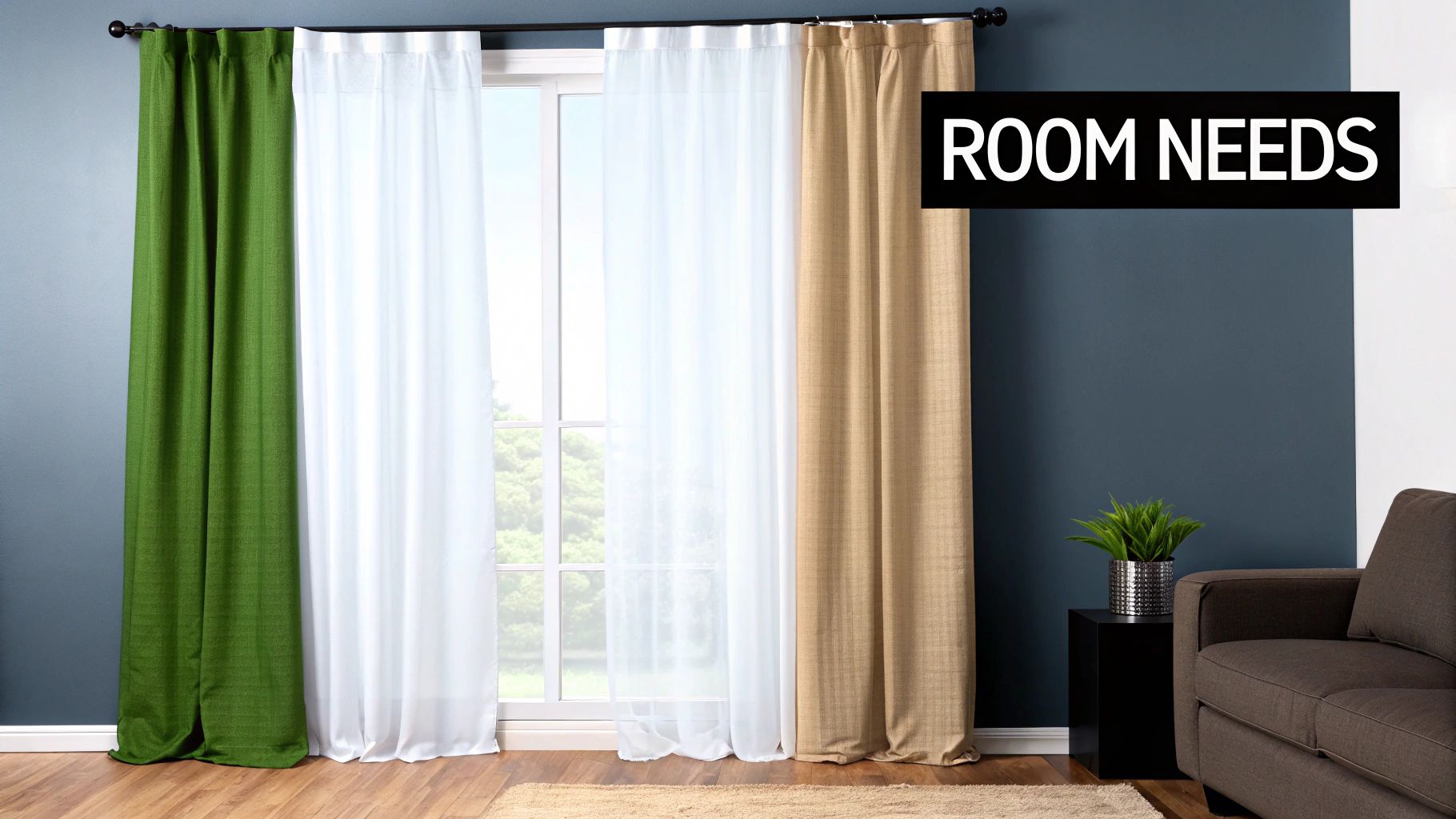
Take a walk through your house and assess each room. Getting clear on its main requirement is like creating a roadmap for your shopping.
The best window treatments are the ones that blend seamlessly into your life. A curtain that looks incredible but doesn't block the streetlight that keeps you up at night is, frankly, a bad purchase—no matter how stylish it is.
To help you get started, I’ve put together a quick reference guide below. It’s designed to help you match different curtain types to your specific needs.
This table breaks down common curtain styles to help you find the perfect match for your room's function and your home's style.
| Curtain Type | Primary Function | Best For (Room) | Light Control Level |
|---|---|---|---|
| Sheer Curtains | Light filtering & ambiance | Living Rooms, Dining Rooms, Sunrooms | Low |
| Room-Darkening | Reduces light significantly | Bedrooms, Home Offices, TV Rooms | High |
| Blackout Curtains | Blocks 95-100% of light | Bedrooms, Nurseries, Home Theaters | Maximum |
| Thermal Curtains | Insulation & energy savings | Drafty rooms, Bedrooms (North or South facing) | High to Maximum |
| Unlined Cotton/Linen | Basic privacy & style | Kitchens, Casual Living Areas | Medium |
| Velvet Drapes | Insulation & sound dampening | Formal Living Rooms, Dining Rooms, Bedrooms | High |
This little chart should make it much easier to pinpoint what you're looking for. For instance, if you love natural light but need to cut the glare on your TV, browsing the Joey'z Shopping Sheer Curtains Collection is the perfect place to start.
The fabric you choose is the heart and soul of your curtains. It dictates everything from the curtain's look and feel to how it functions day-to-day. Think of it like picking a coat: a light linen jacket has a completely different purpose than a heavy wool peacoat. Curtain fabrics are the same.
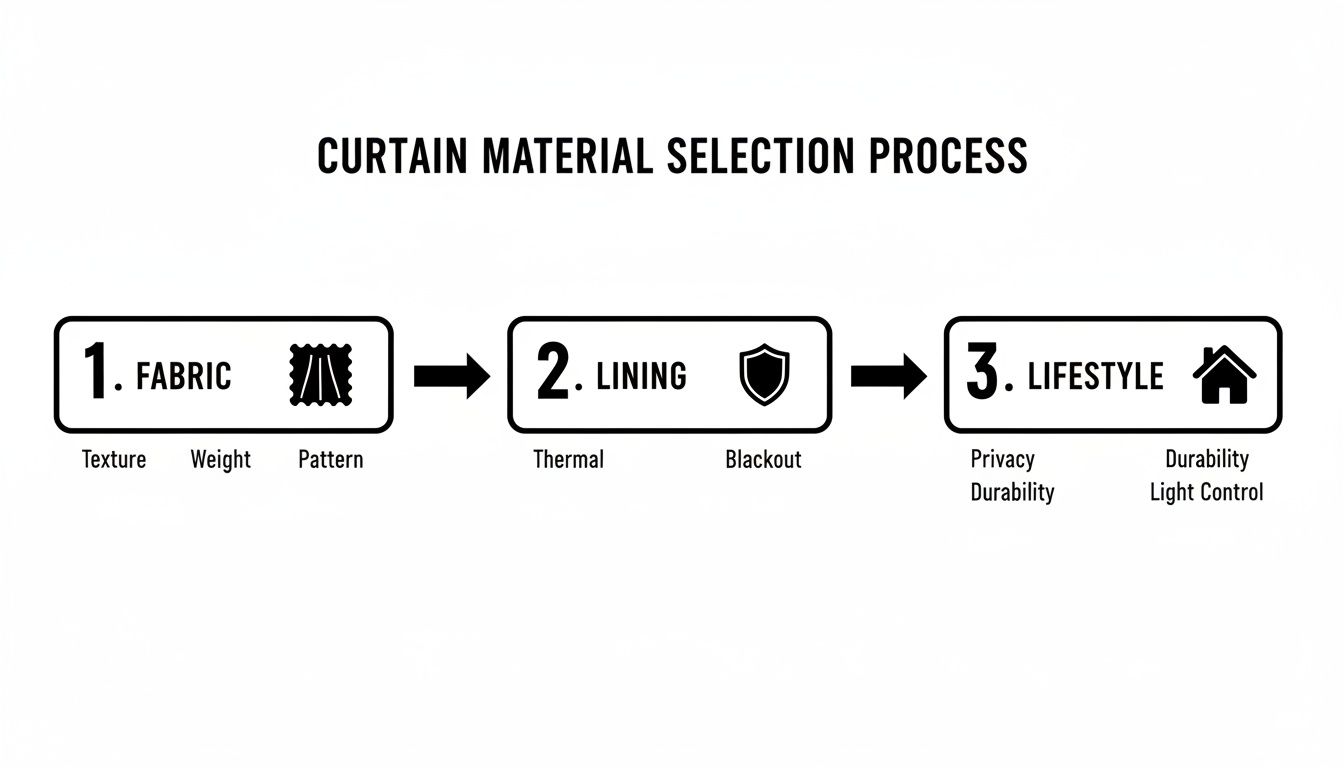
Before you fall in love with a pattern, it’s worth getting to know the material itself. A delicate silk might look incredible, but it's a terrible choice for a window that gets blasted with sun all day, as it will fade and weaken.
Here’s a quick rundown of some popular choices I often recommend:
If you want to go even deeper, our guide to curtain cloth types is a great next step. Durability is a big deal here—polyester blends can easily last 5-7 years, while some cottons might only look their best for 3-4.
While the fabric gets all the glory, the lining is the true MVP doing all the heavy lifting. A good lining can totally change a curtain's performance, adding structure, blocking light, and boosting its energy efficiency.
Here are the main types of lining and what they do best:
I always tell people that a simple blackout lining doesn't just block light; it adds weight and substance. It gives even a budget-friendly curtain panel a more luxurious, custom feel. It’s one of the easiest upgrades you can make.
The right fabric and lining have a massive impact on your home's comfort and energy bills. For a bigger picture of home efficiency, it's helpful to explore broader window insulation solutions.
Getting your curtain measurements right is the single most important step for achieving that polished, designer look. An inch or two off can be the difference between a window treatment that looks intentional and one that just feels… wrong.
The goal here is to sidestep the common mistakes: curtains that hang too short, aren't wide enough, or are hung in a way that makes the window seem smaller. For a deeper dive, our guide on how to measure curtains is a fantastic resource.
One of the most effective tricks for making a room feel bigger is the "high and wide" method. This simple concept creates an optical illusion, making your windows appear larger and your ceilings taller.
When you do this, your open curtains frame the view beautifully instead of covering up precious glass and sunlight.
To avoid the thin, skimpy look of curtains that don't have enough fullness, you need to calculate the right width. The short answer is that the combined width of your curtain panels should be at least 2 to 2.5 times the width of your window. This ensures a rich, gathered look when they're pulled shut.
Pro Tip: Always measure the full width of your installed curtain rod, not including the decorative ends (finials). This is the number you'll use for your fullness calculation.
The length of your curtains has a huge impact on the room's vibe. Always measure from the bottom of the curtain rod down to where you want the fabric to end.
Getting a precise fit is crucial for all home textiles, so it's worth understanding the principles of measuring accurately for your home furnishings when updating other pieces in your space.
You've nailed the fabric and measurements. Now for the fun part: picking the details that give the room its personality. The curtain's header style and the hardware you choose are the design elements that pull the whole look together.
This is where you set the mood. Are you going for a relaxed, modern farmhouse vibe? Or is a formal, timelessly elegant space more your speed? Your answers will point you to the perfect combination.
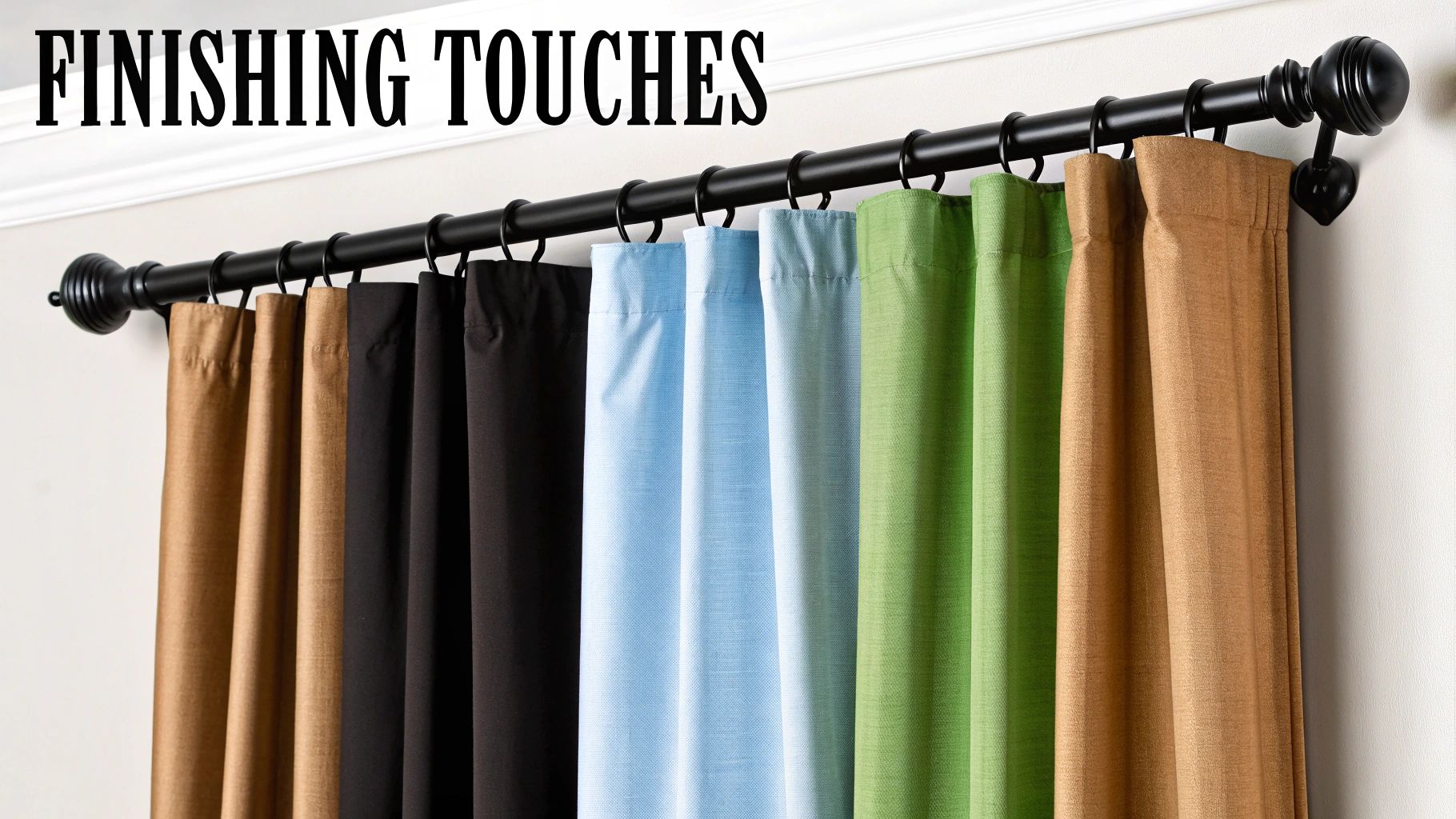
The "header" is the very top of the curtain that connects to the rod. This detail dictates how the fabric drapes, which has a massive impact on the feel of the room. A crisp header feels formal, while a soft one creates a more laid-back atmosphere.
| Header Style | Formality Level | Ease of Opening/Closing | Best Paired With |
|---|---|---|---|
| Grommet Top | Casual to Modern | Very Easy | Contemporary or industrial decor; high-traffic areas. |
| Rod Pocket | Casual/Traditional | Difficult | Stationary panels or windows where curtains are rarely moved. |
| Pinch Pleat | Formal/Classic | Easy (with rings) | Elegant dining rooms, traditional bedrooms, or formal living spaces. |
| Back Tab | Modern/Polished | Moderate | Clean, minimalist, or transitional rooms for a tailored look. |
Your header choice isn't just about looks—it's about lifestyle. A smooth-gliding grommet curtain is a joy to use on a patio door, while a stationary pinch pleat offers timeless structure for a formal dining room.
Curtain hardware is so much more than a metal pole; it’s a crucial decorative element. The rod, the finials (decorative ends), and rings can either blend in or stand out as an eye-catching accent. When you learn how to select curtains that truly elevate a space, you realize hardware is just as important as the fabric.
Think about the material and finish. A sleek, matte black rod is a natural fit for contemporary rooms, while a warm wood or antique brass rod works beautifully in traditional or rustic settings. The goal is a harmonious look that supports your room's existing style. For a complete guide, our curtain rod size chart can help you find the perfect match.
You’re on the home stretch. Think of this final checklist as your last look before you leap—a quick scan to make sure every detail is perfect. A quick review now will save you from the hassle of curtains that don't quite fit or a fabric that can't handle the morning sun.
The global curtains market is expected to hit $21.99 billion by 2029, driven by a boom in home renovations. Homeowners are looking for functional choices, as the right curtains can cut household energy bills by up to 20%. You can explore more insights on global curtain demand here.
Final Thought: Answering these last few questions helps solidify your decision. This process isn't just about buying curtains; it's about choosing the right curtains that will look beautiful, function perfectly, and bring a little joy to your everyday life.
Even after you've considered the big details, a few small questions often pop up. Let’s tackle those common head-scratchers with some quick, straightforward advice.
The short answer: mount the curtain rod 4 to 6 inches above the window frame. This designer trick draws the eye upward, making ceilings feel taller and the room more spacious. Avoid the common mistake of mounting it right on the window trim.
While often used interchangeably, there’s a useful technical difference. Curtains are generally made from lighter, unlined fabrics to filter light and offer basic privacy. Drapes are the heavy-duty option, made from thicker, opaque fabrics and almost always lined for maximum light-blocking, insulation, and sound dampening.
For a subtle, calming vibe, pick a curtain color that’s a few shades lighter or darker than your walls. This creates a soft, layered effect. To make a bolder statement, choose a contrasting color that pulls from other accents in the room, like a throw pillow or a piece of art, turning your windows into a stunning focal point.
For a modern and polished look, yes. Ideally, your curtains should either "float" about a half-inch above the floor for a practical, clean look or just barely "kiss" its surface for a tailored, custom appearance. Curtains that are too short can make a room feel dated and unfinished.
Ready to put all this newfound knowledge to the test? At Joey'z Shopping, we offer a huge variety of curtains to match any style, function, and budget. From light-filtering sheers to insulating blackout drapes, you'll find the perfect fit to complete your home.
Explore our full collection of beautiful and functional curtains at JoeyzShopping.com today!