
Join the Joey'z Family!

When you're picking out window treatments, the right material can completely change the feel of a room. Time and time again, linen fabric for drapes emerges as the top contender for its effortless elegance and surprising practicality. We think of it as more than just fabric; it’s an investment in your home's entire atmosphere. Linen just has a unique character that other materials can't seem to replicate.
Unlike stiff, synthetic fabrics that can feel a bit lifeless, linen has this wonderful, organic, lived-in quality right from the start. Its signature slub texture—those subtle, natural variations in the yarn—adds just the right amount of visual interest. It brings a touch of rustic charm without ever looking messy, giving linen its incredible depth and luxurious feel.
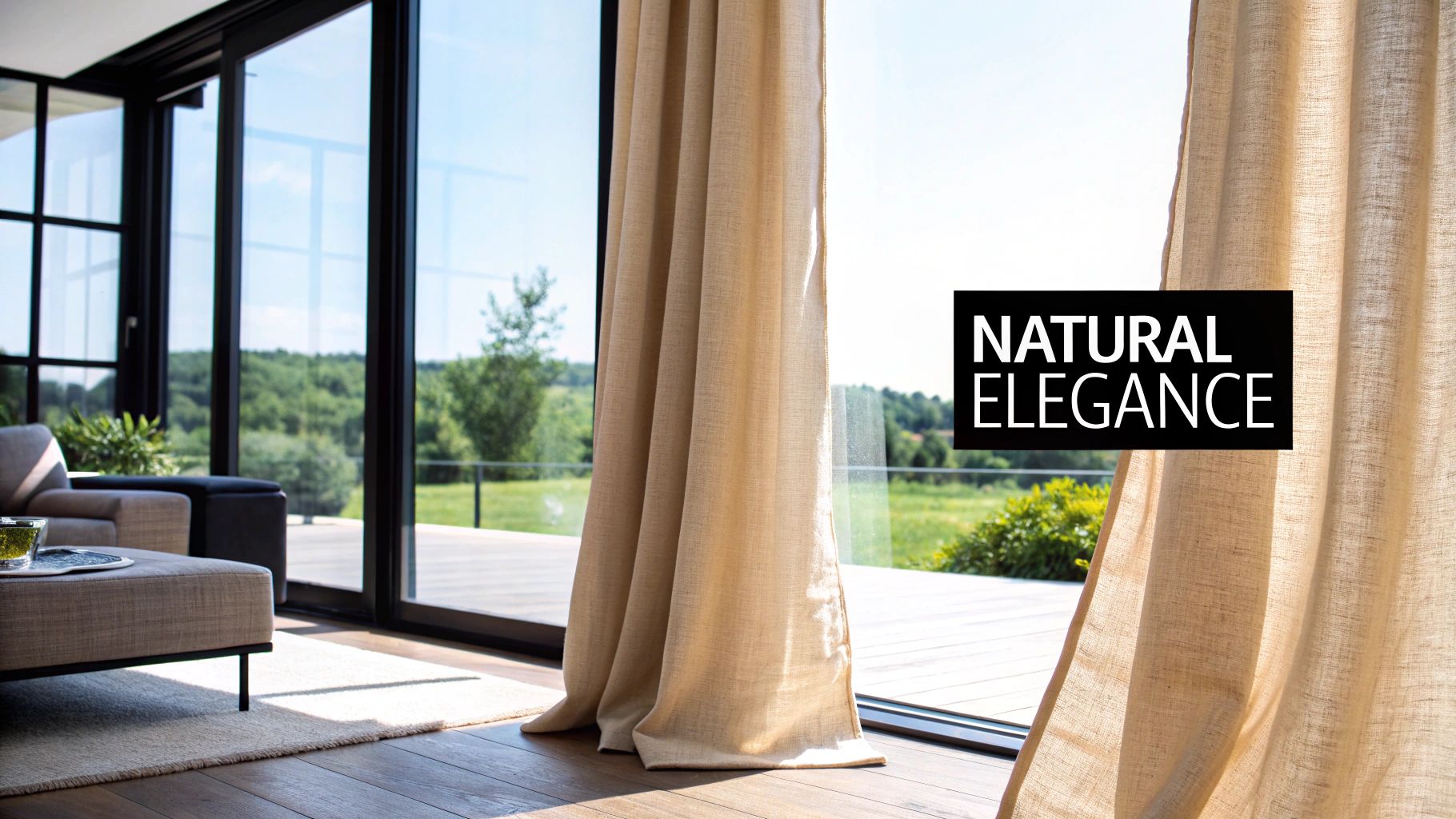
But linen's appeal goes way beyond its good looks. It’s also an incredibly practical material, known for its strength and how well it holds up over time. Because it comes from the flax plant, linen fibers are approximately 30% stronger than cotton. That strength makes them super durable and resistant to everyday wear and tear, meaning your drapes will look beautiful for years to come.
Plus, linen's breathability is a huge functional perk. The fabric allows air to circulate, which helps keep a room feeling fresh and can even help maintain a more comfortable temperature all year. It's this beautiful blend of elegance and toughness that makes it such a versatile choice for any home.
"Linen drapes are a designer's secret weapon. They effortlessly add a layer of softness and texture that makes a room feel finished, polished, and incredibly welcoming. The way they interact with natural light is simply unmatched."
In an era where we're all trying to make more conscious choices, linen really shines. The flax plant requires significantly less water and fewer pesticides to grow compared to crops like cotton. This makes linen an inherently eco-friendly material, aligning perfectly with the growing desire for sustainable decor. If you're looking for more ideas, you can explore our guide to eco-friendly home decor choices.
This shift toward high-quality, sustainable materials is definitely being noticed. The global linen fabric market was valued at USD 3.75 billion in 2022 and is projected to grow substantially, reflecting this growing demand for linen fabric. This trend means high-quality linen drapes are becoming an even more popular and accessible option for anyone seeking that perfect mix of style and substance.
Here's a quick comparison to see how linen stacks up against other popular materials for window treatments.
| Fabric | Aesthetic | Light Filtering | Durability | Eco-Friendliness |
|---|---|---|---|---|
| Linen | Relaxed, textured, elegant | Diffuses light beautifully | Very high; gets softer with age | High; biodegradable and renewable |
| Cotton | Versatile, casual, smooth | Good, but varies by weave | Moderate; can fade in sun | Moderate; high water usage |
| Polyester | Crisp, wide color range | Varies; often used for blackout | High; resists wrinkles and fading | Low; synthetic, not biodegradable |
| Velvet | Luxurious, formal, heavy | Excellent; blocks most light | High; can attract dust | Varies; can be natural or synthetic |
| Silk | Lustrous, delicate, formal | Prone to sun damage; needs lining | Low; fragile and needs special care | High; natural fiber but intensive process |
As you can see, linen holds its own by offering a fantastic balance of beauty, function, and sustainability that's hard to beat.
Not all linen is created equal. The secret to its incredible range lies in two key factors: its weave and its weight. The weave is the fabric's unique fingerprint—it dictates the texture, the way it hangs, and its overall personality. The weight, on the other hand, determines its function, telling you how much light it will let in and how much privacy it will provide.
Understanding these two elements is how you select the perfect linen fabric for drapes that don't just look beautiful but also work exactly the way you need them to.
The weave is simply how the flax threads are woven together. While many variations exist, a few common styles are absolutely perfect for drapes.
Each weave brings its own character. A plain weave feels timeless and understated, while a herringbone introduces a touch of classic pattern without feeling too busy. To dive deeper into how different materials work, explore our guide on various curtain cloth types.
This is where style meets function. Fabric weight is measured in Grams per Square Meter (GSM). The higher the GSM, the heavier and more opaque the fabric will be. This single number is your best friend for controlling light and privacy.
The demand for high-quality window treatments shows just how much these choices matter. The global home textile market is a massive industry, and linen’s solid standing proves it's a top-tier material for drapes that are both stylish and functional.
The weight of your linen drape is the most critical decision for ambiance. A lightweight linen whispers, letting the sunlight dance in the room, while a heavyweight linen speaks with authority, offering solitude and structure.
Choosing the right weight is all about matching the fabric to the room's purpose. Let’s break down the common categories and where they shine.
Lightweight Linen (Under 150 GSM)
Medium-Weight Linen (150-250 GSM)
Heavyweight Linen (Over 250 GSM)
While unlined linen drapes have a beautiful, natural airiness, adding a lining can completely transform their performance. So, do your linen drapes really need a lining? The short answer is: it all depends on what you want to achieve in the room.
Lining isn't just an extra piece of fabric; it's a strategic choice that acts as a behind-the-scenes partner to your linen fabric for drapes. A good lining protects the fabric from sun damage, adds weight for a more luxurious hang, and gives you precise control over the room's atmosphere.
When you're looking at linings, you'll generally come across three main options. Each one is designed to solve a different problem, whether you're trying to tame harsh sunlight, create the perfect sleep sanctuary, or make your home more energy-efficient.
To help you visualize which linen weight and lining combination might be right for you, this decision tree breaks down the process based on your main goal.
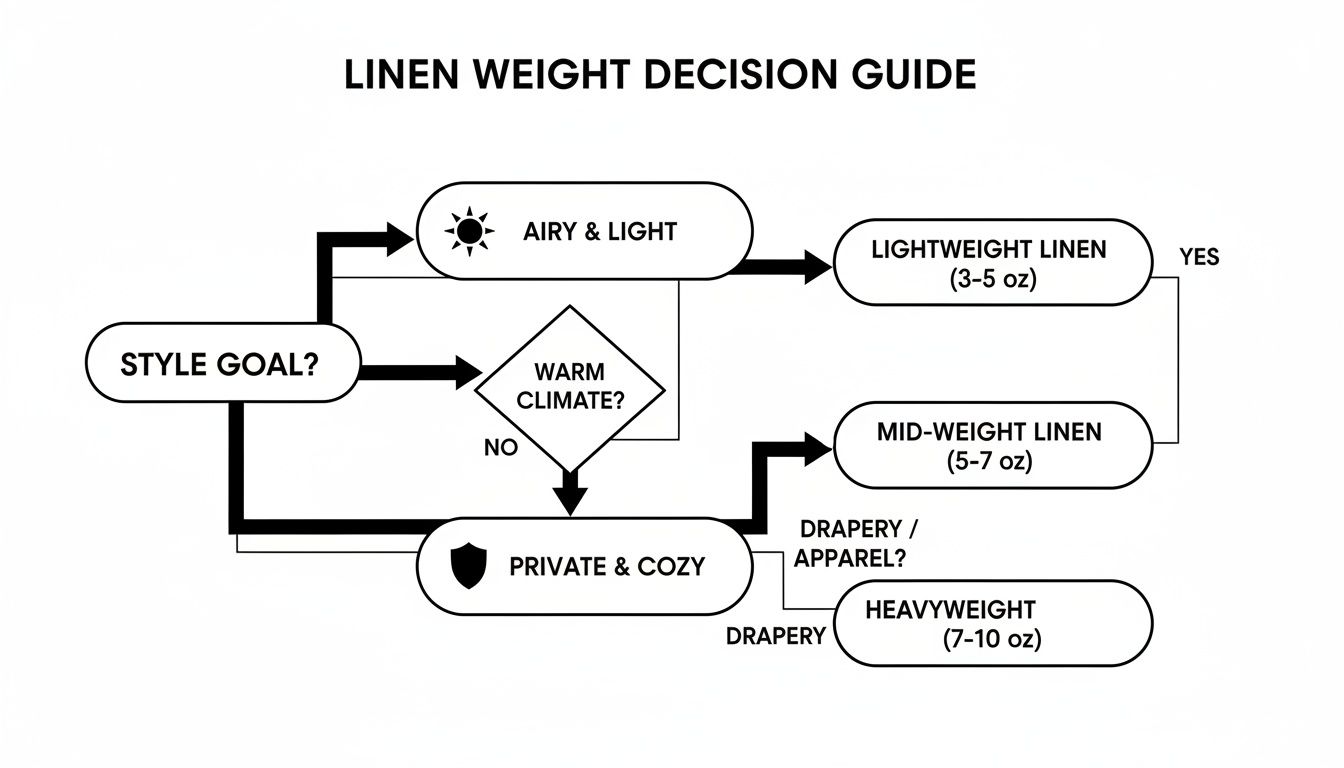
As you can see, if you're aiming for an airy, light-filled room, an unlined, lightweight linen is perfect. But for those who need more privacy or light control, a heavier, lined linen drape is the way to go.
We understand that choosing the right lining can feel like a big decision. This table breaks down the key benefits of each type to help you match a lining to your room's specific needs.
| Lining Type | Primary Benefit | Best For (Room) | Effect on Drape |
|---|---|---|---|
| Light-Filtering | Softens light, adds privacy | Living Rooms, Dining Rooms, Kitchens | Adds moderate body and a smooth hang |
| Blackout | Blocks nearly all light | Bedrooms, Nurseries, Home Theaters | Adds significant weight and structure |
| Thermal | Insulates against heat/cold | Any room with drafty windows | Adds substantial weight and a full look |
Each option offers a unique advantage, so think about what matters most in your space—light, privacy, or temperature control—to make the best choice.
Beyond just light and insulation, a lining has a dramatic effect on how your linen drapes hang and feel. Unlined linen has that breezy, relaxed quality we all love, but adding a lining gives the panels more body and structure.
This added weight creates a more substantial and luxurious fall, encouraging deeper, more uniform pleats that look tailored and intentional. Your drapes will appear fuller and more opulent, contributing to a polished, finished feel in any room.
By adding a lining, you're not just improving function; you're investing in the drape's longevity and aesthetic. It helps the linen hold its shape, enhances the richness of the fabric's color, and provides a professional finish that truly completes a window.
To pick the perfect lining, think about each room's specific needs. A living room might benefit from a light-filtering lining to keep things bright while protecting your furniture from the sun. On the other hand, a street-facing bedroom would be much better served by a blackout lining for privacy and better sleep.
If you're leaning toward maximum light blockage, you can learn more about the importance of blackout curtain linings in our detailed guide.
Ultimately, lining your drapes comes down to balancing the look you want with the practicality you need. By understanding your options, you can make sure your new linen drapes not only look stunning but also perform perfectly for years to come.
Linen drapes are the secret weapon of the window treatment world. They can effortlessly adapt to just about any interior design style you can dream up. The magic is in how the same beautiful fabric can tell a completely different story depending on its color, texture, and the hardware you pair it with. This incredible versatility is what makes linen fabric for drapes a favorite for both seasoned designers and homeowners.
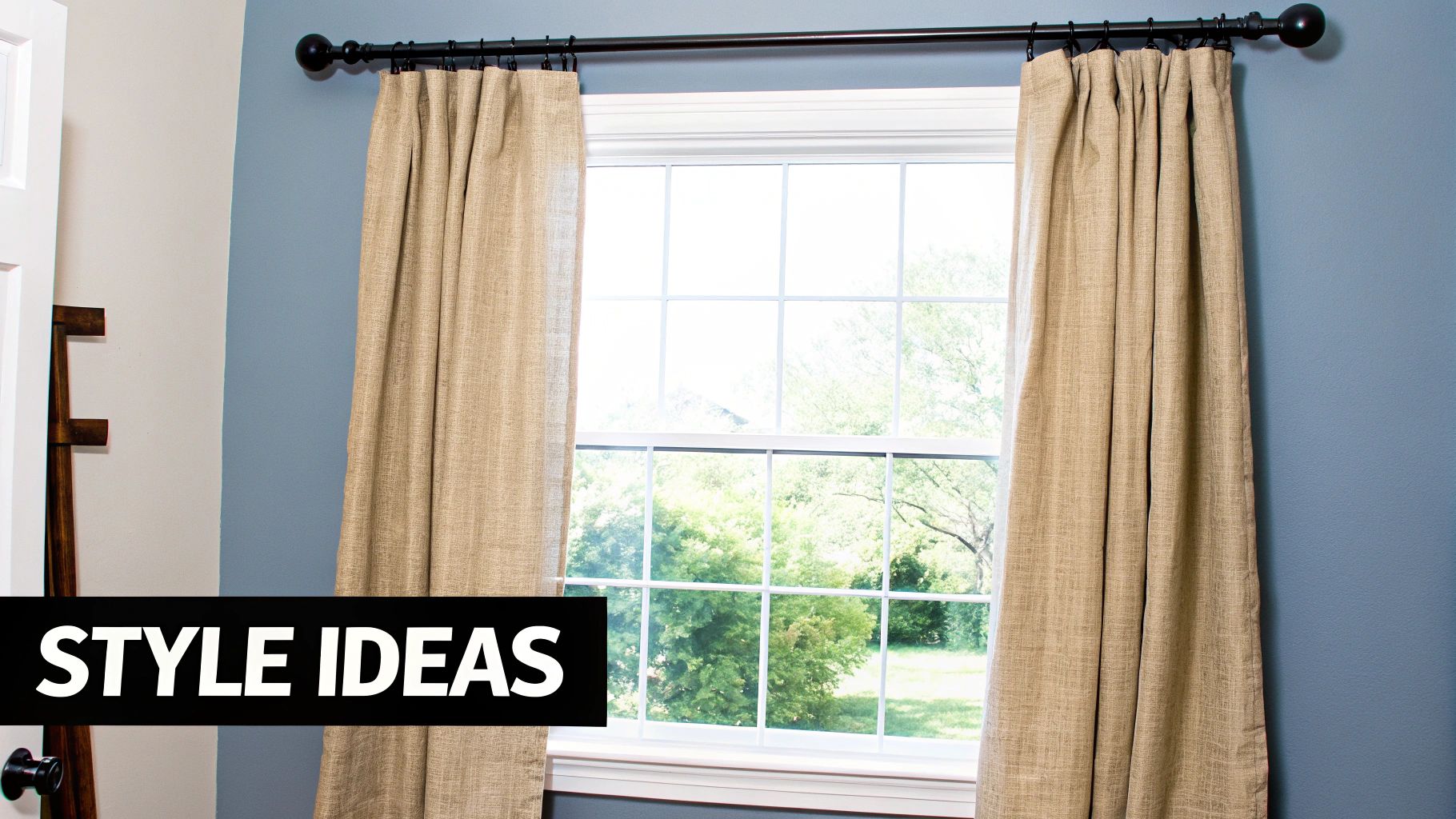
Whether your home feels like a breezy coastal retreat or a chic urban loft, there’s a linen drape waiting to complete the picture. Let's walk through how to style this timeless fabric to fit your unique space.
For any design style that celebrates light, air, and natural materials, linen is an absolute no-brainer. Coastal and Scandinavian interiors are built on a foundation of simplicity and brightness, which makes linen drapes a natural and beautiful choice.
In modern and minimalist spaces, everything is about clean lines, uncluttered surfaces, and carefully chosen details. This is where linen drapes add a crucial layer of softness and texture, preventing a room from feeling too cold or sterile.
The trick is to choose a drape that feels structured and intentional. Think sleek, flat-panel curtains or a tailored pinch-pleat style in a solid, neutral color. A deep charcoal grey, a rich navy, or a warm beige can add depth without creating visual clutter. For hardware, a matte black or metallic rod with simple, geometric finials will echo the clean, modern lines of the room.
Linen in a minimalist setting is all about quiet confidence. It doesn't shout for attention but provides an essential, grounding texture that makes the entire space feel more inviting and complete.
If your style leans more eclectic, cozy, and lived-in, linen drapes are perfect for layering in rustic charm and warmth. These aesthetics are all about embracing texture, character, and a connection to the natural world.
As you choose and style your linen drapes, it’s always helpful to think about the bigger picture of your room's flow and function. For more ideas on creating a cohesive space, you might find a guide to designing a living room layout useful. At the end of the day, the true beauty of linen is its ability to be dressed up or down, making it the perfect finishing touch for any room.
You’ve found the perfect linen, picked out the right lining, and can already picture how your new drapes will transform the room. Fantastic! Now comes the practical part that turns that vision into a beautiful reality. Getting the measurements just right and knowing how to look after your linen fabric for drapes are the two things that guarantee they look stunning from day one—and for years to come.
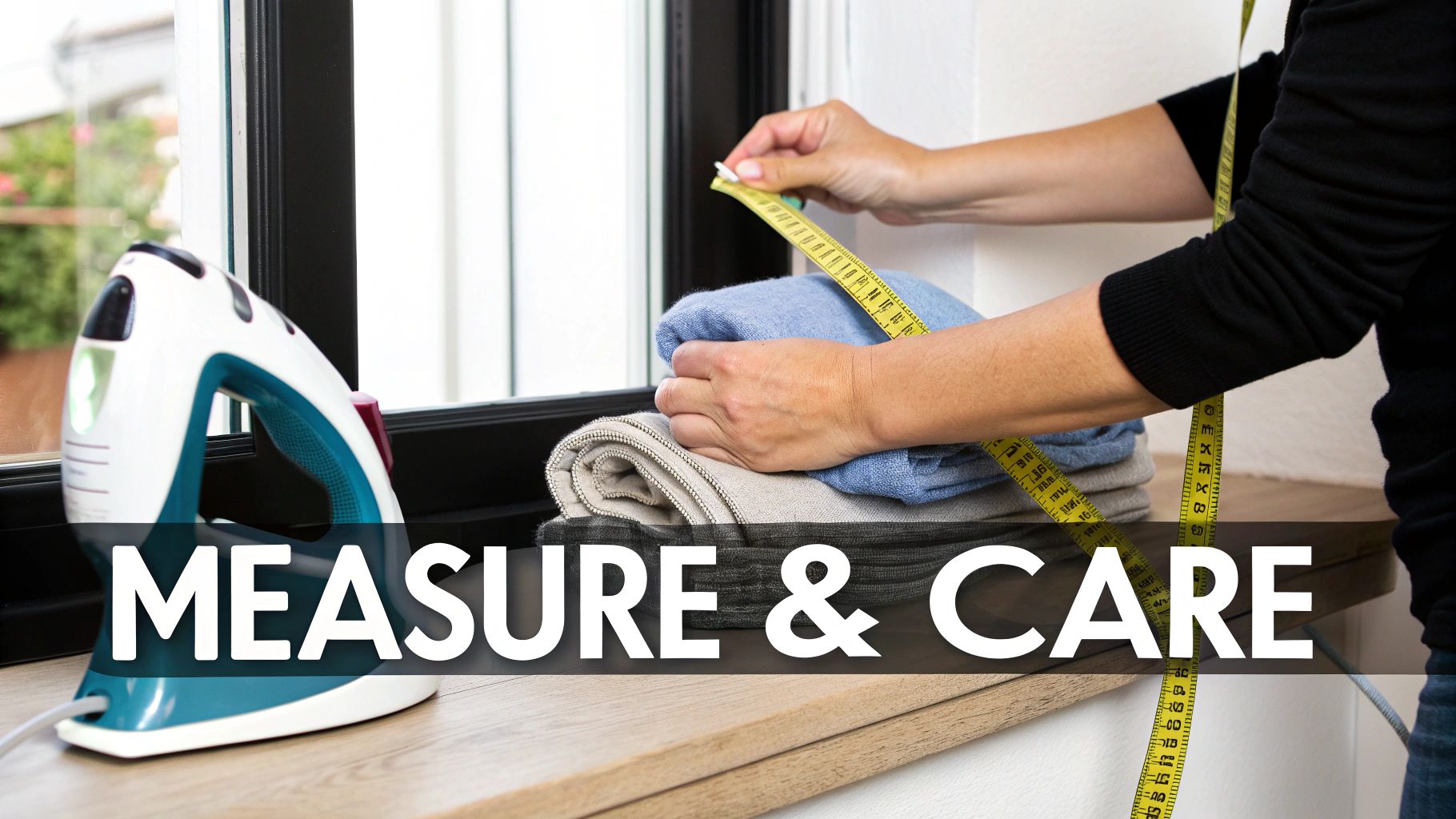
We'll walk you through a simple process for measuring your windows to get that professional, custom-made feel. And we’ll bust some myths about linen care, showing you just how easy it is to maintain its natural, effortless beauty.
Taking a few extra minutes with a tape measure is the single best thing you can do to guarantee a high-end result. When drapes are even a little off, they can look awkward or not function properly. Follow these steps, and you’ll get it right every time.
Step 1: Measure the Width for Fullness First, measure the full width of your curtain rod—not the window frame. This is a common mistake that leaves drapes looking flat and skimpy when you pull them closed.
Step 2: Determine the Correct Length Next, measure from the top of your curtain rod down to where you want the drapes to end. This is a stylistic choice, and each option creates a completely different mood.
A well-measured drape is like a perfectly tailored suit. It elevates the entire look, making everything feel more intentional and polished. Don't rush this step—it’s where the magic happens.
One of the biggest myths about linen is that it’s fussy and difficult to care for. In reality, it’s a remarkably tough and low-maintenance fabric. With just a little know-how, you can keep your linen drapes looking fresh for decades.
Always check the care label first, but most linen drapes can be machine washed. Here's a simple process to follow.
Linen's natural tendency to wrinkle is part of its relaxed, organic charm. Many people absolutely love this effortless look! Once you hang the drapes, the weight of the fabric will naturally pull out many of the creases over time.
However, if you prefer a crisper, more polished finish, that’s easy to achieve, too.
With these simple tips for measuring and care, you're all set to enjoy the lasting elegance of your linen drapes. This practical knowledge ensures your investment not only looks beautiful but also stands the test of time. For a durable yet stylish option, consider our collection of Linen Blend Curtains.
We get it—choosing the perfect drapes comes with a lot of questions. To help you feel completely confident in your choice, we’ve gathered some of the most common things people wonder about linen. Think of this as your final checklist before creating the window treatments you’ve always wanted.
Yes, they are an excellent choice. Linen is one of the strongest natural fibers you can find, making it incredibly resilient and a perfect fit for busy spots like living rooms or hallways.
The natural strength of flax fibers means your drapes can handle being opened and closed daily without showing signs of wear and tear. Plus, their timeless, elegant look isn't just a passing trend, which makes them a lasting investment for your home. If a room gets a lot of direct, intense sunlight, we recommend adding a light-filtering lining to give the fabric an extra layer of protection against fading over the years.
The short answer? You can either embrace them or easily get rid of them. That gentle, natural wrinkling is part of linen's relaxed, organic charm, and many people absolutely love that effortless look.
If you’d rather have a smoother, more polished finish, managing wrinkles is simple.
Think of linen's wrinkles not as a flaw, but as a sign of its authenticity. They tell a story of natural comfort and relaxed elegance, adding a character that synthetic fabrics just can't replicate.
Absolutely. Linen is a fantastic year-round option because it’s a natural thermoregulator. It’s a wonderfully breathable fabric, which allows for better air circulation to help keep a room feeling cooler and fresher in the summer.
Come winter, a substantial linen drape provides a beautiful and effective barrier against the cold. When you pair your drapes with a thermal lining, they become even more powerful insulators, helping to block drafts and keep your indoor temperature cozy. This versatility makes them a smart and stylish choice, no matter the climate.
The main difference really comes down to authenticity versus practicality. Drapes made from 100% linen are crafted purely from flax fibers. This is what gives them that signature rich texture, superior breathability, and the beautiful, fluid drape that's so hard to replicate.
Linen blends, on the other hand, mix linen with other fibers like cotton or polyester. These blends are usually designed to do two things: reduce wrinkling and lower the price tag. A blend can be a great, lower-maintenance option and is often more budget-friendly. However, it won't have quite the same unique character, luxurious feel, or the subtle, organic variations that make pure linen so special.
Ultimately, your choice depends on what matters most to you. Are you after the authentic look and feel of pure linen, or do you prefer a more wrinkle-resistant and cost-effective alternative?
Ready to bring the timeless beauty of linen into your home? At Joey'z Shopping, we offer a curated collection of high-quality linen drapes designed to fit any style and budget.
Explore Our Full Collection of Linen Drapes at JoeyzShopping.com