
Join the Joey'z Family!

Meta description: Lining material for curtains affects light control, insulation, and wear. Learn how to choose blackout, thermal, cotton, or polyester wisely.
If you're staring at a set of curtains that looked great online but now leak morning light, show every wrinkle, or feel useless against a cold window, the problem usually isn't the color or the pattern. It's the lining material for curtains.
Most homeowners shop the visible fabric and ignore the layer doing the work. That's the hidden mistake. A curtain can look polished on day one and still disappoint within weeks if the lining can't handle glare, heat, moisture, or daily use.
A lot of curtain regret starts the same way. The panels arrive, the color works, the room looks finished, and everybody feels clever for saving money. Then the sun starts hitting the window every afternoon, the face fabric begins to look tired, and the room still feels too bright or too drafty.
That's when lining stops being a background detail and starts acting like the structural part it really is.
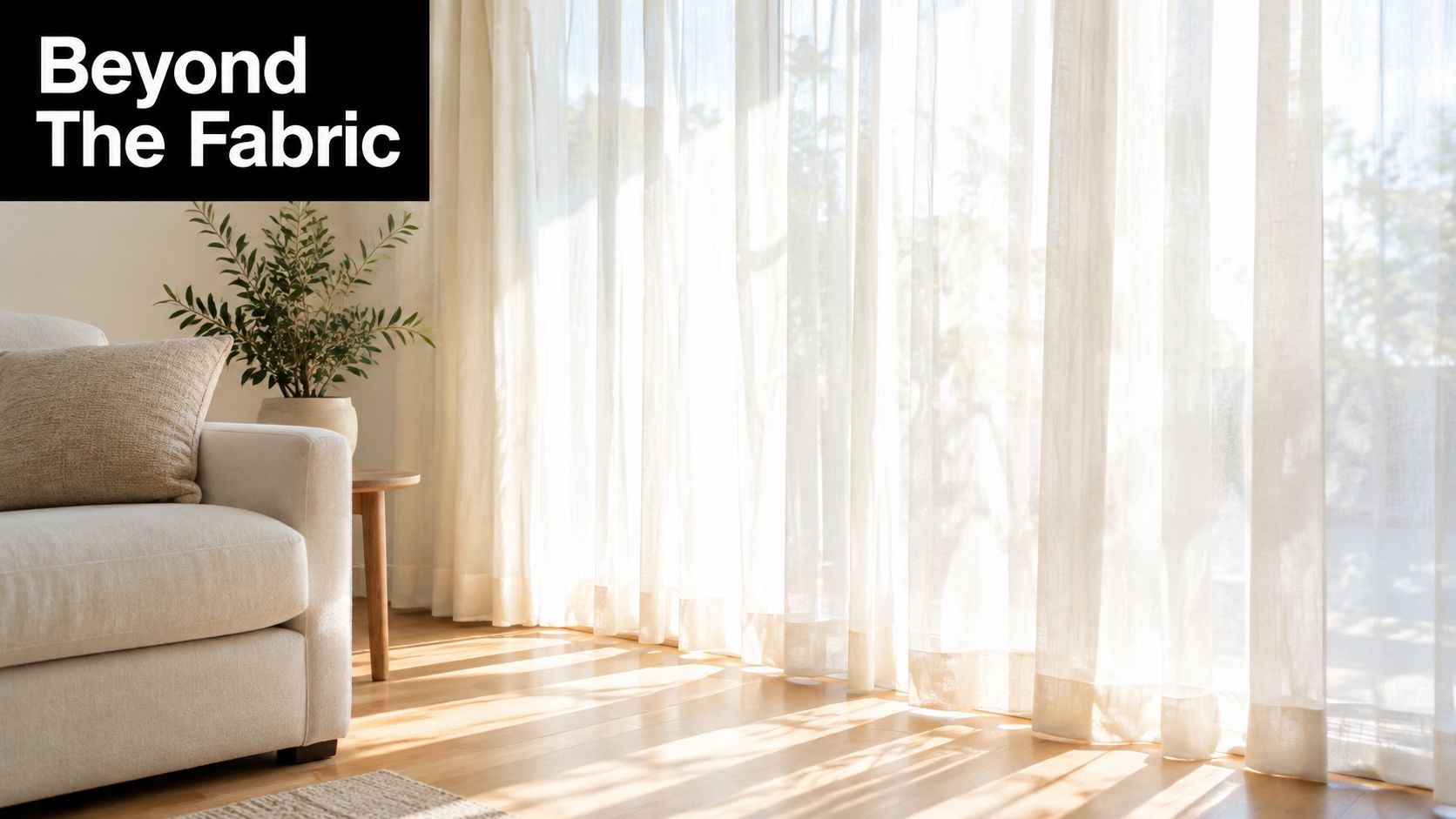
The short answer is this. Lining controls how a curtain performs, not just how it looks.
A good lining helps with several jobs at once:
A published commercial interiors guide gives a useful baseline: a common curtain lining weighs about 125 to 150 GSM and can block roughly 40% to 50% of incoming light. The same guide notes that lined systems can exceed 90% darkness in some setups, which shows how much the lining changes performance, not just appearance (commercial curtain lining data pack).
Practical rule: If a curtain's job includes sleep, glare control, temperature comfort, or protecting a nicer face fabric, the lining isn't optional.
Curtain lining isn't some tiny niche anymore. One industry tracker projects the global curtain lining fabrics market at about USD 4.2 billion in 2026, tying demand to building completions, hospitality refurbishment, and consumer interest in thermal comfort and light control (global curtain lining market analysis).
That shift matters because it reflects how people buy curtains today. They don't just want a pretty panel. They want sunlight control, privacy, and a room that feels better to live in.
The cotton versus polyester debate sounds simple until you live with both. One feels softer and more traditional. The other usually asks less from you over time.
Historically, that split reflects a much bigger shift in textiles. A textile history source notes that in 2700 B.C. only dignitaries in China could afford twice as much silk, and it later traces how lining materials moved beyond elite use and eventually shifted from silk and satin toward cheaper cotton and synthetic fibers such as polyester, polyamide, acetate, and viscose (textile lining history overview).
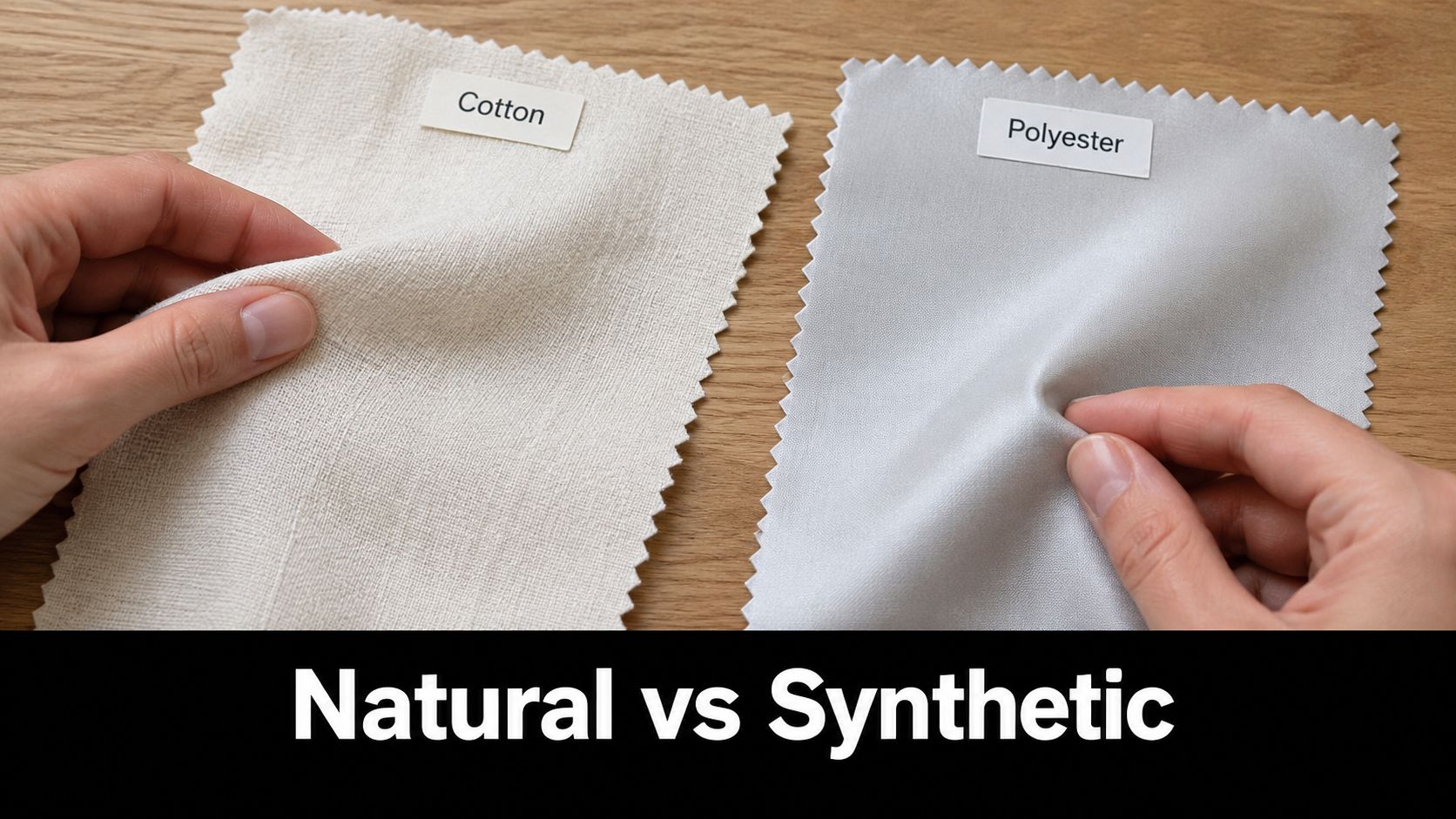
Cotton lining usually wins on feel. It has a softer hand, a classic look, and it works well when you want a curtain to feel less synthetic and more refined.
It also suits decorative rooms where drape matters as much as utility. If you're pairing curtain panels with natural face fabrics, cotton often gives a gentler, more traditional finish.
Polyester tends to win on practicality. It handles routine use well, usually asks for less fuss, and makes more sense in busy homes where kids, pets, humidity, or frequent cleaning are part of daily life.
That's one reason synthetic and blended linings became standard in many furnishing applications. They offer durability and can be adapted for function-specific uses, especially where blackout or easy-care performance matters.
For homeowners trying to protect decorative fabric from fading, Joey'z Shopping has a useful guide on fade-resistant fabric for home interiors, which pairs well with lining decisions because the face fabric and the liner age together.
This isn't a purity contest. It's a trade-off.
| Lining type | Usually works well for | Watch out for |
|---|---|---|
| Cotton | Softer drape, classic finish, decorative rooms | Can be less forgiving in demanding spaces |
| Polyester | Easy upkeep, rentals, family homes, moisture-prone areas | Can feel less natural in hand |
| Blends | Middle ground between feel and function | Quality varies by construction |
Some buyers chase "natural" on principle, then end up frustrated by upkeep. Others buy the cheapest synthetic available and wonder why the curtain feels stiff or plasticky. Material family matters, but construction matters just as much.
Buyers mix up two different jobs. Blackout lining is mainly about light control. Thermal lining is mainly about heat transfer. Sometimes one product does both, but you shouldn't assume that from the label alone.
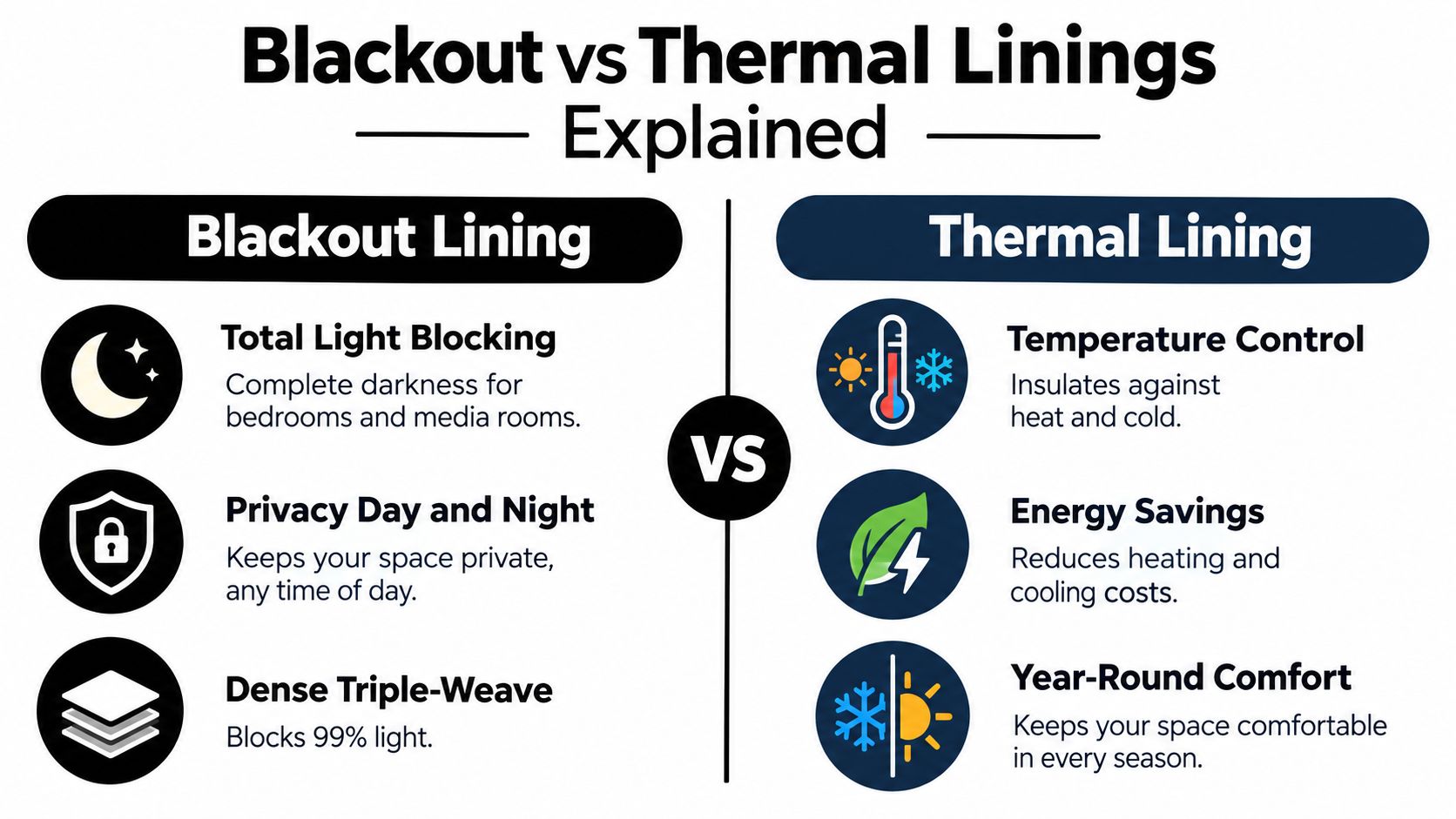
The short answer is darkness.
If the room is a bedroom, nursery, or media room, blackout lining usually solves the right problem. Expert guidance describes blackout thermal lining as using three coated layers for insulation plus near-total light control, which is different from standard thermal lining that is typically a single coated layer (thermal curtain lining guide).
That layered construction is why blackout products feel denser and more assertive. They aren't subtle. They're built to stop light.
A quick visual explanation helps:
Thermal lining deals with comfort near the window. The mechanism matters here, because this isn't marketing fluff.
Thermal curtain linings work by combining a fabric layer with a low-conductivity or coated backing that traps a still-air boundary layer between the curtain and the window; this reduces convective heat transfer and improves the overall window assembly's resistance to heat flow.
That explanation lines up with how these products behave in real rooms. You notice the benefit most on windows that feel cold in winter or hot in direct sun.
Independent textile guidance adds two useful specification points. Heavier thermal systems at around 200 gsm or more are recommended for meaningful insulation, and 280 to 340 gsm gives a noticeably stronger winter effect. The same guidance warns that thermal benefit drops sharply if the curtain fit is leaky around the perimeter (thermal curtain buying guide).
For a room-by-room look at cold-weather performance, Joey'z Shopping also breaks down whether thermal curtains work in winter.
A sloppy install can undo a premium lining. If the panel is too narrow, too short, or leaves side gaps, light leaks and airflow win.
Interlining is the layer many people don't know they want until they see the finished curtains hanging properly. It's the quiet middle layer that sits between the face fabric and the lining, and it changes the curtain from merely functional to properly substantial.
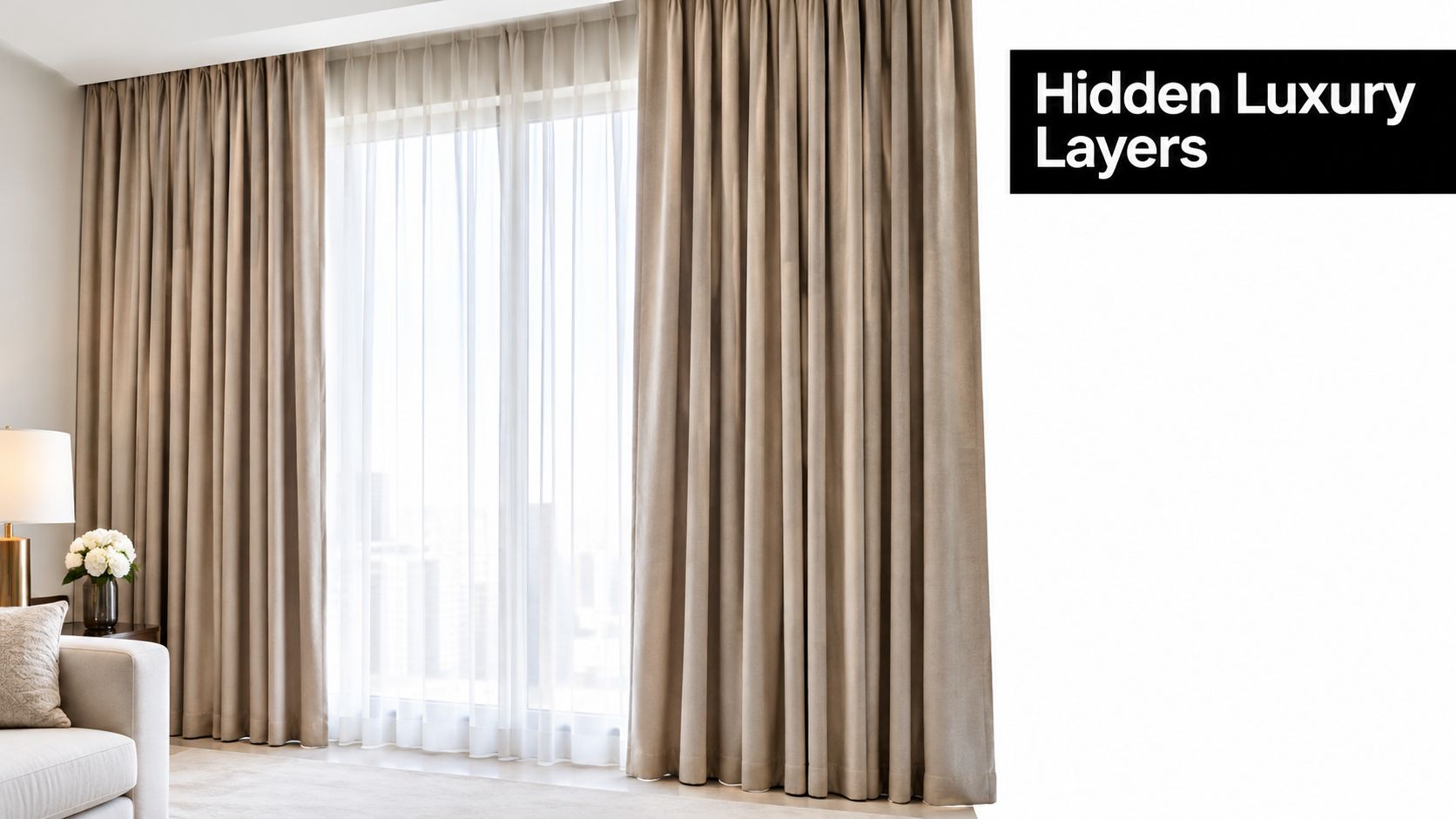
The biggest visible change is drape. Curtains with interlining usually hang with more presence, fold more gracefully, and look less flimsy in tall rooms or wide window spans.
The less visible change is performance. The earlier thermal guidance notes that bonded blackout and interlined constructions provide the highest insulation because they combine coated layers with a separate insulating layer. That's why premium curtains often feel thicker and calmer around the window area, even before you get into style.
Interlining makes sense when the face fabric is delicate, the room is formal, or the window is large enough that thin panels look underdressed. It's also useful when you want the curtain to hold its shape over time rather than collapse into limp folds.
Good candidates include:
For DIY sewists, one helpful crossover skill is understanding stabilizing layers in soft furnishings. If you're comparing curtain support materials with garment or craft methods, this guide on how to use fusible interfacing gives a clear reference point for how hidden internal layers affect structure, even though interfacing and interlining aren't the same thing.
Interlining isn't for every budget curtain. But when a room needs polish, softness, and a heavier fall, it's often the missing layer.
Room function should drive the decision. That's the part trend articles usually skip. Buyers get lots of advice about linen, layering, and color, but not enough practical help matching lining to heat, glare, moisture, and daily abuse.
Recent trend coverage leans heavily toward natural face fabrics and eco-conscious choices such as linen, cotton, bamboo, and recycled polyester, while often stopping at broad advice to choose linings carefully instead of giving real comparison help by room type or performance need (2025 curtain trend coverage and buying gap).
The short answer is to match the lining to the room's problem.
A thick liner in a mild climate can be overkill. A decorative lightweight liner on a harsh west-facing window can be wishful thinking.
If you're dealing with humid rooms or fabrics that need to dry and perform cleanly, this explainer on moisture-wicking materials is worth a look because moisture behavior affects how curtain assemblies age in active homes.
Cheap curtains can become expensive if you keep replacing them. That's the part shoppers don't see on the product page. The lower upfront price often hides the cost of poor lining choices, especially in sun-heavy rooms and rental properties.
A properly chosen lining protects the face fabric, helps the curtain keep its shape, and reduces the chances that you'll give up on the whole set after one season of annoyance.
Good value isn't just about years of use. It's about fewer frustrations during those years.
Look for value in these areas:
Cotton-style linings can look beautiful, but they may ask for more careful handling. Polyester and similar synthetics usually fit households that need simpler upkeep and fewer surprises.
That practical gap matters even more now because sustainability-minded shoppers are being pushed toward natural and recycled fabrics without always getting honest guidance on long-term wear. Current decor coverage shows strong interest in natural and recycled materials, but it often doesn't answer the harder question of whether recycled-polyester lining, organic-cotton lining, or a mixed system is the better long-term choice for high-use homes or rentals (summer 2025 curtain fabric trends).
Buying the "greener" option only helps if the curtain still works for your household. A lining that needs early replacement isn't doing you many favors.
If you're specifying curtains for offices, venues, schools, or similar settings, lining can affect fire compliance. In the United States, lined curtains and other multilayer materials are evaluated under NFPA 701 Test Method 2, not the basic method used for lighter fabrics, which means the liner changes the compliance conversation (commercial curtain fire standard guide).
The short answer is that the best lining material for curtains depends on the problem you're solving. Polyester usually fits busy homes and easy-care needs. Cotton suits softer drape and a more traditional finish. Blackout and thermal builds are better thought of as performance constructions rather than simple fabric personalities.
No. Some lined curtains only soften daylight or improve privacy. A common lining can block roughly 40% to 50% of incoming light, while some lined systems can exceed 90% darkness, depending on the full setup and construction, as noted earlier in the article.
Not exactly. Some products combine both features, but the priorities differ. Blackout is mainly for darkening the room. Thermal is mainly for reducing heat transfer and improving comfort near the window.
Start with the care instructions for the full curtain assembly, not just the face fabric. Mixed constructions can behave differently than expected, especially after washing or steaming. If you're weighing steam cleaning against take-down cleaning, the Top Cleaners fabric guide is a practical reference because it explains why cleaning method should match fabric type.
Yes, in many commercial and public settings they do, and the lining counts. In the UK, guidance identifies BS 5867 Part 2 B as the standard for flame-retardant curtain fabrics and states that if a curtain has a lining, the lining should also be certified to the same standard because the finished curtain is only as compliant as its weakest component (BS 5867 lining datapack guidance).
Yes. Independent guidance for non-domestic curtains says BS 5867 Part 2 explicitly covers curtain-and-lining combinations and that the lining area must be included when calculating the amount of fire-retardant treatment needed for the finished assembly (fire safety regulations for curtains and drapes).
At Joey'z Shopping, you'll find window treatment options and practical buying guides that help you sort through blackout, thermal, and decorative curtain choices without guessing. If you're trying to match lining performance to a real room problem, it's a useful place to compare styles and learn what will hold up in everyday life.