
Join the Joey'z Family!

Let's be honest—finding window coverings that look luxurious without completely draining your bank account can feel like searching for a needle in a haystack. But here’s the good news: getting that custom, high-end look on a real-world budget isn't about spending more. It's about making smarter choices with low cost window coverings.
This guide is your roadmap to achieving that polished, expensive look for less. We'll dive into the best budget-friendly materials, share clever installation tricks, and give you actionable advice for a designer-approved style.
Elevating your home’s style starts with a shift in perspective. You have to let go of the idea that affordable automatically means cheap-looking. With the right approach, you can select, measure, and install window treatments that will have your guests asking for your decorator’s number.
The secret is focusing on the little details that create an illusion of luxury, even when you're working with budget-friendly materials.
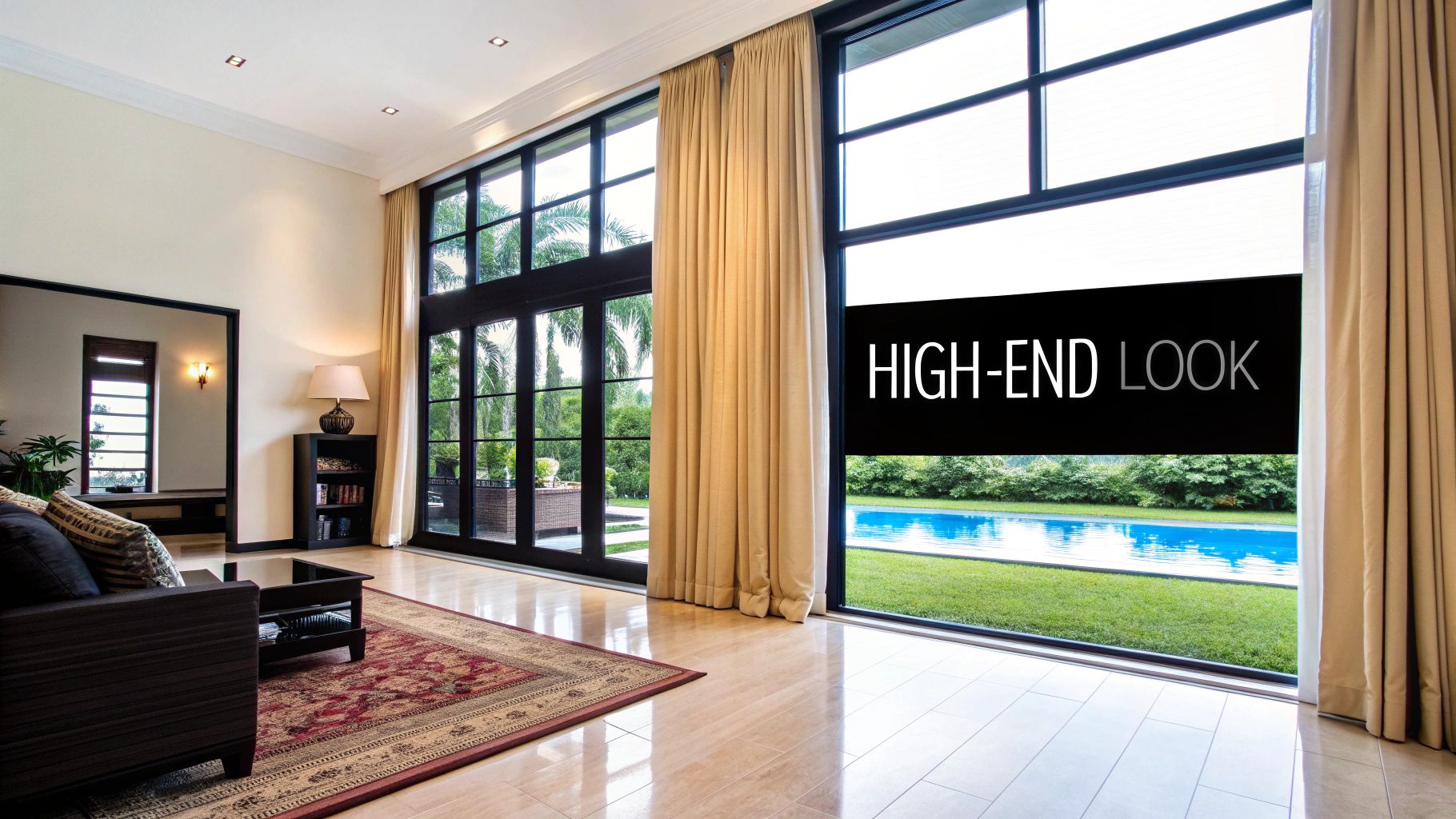
The trick lies in a few key principles that professional designers use all the time to maximize impact without maximizing cost. By paying close attention to these elements, you can transform standard, off-the-shelf products into something that looks totally custom-made.
The right window treatments don't just add style; they can make a measurable difference in your home's comfort. The U.S. Department of Energy reports that up to 30% of a home’s heating energy is lost through its windows, a loss that well-chosen coverings can significantly reduce.
For even more inspiration, check out our guide on how to make your curtains look more expensive, which dives deeper into specific styling techniques.
Diving into the world of low cost window coverings can feel overwhelming. But it really boils down to three fantastic contenders: curtains, blinds, and shades. Each brings a unique mix of style, function, and affordability to the table.
The trick is to match the right option to what a room actually needs. Is it privacy for a bedroom? Or taming that afternoon glare in the living room? Curtains offer versatile style, blinds provide practical control, and shades deliver modern looks and energy efficiency.
To help you see the differences at a glance, this comparison breaks down the most common affordable options, giving you a realistic idea of what to expect in terms of cost and what each type does best.
| Covering Type | Typical Cost | Best For | Pros | Cons |
|---|---|---|---|---|
| Curtains | $20 - $150+ per pair | Adding softness, color, and style to living rooms and bedrooms. | Huge variety of fabrics, colors, and patterns. Easy to install and swap out. Great for insulation. | Can collect dust and require cleaning. Less precise light control than blinds. |
| Blinds | $15 - $100+ per window | Kitchens, bathrooms, and anywhere you need precise light and privacy control. | Durable and easy to clean. Excellent for managing light and privacy. Very cost-effective. | Can look a bit stark. Cords can be a safety hazard for kids and pets. |
| Shades | $25 - $200+ per window | Modern aesthetics, bedrooms, and rooms where energy efficiency is a priority. | Sleek and minimal look. Great insulation (cellular shades). Cordless options are safer. | Fabric can be harder to clean. Custom sizes can get pricey. |
Curtains are a classic go-to for affordable style because the variety is incredible. For the best value, look for heavyweight polyester or cotton-blend panels. These materials offer a beautiful, heavy drape that often mimics much more expensive fabrics like linen or velvet.
To really stretch your budget, focus on fullness and length. A common mistake is buying panels that are too narrow for the window.
When it comes to affordable and practical window treatments, blinds are an absolute powerhouse. Faux-wood and vinyl mini-blinds are especially popular because they are incredibly tough, easy to clean, and stand up to humidity, making them perfect for kitchens and bathrooms.
Their popularity isn't just anecdotal. Blinds captured a massive 34.68% of the global window coverings market share, leading the pack in an industry valued at over USD 28 billion.
The real magic of blinds is their unbeatable light control. With just a quick tilt of the slats, you can dial in the exact amount of light and privacy you want. It's a level of precision that's tough to find in other coverings at this price point.
Shades bring a clean, modern vibe to a room and come in several budget-friendly styles. Roller shades are a minimalist favorite, while Roman shades offer soft, elegant folds that add a touch of class.
But the real MVP for long-term savings? Cellular shades, also known as honeycomb shades. Their unique honeycomb-shaped pockets trap air, creating an insulating barrier that helps keep your home warmer in the winter and cooler in the summer. This can lead to real savings on your energy bills, making them a seriously smart investment.
Before you decide, it's helpful to understand the bigger picture of how to shop on a budget without sacrificing style. And if you're feeling like none of these are quite right, we've got more ideas in our guide on finding the perfect alternative to curtains for any room.
The single biggest secret to making any window treatment look expensive? A flawless, custom fit. Getting your measurements right is what makes your low cost window coverings look professionally installed. It’s less about complicated math and more about being precise.
Think of it like getting a suit tailored; the right fit makes all the difference. You have two main options for mounting: inside or outside. Each requires a slightly different measurement technique to get that crisp, clean look.
An inside mount is when your blinds or shades fit neatly inside the window frame. This creates a sleek, built-in appearance that's perfect for a minimalist, uncluttered vibe.
An outside mount is when the treatment is installed on the wall or trim above and around the window. This is a great trick to make a window appear larger, or if your window frame is too shallow for an inside mount.
This simple flowchart breaks down your high-level options.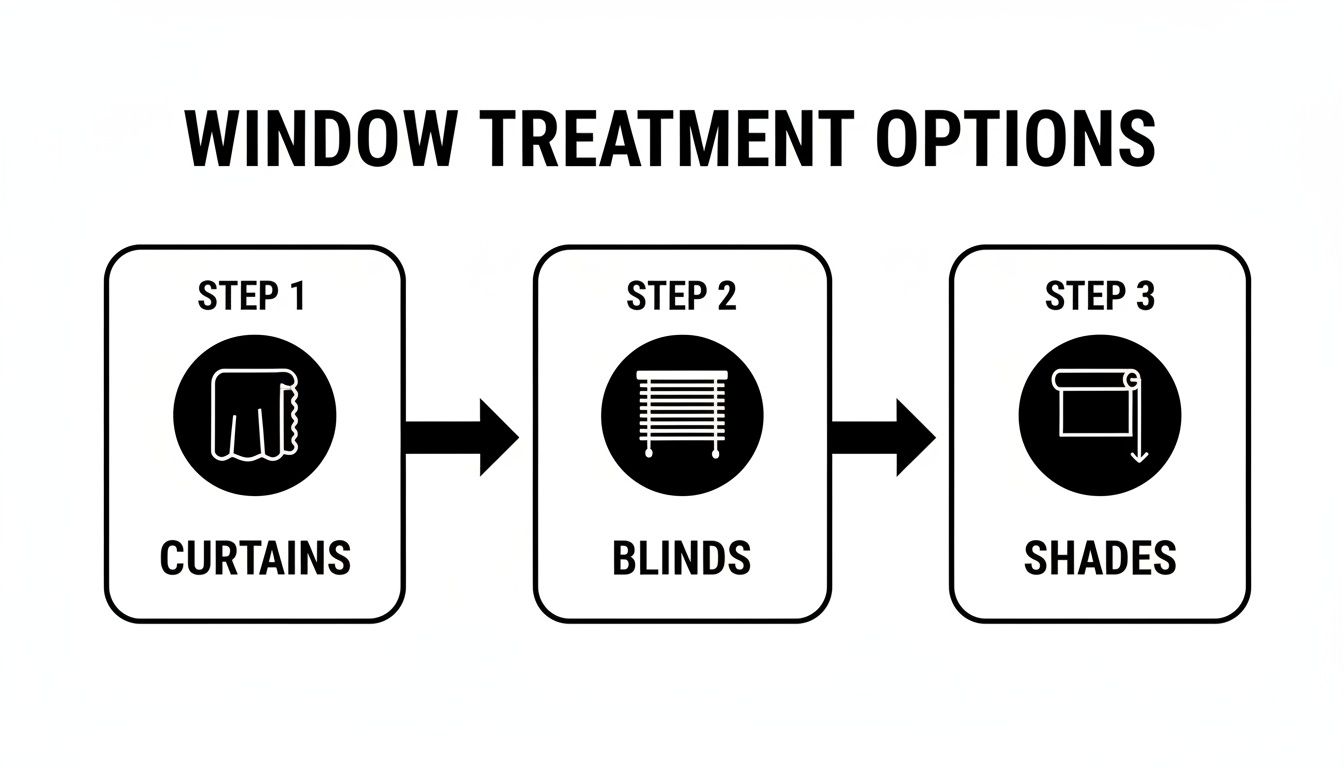
It helps you visualize the three main paths—curtains, blinds, or shades—so you can decide which direction to go before you even pick up a tape measure.
Before you do anything else, grab the only tool that truly matters here: a steel tape measure. Fabric or vinyl ones can stretch over time, which can throw off your numbers.
For an Inside Mount:
For an Outside Mount:
Always measure twice and write it down immediately. A common slip-up is rounding numbers or accidentally swapping them. Double-checking your work now will save you a ton of headaches (and returns) later.
Alright, you’ve got your perfect measurements in hand. Now for the fun part: installation. It might sound intimidating, but a few core techniques are all you need for a secure, professional-looking result.
This is where you can get really creative and add personal touches that make affordable window coverings look custom-made. We'll walk through the fundamentals and then explore some renter-friendly DIY ideas to elevate your style.
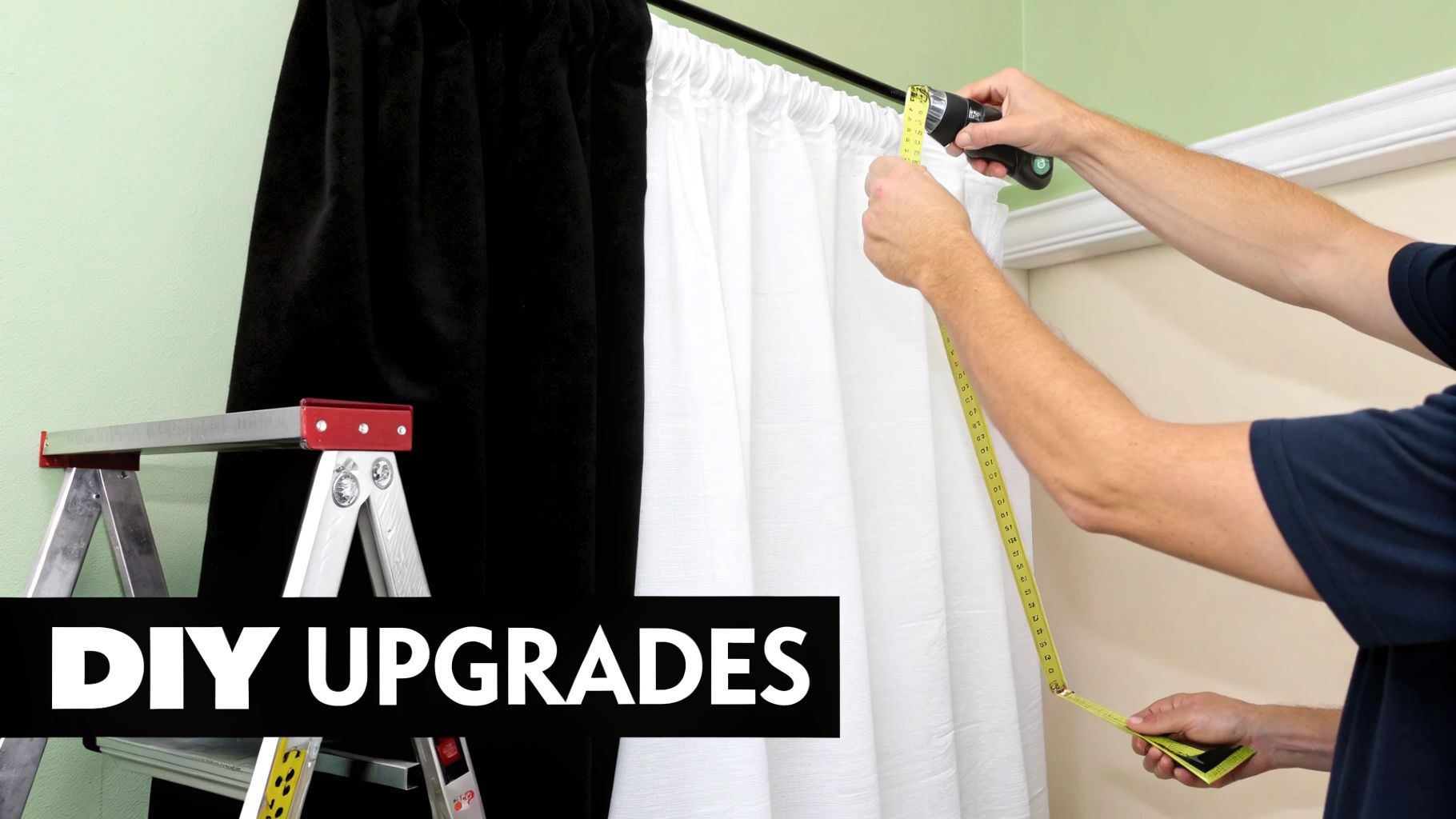
If there's one trick to hanging curtains that delivers a huge visual punch without costing a dime extra, this is it. It’s called the "high and wide" method, and it’s a designer’s best-kept secret for making any room feel bigger, brighter, and more elegant.
You don’t need to be a DIY expert to add a touch of custom flair. These simple upgrades can take standard, low cost window coverings and make them look uniquely yours.
The demand for these stylish solutions is growing fast. The global market for window coverings hit USD 32.7 billion in 2022 and is projected to reach USD 60.1 billion by 2030. You can discover more insights about the window coverings market to learn more.
Renter-Friendly Tip: If drilling holes isn't an option, tension rods are your best friend. They fit securely inside the window frame with no hardware needed. Another great no-drill choice is peel-and-stick window film, which offers privacy and style with zero damage.
When focused on style and savings, it's easy to overlook something far more important: safety. This is especially true for children and pets.
So, let's be direct. When choosing low cost window coverings, the single most critical decision you can make is to go cordless. Dangling cords from older blinds and shades are a serious and often silent strangulation risk. The entire window covering industry has made a decisive shift toward safer, cordless designs that remove the hazard completely.
The short answer to "which blinds are safest?" is always the same: choose cordless. It’s that simple. Cordless blinds and shades are operated with a gentle push or pull on the bottom rail, offering total peace of mind.
This focus on safety has become a huge driver in the market. The U.S. window coverings market soared to USD 3.8 billion, with much of this growth fueled by demand for cordless, pet-safe blinds.
When shopping, look for products clearly labeled as "cordless" or "child-safe." Many reputable brands also carry a "Best for Kids" certification, a voluntary safety standard that helps you spot the safest products. For a deeper dive, check out our guide on what are cordless blinds and how they work.
Choosing a cordless lift system isn’t just an upgrade; it’s a fundamental safety feature. It's the simplest and most effective way to create a worry-free environment for everyone in your household.
Safe window treatments are a huge step, but they're just one piece of the puzzle. It's worth exploring broader strategies for child-proofing your home to build a completely secure space.
What if you have existing corded blinds? You can take immediate steps to reduce the risk:
While these are good temporary fixes, the best long-term solution is always to replace old corded window treatments with modern, certified cordless options.
To help you make the best choice, we’ve pulled together answers to the most common questions about affordable window treatments.
The short answer is basic roller shades, simple vinyl mini-blinds, or sheer curtain panels. These are the no-frills workhorses of the window treatment world, providing essential privacy and light filtering without a big price tag.
For a temporary or even lower-cost route, you could try peel-and-stick window film or disposable paper shades.
The secret weapon is layering. Pair inexpensive blinds—like faux-wood or clean white vinyl ones—with a great set of fabric curtain panels. This combination adds softness, texture, and a sense of luxury that instantly makes the whole window look more high-end.
To nail this look, hang a decorative curtain rod high and wide, just as we discussed earlier. This trick makes the room feel taller and more open. Finally, ensure the blinds themselves are sized for an inside mount to get that clean, custom-fit feel.
Yes, absolutely. Cellular shades are a fantastic choice for low cost window coverings, especially when you consider their long-term value. While the upfront cost might be slightly more than basic mini-blinds, they can pay for themselves over time.
Their unique honeycomb structure traps air, creating a powerful layer of insulation. According to the U.S. Department of Energy, the right window coverings can stop up to 30% of a home’s heating energy from escaping. Cellular shades are champions at this, which can lead to noticeable savings on your energy bills.
When buying budget-friendly curtains, focus on two things: fabric and fullness. These two elements make the biggest impact and separate curtains that look cheap from those that look intentionally chosen.
Always aim for a combined curtain panel width that is at least twice the width of your window. This ensures you get that rich, gathered look when they’re closed, avoiding that stretched-out, skimpy appearance that just screams "budget."
Look for heavier materials like thick cotton blends, microsuede, or a good linen-look polyester. These fabrics hang better than flimsy ones and have a more substantial, high-end feel. Also, check for details like weighted hems, which help the panels drape beautifully.
Ready to find the perfect window treatments that fit your style and your budget? At Joey'z Shopping, we offer a wide variety of beautiful, safe, and affordable options to transform any room.
Explore our collection of curtains and blinds at Joey'z Shopping today!