
Join the Joey'z Family!

You've found the fabric, chosen a warm neutral, and saved a dozen inspiration photos. Then the ordering page asks whether you want pinch pleat, goblet, triple tailor, lining, interlining, finished width, or fabric fullness. Suddenly, choosing pleated linen drapes feels less like decorating and more like taking a short course in window engineering.
The good news is that the decision becomes straightforward once you separate appearance from construction. You need to choose a pleat style, match it to linen's natural body, decide how much support the fabric needs, measure the rod correctly, and install the panels so the folds can do their job. The guide below gives you those decisions in practical order, including when pleated linen is smarter than ripple fold and when it isn't.
A shopper can walk into a fabric store wanting “simple linen curtains” and leave with several conflicting recommendations. One salesperson points toward soft, unlined panels. Another recommends a pinch pleat with interlining. Online listings add terms such as 200% fullness, finished width, stackback, blackout lining, and return depth without always explaining what those terms mean for the actual window.
That confusion is understandable. A flat curtain panel and a finished pleated panel aren't measured or hung in quite the same way, even when they use similar fabric. Linen also refuses to behave like a slippery synthetic. Its texture, body, and tendency to show natural creasing affect the final result far more than a product photograph suggests.
Start with the room, not the trend. A relaxed bedroom may welcome a softer pencil pleat, while a living room with layered sheers usually benefits from a more controlled pinch pleat. A formal dining room can carry the decorative shape of a goblet header, but that same detail may feel fussy beside modern furniture.
Your fabric choice comes next. Lightweight linen can look beautiful in a sample and then lose its fold definition on the rod. Midweight linen usually gives a better balance of texture and structure, while heavier linen needs more careful planning at the pleats and stackback.
Finally, measure the finished product you need, not just the glass area. Rod width, panel width, fullness, drop, lining, and the wall space required when the curtains are open all influence whether the window feels generous or crowded. Once those pieces are clear, the vocabulary stops being intimidating and starts becoming useful.
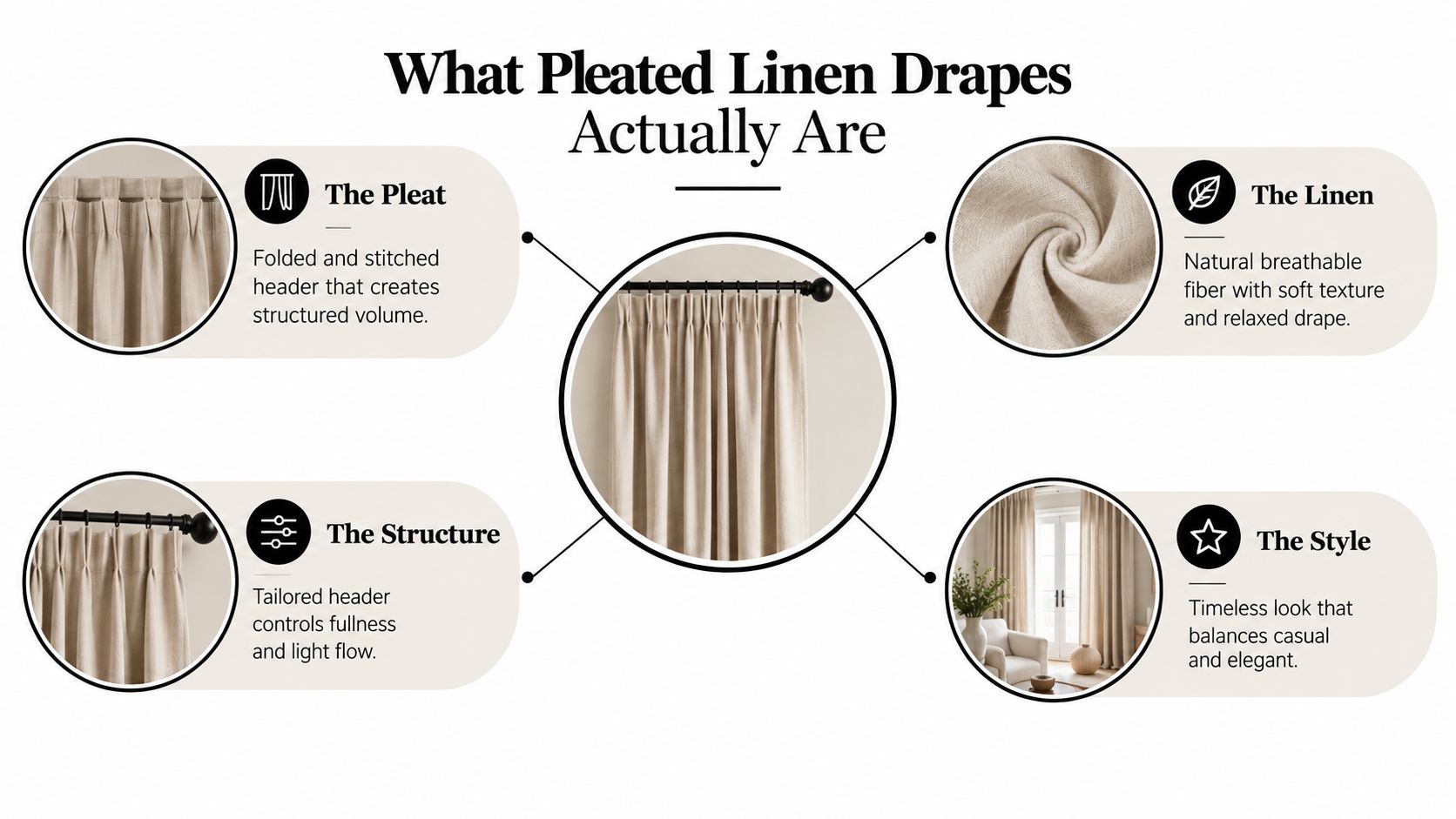
Pleated linen drapes are curtains made from linen fabric with a folded, sewn, or otherwise formed header that gathers the material into deliberate vertical folds. Those folds create fullness across the window while giving the top edge a structured shape. The pleat isn't decoration added after the fact. It controls how the fabric hangs, opens, closes, and stacks.
Linen comes from the flax plant and has a naturally crisp hand. Under ASTM D1388 testing, linen has a measurable drape factor between 28 and 42 mm, which means it hangs stiffer than Tencel and doesn't flow like silk or rayon. That behavior explains the appeal of linen pleats: the fabric can look structured without appearing glossy or overly formal. Textile Pulse's explanation of linen's drape characteristics provides the relevant fabric-behavior context.
The simplest definition: pleated linen drapes are structured top folds made on a natural flax fabric that breathes, drapes, and ages beautifully.
A flat panel has no built-in fullness at the top. You create its shape by gathering it on a rod, using rings, or allowing the fabric to hang loosely. A rod-pocket curtain slides through a sewn channel and tends to create a softer, less controlled arrangement. Grommet curtains use visible rings built into the fabric, giving them a casual, contemporary feel.
Pleated headers use hooks, rings, or a track system to create a more intentional line. The folds remain visible when the curtain is closed, and the fabric can look finished even before you add furniture or accessories.
The pairing also has historical logic. Window treatments developed from earlier European curtain traditions into increasingly elaborate decorative forms, and pleats became a practical way to add fullness and structure. Historical references describe early curtains and drapes in 15th-century England as commonly made from wool or linen, while nineteenth-century interiors used more elaborate valances and pleated draperies. The Encyclopedia of Window Fashion documents that longer evolution.
The pleat style changes the mood of the room more than most shoppers expect. It also changes how much fabric sits across the window and how formal the finished treatment feels. The table below is a useful starting point, but fabric body and lining still determine whether the result looks crisp or collapsed.
| Pleat Style | Typical Fullness | Best Look | Best Room | Care Notes |
|---|---|---|---|---|
| Pencil pleat | Varies by tape and make | Relaxed, gathered, cottage-like | Bedroom, guest room, casual sitting room | Keep the tape evenly gathered and steam the folds gently |
| Pinch pleat | About 2x fullness | Tailored and dependable | Living room, dining room, transitional home | Hook placement matters for an even top line |
| Goblet pleat | About 2x fullness | Decorative and formal | Formal dining room, traditional sitting room | Avoid crushing the cup-shaped folds |
| Box pleat | Often specified by the maker | Clean, geometric, controlled | Contemporary or transitional room | Pressing and spacing must stay consistent |
Pencil pleats gather onto pleater tape, creating a continuous series of narrow folds. They suit a softer, less architectural room, especially when the linen is allowed to retain some relaxed texture. I'd use them for a bedroom before a formal living room.
Pinch pleats are the workhorse. Several folds are gathered and secured near the top, creating a stable header that works with both classic and updated interiors. For most living rooms, this is the safest recommendation because it looks polished without demanding a heavily traditional room.
Goblet pleats form rounded, cup-like folds above the main body of the curtain. They need enough fabric body to keep the shape from looking limp, and they're best where the furniture and architecture can support a more decorative treatment.
Box pleats create flat, rectangular folds with a clean rhythm. They're a strong choice for contemporary or transitional spaces where you want geometry without the ornate feel of goblet pleats.
For most shoppers, the decision is simple:
A linen swatch can look perfect in your hand, then lose its shape on the window. Fabric weight and backing determine whether pleats stay defined, relax into soft folds, or become unnecessarily bulky.
Lightweight linen tends to collapse when a header must hold a firm fold. Midweight linen usually supports pleats more cleanly without creating excessive stack width. Heavy linen has plenty of body, yet its folds can look bulky unless the maker adjusts spacing and returns. This fabric-weight and lining guide explains why lining or interlining is usually the right specification when crisp pleat definition matters.
Unlined linen shows the most natural texture and lets daylight filter through. Choose it for decorative panels, dim rooms, or an airy, informal finish. Skip it for a crisp formal pinch pleat unless the fabric already has enough body.
Privacy lining adds weight and softens incoming light. It helps midweight linen keep its shape while giving the room a more finished appearance. For an everyday living room, this is my default recommendation.
Blackout lining belongs in bedrooms, nurseries, and media rooms where light control takes priority. The backing also changes the curtain's character, giving the linen a firmer presence. Interlining adds still more body and insulation, creating the fuller finish associated with custom drapery. Use it when you want sculpted folds, not merely extra darkness.
A practical order specification reads: midweight linen or linen blend, pinch pleat header, privacy lining, finished to the measured drop. Replace privacy lining with blackout when the room needs darkness. For lightweight fabric and sharply shaped folds, specify interlining instead of expecting steaming to correct weak structure.
For a softer, textured treatment, review Joey'z guide to linen-blend drapes. Linen blends can be a sensible choice when you want linen's surface character with a more stable finished panel.
Shrinkage must be settled before the order. Untreated linen typically shrinks about 3% to 6% during initial laundering, according to this linen material reference. Do not wash an unfinished floor-length panel casually and assume the hem will remain at the original position. Pre-shrink the fabric when appropriate, or order with finished dimensions clearly specified. A maker who cannot explain whether the quoted drop is before or after finishing is not ready to receive a custom order.
A well-made pleated linen drape can still look wrong if the rod width, finished panel width, or drop is misread. Measure from the hardware outward, then order to the finished dimensions. The rod controls coverage, fullness, and where the open panels will sit.
Set the rod high enough to strengthen the room's vertical line, but install it level and anchor every bracket securely. A wide window may need a center support. Position it so the panels can still travel or stack where you planned.
For hardware sizing, use Joey'z explanation of drapery rod sizing. It helps match the rod span and support plan to the window treatment.
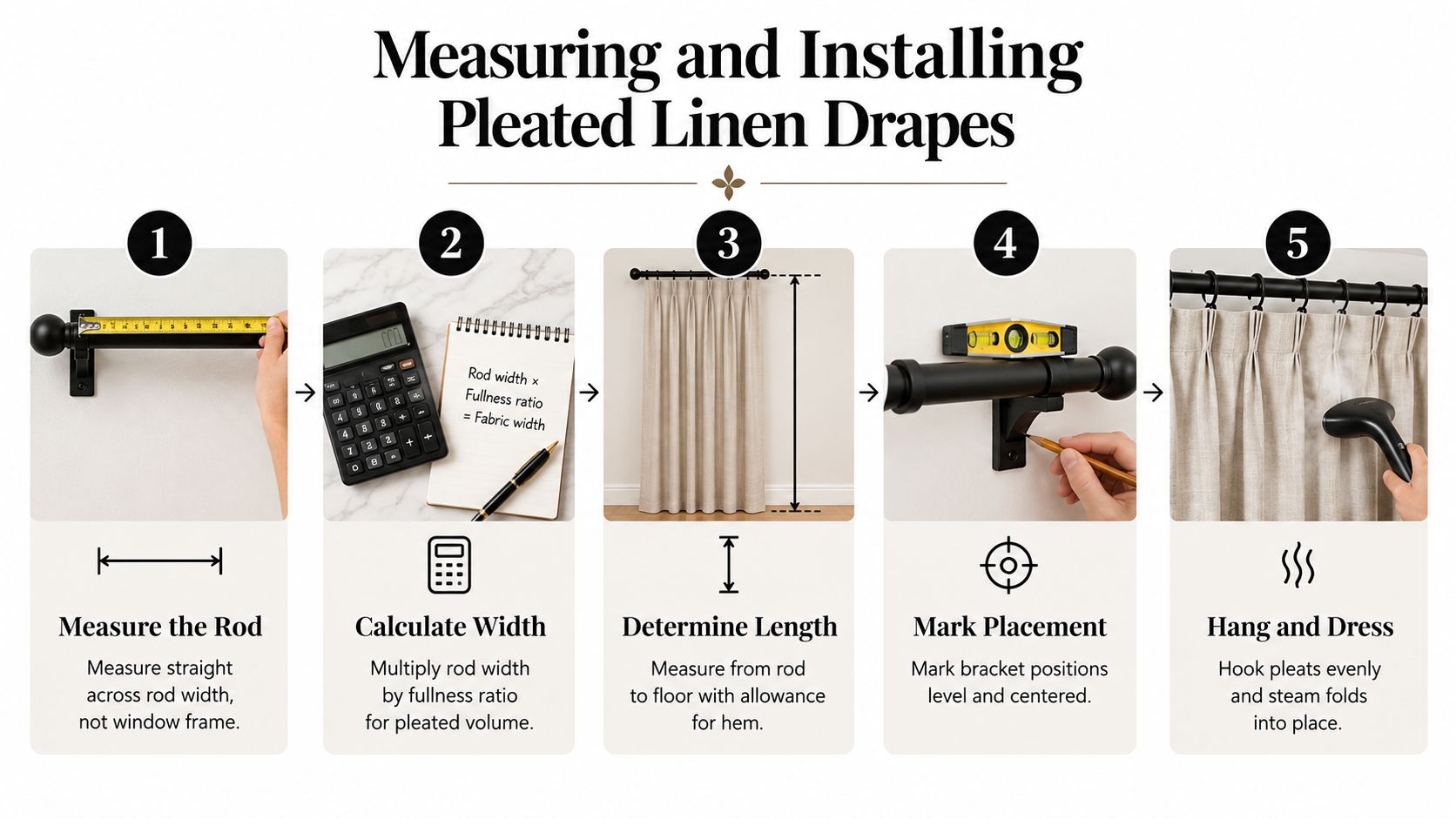
Before hanging, attach the hooks at even intervals and check that every pleat reaches the same height. Hang the panels closed, then steam from top to bottom to encourage the folds. Let the linen settle before changing the hem or hook positions.
For a visual demonstration of the installation process, use this companion video:
Ripple fold is cleaner. That's precisely why it's popular. The continuous wave works beautifully in minimalist and architectural rooms, especially when the curtain travels on a track and the hardware needs to disappear.
But cleaner isn't always better. Trend coverage for 2026 identifies ripple fold, Euro pleats, and full-height textured neutrals as dominant modern directions, while pinch pleats read as more traditional or classic. The 2026 textile drapery trend discussion supports that distinction.
Pleated linen drapes win when the room needs a deliberate top line and a more formal finish. Pinch pleats give a wide window a sense of order, particularly when the treatment includes lined panels or a sheer layer underneath. Ripple fold can look excellent in that arrangement too, but it creates a more continuous, relaxed wave rather than a visibly structured header.
I also prefer pleats when the fabric is substantial. Thicker linen and linen-blend fabrics can look grounded and expensive in a pinch pleat, while a ripple fold may expose every weakness in the fabric's ability to move smoothly along the track.
Choose pleated linen when:
Skip pleated linen for an aggressively minimalist room where uninterrupted horizontal movement is the point. There, ripple fold is likely the cleaner answer. The right question isn't whether pleated linen is the newest header. It's whether the room needs formal control, fabric support, and a structured frame around the window.
Linen rewards a light touch. Regular care prevents dust from settling into the folds, while aggressive washing or rough drying can distort the header and change the finished drop. Start by checking the seller's care label, especially when the panel has lining, blackout backing, or interlining.
Use a vacuum with a soft brush attachment on a low setting. Work from the top downward and support the fabric with your free hand so you don't pull against the pleats. A gentle pass as part of ordinary room cleaning is more useful than waiting until the panels look visibly dusty.
For a small mark, blot rather than scrub. Use a clean, barely damp cloth and test an inconspicuous area first. Scrubbing can spread the stain and flatten the folds. If the panel is lined, don't soak it unless the care instructions specifically allow it.
Dry cleaning is the safer route for structured, lined, or interlined drapes. Unlined panels may tolerate gentle washing when the label permits it, but shrinkage remains a real concern, particularly with untreated linen. Never assume a linen-look fabric and a linen panel share the same care requirements.
Direct sun can fade natural textiles over time. Lining reduces exposure and helps the curtain maintain a more even appearance, while rotating interchangeable panels can distribute wear when the design allows it. For households that care about breathable, practical textiles beyond curtains, Joey'z guide to moisture-wicking materials offers useful fabric context.
Steam wrinkles vertically after installation, keeping the steamer moving rather than pressing it into the linen. A few natural creases are part of the fabric's character. The goal is an orderly hang, not a frozen sheet of fabric.
先把訂購條件寫清楚,再比較布料與報價:
Do pleated linen drapes need lining? 不一定,但想要摺痕更挺、隱私更好或控光更穩定,就選 lining 或 interlining。對輕薄亞麻來說,這通常比追求更高布料重量更有效。
Can they be washed? 只有洗標允許時才能水洗。Lined 與 interlined panels 通常比 unlined panels 更難照料,別只看布料名稱下決定。
Will linen shrink? 如前文所述,未經預縮的亞麻首次清洗會有 3% 至 6% 的收縮風險。訂製落地窗簾時,應要求預縮,或保守設定完成尺寸。
Are they suitable for renters? 可以,前提是租約允許安裝五金。量準 rod、使用 even hooks,再配合可拆式固定方式,就能避免訂製施工。
預算有限時,先花在 header、finished width 與 lining,別先追稀有色。尺寸正確、褶型可信的 ready-made panel,通常比昂貴布料配錯 rod 更好看。
造訪 Joey'z Shopping,比較 pleated curtain panels、blackout window treatments 與實用的窗飾指南。購買前照上方清單量尺,能降低首日掛上後才發現尺寸不對的機會。