
Join the Joey'z Family!

So, what are thermal curtains, really? Think of them as a high-performance jacket for your windows. These aren’t just your average drapes; they’re specialized window treatments carefully engineered with multiple layers of fabric to create a powerful insulating barrier. This helps you keep your room’s temperature just right, all year round.
Table of Contents
The short answer is: thermal curtains are window treatments designed to prevent heat transfer. Think of them like a thermos for your home. Just as a thermos keeps your coffee hot or your water cold, these curtains prevent heat from escaping in winter and stop the sun’s intense heat from entering in summer.
The real magic is in their construction. Unlike standard single-layer curtains, thermal curtains use tightly woven fabrics, often featuring several layers or a special foam backing. This clever design traps a pocket of air between the window and your room, and that trapped air is the secret to their insulating power. You can learn more about different materials in our guide to curtain cloth types.
The main advantages go far beyond just keeping your room comfortable. Homeowners often choose them for a few key reasons:
Expert Insight: One of the most significant benefits is their efficiency. According to the U.S. Department of Energy, medium-colored draperies with a white plastic backing can reduce heat gains by 33%. In colder climates, high-quality thermal curtains can reduce a room's heat loss by up to 25%.
So, what’s the big difference between a thermal curtain and a regular one? It all boils down to a clever, multi-layered design. Don't think of it as just a single piece of fabric. Instead, picture a high-tech sandwich made for your window, where every layer has a crucial job.
The key to a thermal curtain's effectiveness is its ability to trap air. This trapped air creates a dead space between the window and your room, which acts as a powerful insulating buffer that slows down heat transfer.
While the exact construction can vary, most thermal curtains are built with a few key layers working together:
This simple concept map breaks down how a thermal curtain works its magic, regulating temperature to save you money on energy.
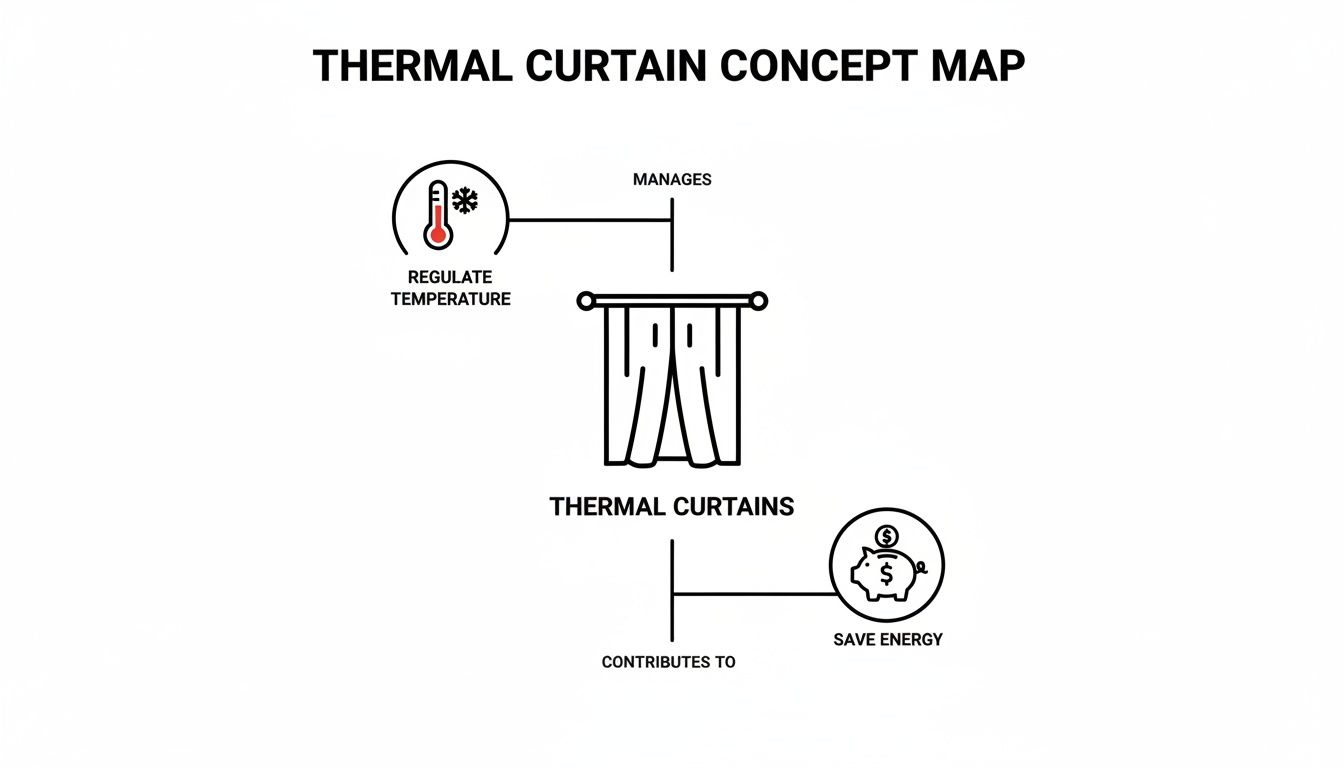
This smart engineering is why the market for these curtains is growing so fast. According to market research, the global demand for energy-efficient window treatments is on the rise, as reported by firms like Custom Market Insights.
Thermal curtains are more than just a pretty face for your windows; they bring tangible benefits that can completely change the feel of your living space. Think of them as a practical investment that solves common headaches, from high energy bills to annoying street noise.
Let's break down the four most compelling reasons to consider them.

This is the big one. Their insulating magic works year-round to keep your home comfortable and give your HVAC system a much-needed break.
By helping stabilize your home's temperature, these curtains lead to substantial savings. This is a simple but powerful way to reduce overall energy consumption in your home and get your monthly utility bills under control.
If you live in a busy city or near a bustling street, you know how disruptive outside noise can be. The dense, multi-layered construction of thermal curtains makes them surprisingly good at dampening sound.
They absorb sound waves, muffling everything from traffic and construction to your neighbor's late-night jam sessions. This helps create a more peaceful, serene atmosphere inside—perfect for home offices, nurseries, or just unwinding after a long day.
It turns out that most high-quality thermal curtains are also blackout curtains in disguise. Their thick, opaque fabric is designed to block nearly all incoming light, which offers a few key advantages:
You can learn more about how blackout curtains help with heat in our detailed guide.
That beautiful afternoon sun streaming through your windows isn't so great for your stuff. Constant exposure to the sun’s ultraviolet (UV) rays is what causes your beautiful hardwood floors, cherished furniture, and vibrant rugs to fade over time.
Thermal curtains act like a protective shield against this damage. By blocking most harmful UV radiation, they help preserve the color and integrity of your decor, extending the life of your furnishings.
When you’re standing in the home decor aisle, it’s easy to get them mixed up. So, what are thermal curtains offering that your regular ones don’t? The short answer is performance. While both can look stylish, they are built for entirely different jobs.
Regular curtains are mostly about decoration. Their job is to add color and style while offering basic privacy and some light filtering. They’re usually made from a single layer of fabric like cotton or linen. Think of them as a fashionable t-shirt for your window—they look great but don't offer much protection.
Thermal curtains, on the other hand, are engineered for function. They are the high-performance winter coats of window treatments, designed with multiple layers specifically to insulate your home.
The real distinction is in their construction. Just as you’d want to understand the difference between different insulating materials and their properties for a good quilt, the same logic applies here. Thermal curtains use dense, multi-layered fabrics, often with a foam core or triple-weave technology, to trap air and create an insulating barrier.
To make the choice even clearer, here’s a quick side-by-side breakdown.
| Feature | Thermal Curtains | Regular Curtains |
|---|---|---|
| Primary Goal | Performance & Insulation | Decoration & Style |
| Construction | Multi-layered, dense fabric | Single layer of fabric |
| Energy Savings | High (reduces heat transfer) | Low to None |
| Noise Reduction | Significant muffling effect | Minimal sound absorption |
| Light Control | Excellent (often 99% blackout) | Varies (from sheer to light-filtering) |
Ultimately, the best curtain for you depends on what you need it to do. If performance is your priority, thermal curtains offer a suite of benefits that standard curtains simply can't match.

Ready to upgrade your windows? Finding the perfect thermal curtains is about balancing insulating power with personal style. It’s simpler than you might think once you know what to look for.
The single most important step is getting the measurements right. If the fit is off, you’ll lose a huge chunk of the curtain’s insulating benefits. To create a sealed pocket of air, your curtain rod should extend 3 to 6 inches past the window frame on both sides. The curtains themselves should hang below the windowsill to stop drafts.
Heavier, denser materials like suede, velvet, or a tightly woven polyester are fantastic insulators. The type of material also ties directly into light control. If you’d like to learn more about how different textiles perform, you can explore the properties of blackout cloth fabric in our other guides.
The idea that thermal curtains are clunky is a total myth. They come in countless colors and patterns, so you can easily find a set that complements your home’s decor.
Insider Tip: The hanging style makes a difference. Grommet-top curtains have a clean, modern look and slide easily, but a rod-pocket style can create a tighter seal at the top of the window, which might give you a small boost in insulation.
Still wondering what thermal curtains can do for your home? Here are clear, quick answers to the questions we hear most often.
Yes, absolutely! The insulating magic of thermal curtains works both ways, making them a fantastic year-round solution. In the winter, they trap warm air inside. When summer rolls around, they act as a powerful barrier against the sun's heat, keeping your rooms noticeably cooler.
They're very similar, but not identical. The short answer: most thermal curtains are also blackout curtains, but not every blackout curtain is thermal. The dense, multi-layered construction needed for insulation naturally blocks light. However, some curtains are designed only to block light and may lack the core required for true temperature control.
The right cleaning method depends on the fabric and backing. Many modern thermal curtains are machine washable on a gentle cycle with cold water. However, those with a delicate foam backing might need spot cleaning or dry cleaning. Always check the manufacturer's care label first to protect the curtain’s appearance and preserve its insulating features.
Ready to feel the year-round comfort and see the energy savings for yourself? Explore the stylish and effective collection of thermal curtains at Joey'z Shopping and find the perfect fit for your home today. Visit our curtain collection to get started.