
Join the Joey'z Family!

When you're trying to decide between wood vs faux wood blinds, it comes down to where you'll hang them and what you value most: authentic charm or everyday resilience.
The short answer is this: Faux wood blinds are champions of durability and moisture resistance, making them a no-brainer for kitchens and bathrooms. On the other hand, nothing beats the authentic, natural beauty of real wood blinds. They're also much lighter, which makes them a beautiful and practical choice for living rooms and bedrooms.
Choosing the right blinds is a dance between style, function, and budget. This guide will help you make a confident choice for every room in your home.
Choosing window treatments is always a balance of style, function, and what you’re comfortable spending. Both wood and faux wood blinds give you that classic, timeless look with horizontal slats that offer fantastic control over light and privacy.
The real difference is in what they're made of, and that's what will guide you to the right choice for each room in your home.
Before we dive into the details, it helps to see how these two stack up side-by-side. Think of this as your cheat sheet for picking the perfect material for every window.
Many of our customers also care about ease of use. You can learn more about modern lift systems in our guide on what cordless blinds are and how they work.
Expert Insight: The most common mistake we see is homeowners installing beautiful real wood blinds in a high-humidity bathroom. They look great at first, but the constant steam will almost always cause them to warp within a year or two. For these spaces, faux wood is always the smarter long-term investment.
To give you a high-level overview, we've put together this simple table. It breaks down the key differences to help you make a quick assessment.
| Feature | Real Wood Blinds | Faux Wood Blinds |
|---|---|---|
| Material | 100% natural hardwood (like basswood) | PVC, vinyl, or a composite material core |
| Best For | Living rooms, bedrooms, offices, dry areas | Kitchens, bathrooms, laundry rooms, humid climates |
| Moisture Resistance | Low (can warp, crack, or discolor) | High (completely waterproof and humidity-proof) |
| Appearance | Authentic, unique wood grain and rich stains | Mimics wood; can have embossed textures |
| Weight | Lighter, easier to lift on large windows | Heavier, can be cumbersome on very wide windows |
| Cost | Higher initial investment | More budget-friendly |
| Durability | Prone to scratches and moisture damage | Highly resistant to scratches, dents, and fading |
When you're deciding between wood and faux wood blinds, what they look like is often the final word. While both give you that classic, slatted style, small differences in texture and finish can completely change a room's vibe.
The biggest draw for real wood blinds is their authenticity. Each slat comes from genuine hardwood, which means you get to see all the one-of-a-kind grain patterns, knots, and variations that nature created. No two sets of real wood blinds are ever exactly the same.
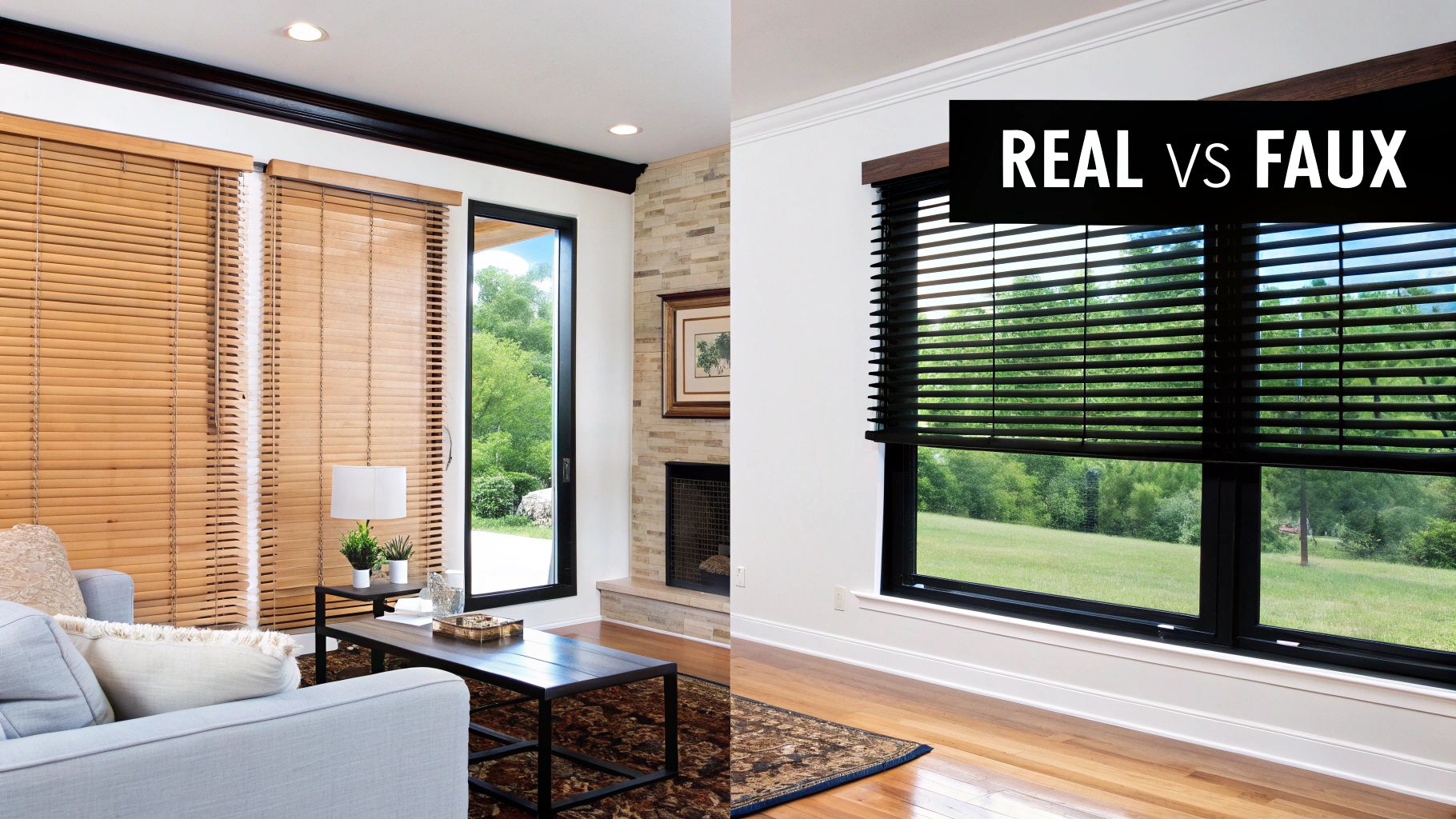
Real wood blinds are simply stunning in spaces meant for comfort and elegance, like living rooms, dining rooms, and home offices. When stained, the wood's natural beauty shines through, creating rich, deep tones from light oak to dark mahogany.
This natural appeal is a key reason for their enduring popularity. According to a market analysis by Grand View Research, the global window coverings market was valued at $23.3 billion in 2021, with sustained demand for premium, natural materials.
On the other side of the coin, faux wood blinds have come an incredible distance over the years. Early versions could look plasticky, but modern manufacturing has changed the game. Today’s high-quality faux wood blinds feature embossed textures and realistic finishes that expertly mimic authentic wood grain.
From a few feet away, many people would have a hard time telling the difference between a premium faux wood blind and the real thing. This makes them a brilliant choice for creating a cohesive look throughout your home.
Designer's Takeaway: Use real wood to make a statement in a main room, like a formal dining area. Then, carry that same color and style into the kitchen with high-quality faux wood for a look that's both seamless and practical.
When you put wood vs faux wood blinds head-to-head on color, both offer a huge palette. Their strengths, however, lie in different areas.
For larger windows, the visual impact is even greater. You can find more great blinds ideas for large windows in our dedicated guide.
When picking between wood vs faux wood blinds, this is where the conversation gets practical. How your blinds handle daily life—especially in kitchens and bathrooms—matters in the long run.
Real wood, with all its charm, is porous. That means it absorbs moisture from the air. In a steamy bathroom or kitchen, this can cause the slats to warp, crack, or even discolor over time.
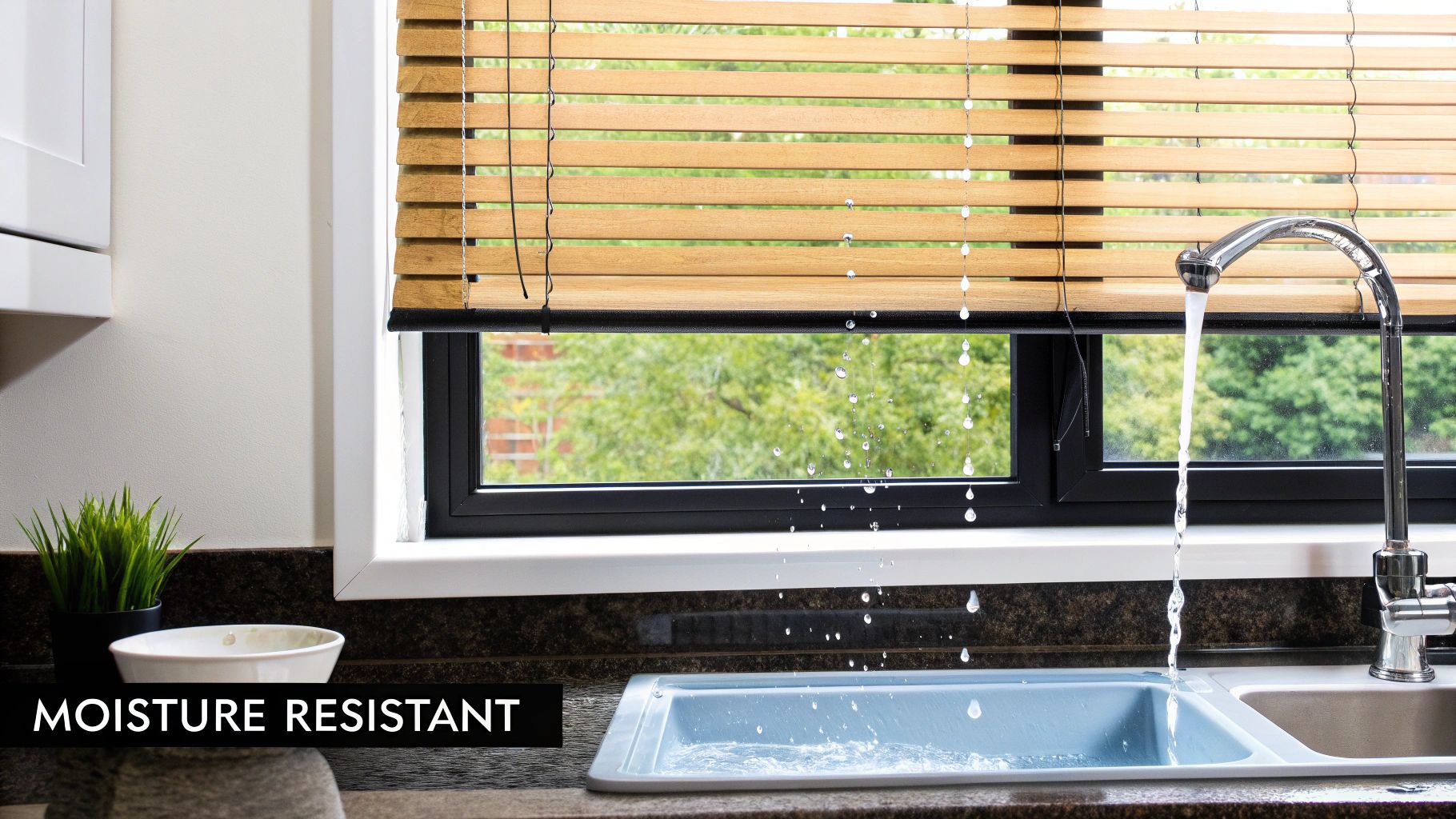
This is where faux wood blinds have a clear advantage. They are typically built with a PVC or composite core, which makes their slats completely waterproof. They are unaffected by humidity, steam, or splashes from the sink.
For blinds right over your kitchen sink or next to the shower, faux wood is the worry-free solution. Their resilience is a huge reason for their popularity.
Key Takeaway: For any room with a water source—bathrooms, kitchens, laundry rooms—faux wood isn't just a good choice; it's the only practical choice if you want to avoid warping and damage.
Beyond water, how do they hold up against bumps, scrapes, and a busy household? Here again, the tough construction of faux wood gives it an edge.
To better understand how natural materials perform under pressure, you can explore insights on the durability of hardwood in demanding environments like kitchens.
Ultimately, this isn't about which material is "stronger" in a vacuum. It's about picking the right tool for the job.
For a formal living room or quiet home office, the classic beauty of real wood is a wonderful choice. But for the hard-working spaces in your home, the peace of mind that comes with faux wood’s resilience is priceless.
When you’re weighing wood vs faux wood blinds, the conversation often comes down to budget. The real story is about long-term value and what each option brings to your home over time.
Faux wood blinds are the more budget-friendly choice upfront. Their lower price makes them a fantastic option for outfitting multiple rooms without a massive initial spend.
On the flip side, real wood blinds carry a higher price tag. This cost reflects the authentic hardwood and craftsmanship involved.
Here’s a general idea of what you might pay for a standard-sized window:
Remember, professional installation can add another $50 to $100 per window.
Budgeting Tip: If you love the look of real wood but your budget is tight, install them in one high-impact room, like your living room. Then, use perfectly color-matched faux wood blinds from Joey’z Shopping’s collection in other areas for a cohesive look.
The long-term value of faux wood blinds shines through in their resilience. Since they're moisture-proof and durable, you’re far less likely to face replacement costs down the road.
Think about a bathroom. Real wood blinds might start to warp after a few years of humidity. Faux wood, however, will keep looking and working perfectly, saving you money and hassle.
While real wood blinds cost more at first, they can be seen as an investment in your home's overall value. The timeless elegance of authentic hardwood is a feature prospective homebuyers notice.
It’s similar to choosing hardwood floors or granite countertops. These are premium upgrades that can boost your home's appeal and potentially its resale value.
Once your blinds are up, you have to live with them. Let's talk about the practical side of things—cleaning, environmental impact, and safety. These details are a huge part of the wood vs faux wood blinds decision.
The biggest cleaning difference boils down to one simple thing: water.
For a more detailed walkthrough, our guide on how to clean Venetian blinds has tips for both materials. And don't forget the importance of regular window washing for the overall look of your home.
For many, the environmental footprint of a purchase matters. The choice between wood and faux wood tells two different sustainability stories.
Real wood blinds can be an eco-friendly choice if sourced responsibly. Look for an FSC (Forest Stewardship Council) certification. This ensures the wood was harvested from sustainably managed forests.
Faux wood blinds are typically made from PVC (Polyvinyl Chloride), a type of plastic known for its toughness. While that durability means they last for years, PVC's production and disposal raise environmental questions.
In a family home, safety is non-negotiable. Dangling cords on traditional blinds are a known hazard for children and pets.
Thankfully, you can now find both real wood and faux wood blinds with cordless lift systems. You simply push or pull the bottom rail to raise and lower the blinds, completely eliminating the danger of entanglement. Always make cordless options your top priority.
Deciding between wood vs faux wood blinds is about matching the right material to the right room. A blind that's stunning in a dry living room might not last in a steamy bathroom.
For kitchens and bathrooms, the choice is clear. These rooms deal with steam, humidity, and splashes, making faux wood blinds the winner. Their waterproof material won't warp, crack, or fade from moisture exposure.
In living rooms, dining rooms, and bedrooms, moisture is rarely an issue. Here, your decision can focus on style and budget.
What about those big picture windows? This is where weight becomes a factor. Because real wood is lighter than faux wood, it’s often the better choice for very large windows. Lifting a heavy faux wood blind can be a workout.
Insider Tip: For a seamless look, consider a hybrid approach. Use stunning real wood blinds in your main living area, and then install perfectly color-matched faux wood blinds from Joey’z Shopping in the kitchen and bathrooms.
By matching the blind material to the room's function, you ensure your window treatments will not only look fantastic but also perform perfectly for years.
Even after weighing the pros and cons, you might have a few questions. Here are the most common things customers ask when deciding between wood and faux wood blinds.
Not anymore. While early versions could look plasticky, modern manufacturing has come a long way. Today’s premium faux wood blinds feature realistic wood grain textures and sophisticated finishes that expertly mimic the real thing. From a few feet away, most people can't tell the difference.
No, it's the other way around. Real wood blinds are significantly lighter than faux wood blinds of the same size. Natural wood is less dense than the PVC or composite materials in faux wood. This makes a real difference when lifting blinds on large or wide windows.
Real wood blinds have a slight edge. Wood is a natural insulator, so it’s slightly more effective at slowing down heat transfer than PVC. This can lead to small energy savings by helping to keep rooms warmer in winter and cooler in summer. That said, both types provide a valuable barrier when fully closed.
This is a common concern, but it's mostly a thing of the past. High-quality, modern faux wood blinds are made with powerful UV inhibitors that resist yellowing from sun exposure. While older, lower-quality blinds were known to discolor, reputable brands engineer their products to maintain their color for years.
Ready to find the perfect blinds for your space? Explore the full collection of stylish and durable window treatments at Joey'z Shopping and find an option that fits your home, budget, and lifestyle. Shop Our Blinds Collection Now.