
Join the Joey'z Family!

[TOC]
Dressing tall windows isn't just about covering glass; it's about making a statement. The best approach is to think like a designer: maximize the height, control the light, and choose fabrics that add grandeur without overwhelming the room. We’ll lean on the classic "High and Wide" rule, a favorite in the design world for creating that dramatic, soaring effect that makes a room feel truly special.
These expert drapery ideas for tall windows will help you transform your space from simply having large windows to featuring a stunning, architectural focal point.
Tall windows are architectural showstoppers that flood a space with natural light and create an incredible sense of openness. But their grand scale presents a unique design challenge. Standard curtains can look comically small, visually shrinking the very feature you want to celebrate.
The goal isn't just to cover the window. It's to complement its impressive height, making the entire room feel taller and more elegant.
This reflects a broader trend in home design. As architects favor higher ceilings and larger windows, the demand for longer drapery has surged. Market analysis shows sales for extra-long curtain panels (96 inches and up) grew significantly faster than standard sizes between 2017 and 2022. This trend is driven by designers who know that hanging drapery high above the window frame visually stretches a space. You can read the full research about these market trends for more details.
Choosing the right window treatment is about balancing three key factors:
A quick comparison is often the best way to decide. This guide breaks down go-to styles for tall windows, helping you see at a glance what might work for your space.
| Drapery Style | Best For | Key Feature |
|---|---|---|
| Floor-to-Ceiling Panels | Creating maximum visual height and drama. | Long, unbroken lines of fabric that draw the eye upward, making ceilings feel even taller. |
| Layered Drapes & Sheers | Ultimate light and privacy control. | Combines airy sheers for daytime with opaque panels for nighttime, offering total flexibility. |
| Motorized Drapes | Hard-to-reach windows and modern convenience. | Allows for effortless operation with a remote or smart device, perfect for two-story great rooms. |
Each style offers unique benefits. Whether you're after pure drama, practical light control, or modern convenience, there's a perfect solution for your magnificent windows.
Getting your measurements right is the single most important step for achieving a polished, high-end look. It’s what separates custom-feel window treatments from a clumsy afterthought. The secret isn't a complex formula—it's a simple designer trick called the 'High and Wide' method.
Think of your drapery as the perfect frame for a beautiful painting; its job is to enhance the view, not obstruct it. This method ensures your windows look as large and grand as possible. For a deeper dive, our expert tips on how high to hang curtains offer a detailed walkthrough.
The core idea is to create an optical illusion that makes ceilings feel taller and windows seem wider. Instead of mounting the curtain rod directly on the window trim, you go above and beyond it.
Expert Tip: Hanging drapery high and wide prevents fabric from blocking the glass, which protects your view and makes the window itself feel much larger. It’s one of the most effective drapery ideas for tall windows because it accentuates their best feature—their height.
Once the rod placement is set, the next decision is drapery length. This detail has a huge impact on the room's vibe. There are three classic styles, each setting a different mood.
This visual guide breaks down the essential steps for dressing your tall windows, from establishing height to selecting the right fabric.
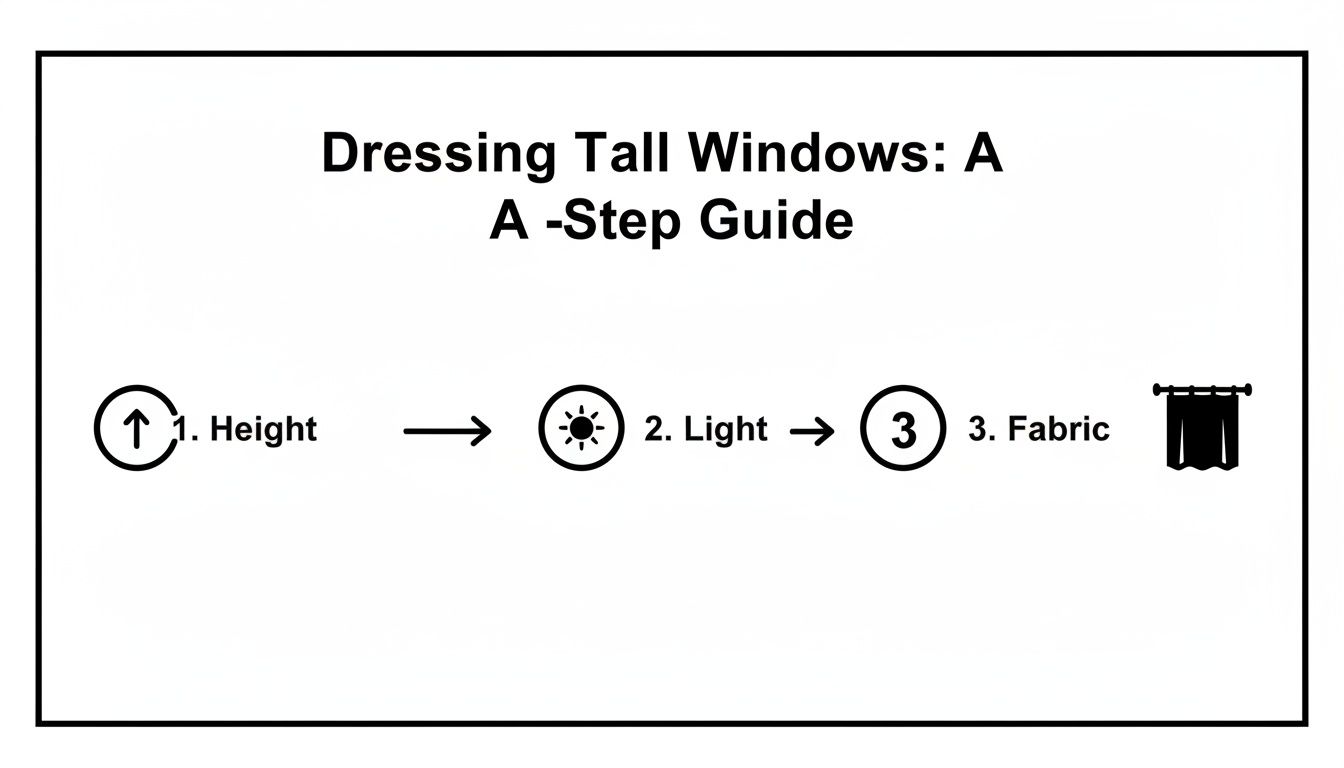
As the infographic shows, getting the height, light control, and fabric choice right are the three pillars of great window treatment design.
To ensure your drapery fits perfectly, understanding how to plan a room layout can be a huge help. Perfect measurements are the start, but how those curtains work with your furniture completes the picture.
Picking the right fabric is where the magic happens. This is where your vision comes to life, blending beautiful style with the demands of everyday living. The fabric's weight, texture, and the way it hangs—what designers call its drape—will set the entire mood for the room.
For a soft, dreamy vibe, airy materials like sheer linen or cotton voile are perfect. They let diffused sunlight filter through, casting a gentle glow. For more presence and formality, heavier fabrics like velvet, wool, or a substantial Belgian linen bring richness and luxury. They also offer far better insulation and light control.
The fabric you see is only half the story. The lining is the unsung hero, especially for grand, tall windows. An unlined drape is a single layer of fabric, but adding a lining turns it into a high-performance workhorse for blocking light, ensuring privacy, and insulating your home.
Energy efficiency is a major factor. Large glass panes can account for 25–30% of a home's heating and cooling energy loss. It’s no surprise that in North America, which represents over 30.6% of the global window coverings market, homeowners are prioritizing energy-saving solutions like lined drapes. You can discover more insights about the window coverings market to learn more.
Why linings matter: A quality lining protects your main fabric from sun damage, extending its life. It also adds body and weight, giving your curtains the full, professional look you see in design magazines.
Choosing a lining is straightforward. There are three main types, each with a specific job.
Here’s a quick rundown of your options:
For a deeper dive into materials, we’ve put together a helpful guide on the different curtain cloth types available.
Layering window treatments is a designer secret for creating a complete, intentional look. This technique is especially brilliant for tall windows because it adds softness and dimension without visually cutting them down to size.
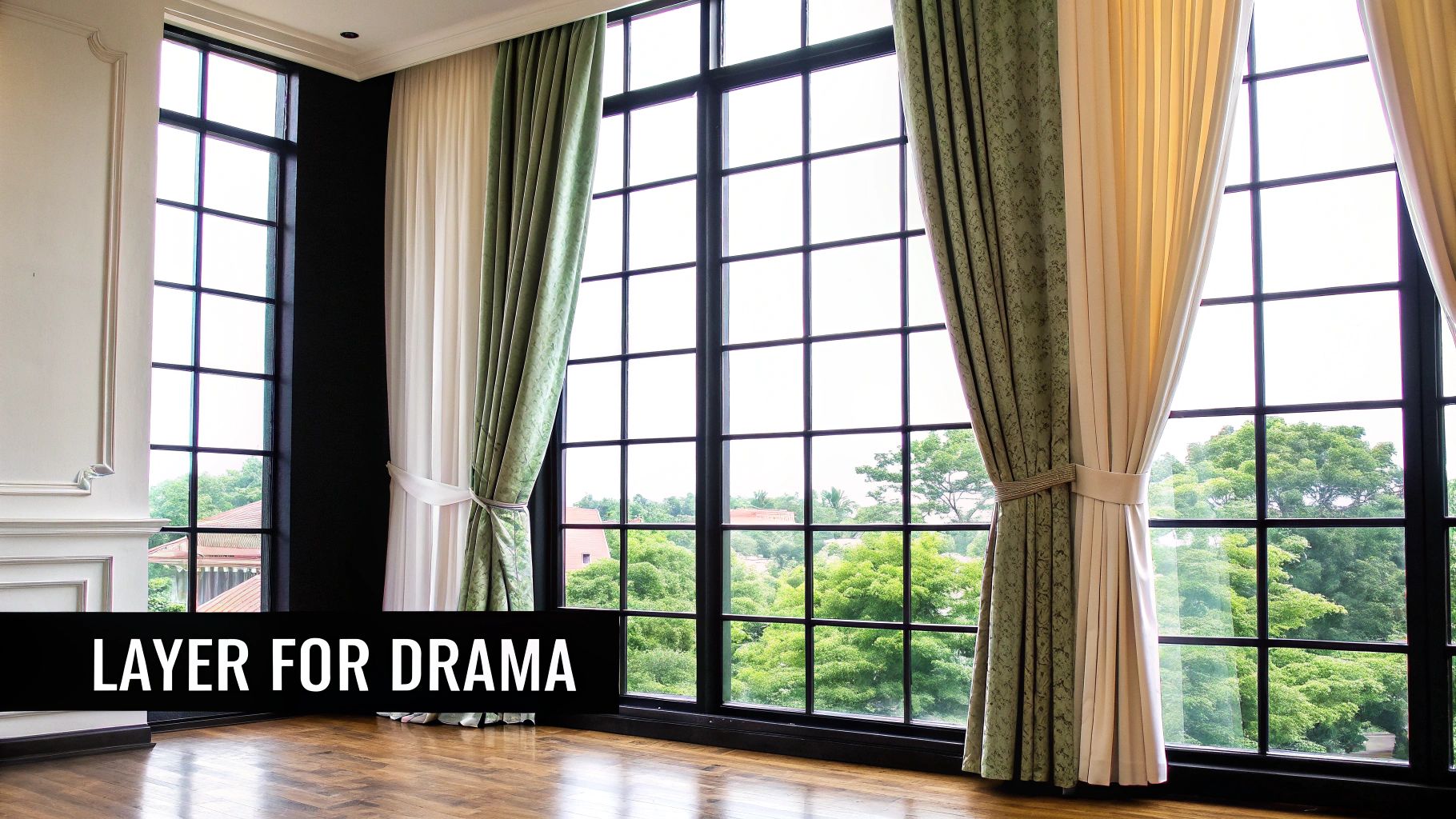
The simplest approach is to pair two different types of fabric on a double curtain rod, giving you incredible flexibility for light and privacy control.
The most popular layering method pairs lightweight sheer curtains with heavier, opaque drapery panels. This combination offers the best of both worlds, adapting to your needs from sunrise to sunset.
This layered approach does more than manage light; it adds a rich, textural quality to your decor. The interplay between airy sheers and substantial outer drapes creates a look that feels both luxurious and thoughtfully designed.
For an even more tailored solution, layer drapery panels over a hard window treatment like Roman shades, cellular shades, or woven wood blinds. This pairing offers a clean, structured look with superior insulation and light-blocking capabilities.
Imagine floor-to-ceiling drapery panels framing a sleek Roman shade. The shade provides primary light control, while the drapes act as decorative side panels that add softness, color, and drama.
Pro-Tip for a Cohesive Look:
By combining treatments, you craft a custom solution that addresses every practical need without sacrificing an ounce of style.
For truly impressive tall windows, the hardware is just as important as the fabric. The curtain rod is the backbone of your window treatment; it must be strong enough to support long, heavy drapes without bowing. A flimsy rod is a recipe for a droopy, unprofessional look.
For dramatic drapery ideas for tall windows, a rod with a diameter of at least 1 to 1.5 inches is your best bet. Decorative rods with stylish finials add a finishing touch, while traverse rods—which open drapes with a cord or wand—are practical for curtains you'll use daily.
While the right rod is crucial, automation is where smart function meets modern living. Manually operating drapes on a two-story window is a hassle. This is why motorized or smart curtain tracks are a must-have for hard-to-reach windows, giving you effortless control with a button press or voice command.
This move toward convenience is reshaping the window treatment market. The global market for curtains and blinds surpassed USD 26.1 billion in 2025, with smart home integration being a key driver. You can learn more about the high-end curtain market findings to see how technology is leading the charge.
Beyond convenience, automation offers a vital safety benefit by eliminating cords. Long, dangling cords pose a serious strangulation hazard for children and pets. Choosing cordless solutions like motorized tracks or wand-controlled systems is non-negotiable for a family-friendly home.
Choosing a cordless system provides peace of mind and creates a cleaner, more streamlined aesthetic. It’s an investment in both your family’s safety and your home’s modern appeal.
If you're a DIY enthusiast, you can even tackle the project yourself. For a great step-by-step walkthrough, check out our article on how to install motorized shades.
Why Automation is a Smart Choice for Tall Windows:
Let's bring these concepts to life. Different rooms have different functions, and your drapery choices should reflect that. The goal is to find a style that looks incredible and supports the way you live in each space.
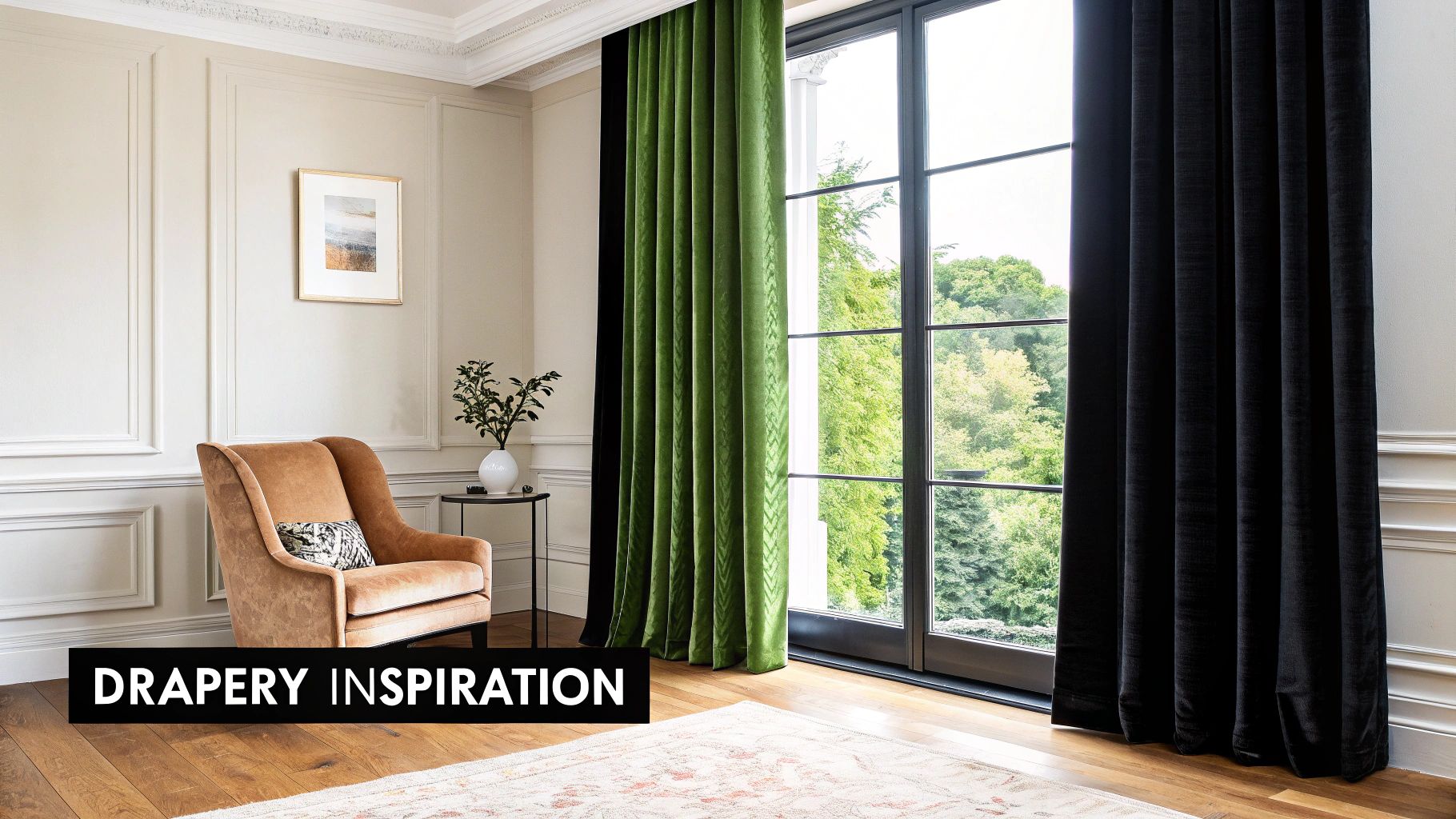
Here is some practical, room-by-room inspiration you can easily make your own.
Your living room is the perfect stage for drama. Floor-to-ceiling velvet panels are a classic for a reason—they create an undeniably grand yet cozy atmosphere. The fabric's weight provides excellent insulation and a rich, luxurious drape that highlights your windows' height.
Pro Tip: Decorative tie-backs hold panels open to frame the view beautifully, adding a touch of classic, tailored polish.
In the bedroom, light control and a feeling of peace are paramount. The best solution is a layered approach. We love pairing a sheer curtain for daytime privacy with an outer layer of blackout curtains to block light for a restful night's sleep.
This one-two punch gives you total control over the room’s ambiance—soft, filtered light during the day and complete darkness at night.
Dining rooms and entryways are all about making a sophisticated first impression. Elegant patterned linens or silks, hung high and wide, can turn your tall windows into a stunning focal point. A subtle damask or a modern geometric print adds visual interest without overwhelming the space.
Consider a tailored pleat style, like a French or Pinch pleat, to add structure and a formal, custom-made feel. This refined detail ensures the curtains hang beautifully, elevating the room's polished aesthetic.
Here are answers to the most common questions about dressing tall windows, helping you finalize your choices with confidence.
The best fabric depends on your goal. For a light and airy feel, choose linen, cotton, or sheers. For a more dramatic and formal look that also provides insulation, opt for heavier fabrics like velvet, wool, or brocade. These materials have a beautiful drape that complements the height of the window.
The ideal length depends on the look you want. For a clean, modern style, have the drapes "float" a half-inch above the floor. For a tailored, custom look, have them "kiss" the floor. For a luxurious and formal feel, let them "puddle" 1-3 inches on the floor. Always measure from your curtain rod placement, not the window frame.
They don't have to match, but they should coordinate. Using the same fabric in different complementary colors or choosing different patterns within the same color palette creates a cohesive, professionally designed feel without looking repetitive or boring.
Cleaning drapes on high windows requires a sturdy ladder and careful handling. For light dust, use a vacuum with a soft brush attachment. For deeper cleaning, check the fabric's care label—many require professional dry cleaning to avoid shrinkage or damage. For the windows themselves, knowing how to clean high windows safely and effectively is a must.
Ready to bring these grand drapery ideas to life? Explore the stunning collection of curtains and hardware at Joey'z Shopping to find the perfect style for your magnificent windows. Shop our window treatments today!