
Join the Joey'z Family!

Getting curtains right can completely transform a room, but it all starts with one crucial step: accurate measurements. Learning how to measure for window curtains correctly helps you avoid common frustrations, like drapes that hang too short or don't look nearly as full as you'd hoped. Before you pick up a tape measure, the most important thing is to decide on the style you want to achieve.
Here’s a little secret from my years of experience: thinking about your desired curtain style first is the key to getting your measurements right. A classic mistake is to just measure the window frame and buy curtains based on those numbers alone. The final look you want—whether it’s dramatic floor-to-ceiling drapes or a clean, modern style—is what truly dictates where you'll place the rod and how long the curtains need to be.
Making these decisions upfront saves time and helps you avoid costly mistakes. For example, if you decide you want curtains to make a small window feel larger, your measurement points will be far outside the actual window frame. This approach ensures your measurements serve your design vision, not the other way around.
Before you start, take a moment to think about these three style elements, as they directly impact every number you'll write down:
Understanding these fundamentals gives you the foundation for flawless window treatments. It turns a tricky task into a simple, confident project.
Before you pull out the tape measure, let's get your tools in order. Trust me, trying to measure with the wrong gear is a surefire way to get numbers that are slightly off, which leads to curtains that just don't hang right. You don’t need a contractor's full kit, but a few key items will make all the difference.
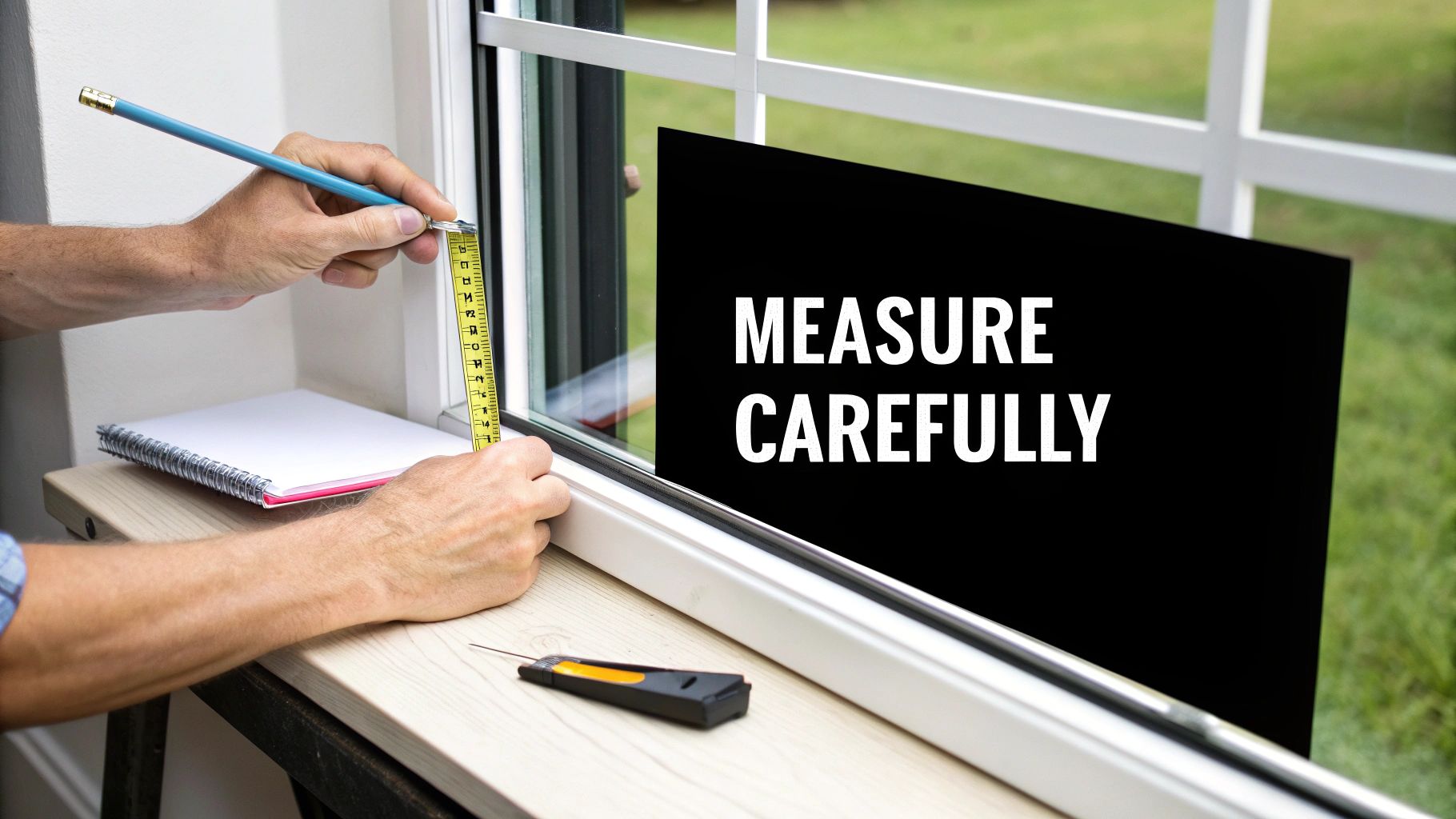
What's the most important tool for measuring for window curtains? The short answer is a sturdy metal tape measure. A fabric or plastic one can stretch and warp, throwing your whole project off. You’ll also want a pencil and notepad handy (or your phone's notes app) to write down every measurement the moment you take it. Trying to remember them, even for a minute, is a recipe for disaster.
For taller windows, a reliable step stool is a must for both safety and getting a good, straight measurement. If you can, grab a helper.
My Pro Tip: Always, always measure each window individually, even if they look identical. I've learned the hard way that minor variations in home construction can result in different dimensions. Assuming they're the same is a recipe for uneven curtains.
The secret to a polished, designer look isn't just about the fabric—it's all about where you place the rod. This simple step can make your windows feel larger and your ceilings seem taller. When you're measuring, this decision determines the final length and width you’ll actually need.
It all comes down to two key ideas: height and width. Getting these right creates a sense of balance and space, helping you avoid the common mistake of making windows look small and cramped.
As a general rule, mount the curtain rod 4 to 6 inches above the window frame. This small adjustment draws the eye upward, creating the illusion of a much taller ceiling. If you have plenty of wall space between the top of the window and the ceiling, don't be afraid to go even higher for a more dramatic effect.
This one decision has a huge impact on the curtain length you'll need. For a deeper dive into finding that perfect vertical spot, our guide on how high to hang curtains is packed with expert tips.
Just as important as height is giving your curtains breathing room on the sides. Plan to extend the curtain rod 3 to 6 inches past the frame on each side.
This extra space is what designers call "stack back." It gives your curtains a place to rest when they're fully open, ensuring they don't block any of the glass. Proper stack back lets the maximum amount of natural light flood into your room and makes the window itself appear much wider.
Getting the width right is all about achieving that perfect curtain fullness—the lush, gathered look that makes curtains feel intentional and professionally styled. The real starting point for this measurement is your curtain rod. Measure it from end to end, but don't include the decorative finials.
Once you have that number, you're ready for some simple multiplication. This is the secret sauce that ensures your curtains look beautifully draped, not like a sheet stretched awkwardly across the glass.
The amount you multiply by depends on the style you're going for. Each level of fullness creates a completely different feel.
This infographic is a great visual for where to measure. It shows exactly why getting the rod placement right is so important for your final width calculation.
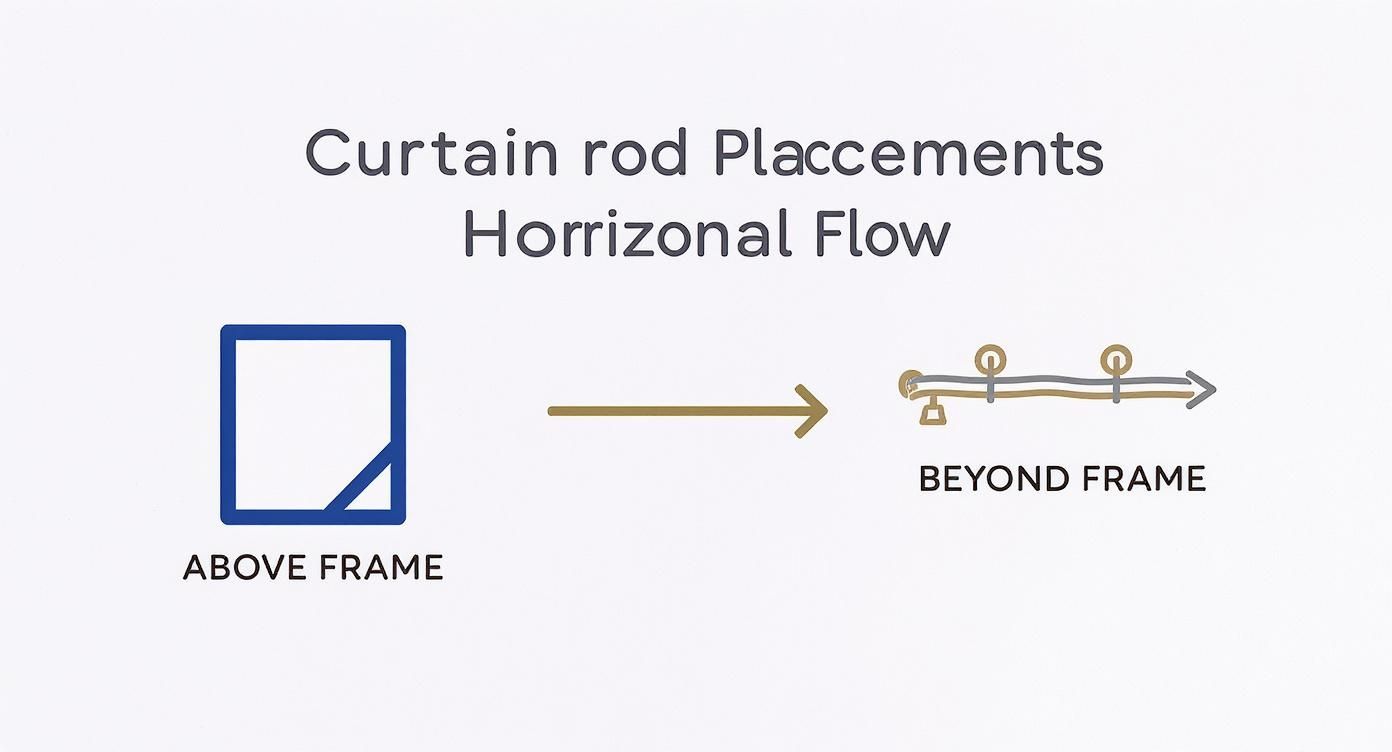
As you can see, measuring beyond the frame doesn't just help the curtains stack back nicely—it also gives you the correct base number for figuring out your fullness.
A Little Insider Tip: Don't forget that your curtain's heading style, like a pinch pleat versus a grommet top, plays a big role in fullness. Pinch pleats are already gathered, so the fabric width is fixed. For grommet and rod-pocket styles, though, your calculation is everything.
If you want to skip the math, we’ve got you covered. You can pop your numbers into our handy curtain width calculator. To buy your own fabric, this guide will help you calculate the necessary fabric yardage for your curtain project.
The way your curtains meet the floor is a powerful design choice that can define a room's style. It's the final, crucial decision that sets your vertical measurement and the entire mood of the space.
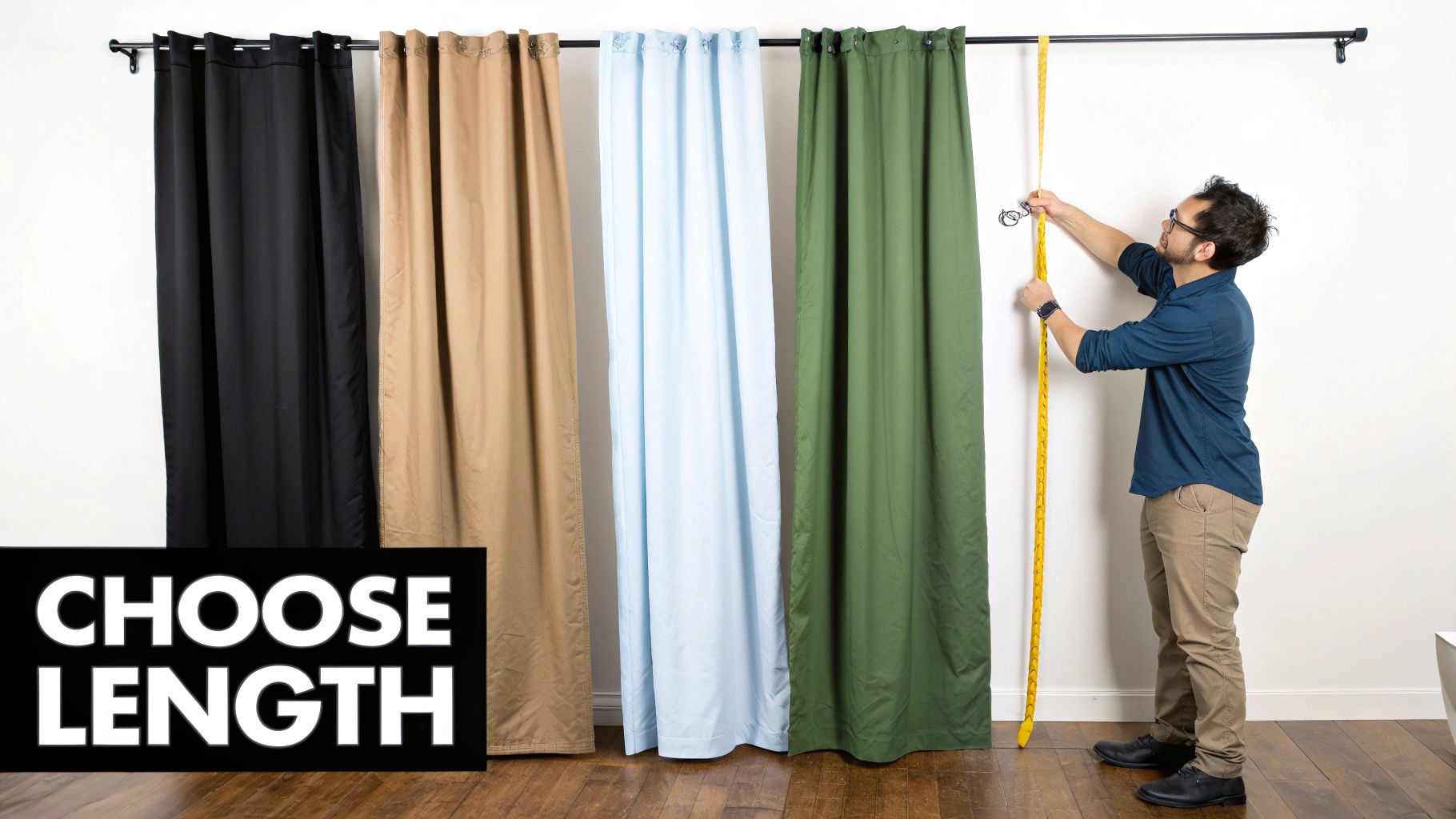
There are three classic looks to choose from. To get your length, you'll always want to measure from the top of your curtain rod down to where you want the fabric to end.
Each of these styles has its own personality and purpose. Getting to know them will help you pick the right fit for your home, a topic we explore more deeply in our complete guide to curtain lengths.
Pro Tip: When you're measuring, don't forget to account for the height of your curtain rings or any fabric that sits above the rod pocket. It’s a small detail, but it can easily throw off your final length by an inch or more.
Even the most seasoned DIYer can run into a window that doesn't play by the rules. My best advice is simple: measure twice, order once. This little habit prevents so many headaches, especially when you're clicking "buy" online.
One common curveball is an older home with uneven floors or ceilings. If you suspect your window area is a bit skewed, take three separate length measurements: one on the left, one in the middle, and one on the right.
So, which number do you use?
Bay windows and corner windows are beautiful but require a different strategy. Instead of a single, long rod, you'll likely need a setup with multiple rods connected by special corner joints.
The trick is to treat each window panel as its own project. Measure each segment individually, from one corner to the next, just like you would a standard window. Once you have the measurements for each part, you can add them all together to figure out the total fabric width needed. You can find some clever visual solutions in these styling ideas for small bedrooms.
Expert Insight: Here's something you learn from experience: fabric isn't static. Natural fibers like linen can stretch over time, pulled down by their own weight. I often recommend measuring about a half-inch shorter than your ideal length to account for this gradual drop.
Precise measuring for window curtains is the key to ensuring what you order online actually fits and looks professional when it arrives. It saves you the hassle and cost of returns, turning a potentially frustrating process into a success.
Even with a solid plan, a few questions always pop up. Getting these sorted out first will give you the confidence that you’re doing it right.
This is completely up to you and your design style. A "float" length (about 1 inch above the floor) is practical and clean. A "kiss" length (just brushing the floor) is tailored and elegant. A "puddle" length (pooling on the floor) is dramatic and best for formal, low-traffic areas.
The golden rule is that your curtain panels should have a combined width that is 1.5 to 2 times the width of your curtain rod, not the window itself. Measuring only the window frame is a classic mistake that results in curtains that look flat and skimpy when closed.
Always measure every window individually, as even identical-looking windows can have slight variations. If you have two windows close together, a great designer trick is to treat them as one large unit. Use a single, long rod that spans both windows to create a cohesive, grander look.
Ready to put those perfect measurements to use? Find the curtains that will complete your vision at Joey'z Shopping. We invite you to explore our collection of high-quality window treatments today.