
Join the Joey'z Family!

The short answer is yes. In nearly every design scenario, curtains should touch the floor. This single detail is a designer secret that creates a polished, intentional look, making your room feel more complete and even taller.
Curtains that stop short—what designers call "high-water" curtains—can make even a beautiful room feel awkward and unfinished. We'll explore exactly why floor-length curtains work and how to choose the right style for your home.
Ever walked into a space and felt like something was just… off? There's a good chance the curtain length was the culprit. Deciding whether your curtains should touch the floor isn't a minor choice; it's a fundamental decision that shapes the room's entire atmosphere.
The right length can instantly elevate your space. When hung correctly, floor-length curtains create a seamless vertical line that draws your eye upward. This simple trick creates the illusion of higher ceilings, adding a sense of grandeur and openness. On the flip side, curtains hanging inches above the floor visually chop the wall in half, making ceilings feel lower and the room seem smaller.
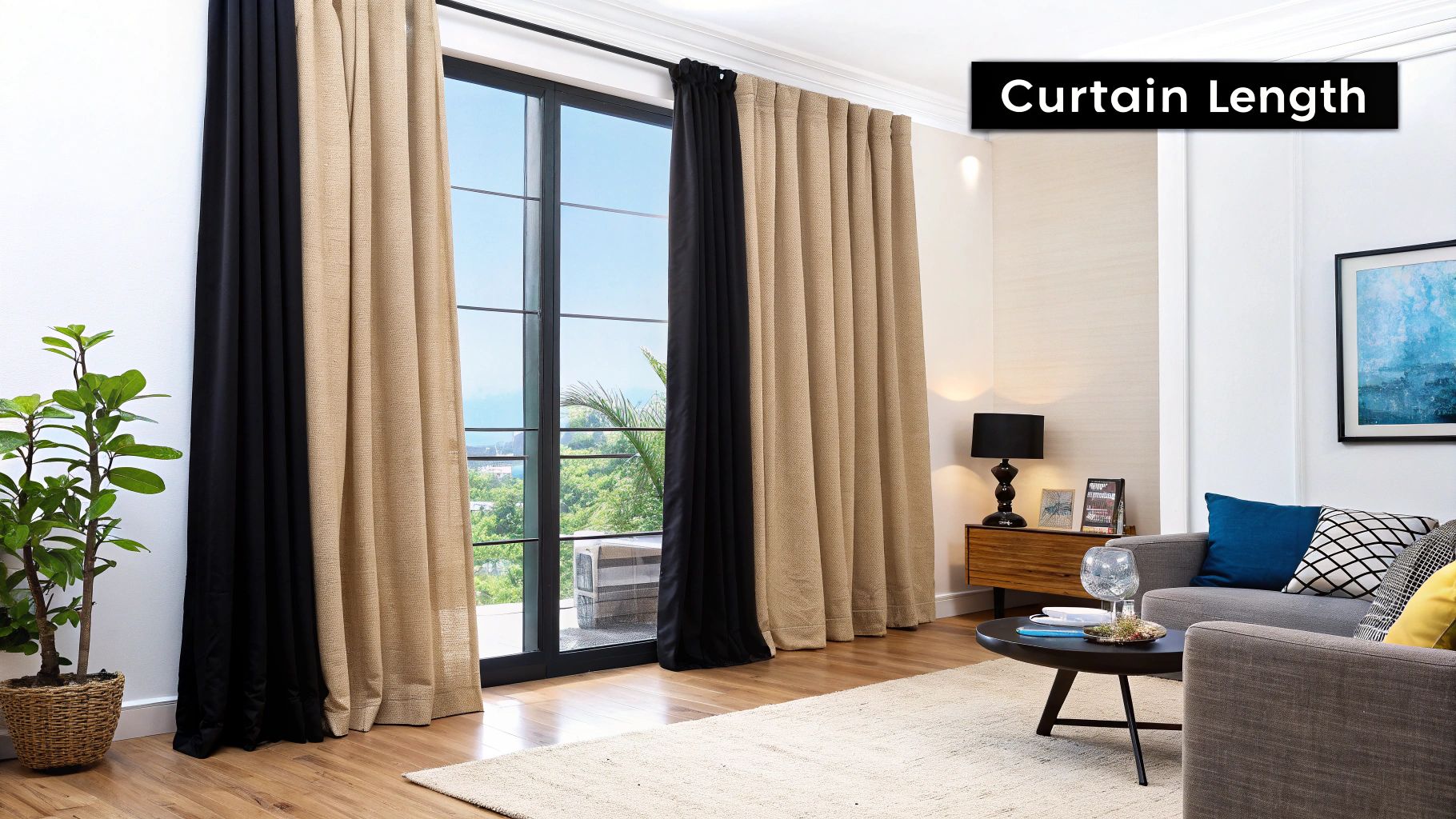
The impact of curtain length is backed by design principles and industry data.
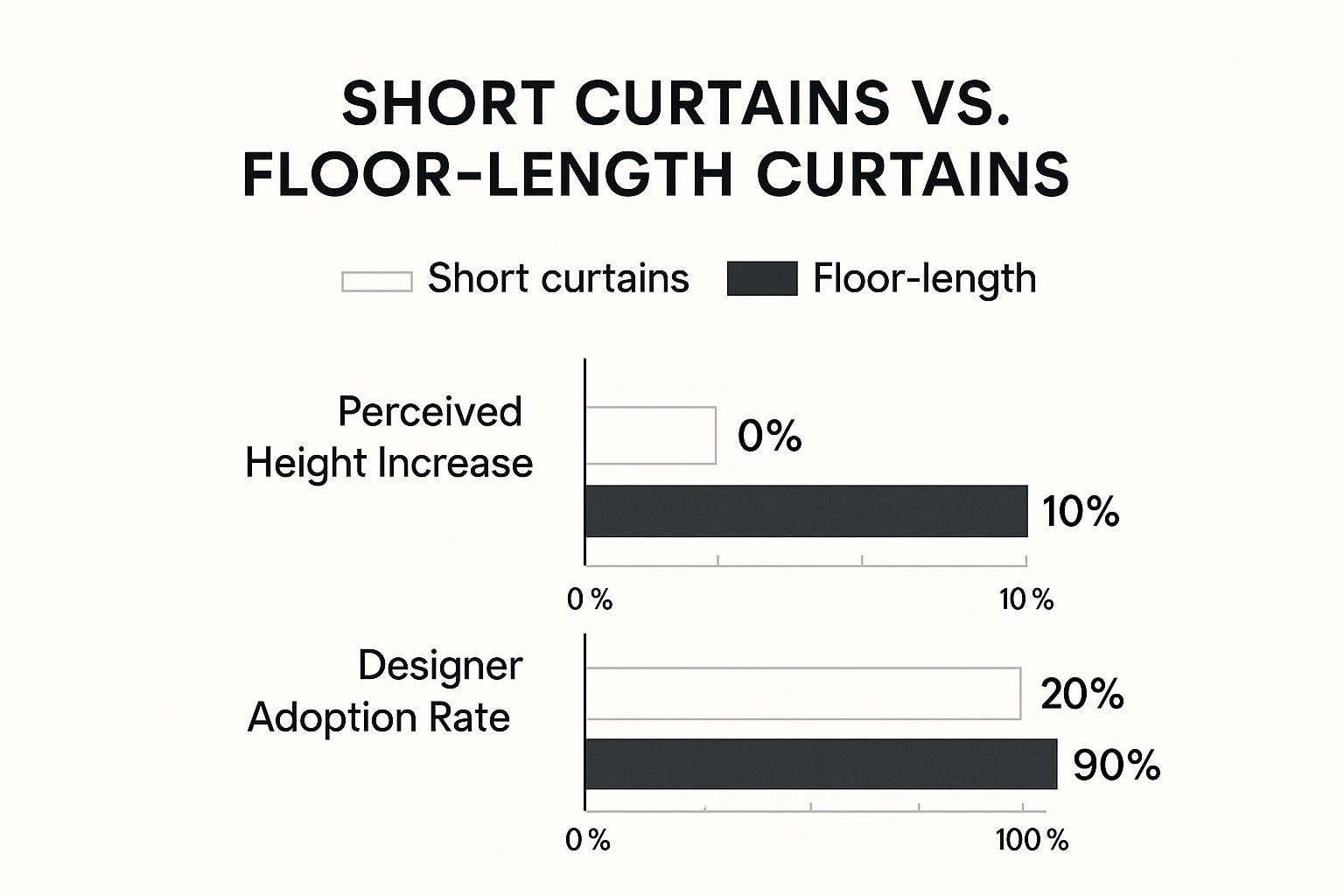
The numbers speak for themselves. An overwhelming 95% of interior designers opt for floor-length styles. Why? Because they know it can make a room feel up to 10% taller. It's a small change with a significant, measurable impact.
Now that you see why designers almost always recommend floor-length curtains, let's find the perfect style for your space. Deciding if your curtains should touch the floor isn't a simple yes-or-no question; it’s about balancing the look you want with the practical needs of the room.
There are three classic, designer-approved ways to hang curtains, and each one creates a different vibe.
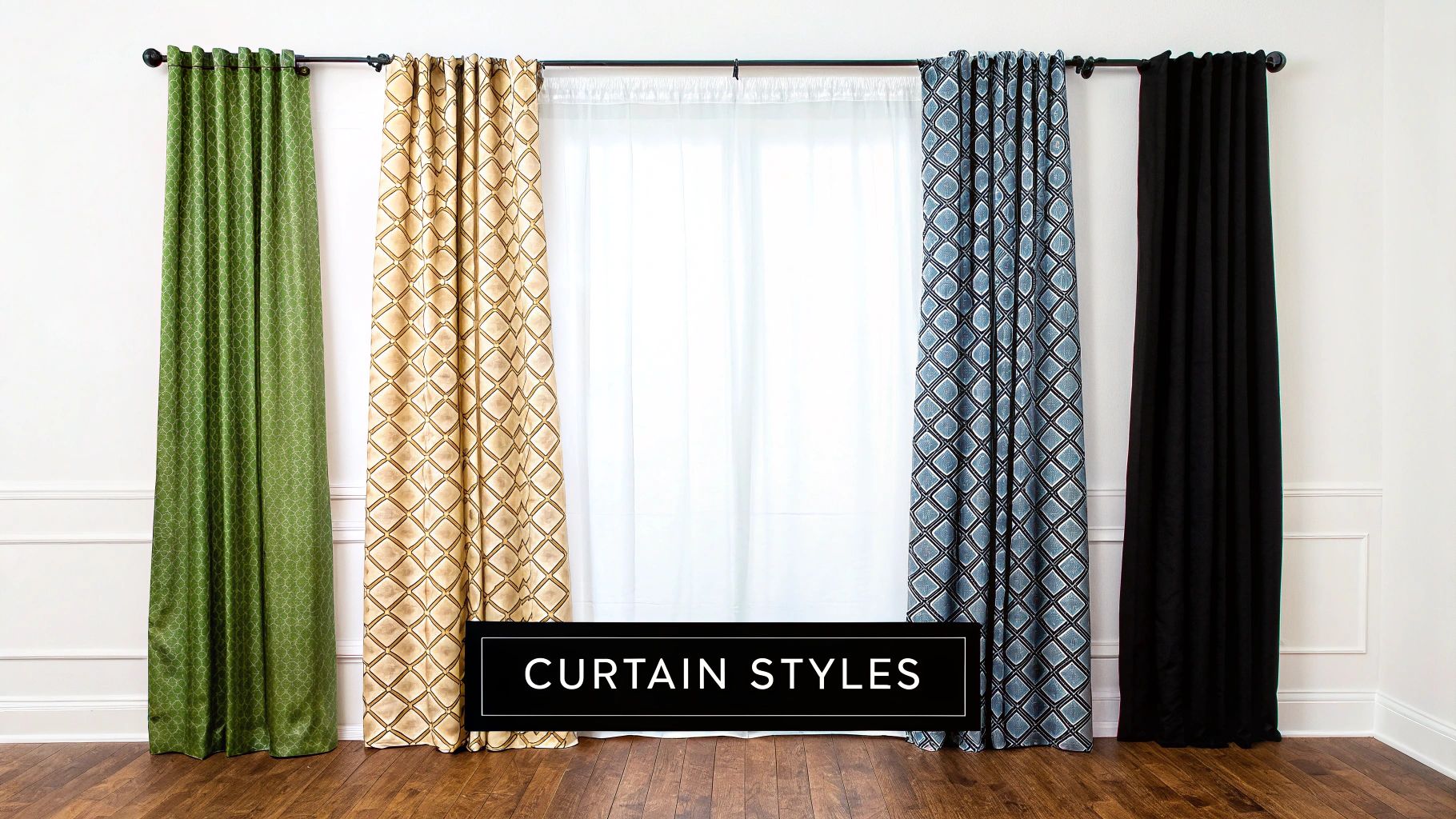
| Curtain Style | Description | Best For | Vibe |
|---|---|---|---|
| The Float | Curtains hang 0.5-1 inch above the floor. | High-traffic areas, homes with pets or kids, kitchens. | Clean, practical, casual. |
| The Kiss | Curtains just barely touch or graze the floor surface. | Most rooms, especially living rooms and bedrooms. | Tailored, polished, intentional. |
| The Puddle | Curtains have 1-6 inches of extra fabric on the floor. | Formal spaces, bedrooms, low-traffic areas. | Luxurious, dramatic, romantic. |
The "float" is exactly what it sounds like—the curtain hangs about a half-inch to one inch above the floor, never quite touching. This is the most practical style, making it a fantastic choice for high-traffic areas where curtains could collect dust or get stepped on.
It’s also the perfect solution if your floors are a little uneven, as it hides imperfections by avoiding a crooked hemline. The clean, straight line of a floating curtain offers a crisp, casual look that’s easy to live with, especially in homes with pets or young kids.
"The kiss" is arguably the most popular and polished style. This is where the curtains just barely graze the floor, creating a perfectly tailored, intentional look. I'll be honest, this one is the hardest to get right because it demands precise measurements, but the elegant result is worth it.
A kissing length looks custom-made, providing a clean and sophisticated finish that works beautifully in almost any room. It strikes that perfect balance between practical and luxurious. This length is a favorite among designers because it gives you the visual height of floor-length drapes without the high maintenance of extra fabric on the ground.
If you're aiming for a truly opulent and romantic feel, "the puddle" is the way to go. This style involves adding one to six inches of extra fabric that pools, or "puddles," elegantly on the floor. It’s a bold, dramatic statement that feels most at home in formal spaces where you want to inject a dose of luxury.
The puddle effect works best with heavier, high-quality fabrics like velvet or thick linen, as their weight helps the fabric drape beautifully. While a White Sheer Window Grommet Curtain Set can create a light, airy puddle, heavier materials give a more pronounced look. You can learn more about finding the perfect material by exploring different curtain cloth types.
Getting that perfect, floor-grazing curtain length isn't about guesswork; it’s all about correct measurements. We've all seen curtains that hang just a little too high—that dreaded "high-water" look—and it's easily avoidable with a few simple steps.
The Golden Rule: Forget the window frame. To make ceilings feel taller, mount your curtain rod 4-6 inches above the window frame. You should also extend the rod 6-10 inches wider than the frame on each side to maximize natural light when curtains are open.
With your rod in place, it’s time to measure. Always use a metal tape measure, as fabric ones can stretch and give you inaccurate numbers.
Now, take that baseline measurement and tweak it to get your final look.
For a more detailed walkthrough, check out our complete guide on how to measure window curtains to ensure a flawless fit.
Getting window treatments right can completely change a room's feel, but it’s easy to make small mistakes that throw off the entire look. The goal is always to make your windows look as grand and inviting as possible.
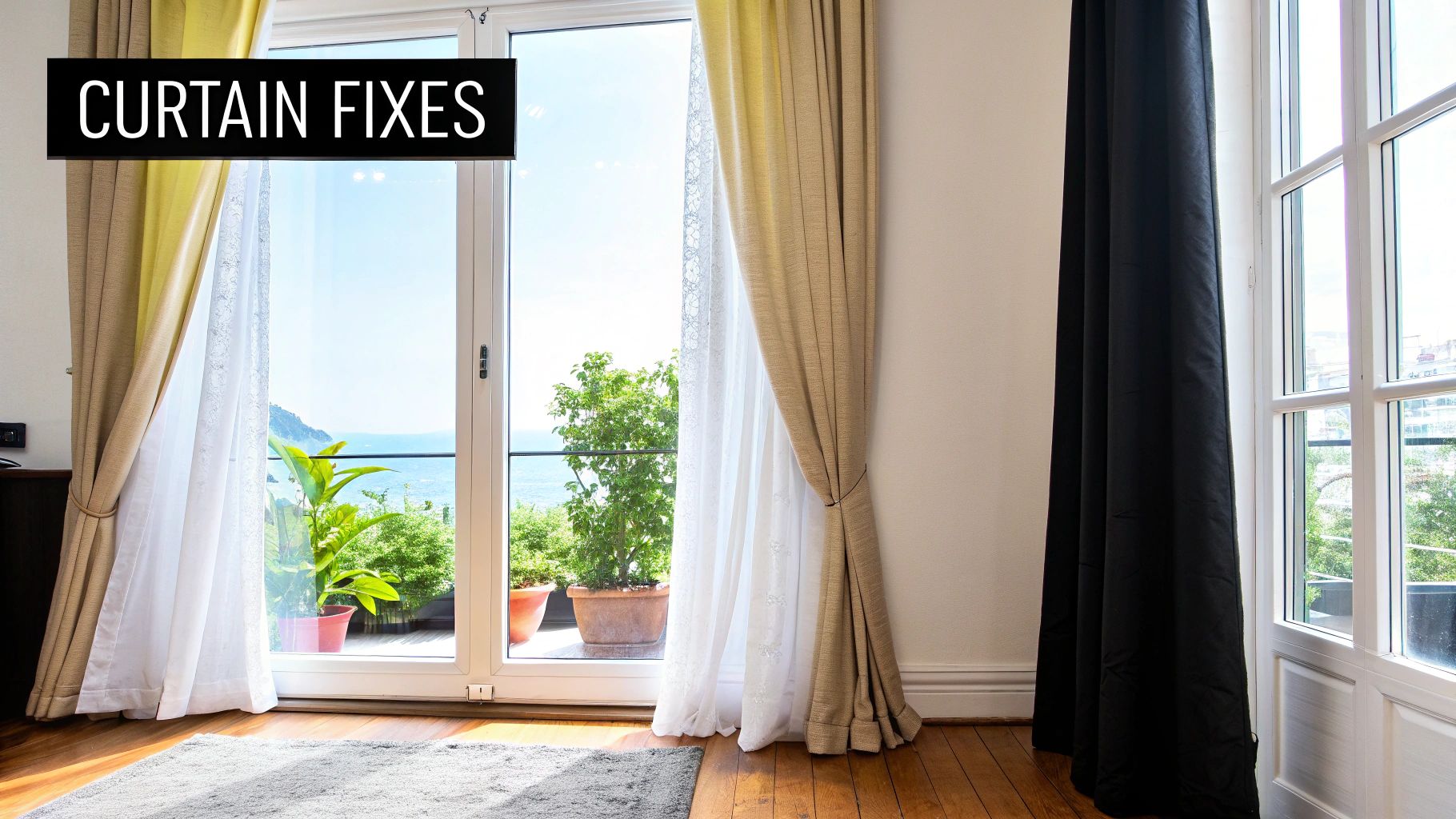
The single most common mistake? Hanging curtains that are too short. This "high-water" look visually chops the wall in half, making ceilings feel lower. When people ask should curtains touch the floor, my answer is almost always yes for this exact reason.
Another frequent pitfall is mounting the curtain rod too low or too narrow. Placing it right above the window frame can make the window feel small and cramped, while a narrow rod forces the curtains to block precious light.
Luckily, these issues are easy to fix:
A well-hung curtain should frame your window, not smother it. For a deeper dive, our guide on how to hang curtains properly provides even more expert tips.
Even with the basics down, specific situations can leave you wondering what to do. Here are answers to common curtain length dilemmas.
Yes, they absolutely should. For bedrooms, curtains should always touch the floor, whether with a gentle "kiss" or a more luxurious "puddle." This look adds a layer of coziness perfect for creating a relaxing retreat. More importantly, floor-length curtains are better at blocking light and insulating against noise and drafts—key for a great night's sleep.
This is a key exception where function must win over form. If you have a radiator or heating vent directly under a window, your curtains should "float" about an inch above it. Safety and efficiency come first. Floor-length drapes would block heat or airflow, making your HVAC system work harder and could even become a fire hazard with older radiators.
You can, but you’ll want to be strategic. The dramatic "puddle" style, with its extra fabric, is best avoided—it’s a magnet for pet hair and can be a tripping or climbing hazard for little ones. The "kiss" length is the perfect compromise for homes with kids and pets. It gives you the elegant, finished look without the pile of fabric on the ground, making it safer and much easier to keep clean.
Curtains that are too short ("high-water"), too sheer for the room's needs (like in a bedroom), or hung on skinny, sagging rods are generally considered out of style. The modern look favors full, properly measured curtains hung high and wide to create an airy, polished feel. Outdated, heavy valances and overly ornate patterns are also less common in contemporary design.
Ready to put your new knowledge to work? Explore the beautiful and accessible collection at Joey'z Shopping and find the perfect curtains to complete your space. Discover window treatments for every room in your home.