
Join the Joey'z Family!

Table of Contents
When we talk about a modern kitchen window treatment, we're really talking about a shift in thinking. The best options find a sweet spot where minimalist design meets maximum function. Forget fussy, heavy fabrics; today’s look is built on clean lines, tough materials, and smart features that make life in the busiest room of the house a little easier.
Think of it as a sleek, practical upgrade that elevates both the style and the feel of your kitchen. A modern treatment should solve everyday problems—like blinding morning glare or nosy neighbors—without creating new ones, like complicated cleaning routines.
So, what’s the real difference between a modern kitchen window treatment and a more traditional one? The short answer is a "less is more" philosophy. Instead of ornate valances or puddling drapes, the modern approach is all about clean aesthetics and high performance, especially in a room that deals with constant heat, humidity, and the occasional splatter.
This isn't just a style choice; it’s a direct response to how we live today. With open-concept layouts, kitchen window coverings need to feel like a seamless part of the whole design, not an afterthought. The focus has shifted to solutions that give you precise control over light, offer privacy without darkening the room, and are incredibly simple to clean.
A truly modern treatment is a combination of smart features all working together to make your life easier and your kitchen look great.
It's clear people are catching on to these functional, stylish solutions. The global market for curtains and blinds was valued at around USD 22.26 billion, and that number is expected to jump to over USD 31 billion by 2034. This shift shows a real demand for window treatments that are as practical as they are beautiful. You can discover more insights about this growing market trend.
Picking the right window treatment for a modern kitchen can feel like choosing the perfect finishing touch for a recipe—get it right, and it pulls everything together. The best style comes down to your needs for light, privacy, and the overall vibe you're going for.
Let's walk through the most popular options and see how they actually hold up in a real kitchen. From sleek roller shades to the softer touch of Roman shades, each style brings something unique to the table.
For a clean, minimalist look, nothing beats a roller shade. It’s a single piece of fabric that rolls into a slim cassette, practically vanishing when you don't need it. This makes them a fantastic choice for a modern kitchen window treatment, especially if you have a great view you don't want to block.
Their simple profile is a natural fit for contemporary kitchen designs. They’re also a dominant force in the market, bringing in USD 19.1 billion in revenue in a single year, which speaks to their practical appeal. You can discover more about the blinds and shutters market to see why this style continues to lead the pack.
Solar shades are the high-performance cousin of roller shades. They're designed to cut harsh glare and block damaging UV rays, all without completely sacrificing your view. They are a lifesaver for kitchens that get blasted with intense afternoon sun.
What if you love the clean function of a shade but want a bit more softness? Roman shades are your answer. They're made from fabric that stacks into neat, elegant folds as you raise them, giving a more tailored and textured look.
Think of them as the perfect middle ground between the softness of curtains and the crisp functionality of blinds. Modern Roman shades come in a huge variety of durable, easy-to-clean fabrics, making them a stylish and practical choice for a breakfast nook or windows that aren't in the direct splash zone.
If you're after a classic look but need it to withstand kitchen chaos, faux-wood blinds are a top contender. They give you the warm look of real wood but are made from tough composite materials or PVC that won't warp, crack, or fade when things get hot and steamy.
Feeling overwhelmed by the options? It helps to see everything side-by-side. This table breaks down the most popular styles, looking at what they do best and where they might fall short in a kitchen setting.
| Style | Best For | Pros | Cons | Price Range |
|---|---|---|---|---|
| Roller Shades | Minimalist designs, unobstructed views, budget-friendly updates | Sleek and simple, disappears when raised, wide variety of colors and opacities | Fabric can be difficult to spot-clean, limited textural interest | $ - $$ |
| Solar Shades | Kitchens with intense sun exposure, UV protection, preserving views | Reduces glare and heat, protects interiors from fading, maintains view | Can look a bit commercial, limited privacy at night | $$ - $$$ |
| Roman Shades | Adding a soft, tailored look to dining nooks or less-messy areas | Elegant and stylish, provides insulation, vast fabric choices | Can absorb odors and stains, not ideal for high-splatter zones | $$ - $$$$ |
| Faux-Wood Blinds | High-humidity areas like over the sink, precise light control | Extremely durable and moisture-resistant, easy to clean, classic look | Can be heavy to lift on large windows, slats can collect dust | $ - $$$ |
| Café Curtains | Charming, traditional, or farmhouse aesthetics, privacy on the lower half | Adds softness and character, allows light in from the top, budget-friendly | Offers partial privacy only, can feel dated if not styled well | $ - $$ |
| Cellular Shades | Energy efficiency and insulation, modern and clean appearance | Excellent insulators (save on energy bills), lightweight, great light filtering | Cells can collect dust and insects, less durable than blinds | $$ - $$$ |
This comparison should give you a clearer picture of which treatment aligns with both your kitchen's functional demands and your personal style.
This decision tree is a great way to visualize the process. You start with your main priority—is it function or style?—and follow the branches to see what makes the most sense for you.
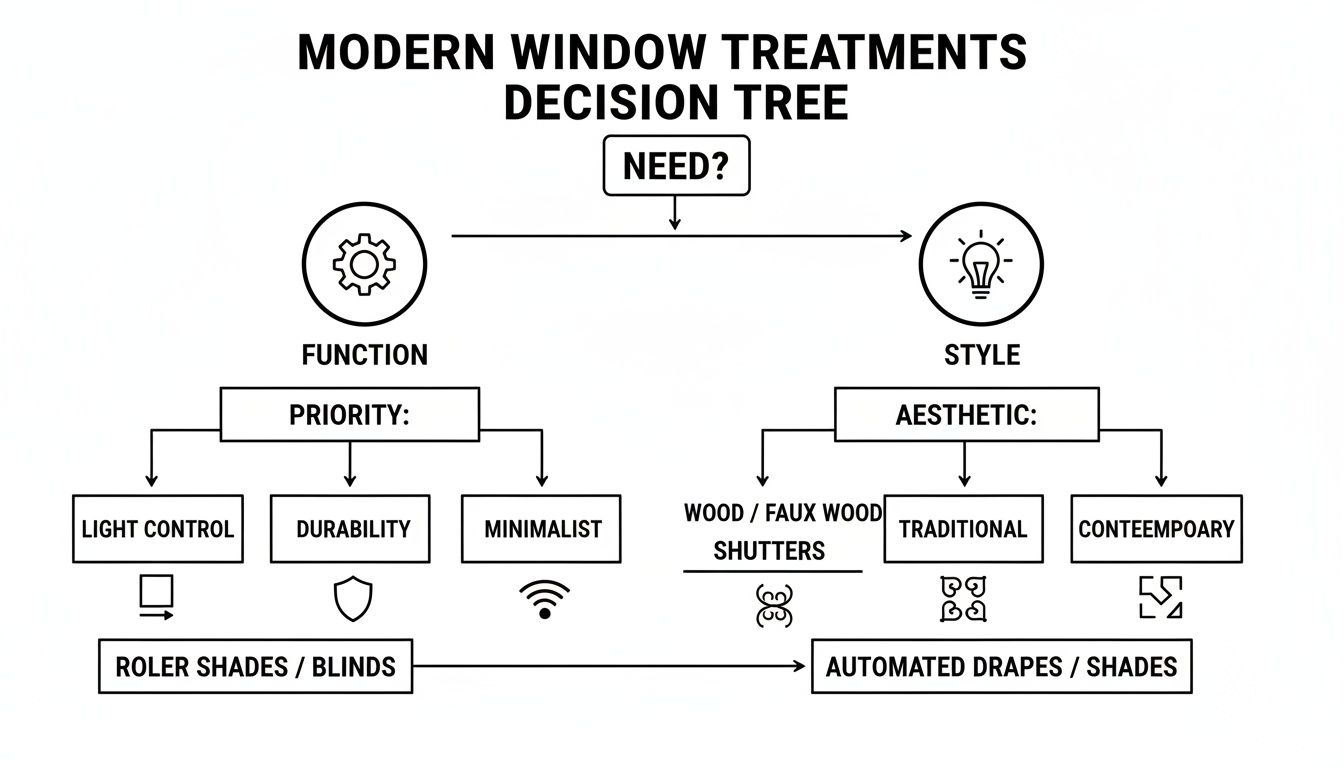
Ultimately, the chart shows that the best choice is usually a blend of both. You're looking for that sweet spot where a window treatment meets your practical needs for durability while also fitting in perfectly with your kitchen's aesthetic.
The kitchen is the heart of the home, but it’s also a chaotic zone of steam, grease, and splatters. Your window treatments are on the front lines, which means picking a material isn't just about style. It's about survival.
Think of it like choosing the right pan for the job. You wouldn't use a delicate pan for searing, and you shouldn't put absorbent, high-maintenance fabrics near a steamy sink. Durability and ease of cleaning are non-negotiable here.
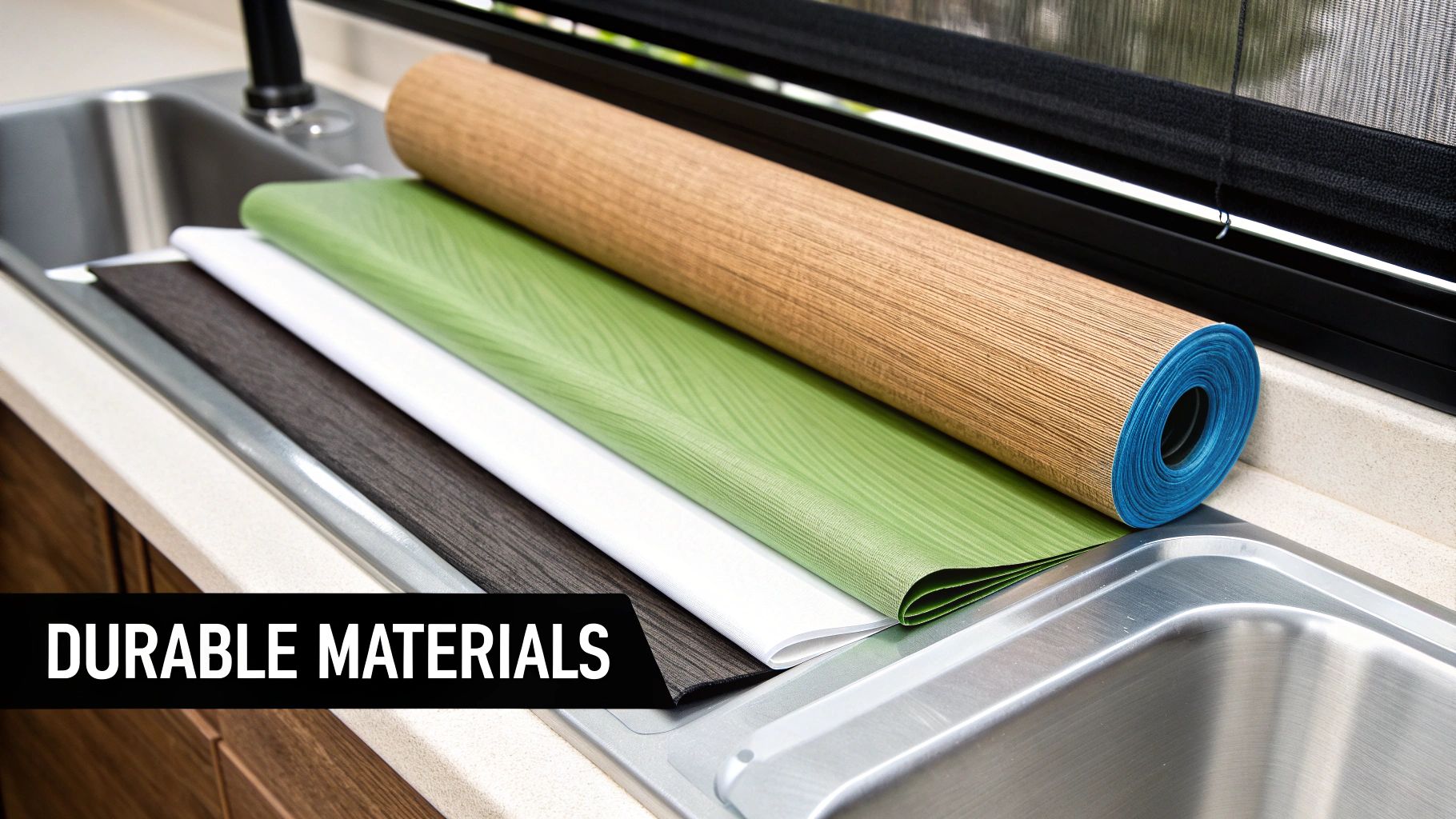
Some materials are simply built to perform better under pressure. They shake off moisture, wipe clean in a flash, and won't warp or fade in intense sunlight.
On the flip side, some materials just can't take the heat—or the humidity and grease—of a busy kitchen.
The core idea is simple: pick a non-porous or specially treated material that puts up a barrier against everything the kitchen throws at it. This way, your investment will look fresh and work perfectly for years.
Advanced glass types like ultra-clear glass can also boost light transmission and clarity, making your material choices look even better.
The modern kitchen thrives on bright, open spaces, but this can create a tricky balancing act. You want natural light for cooking and gathering, but you probably don't want your neighbors having a front-row seat to your morning coffee routine. The secret is finding a modern kitchen window treatment that perfectly juggles light, privacy, and the view.
You need flexible solutions that can adapt as your day changes—from bright morning sun to the need for total privacy once it gets dark.
For windows facing a busy street or a neighbor's house, traditional shades can feel like an all-or-nothing choice. This is where a few innovative designs come into their own.
Think of these options as customizable filters for your windows. Instead of just opening or closing a treatment, you're fine-tuning the atmosphere in your kitchen moment by moment.
Another great strategy is to use layers or treatments that diffuse light rather than block it. Sheer shades, for instance, have fabric vanes suspended between two layers of sheer material. They soften incoming light beautifully while still giving you plenty of privacy during the day.
For a budget-friendly and surprisingly effective option, window films are an excellent choice. Learning how to install window privacy film can be a huge help. It’s a simple way to add a layer of privacy without installing new hardware.
The modern kitchen is the command center of the home, and your window treatments should follow suit. The best modern options are packed with technology and safety features that make daily life smoother and safer.
The single biggest shift has been the move away from dangling cords. For any home with curious kids or pets, cordless designs are a non-negotiable safety feature. Instead of a tangled mess, these treatments work with a simple push or pull. It’s an intuitive system that gets rid of a major household hazard while keeping everything looking clean.
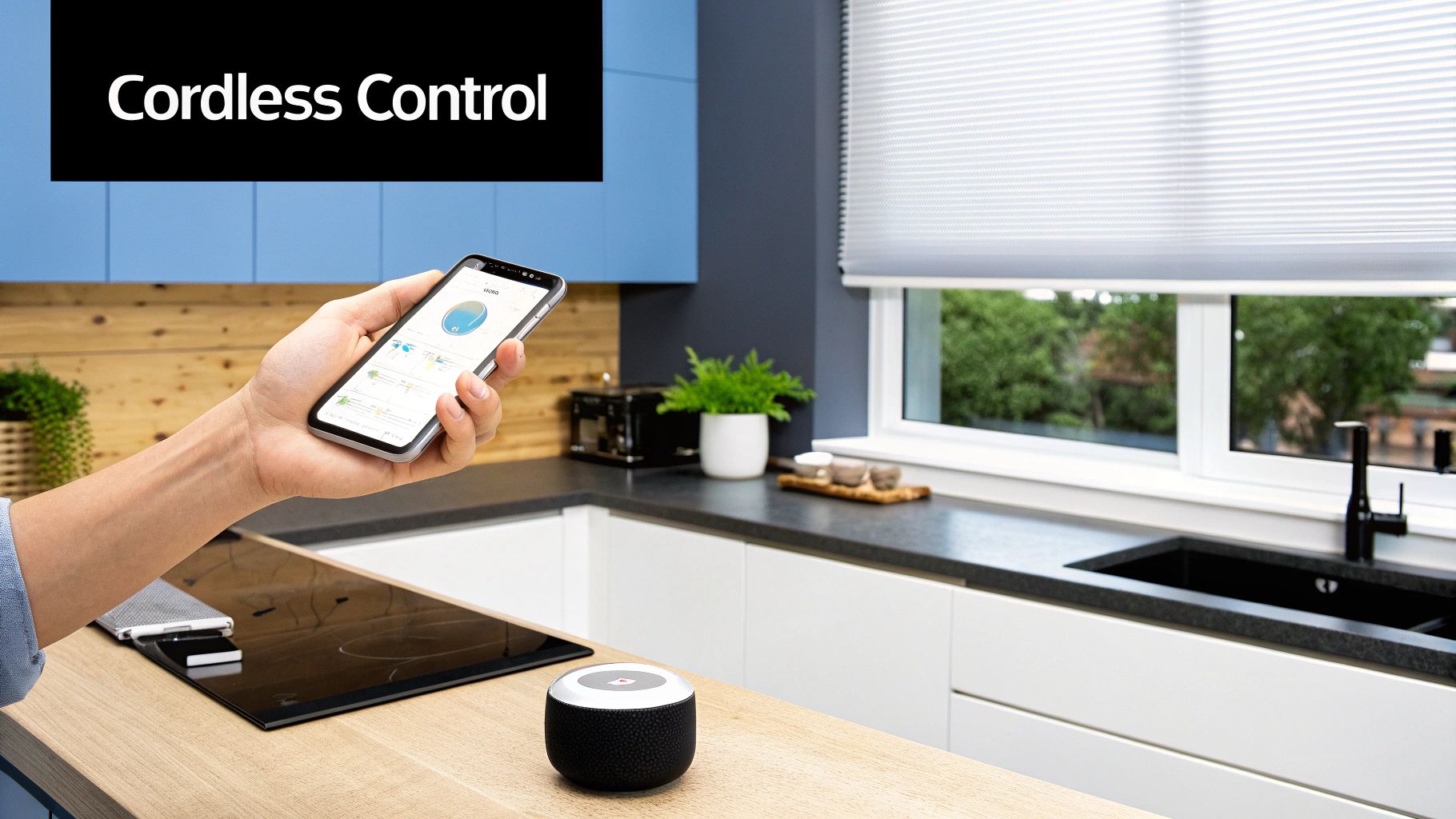
Motorization takes that cordless convenience up a notch. Imagine your shades gliding open with your morning alarm or closing on their own when the afternoon sun gets too intense. This isn’t just a luxury; it's a huge functional upgrade.
Smart window treatments turn a static fixture into a dynamic part of your home’s ecosystem. They work for you, anticipating your needs. If you're feeling handy, you can even explore our guide on DIY motorized shades.
Getting the measurements right is the single most important part of ordering a new modern kitchen window treatment. It might feel intimidating, but it’s easier than you think and makes all the difference between a sloppy finish and a flawless, professional fit.
A few minutes now will save you the headache of a costly return later. You only need a few simple tools: a steel tape measure, a pencil, and a piece of paper.
First, you need to decide how you want your treatment to hang. This is the difference between an inside mount (it fits neatly inside the window frame) and an outside mount (it’s installed on the wall or trim above the window).
Pro Tip: Always use a steel tape measure. Fabric ones can stretch and throw your numbers off. The golden rule? Measure twice, order once!
Here’s a quick breakdown of how to measure for both mounting styles so you get it right the first time.
For an Inside Mount:
For an Outside Mount:
Even after exploring all the options, you might have a few lingering questions. Let's tackle some of the most common ones to give you the clear answers you need.
The short answer? Anything that’s super durable and a breeze to clean. My go-to recommendations are always faux-wood blinds, vinyl roller shades, or solar shades.
These materials are built to handle the reality of a kitchen sink area—humidity, steam, and splashes from washing dishes. Unlike real wood that can warp or untreated fabrics that might mildew, these options won't give you any trouble, looking great and working perfectly for years to come.
Not at all! You're aiming for coordination, not a perfect match. Think of it as creating a harmonious palette rather than a uniform one.
For instance, if you have bright, white cabinets, the warmth of faux-wood blinds can create a beautiful, natural contrast. Or, if your kitchen is full of sleek stainless steel, a cool gray or metallic roller shade can tie that modern aesthetic together perfectly. It's all about complementing what you already have.
Cleaning greasy blinds is way easier than it sounds, especially if you have the right kind. For tough surfaces like faux wood or vinyl, a simple mix of warm water and a few drops of dish soap does wonders.
All you need is a microfiber cloth. Dip it in the soapy water, wring it out, and just wipe down each slat. I'd steer clear of harsh chemical cleaners—they can strip the finish over time. If you have fabric shades, always check the manufacturer’s care instructions first, as most are designed for simple spot-cleaning.
Ready to find that perfect blend of style and function for your kitchen? At Joey'z Shopping, we've curated a collection of durable and stylish window treatments designed for modern homes just like yours. Explore our collection today and give your kitchen the beautiful, practical upgrade it deserves.