
Join the Joey'z Family!

Choosing between roller shades and cellular shades often comes down to a key trade-off: do you prefer minimalist, clean style, or are you looking for powerful insulation? The short answer is that roller shades deliver a sleek, modern look perfect for streamlined interiors, while cellular shades are the undisputed champions of energy efficiency, thanks to their unique honeycomb design.
This guide will help you understand the core differences so you can make a choice you’ll love for years.
Before diving deep, here's a scannable overview. This table highlights the main strengths and weaknesses of these two popular window treatments across the most important categories.
| Feature | Roller Shades | Cellular Shades |
|---|---|---|
| Primary Benefit | Sleek, minimalist style and versatility | Superior insulation and energy efficiency |
| Aesthetics | Clean, modern, and unobtrusive | Soft, textured, and dimensional |
| Insulation (R-Value) | Low (approx. 0.9–1.5) | High (approx. 3.5–5.0) |
| Light Control | Good; available from sheer to blackout | Excellent; blackout options are very effective |
| Privacy Options | Good; solid barrier when closed | Excellent; top-down/bottom-up available |
| Upfront Cost | Generally more affordable | Typically a higher initial investment |
| Maintenance | Very easy to clean; single fabric panel | Requires more care; cells can trap dust |
This table is a great starting point, but the best choice for your home depends on your specific needs and priorities. Let's get into the details of what makes each of these shades unique. For another expert perspective, this comprehensive guide on roller shades vs cellular shades offers an in-depth look.
When you're weighing roller shades vs cellular shades, the best place to start is with how they’re put together. Their construction is the foundation for everything else—from how they look and last to how well they insulate your home.
Roller shades are the definition of simple elegance. They are just a single, continuous piece of fabric that rolls up around a tube. It's this beautiful simplicity that makes them so appealing, offering a clean, uncluttered look that fits perfectly in modern spaces.
The material you pick determines how the shade functions, so you can customize it for any room's specific needs.
This single-layer design makes roller shades incredibly durable with very little to go wrong. For a deeper dive, you can find detailed information on roller shades that covers all the different types and features available.
Cellular shades, also called honeycomb shades, are engineered with a unique honeycomb structure. This design creates small pockets, or "cells," of air that run horizontally.
Key Insight: Those air-trapping cells are the secret weapon behind a cellular shade’s incredible insulating ability. They create a thermal barrier between your window and the room, dramatically slowing down heat transfer.
This smart construction makes cellular shades an energy-efficiency powerhouse. You can even choose different cell structures for more or less insulation.
While there are many different types of shades, the honeycomb design is truly unique in how well it insulates. This focus on thermal performance is what really sets cellular shades apart.
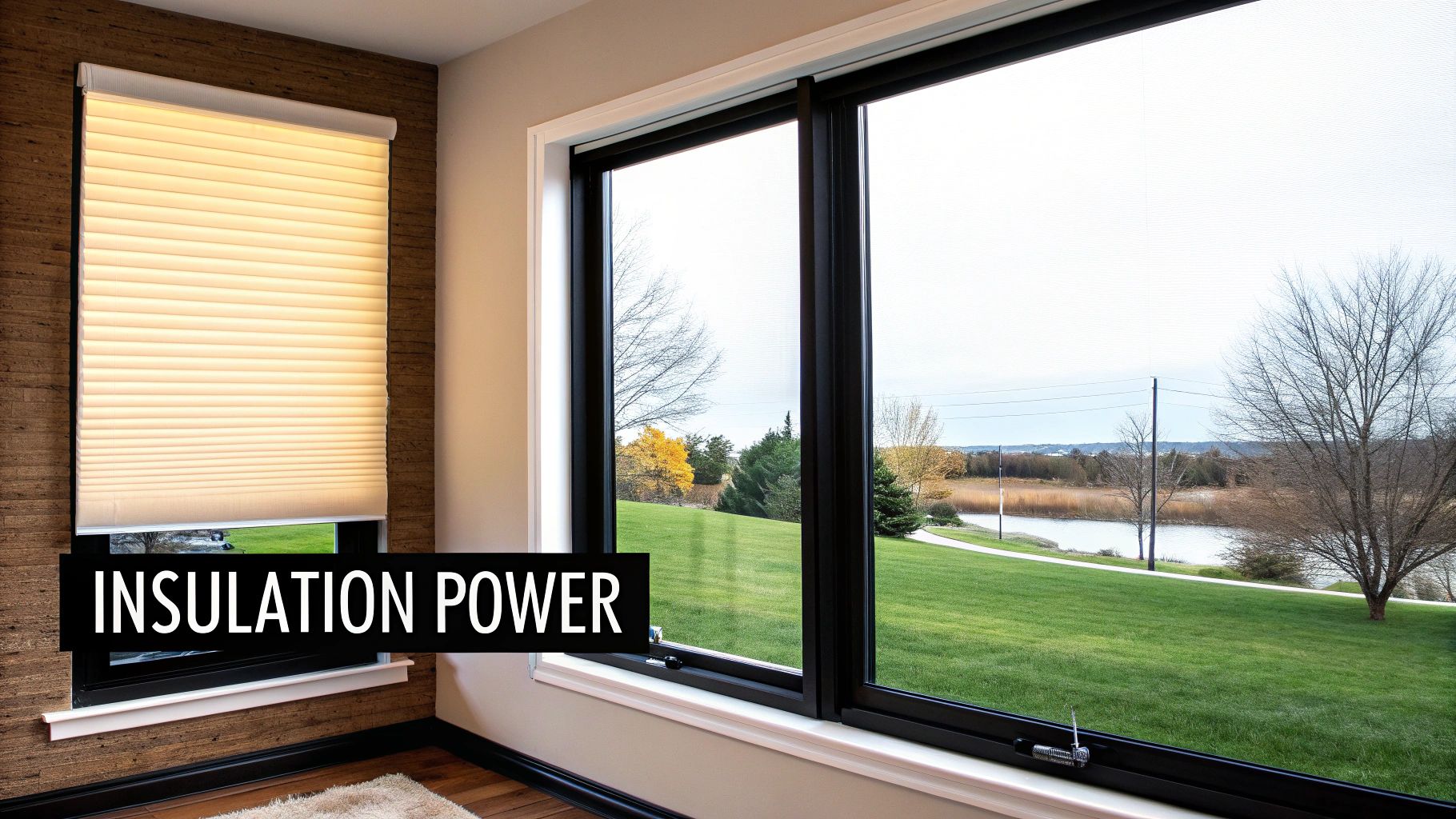
When it comes to energy efficiency, the roller shades vs cellular shades debate has a clear winner. Cellular shades were engineered from the ground up to be insulation powerhouses, creating a thermal barrier that a simple, single-panel roller shade just can't compete with.
What is R-value? R-value is a technical measure of how well a material resists heat flow. A higher R-value means better insulation, and this is where the two shades really part ways.
A standard double-pane window might only have an R-value of around 2.0. A basic roller shade adds very little, offering an R-value of just 0.9 to 1.5. It blocks some direct sunlight but does little to stop heat transfer.
This is where cellular shades completely change the game. Those honeycomb-shaped pockets trap air, creating a surprisingly effective insulating layer.
So, what do these numbers mean for your home comfort and your wallet? The higher R-value of cellular shades leads to a cozier home and lower energy bills year-round.
Key Takeaway: By creating a thermal barrier, cellular shades can reduce unwanted solar heat gain in the summer by up to 60% and prevent heat loss during the winter by over 40%. According to the U.S. Department of Energy, this can lead to an estimated 10-20% reduction in annual heating and cooling costs.
Let’s put this into practice with a couple of common scenarios.
Scenario 1: A Sun-Drenched Living Room in a Hot Climate
In summer, a big, south-facing window can turn your living room into an oven. A roller shade will cut the glare, but a cellular shade will actively block the sun's heat from ever getting into the room, giving your A/C a much-needed break.
Scenario 2: A Chilly Bedroom in a Cold Climate
In winter, that same window becomes a major source of heat loss. The air trapped inside the cellular shade’s honeycomb pockets acts like a buffer, keeping the cold out and the warmth in.
For homeowners conscious about sustainability, choosing the right window treatments is a big deal. To explore more ideas, check out our ultimate guide to eco-friendly window treatments. Ultimately, if insulation and energy savings are at the top of your list, cellular shades offer a return on investment that roller shades simply cannot match.
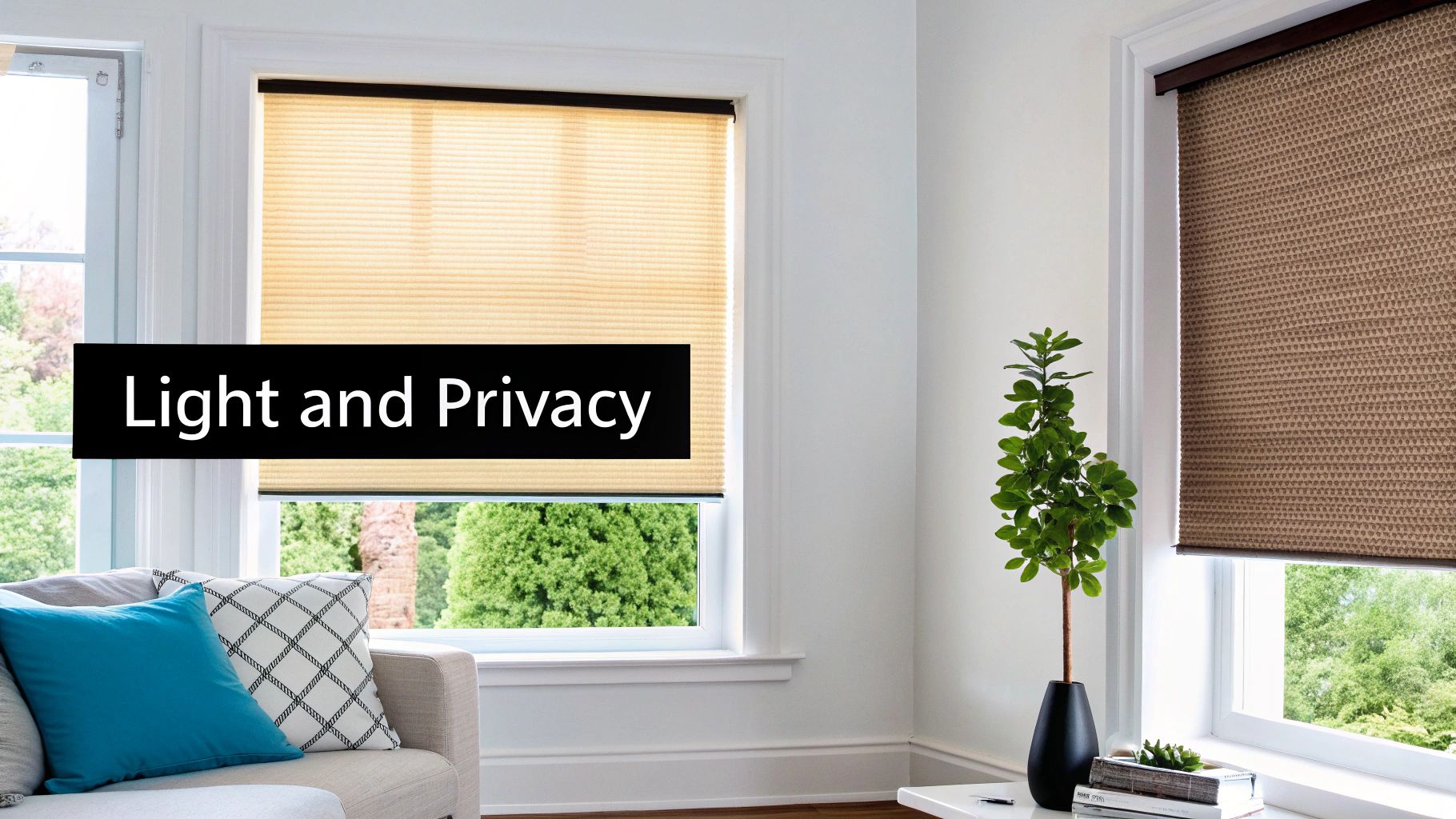
While saving energy is a huge plus, your window treatments are also a core part of your home's look and feel. In the roller shades vs cellular shades matchup, both get the job done, but they go about it in very different ways that can change a room's entire vibe.
Often, the right window treatment comes down to your home's unique style. Roller and cellular shades offer two very distinct looks, each fitting into different design philosophies.
Roller shades are the definition of modern minimalism. Their single, smooth panel of fabric creates a clean, flat profile that practically vanishes when raised. This understated look makes them a perfect fit for:
Cellular shades, on the other hand, bring a softer, more textured look. The gentle folds from their honeycomb design add a nice layer of depth and visual warmth. This makes them a great match for:
Controlling sunlight is one of the main jobs of any window shade. Both types give you a full spectrum of options, from fabrics that gently filter light to materials that block it out completely.
Expert Tip: While both shades come in blackout fabrics, cellular shades often provide a darker room. Their design allows them to be installed with a tighter fit inside the window frame, dramatically reducing the "halo effect" of light peeking around the edges that can sometimes occur with roller shades.
Cellular shades offer similar light control but with an extra perk: even their light-filtering fabrics provide some level of insulation. Our guide comparing light-filtering vs. blackout shades can help you decide what’s best for each room.
Finally, let's talk about privacy. When they're fully closed, both shades create a solid barrier. A standard roller shade is pretty straightforward—it's either up or it's down.
This is where cellular shades introduce a true game-changer: the top-down/bottom-up lift system. This feature lets you lower the shade from the top, allowing natural light to pour into the upper part of your room while keeping the bottom half covered for total privacy. For many homeowners, this one feature is the deciding factor.
When you’re choosing window treatments, it’s about more than just the initial price tag. You want a smart investment. Looking at roller shades vs cellular shades means weighing the upfront cost against the durability and overall value each shade brings to your home over its lifetime.
Generally, roller shades tend to have a lower starting price, making them a fantastic option if you're on a tight budget. Their simple design—a single panel of fabric with fewer moving parts—keeps manufacturing costs down.
Of course, the price for either shade can climb depending on a few key factors:
While a basic roller shade is often the most affordable entry point, an entry-level cellular shade can be priced very competitively with a mid-range roller shade.
This is where the financial side gets really interesting. A cellular shade might cost more initially, but its incredible insulation can offer a real return on your investment through energy savings. Over the years, those savings can easily make up for, and even surpass, the initial price difference.
The global market backs this up. While the versatile roller shade is projected to hold a 50.9% market share by 2025, it was the insulating cellular shade that led in units sold in 2023. Why? Their honeycomb pockets can reduce heat loss by up to 40%, saving homeowners an average of 10% on heating costs. You can explore more about these market trends and their drivers for a deeper understanding.
The Bottom Line: If your main goal is the lowest possible upfront cost, a standard roller shade is tough to beat. But if you’re thinking about the total cost of ownership over time, the energy savings from a cellular shade make a very compelling financial case.
The final piece of the value puzzle is how well each shade holds up to daily life. The durability in the roller shades vs cellular shades debate really comes down to how they're built.
Roller shades are made to be resilient. Their mechanism is straightforward and tough, and the single fabric panel is usually made from durable materials like vinyl. Cleaning them is a breeze—a quick wipe with a damp cloth is all it takes.
Cellular shades, while well-made, are naturally a bit more delicate. Those amazing honeycomb cells can trap dust and even small insects. They need a gentler touch when cleaning, usually with a vacuum's brush attachment or a can of compressed air.
Trying to decide between roller shades vs cellular shades gets much easier when you stop thinking about which one is "better" and start focusing on which one is better for you.
Think of roller shades as the stylish, dependable workhorse of window treatments. Their simplicity is their biggest strength, making them a fantastic fit for many situations.
Cellular shades are the specialists, built from the ground up for performance where it matters most. When comfort and efficiency are what you're after, these are your go-to.
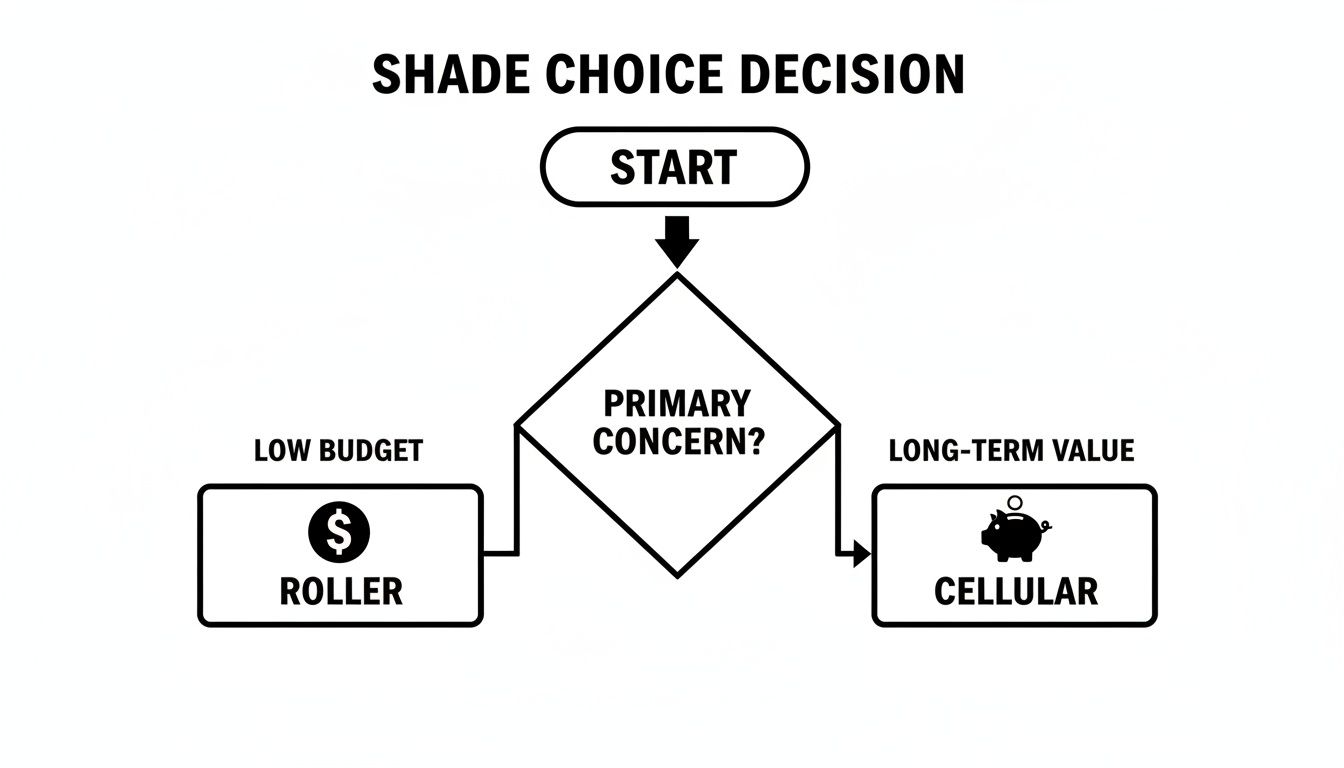
As you can see, the path often starts with what matters most to your wallet. If immediate affordability is key, roller shades are your answer. If you're ready to invest in future savings, cellular shades are the way to go.
Let's dive into some of the questions we hear most often when you're trying to decide between roller and cellular shades. We want to clear up any lingering doubts so you can feel completely confident in your choice.
For true, room-darkening performance, the short answer is cellular shades. While both styles offer blackout materials, a cellular shade's construction gives it an edge. Their honeycomb design allows the fabric to sit much tighter against the sides of the window frame, dramatically cutting down on the "light gap" or "halo effect" where light sneaks in around the edges.
When it comes to easy maintenance, roller shades are the clear winner. Their simple design makes them incredibly straightforward to look after. A roller shade is a single, smooth panel of fabric that you can easily wipe down with a damp cloth or a vacuum's brush attachment. The open cells of a cellular shade can trap dust and require more careful cleaning with a vacuum brush or compressed air.
Yes, absolutely. Both roller and cellular shades are available with modern motorization options, so you won't have to compromise. You can operate your shades via handheld remote, a wall-mounted switch, or by integrating them with smart home systems like Amazon Alexa or Google Home. Motorization is a fantastic feature for hard-to-reach windows.
Safety always comes first, and both shade types are excellent choices when you opt for a cordless operating system. The goal is to eliminate dangling cords, which can be a serious safety hazard. For either style, motorized shades are the safest possible option because they are inherently cord-free. Always look for products certified as "Best for Kids" by groups like the Window Covering Manufacturers Association to ensure the product has been designed with child safety as a top priority.
Ready to find that perfect mix of style, function, and peace of mind for your windows? At Joey'z Shopping, we offer a wonderful variety of both sleek roller shades and insulating cellular shades to fit any home and budget. Explore our collection today and let's transform your space together.