
Join the Joey'z Family!

Choosing the right window treatment can feel overwhelming, but understanding the different types of shades makes it simple. The most popular styles are Roller shades for their clean look, Roman shades for a soft, elegant touch, and Cellular shades for top-tier energy efficiency. Knowing what each type does best is the key to transforming your room.
The short answer is that shades are a single piece of fabric or material, while blinds have adjustable slats. This fundamental difference affects everything from light control and privacy to the overall style they bring to your space.
Window shades are more than just fabric; they are a key design element that dictates the mood, privacy, and comfort of a room. Unlike blinds with their tilting slats, shades are typically a single piece of material. This provides a solid, uniform appearance that changes how they manage light and contribute to your home's aesthetic.
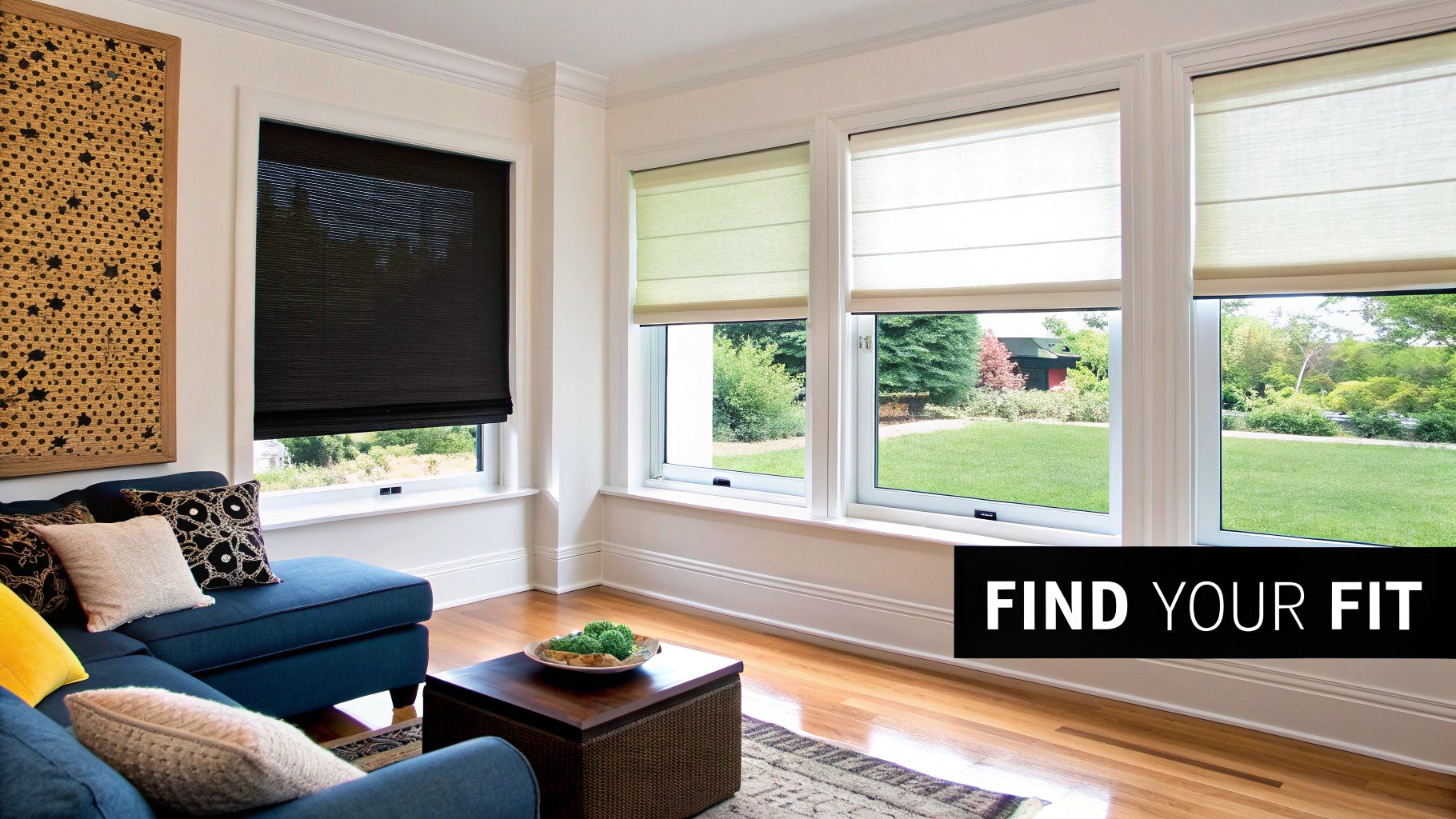
The best way to find the perfect shades is to define your primary goals. Do you want to darken a bedroom for better sleep? Do you need to cut the glare on your TV? Or are you simply looking for a beautiful decorative element for the living room? Each goal points toward a specific style of shade.
Before you fall in love with a fabric, consider the practical job your new shades need to perform. When you prioritize function, the entire selection process becomes much easier.
Once you know the style you want, the next critical step is ensuring a perfect fit. Accurate measurements are non-negotiable—they affect both how the shades look and how they function. Correct measurements prevent light gaps and ensure smooth operation.
For a detailed walkthrough, our guide on how to measure windows for blinds provides all the steps you need for a first-time-right result.
The right window treatment can do more than just block light; it can completely redefine a space, making it feel cozier, larger, or more refined. It’s one of the few home updates that offers an immediate and impactful change.
This guide will walk you through the most popular types of shades in detail, helping you move from inspiration to installation with confidence.
Some window treatments are purely functional, but others are chosen for the character and warmth they introduce. When you want to add a layer of softness or an interesting visual texture, fabric-based shades are an excellent choice. They transform harsh sunlight into a gentle glow, making a space feel instantly more inviting.
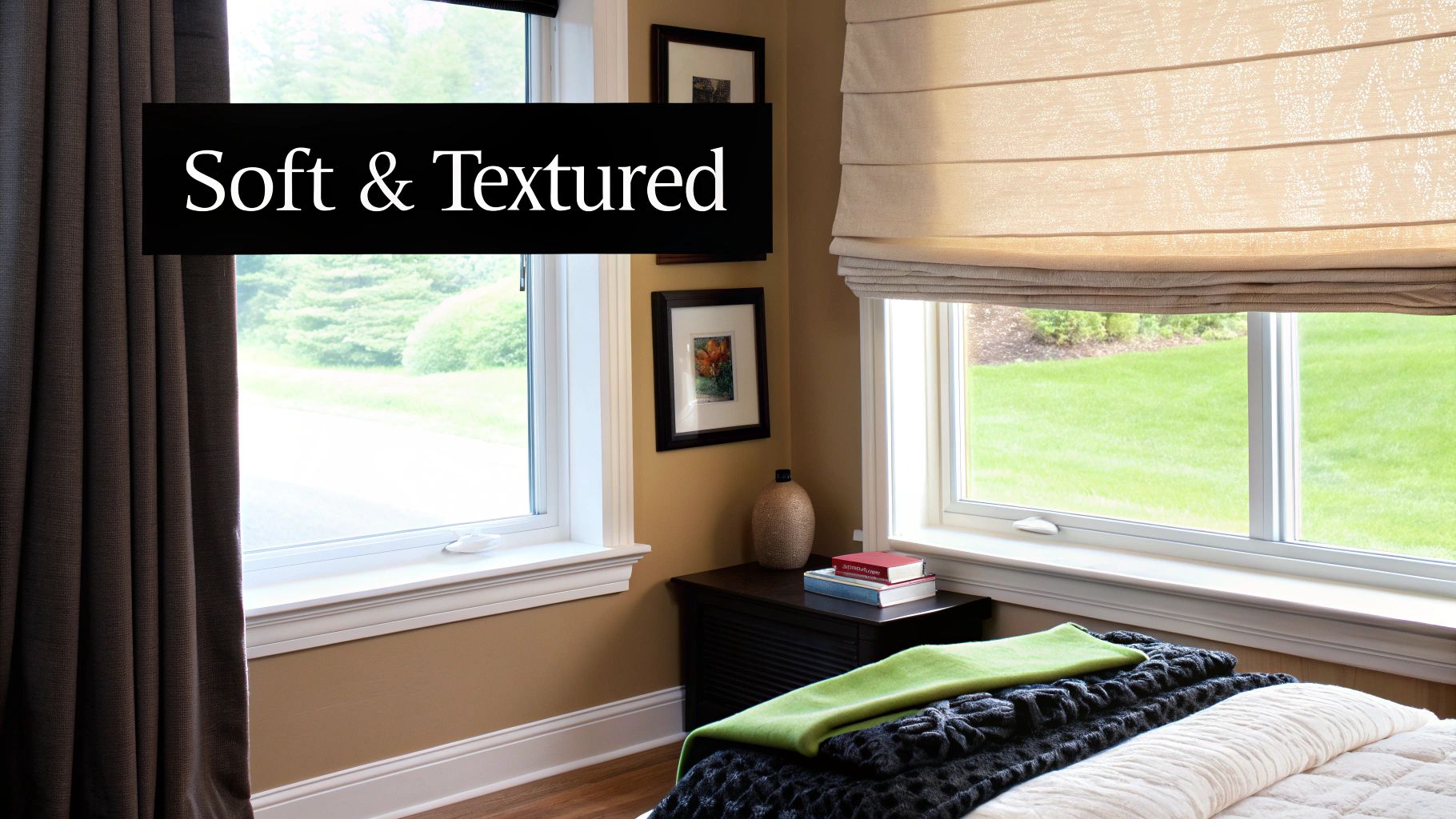
Among these options, Roman and Pleated shades stand out for their ability to add texture and dimension. These styles use fabric to create a distinct, decorative look that bridges the gap between the simplicity of shades and the lushness of drapes.
Roman shades are the go-to for a timeless, sophisticated look. They are crafted from a single piece of fabric that neatly stacks into soft, horizontal folds when raised. Unlike a roller shade that can disappear, a Roman shade maintains its presence, creating what looks like a beautiful fabric valance at the top of the window.
This cascading effect gives them their classic, drapery-like appeal. It’s a style that works perfectly in formal living rooms, elegant dining spaces, and cozy master bedrooms—anywhere you want to add a touch of luxury.
Expert Tip: The style of fold you choose for a Roman shade dramatically changes its personality. A flat fold offers a clean, modern look, while a teardrop or hobbled fold creates a more traditional, voluminous effect with cascading fabric loops.
Choosing the right fabric is key to achieving your desired look and function.
The material also influences the shade’s structure. Heavier fabrics like velvet create deep, rich folds, while lighter materials such as silk blends offer a crisp, airy feel. For a deeper dive into how they compare to other styles, explore our detailed comparison of Roman shades versus roller shades.
While Roman shades offer soft curves, pleated shades are all about sharp, clean lines. These shades are made from a single piece of fabric crisply folded into an accordion-like pattern. When raised, they compress into a very tight, unobtrusive stack at the top of the window, maximizing your view.
This neat, structured look makes them a fantastic fit for modern and minimalist interiors. They are also incredibly lightweight and easy to operate, which is a practical advantage for windows of all sizes.
The slim profile of pleated shades is a major benefit. Because they take up so little space when fully raised, they are an excellent solution for shallow window casings or French doors where bulkier treatments wouldn't work.
The fabric you choose dictates the light control, privacy, and overall mood of the room. This is where you can truly customize your window treatments to fit your lifestyle.
Here is a quick comparison of common fabric types:
| Fabric Type | Best For | Light Control | Vibe |
|---|---|---|---|
| Linen Blends | Living rooms, sunrooms | Gently filters light | Casual, airy, organic |
| Cotton & Canvas | Kitchens, family rooms | Medium light filtering | Versatile, classic, durable |
| Velvet & Chenille | Bedrooms, dining rooms | Excellent room darkening | Luxurious, formal, cozy |
| Polyester & Synthetics | Bathrooms, high-traffic areas | Varies; often high | Practical, easy-to-clean |
Synthetics like polyester have become popular for their durability and resistance to fading and moisture. They are often budget-friendly and easy to clean, making them a great choice for busy households or humid rooms like bathrooms. Natural fibers like linen, however, offer an unmatched organic texture that adds warmth and earthiness.
While some shades focus on soft textures, others are engineered for pure, practical performance. These modern workhorses are perfect for anyone who loves clean aesthetics, efficiency, and smart design. They are an active part of making your home more comfortable and functional.
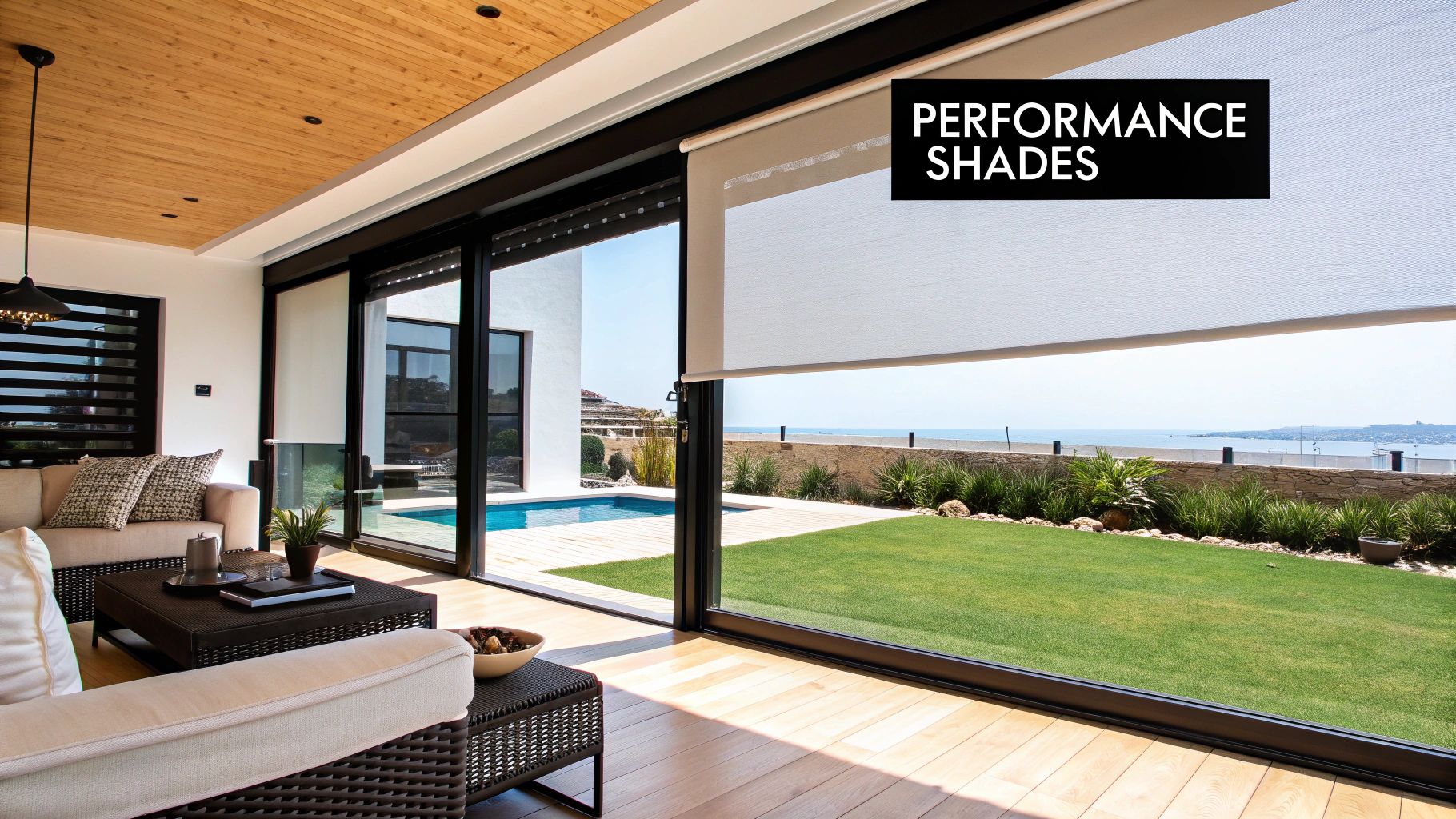
This category includes minimalist favorites like Roller Shades, the UV-blocking power of Solar Shades, and the innovative design of Zebra Shades. Each offers precise control over light and privacy with a distinctly contemporary feel.
For straightforward function and beautifully clean lines, nothing beats the classic roller shade. It consists of a single piece of fabric that wraps neatly around a casing. This design creates an uncluttered, minimal look that fits almost any decor. A key part of their appeal is how they roll up and practically disappear, leaving your view completely open.
Their versatility is what makes them a superstar. Roller shades come in a massive range of materials, colors, and opacities.
This adaptability makes roller shades a go-to solution that proves the simplest design is often the smartest.
Think of solar shades as high-tech sunglasses for your windows. They are a special type of roller shade engineered with a semi-translucent material designed to block harmful UV rays, reduce glare, and keep your home cooler. The magic is in their "openness factor," which describes how tightly the fabric is woven.
A lower openness factor (around 1% to 3%) offers more UV protection and privacy but a less clear view. A higher factor (10% to 14%) preserves more of your view while still cutting glare.
This makes solar shades perfect for rooms with great views that get a lot of direct sun, like home offices or living areas with large windows. You can learn more about maintaining various window screens, including high-performance solar screens to keep them in top condition.
Also known as dual-layer shades, Zebra shades are one of the most inventive options among the different types of shades. They are made from a single, continuous loop of fabric with alternating horizontal stripes of sheer and opaque material. This clever design provides incredible control over light and privacy.
As you adjust the shade, the stripes glide past each other. Align the opaque bands for total privacy, or align the sheer bands to let in soft, diffused light. You can also set them anywhere in between for a custom look.
This dual functionality makes Zebra shades incredibly versatile.
The global blinds and shades market, valued at about USD 6.78 billion, is projected to grow to USD 9.11 billion by 2032. This growth is driven by consumer demand for innovative products like dual-layer shades that offer both privacy and natural light.
Sometimes you need window treatments that solve a specific problem, from high energy bills to poor sleep. Specialty shades like Cellular, Blackout, and Sheer shades are engineered with unique features that go beyond basic light control to improve the comfort and efficiency of your home.
Also known as honeycomb shades, these are the undisputed champions of energy efficiency. Their name comes from a unique construction of fabric cells that look like a honeycomb from the side. This design isn't just for looks—it's brilliant engineering.
These pockets trap air, creating a powerful layer of insulation between your window and the room. This barrier helps keep your home warmer in winter and cooler in summer, potentially lowering your energy bills. This focus on efficiency is a major market driver; the global industry, valued at around USD 14.82 billion, is projected to reach USD 24.63 billion by 2030, largely due to demand for energy-saving solutions like cellular shades. You can discover more insights about this growing market.
For anyone who needs absolute darkness to sleep, works a night shift, or wants a true home theater experience, blackout shades are the solution. Unlike "room-darkening" shades, true blackout shades are designed to block up to 99% of incoming light.
Pro Tip: For maximum light-blocking, choose an outside mount or an inside mount with light-blocking side channels. These additions cover the small gaps along the edges where light often peeks through, ensuring your room stays perfectly dark.
How do they work? It comes down to a few key features:
At Joey'z Shopping, we offer a great selection of stylish blackout curtains and shades that combine total light control with beautiful design.
What if you want privacy and natural light at the same time? Sheer shades solve this dilemma beautifully. They provide the light-filtering benefits of a sheer curtain with the functional control of a traditional shade, striking a perfect balance between openness and seclusion.
Sheer shades are often constructed with soft fabric vanes suspended between two layers of transparent fabric. This design allows you to tilt the vanes open to enjoy a soft, diffused view, or close them for gentle privacy. They are an elegant solution for living rooms and dining areas where you want to create a serene, airy atmosphere.
Large glass surfaces like sliding doors and picture windows are wonderful for natural light but can be a challenge to cover. Standard shades often look awkward or are too small. For these oversized spaces, you need a specialized solution that combines style, function, and ease of use.
The two best options for large openings are Vertical Blinds and Panel Track Blinds. Each offers a distinct look while solving the problem of covering a wide expanse of glass.
Vertical blinds are the time-tested choice for large windows and sliding glass doors. They consist of individual vertical vanes that hang from a track and slide open to one side, providing full access to your door.
Their main advantage is precise light control. You can tilt the vanes to block harsh sun, gently filter light, or close them for total privacy. This versatility makes them a practical tool for managing light throughout the day.
For more inspiration, we have plenty of other large window shade ideas in our dedicated guide.
For a more contemporary and sophisticated look, panel track blinds are a phenomenal choice. Think of them as a sleek update to vertical blinds. Instead of thin slats, they use wide, overlapping fabric panels that glide smoothly along a multi-channel track.
When opened, the panels stack cleanly behind one another, creating a tidy, uncluttered look. When closed, they offer a solid wall of fabric with a bold, architectural feel that is perfect for modern interiors.
Panel track blinds are brilliant not just for windows, but also as stylish room dividers or even closet doors. Their wide panels create a much more substantial and dramatic visual statement than traditional vertical blinds.
The U.S. blinds and shades market continues to grow, driven by interest in energy efficiency and updated home aesthetics. Both vertical and panel track blinds meet this trend by offering practical, stylish solutions. You can learn more about these market trends from Fortune Business Insights.
You’ve explored the amazing different types of shades available. Now comes the fun part: choosing and installing the perfect ones for your home. This guide will walk you through the final steps with confidence.
The first and most critical step is getting accurate measurements. Precision is everything. A small mistake can lead to light gaps or a fit that just looks off.
Before you buy, you need two key pieces of information: the exact dimensions of your window and whether you want an inside or outside mount.
This simple visual can help you choose the right style for large openings.
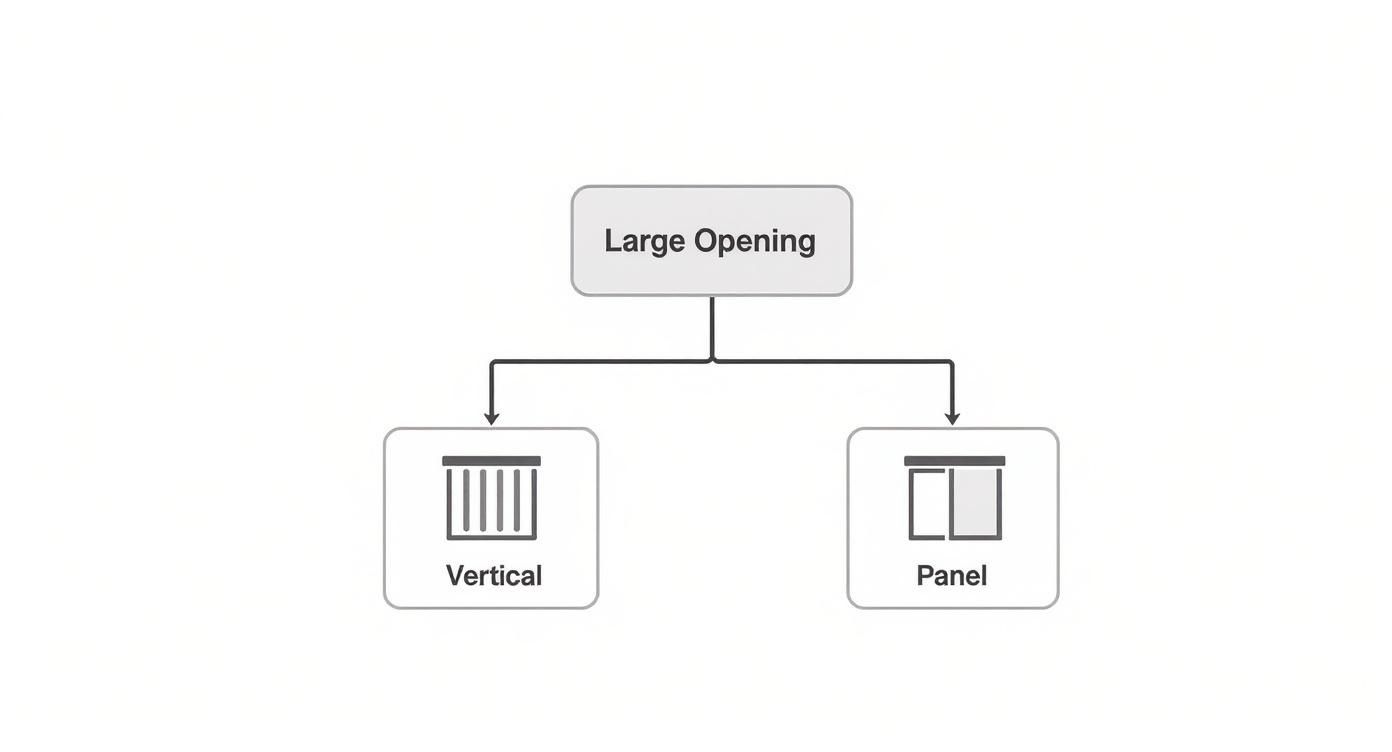
For large expanses of glass, vertical and panel shades are typically the most practical and stylish options.
How you open and close your shades is as important as how they look. Today’s lift systems prioritize safety, convenience, and a clean, modern aesthetic.
Cordless Lift: This is the new safety standard, especially for homes with children or pets. Simply push or pull the bottom rail to raise and lower the shade. No dangling cords, no fuss. The U.S. Consumer Product Safety Commission recommends only cordless window coverings for homes with young children.
Motorized Lift: For ultimate convenience, motorized shades are a game-changer. Operate them with a remote, a smartphone app, or sync them with your smart home system. They are a lifesaver for hard-to-reach windows. At Joey'z Shopping, we have a great selection of smart curtains and shades that bring this technology to your fingertips.
Expert Insight: Motorized shades are also a fantastic security feature. Schedule them to open and close automatically to create the illusion that someone is home, even when you're away.
Choosing the right shades can bring up a few questions. We’ve gathered the most common ones to help you feel completely confident in your decision.
The main difference is their construction. Shades are made from a single, continuous piece of fabric or similar material. They roll, fold, or bunch up to open. Blinds, on the other hand, have individual hard slats or vanes that can be tilted to adjust light or raised completely.
Cellular or honeycomb shades are the champions of energy efficiency. Their unique honeycomb-shaped pockets are specifically designed to trap air, creating an insulating barrier at your window. This helps keep your home warmer in winter and cooler in summer.
Roller shades and cellular shades are consistently the most popular choices. Roller shades are loved for their clean lines, minimalist look, and incredible versatility. Cellular shades are a top pick for their excellent insulation, wide range of light-filtering options, and crisp, modern feel.
Yes, you absolutely can! Most modern shades are designed for DIY installation and come with detailed instructions. However, for oversized windows, motorized systems, or if you simply want a guaranteed perfect fit, hiring a professional installer is always a great option.
Ready to discover the perfect shades to bring your rooms to life? Take a look at the full collection at Joey'z Shopping and find a style that feels just right for you. Start shopping our window treatments now!