
Join the Joey'z Family!

Choosing between the soft, tailored elegance of Roman shades and the sleek minimalism of roller shades can be a tough call. Both transform a window, but they do it in completely different ways. Finding the right one is a personal journey, and we're here to help you navigate it.
The short answer? We suggest Roman shades if you're aiming for a classic, textured look with excellent insulation—perfect for living rooms and bedrooms. On the other hand, roller shades are a fantastic choice for a modern, functional design with precise light control and durability, making them ideal for kitchens and contemporary spaces.
Deciding between Roman and roller shades goes deeper than just looks; it’s about matching a window treatment's personality to your home's needs. Roman shades bring a luxurious, layered feel, acting almost like a hybrid between a shade and a curtain. Their soft fabric folds stack neatly when raised, adding visual interest and warmth.
Roller shades, in contrast, are the champions of modern simplicity. A single piece of material wraps cleanly around a tube, creating an unobtrusive, flat profile that blends right in. This minimalist design is a big reason for their popularity. In fact, roller shades hold the largest share of the global blinds and shades market, accounting for about 27.4% of the product segment. You can read more insights about the window treatment market to see why their popularity keeps growing.
To help you decide, let’s break down the essential features side-by-side.
We know it helps to see things side-by-side. This quick table summarizes the key differences to help you make an informed decision based on what matters most to you.
| Feature | Roman Shades | Roller Shades |
|---|---|---|
| Aesthetic | Soft, elegant, textured fabric folds. | Sleek, modern, minimalist flat panel. |
| Material | Typically high-end fabrics like linen, cotton, silk. | Polyester, vinyl, solar screen fabrics. |
| Best For | Living rooms, dining rooms, bedrooms. | Kitchens, bathrooms, offices, minimalist decor. |
| Insulation | Excellent due to layered fabric construction. | Good with specialized thermal or blackout fabrics. |
| Maintenance | Requires gentle care; spot-cleaning or vacuuming. | Very easy to clean; often just needs wiping. |
Hopefully, this gives you a clearer picture. Both are wonderful options, but one might be a better fit for your specific space and lifestyle.
Window treatments do more than cover a window; they're a core design element that shapes a room's feel. When weighing roman shades vs roller shades, their aesthetic impact is one of the biggest differentiators. Each brings a unique personality to your space.
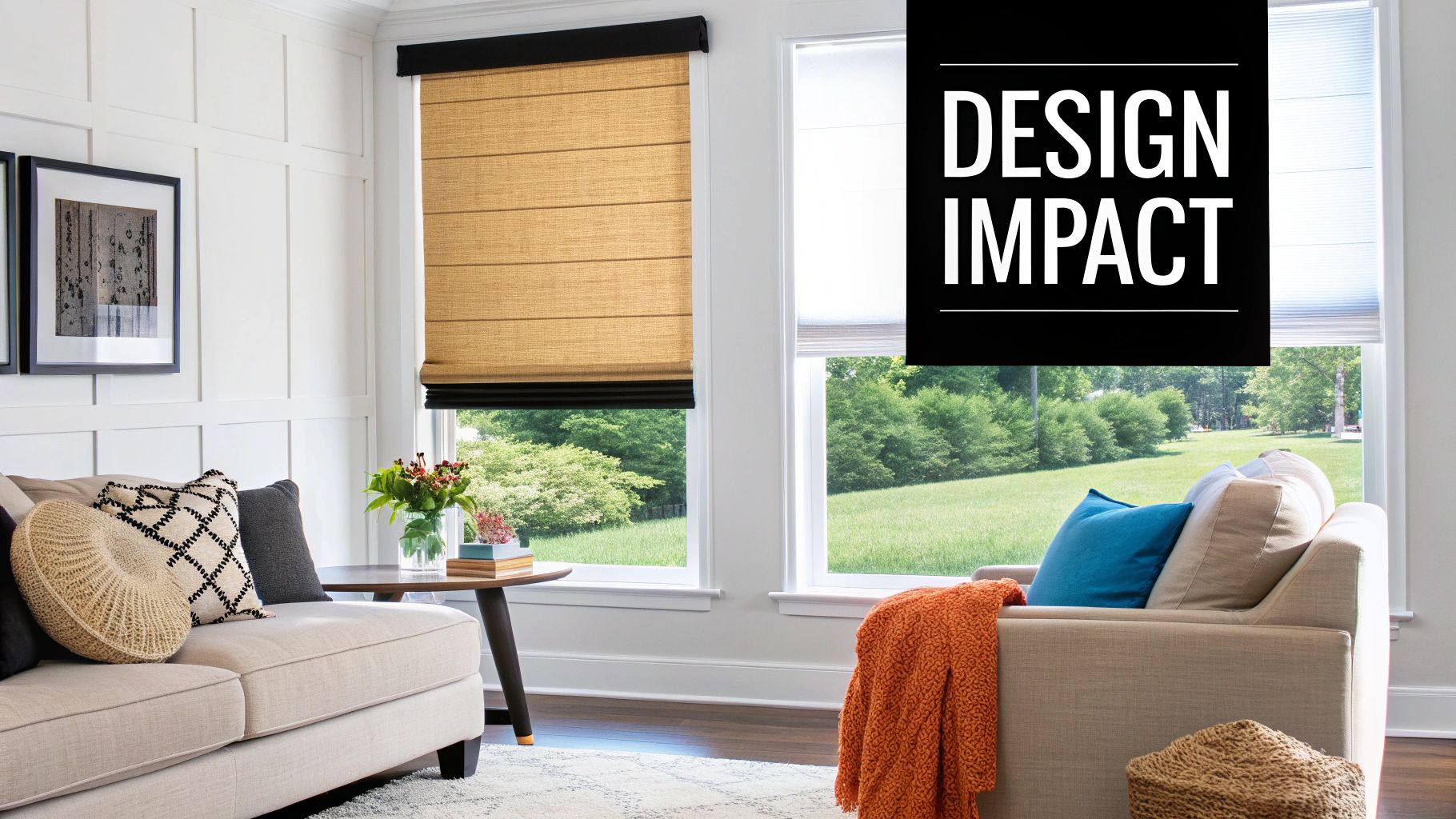
Think of Roman shades as the embodiment of soft, tailored elegance. They're a hybrid of a classic drapery panel and a functional shade. When you raise them, the fabric gathers into neat, horizontal folds, creating a lovely valance-like effect that adds depth, texture, and a touch of luxury.
This natural softness is a powerful tool for warming up a room. For example, a heavyweight linen Roman shade in a living room can soften the hard lines of furniture and flooring, instantly making the space feel more complete and inviting.
The real design magic of Roman shades is in their fabric. From rich velvets to airy cottons and silks, the material directly sets the room's mood. This is why they're a favorite among designers for creating layered, sophisticated interiors.
Expert Insight: Roman shades act as a decorative focal point even when they're fully raised. Their stacked fabric adds architectural interest to the top of the window, so your window never looks completely bare.
They are a fantastic fit for spaces designed for comfort, like:
The choice of fold style—from a clean, flat fold for a modern look to a soft, teardrop fold for traditional decor—lets you customize their look even further. If you're dealing with oversized windows, we've put together a list of inspiring large window shade ideas that can help you find the perfect match.
On the other side of the style coin, roller shades are all about a clean, minimalist aesthetic. Made of a single panel of fabric that rolls neatly onto a tube, they offer a completely flat profile when lowered. When raised, they can practically disappear, maximizing your view and natural light.
This unobtrusive nature is their greatest strength. Roller shades don't compete with other design elements; they complement them by providing a sleek, functional backdrop. A black solar roller shade in a home office, for instance, can cut screen glare while preserving a sharp city view with a modern finish.
This simple appeal is a huge reason they're so popular. The North American region leads the global blinds and shades market, capturing over 39% of total revenue in 2024, with homes making up about two-thirds of that demand. While Roman shades are treasured in high-end interiors, the functional simplicity of roller shades meets a much broader need for stylish, easy-to-install window treatments.
Because they are so simple and durable, roller shades are a perfect match for:
Ultimately, your choice comes down to the story you want your room to tell. Are you going for the soft, inviting narrative of a Roman shade, or the clean, efficient statement of a roller shade?
Let’s move past looks and talk about what your window treatments will actually do for you. When it comes to roman shades vs roller shades, how they handle light, privacy, and insulation is where you'll notice the biggest differences.
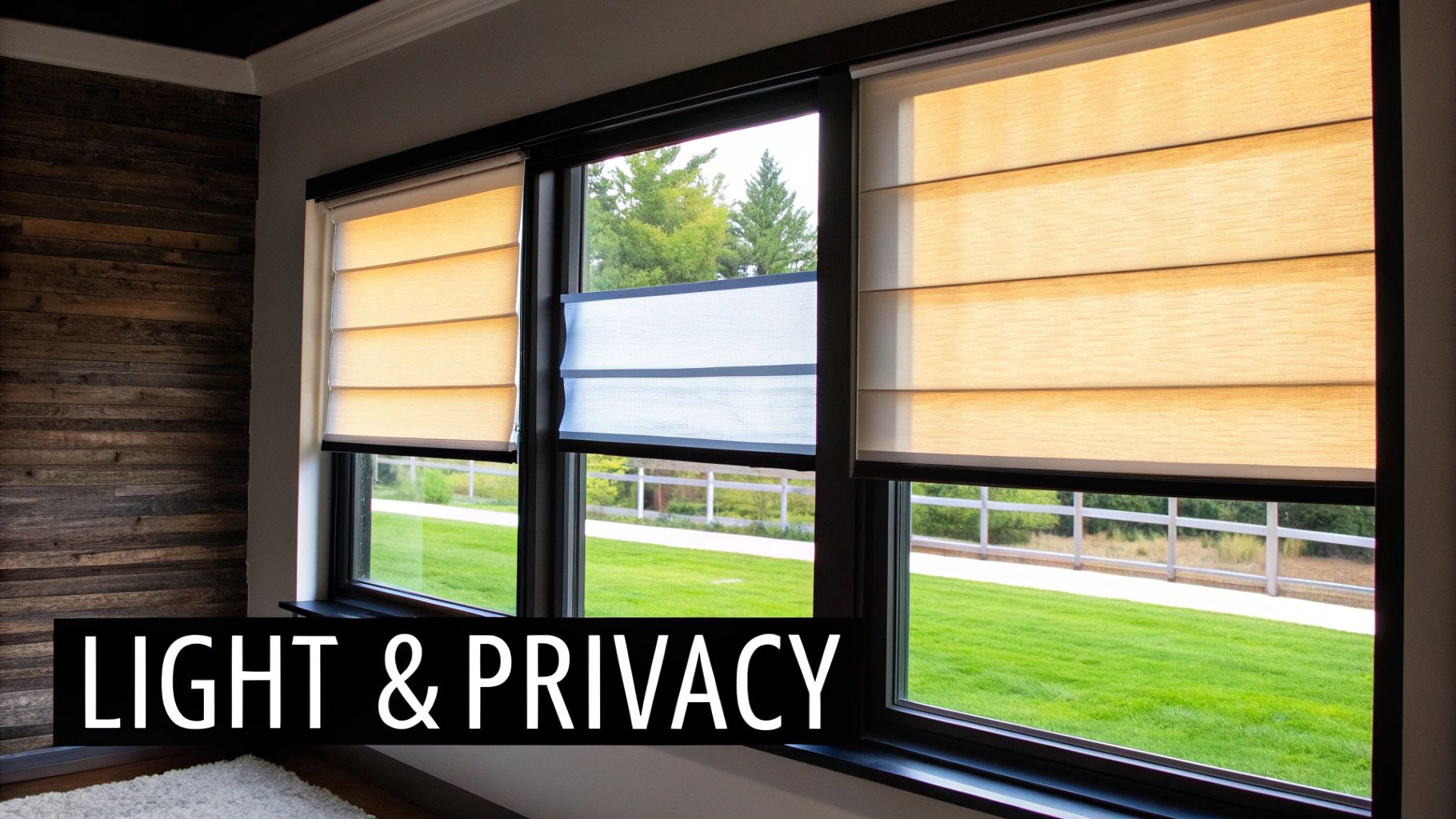
How well a shade manages sunlight can completely change a room's comfort. Getting the opacity right is key, whether you're trying to cut screen glare or need absolute darkness for a good night's sleep.
Roman shades are masters of creating a soft, warm atmosphere. A light-filtering fabric will scatter sunlight beautifully, filling the room with a welcoming glow while toning down harsh glare. Their operation is straightforward—they're either up for full sun or down for that gentle, filtered light.
Roller shades, on the other hand, give you a much broader range of light control. You can find materials from sheer weaves that preserve your view to full blackout fabrics that block 99% of light. For the ultimate flexibility, a dual roller shade system puts two different fabrics (like one sheer and one blackout) on the same bracket, letting you switch between soft light and complete darkness in an instant.
Key Takeaway: If you’re after a soft, ambient glow, a light-filtering Roman shade is a gorgeous choice. For precise, versatile light management—especially with both sheer and blackout options—roller shades have the edge.
Understanding the difference is important. We break it down in our guide on light-filtering vs. blackout shades to help you pick the perfect option for every room.
Privacy is a big deal, especially in bedrooms, bathrooms, and street-facing rooms. The shade’s construction is what really matters here.
Roman shades naturally offer a high level of privacy when closed. Because they’re made of substantial fabric, often with a liner, you don’t have to worry about silhouettes being visible from the outside.
With roller shades, the level of privacy depends on the material:
Did you know your window treatments can make your home more energy-efficient? The U.S. Department of Energy notes that shades can cut down on heat gain by as much as 45% when closed in the summer.
This is where Roman shades truly shine. Their layered fabric design creates an insulating pocket of air between the material and the window. This helps keep your home warmer in winter and cooler in summer, which can lower energy bills. Adding a thermal liner boosts that insulating power even more.
Thinking about insulation is a core part of creating a more comfortable home, a big component of eco-friendly interior design.
While a standard roller shade provides some insulation, specialized thermal or cellular roller shades are designed for efficiency. However, a standard Roman shade will almost always insulate better than a standard roller shade. If thermal performance is your main goal, Roman shades are the clear winner.
When choosing window treatments, you’re investing in a functional piece for your home that needs to stand up to daily life. In the roman shades vs roller shades debate, materials dictate longevity, care, and the best placement in your home.
Roman shades get their charm from beautiful, decorative textiles like natural linen, soft cottons, and luxurious silk blends. These fabrics bring texture and visual warmth, but they also need more TLC.
Proper upkeep keeps your shades looking fantastic for years. Because of how they're built, the cleaning methods for Roman and roller shades are completely different.
Roman Shades: These call for gentle cleaning. A regular dusting or a quick once-over with your vacuum’s upholstery brush is perfect for day-to-day dust. For spills, you’ll need to carefully spot-clean. This is why they aren't the best fit for high-moisture spots like a steamy bathroom or right over the kitchen sink.
Roller Shades: This is where things get incredibly simple. Most are made from tough materials like polyester, vinyl, or solar screen fabrics. These non-porous surfaces can be wiped clean with a damp cloth in seconds, making them a lifesaver in kids' rooms and a no-brainer for kitchens and bathrooms.
Beyond the fabric, the lift mechanism plays a huge role in durability. This is where the simple design of a roller shade often gives it an advantage.
A roller shade is a straightforward system: one piece of fabric wraps around a sturdy tube. The mechanism is self-contained, with few moving parts exposed to dust or wear. That simplicity is what makes it so reliable.
Insider Tip: The straightforward, enclosed mechanism of a quality roller shade is one of its most underrated features. It's incredibly robust and less prone to the operational quirks that can sometimes affect more complex window treatments.
Roman shades rely on a system of cords or tapes that run through rings on the back to create their folds. While modern systems are well-engineered, the design is naturally more complex. Over time, cords can occasionally get tangled or need adjustment to ensure the shade rises evenly.
For homeowners who prioritize low-maintenance durability and fuss-free operation, the robust simplicity of a roller shade is a clear winner. But if the soft, textural appeal of fabric is what you're after, the slightly more involved upkeep of a Roman shade is a worthwhile trade-off.
Explore our collections of durable roller shades and elegant Roman shades to find the perfect balance for your home.
When you’re weighing roman shades vs roller shades, it’s smart to look at the whole picture—not just the initial price tag, but installation and long-term benefits too. The final cost is about the total value each shade brings to your home.
Let's get straight to it: Roman shades usually cost more upfront. Their detailed construction, which involves sewing fabric into beautiful, soft folds, requires more labor and premium materials. In contrast, the clean, simple design of roller shades generally makes them the more budget-friendly option.
The price of a Roman shade is all about the fabric. Premium materials like Belgian linen or silk blends naturally come with a higher price tag. This gives them their luxurious feel but also drives up the cost. The demand for these elegant treatments is solid—as of 2023, the global Roman shades market was valued at around $2.5 billion and is expected to keep growing. You can discover more insights about the Roman blinds market.
Roller shades, on the other hand, offer a much wider range of prices. You can find affordable vinyl options or step up to high-performance solar screen fabrics. This flexibility means they can fit almost any budget.
Value Insight: Think of a Roman shade as functional furniture for your window—its value is tied to its tailored look. A roller shade's value often comes from its practical performance, durability, and cost-effectiveness.
Installation is another place where the two shades can differ. If you're a confident DIYer, roller shades are often easier. Their straightforward bracket system usually just needs a few screws and a level.
Roman shades can be a bit more finicky, especially on larger windows where getting the folding mechanism perfectly aligned is key. While many homeowners install them just fine, the process demands more precision.
If you're new to this, we have a helpful guide. You might find our article on how to install Roman shades useful for detailed instructions.
True value is about more than the initial price. It’s about what you get over the entire life of the product. This is where the comparison gets more interesting.
Here’s a look at our estimated cost and feature breakdown to help you see the bigger picture.
| Aspect | Roman Shades | Roller Shades |
|---|---|---|
| Initial Cost | $$$ - $$$$ | $ - $$$ |
| DIY Installation | Moderate Difficulty | Easy |
| Insulation Value | High | Low to Moderate |
| Aesthetic Impact | High (Decorative) | Moderate (Functional) |
| Maintenance | Low to Moderate | Low |
| Long-Term Savings | Potential energy savings | Lower replacement cost |
Ultimately, the right choice depends on what you value most.
The value of Roman shades comes from:
The value of roller shades is centered on:
Alright, you've seen what makes both roman shades and roller shades tick. Now it's time to figure out which one is the perfect match for your space. Making that final call comes down to lining up your room's needs with what each style does best.
To make it easy, I've put together a quick checklist. Answering these questions will point you straight to the right window treatment.
Before you start browsing, take a minute to think through these questions. Your answers will build a clear picture of what you're really looking for.
This little decision tree can help you visualize how your style preference steers the choice between Roman shades vs roller shades.
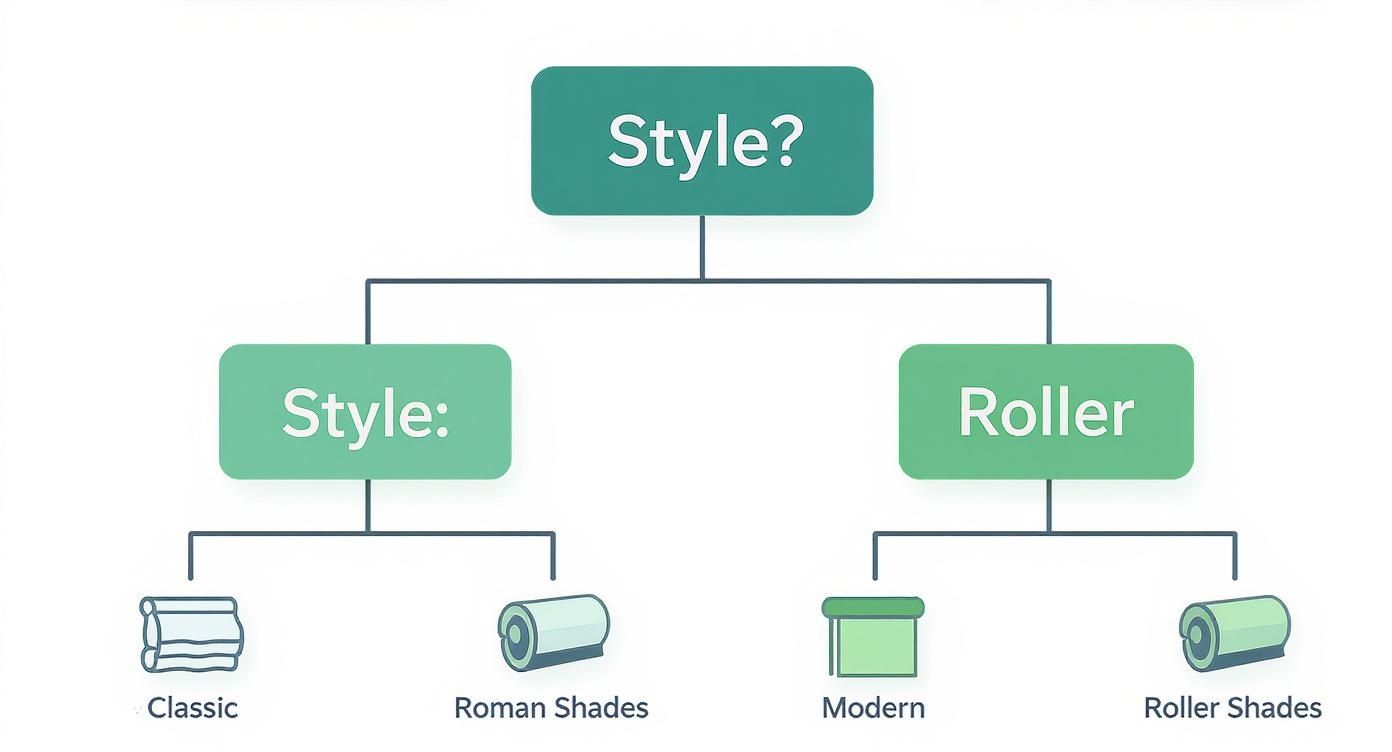
As you can see, if you're all about that classic, fabric-focused look, Roman shades are your natural fit. If a sleek, modern aesthetic is what you're after, roller shades are calling your name.
Let’s put it all together. This last step is about taking what you've decided and turning it into action with confidence.
Final Recommendation: Choose Roman shades when your goal is to add decorative texture, warmth, and superior insulation to living rooms, dining rooms, and bedrooms. Opt for roller shades when you need a durable, easy-to-clean, and budget-friendly solution with versatile light control, perfect for kitchens, bathrooms, and modern spaces.
Based on that, you should have a clear winner. If your checklist pointed you toward elegance and rich texture, it's time to browse our beautiful collection of Roman shades. If modern function and durability won the day, our versatile range of roller shades has exactly what you need.
Even after going through all the details, you might have a couple of questions. Here are direct answers to the questions we hear most from our customers when they’re deciding between Roman and roller shades.
This comes down to what you’re trying to achieve. If your number one goal is making your room as dark as possible, a blackout roller shade is tough to beat, especially when paired with light-blocking side channels.
However, if you’re looking for a softer, more luxurious vibe that still gets the room dark, a Roman shade with a blackout liner is a fantastic choice. It brings a layer of texture and style, creating a cozy retreat while blocking out the vast majority of light.
Safety is always the first priority. The great news is that both Roman and roller shades are available with cordless and motorized lift systems. These are, without a doubt, the safest options for any home with children or pets.
These modern designs eliminate dangling cords entirely, which removes the strangulation risks associated with older shades. No matter which style you choose, always opt for a certified cordless or motorized design.
We generally advise against using standard fabric Roman shades in high-humidity spots, like a full bathroom with a shower. The constant moisture can lead to mildew and damage the fabric over time.
For kitchens, they can absorb cooking smells and are harder to clean than other options. For these rooms, you’ll be much happier with moisture-resistant roller shades. Materials like vinyl or solar screen fabric are far more practical, durable, and easy to wipe clean.
Not at all! While they have a classic feel, today’s Roman shades are incredibly versatile. You can find them in a massive variety of contemporary fabrics, on-trend patterns, and updated fold styles that fit right into modern homes.
Design Tip: A flat-fold Roman shade in a simple, neutral fabric like linen looks perfectly at home in a minimalist interior. Their versatility allows them to bridge the gap between traditional elegance and clean, contemporary design, which is why they never go out of style.
Ready to transform your windows? Here at Joey'z Shopping, we’ve curated a beautiful selection of both elegant Roman shades and sleek roller shades to fit any style and budget. Come explore our collections and find that perfect finishing touch for your home today. Find your perfect window treatment at https://joeyzshopping.com.