
Join the Joey'z Family!

Finding the perfect curtains for your sliding glass patio door is all about striking that sweet spot between style, privacy, and day-to-day function. It’s not just about covering glass. The right treatment transforms a functional doorway into a standout feature, enhancing your view when open and giving you a sense of cozy comfort when closed. This guide covers all the best sliding glass patio door curtain ideas to get you started.
Sliding glass doors are incredible. They flood our rooms with natural light and create a seamless connection between inside and out. But that huge expanse of glass comes with its own set of challenges. Without the right treatment, you’re left dealing with privacy issues, blinding glare, and even heat loss that can send your energy bills soaring.
The real challenge is finding a curtain solution that looks great without getting in the way of the door’s main job—letting you in and out. This is where a little planning goes a long way. Think of it like dressing a busy hallway; whatever you choose has to be durable and easy to use, not just pretty.
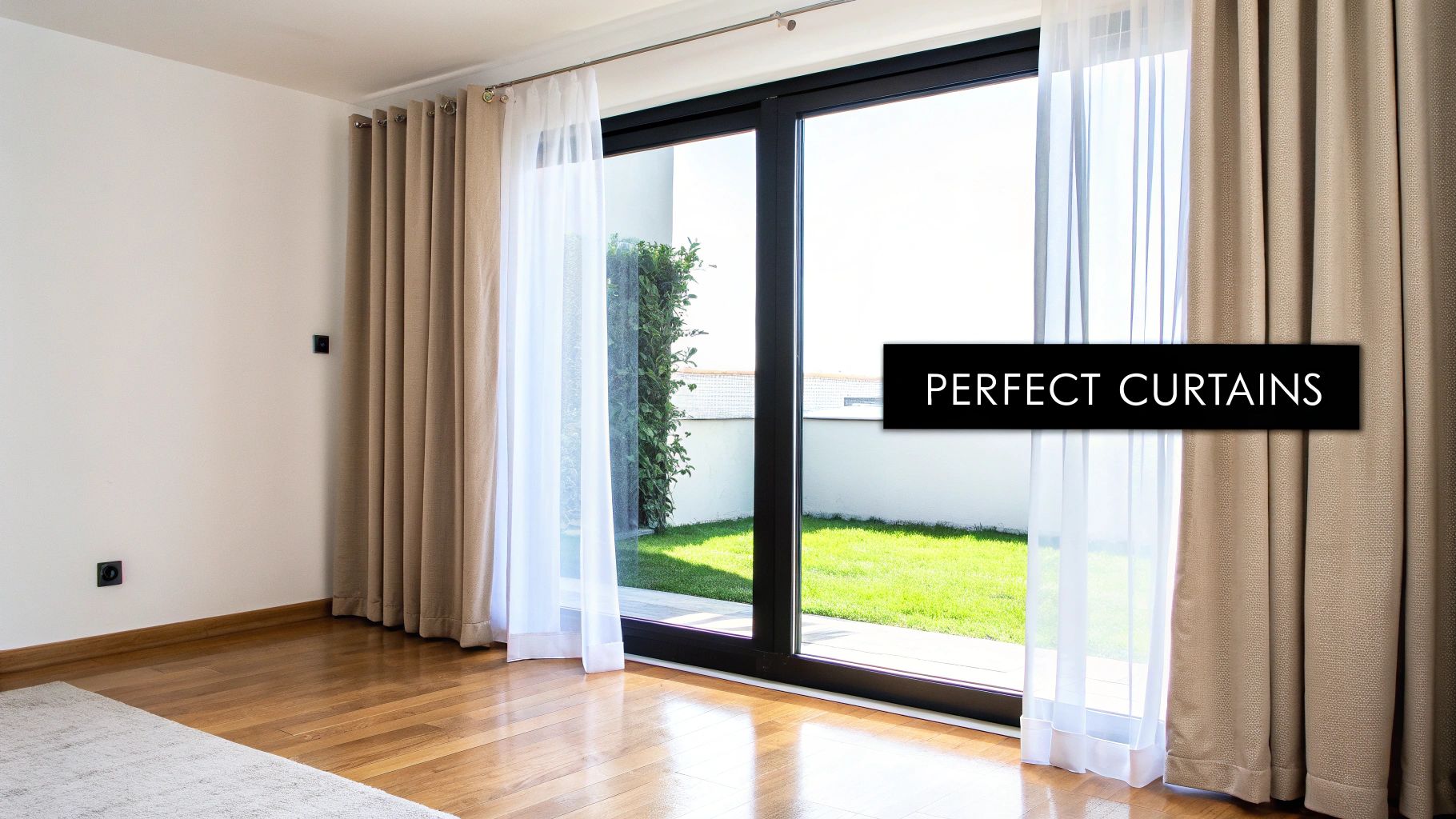
Before you even start thinking about fabrics and colors, let’s get your priorities straight. Knowing what you need from the get-go will make every other decision easier and help you avoid common headaches later on. If you want to dive deep into all the possibilities, this guide on practical and decorative options for sliding glass doors is a fantastic starting point.
Take a minute to ask yourself a few simple questions:
Answering these questions gives you a solid foundation. For example, if you’re all about saving energy, you’ll probably lean toward thermal-lined drapes. But if you’re craving a bright, breezy feel, lightweight sheers might be the perfect fit.
Insider Tip: One of the biggest mistakes people make is treating a sliding door like a regular window. Its massive width and constant use demand special hardware and measuring techniques. You need to make sure the curtains can stack completely off the glass, leaving your view and walkway totally clear.
The fabric you choose for your sliding glass door curtains is so much more than just material—it’s the heart and soul of the whole look. It sets the mood for the entire room, dictates how light filters in, and can even have a real impact on your energy bills. Think of it as casting the main character in your room's design story.
Lightweight fabrics like linen, cotton, and sheers are your go-to for creating a bright, breezy vibe. They act like a soft-focus lens for sunlight, cutting down on harsh glare while still bathing the space in natural light. This makes them perfect for living rooms or kitchens where you want to feel connected to the outdoors.
On the other side, you have the heavy hitters: thermal-lined fabrics, velvet, and blackout materials. These are your champions of privacy, insulation, and total darkness. A thick velvet drape can turn a media room into a theater-like escape, while thermal curtains are absolute workhorses, helping keep your home cooler in the summer and warmer in the winter.
So, should you go for a breezy sheer or a substantial drape? The short answer is: it all comes down to what you need from the space. Are you trying to invite in as much light as possible, or do you need to control it completely?
Light & Airy Fabrics (Sheer, Linen, Cotton):
Heavy & Insulating Fabrics (Velvet, Thermal, Blackout):
To help make the decision a bit easier, let's put the most popular choices side-by-side. This table breaks down how each fabric performs in the areas that matter most, helping you find the perfect match for your home.
| Fabric Type | Best For | Light Control | Privacy Level | Insulation |
|---|---|---|---|---|
| Sheer/Voile | Creating a bright, airy feel and softening harsh sunlight. | Low | Low | None |
| Linen/Cotton | A relaxed, natural look with moderate light filtering. | Medium | Medium | Low |
| Velvet | Adding a touch of luxury, sound dampening, and light blocking. | High | High | Medium |
| Blackout | Achieving maximum darkness and privacy, ideal for bedrooms. | Maximum | Maximum | High |
| Thermal-Lined | Improving energy efficiency by blocking heat and cold. | High to Max | High | Maximum |
Ultimately, the best fabric is one that strikes a perfect balance between your practical needs and your personal style.
Beyond pure function, your curtain style needs to feel right in your home. The right pattern, color, and header type are the crucial finishing touches that pull a room together. These choices are what bring all those great sliding glass patio door curtain ideas to life.
For a clean, modern look, you can't go wrong with solid-colored curtains hung with a simple grommet or ripple-fold header. These styles create sleek, uniform lines that glide effortlessly. If your home leans more traditional or bohemian, don't be afraid to play with patterns and textures. A subtle floral print or a rich, textured weave can add a ton of depth and personality.
Expert Tip: When in doubt, go neutral. A classic off-white, beige, or light gray curtain is incredibly versatile. It lets your furniture and other decor take center stage, and you can always bring in pops of color with decorative tie-backs or other accessories.
Remember, for high-traffic doors, durability is just as important as appearance. A sturdy cotton blend or a high-quality polyester can give you the look of natural fibers with the resilience needed for daily use. If you're looking for that perfect blend of beauty and performance, take some time to explore different insulated and thermal curtain styles.
Think of your curtain hardware as the unsung hero of your window treatment. The fabric gets all the attention, but it’s the hardware that does all the heavy lifting, making sure your beautiful curtains glide open and shut without a hitch. For a high-traffic spot like a sliding glass patio door, getting this part right is absolutely essential.
You’re looking at two main contenders here: the classic curtain rod and the more specialized traverse rod. A standard rod is simple and familiar, but it can be a real pain to drag heavy, wide curtains across it every single day. This is where a traverse rod really shines.
A standard curtain rod is just what it sounds like—a stationary pole that you manually slide curtains across on rings or grommets. It's a timeless choice and works perfectly well for lighter fabrics or on doors that you don’t open and close a dozen times a day.
A traverse rod, on the other hand, is a bit more clever. It has an internal track and pulley system, so instead of pulling on the fabric itself, you use a simple wand or cord to draw the curtains open and closed. That smooth, mechanical action prevents wear and tear on your drapes and makes daily use feel effortless—a total game-changer for busy households.
Here’s the single most important trick for a professional-looking installation: extend the rod well beyond the doorframe. This is one of the most effective sliding glass patio door curtain ideas for making your doorway feel bigger and more grand.
By extending the rod at least 10 to 15 inches past the frame on each side, you create what designers call "stack back" space. This allows the curtains to rest neatly on the wall when open, leaving the entire glass pane unobstructed to maximize your view and natural light.
This simple adjustment completely avoids that bunched-up curtain look that can make a doorway feel cramped and dark.
While wall-mounted rods are the go-to, they aren't your only option. For a truly sleek and dramatic effect, you might want to consider a ceiling-mounted track system.
This approach lets your curtains hang from the ceiling all the way to the floor, creating a stunning illusion of height and a seamless, wall-to-wall look. It's a fantastic solution for modern or minimalist homes where clean lines are a top priority. Ceiling tracks are also perfect when you just don't have enough wall space above the doorframe for a traditional rod. For a deeper dive, explore our guide on the benefits of a curtain track system.
This flow chart simplifies the process of choosing your curtain fabric, which works hand-in-hand with your hardware selection.
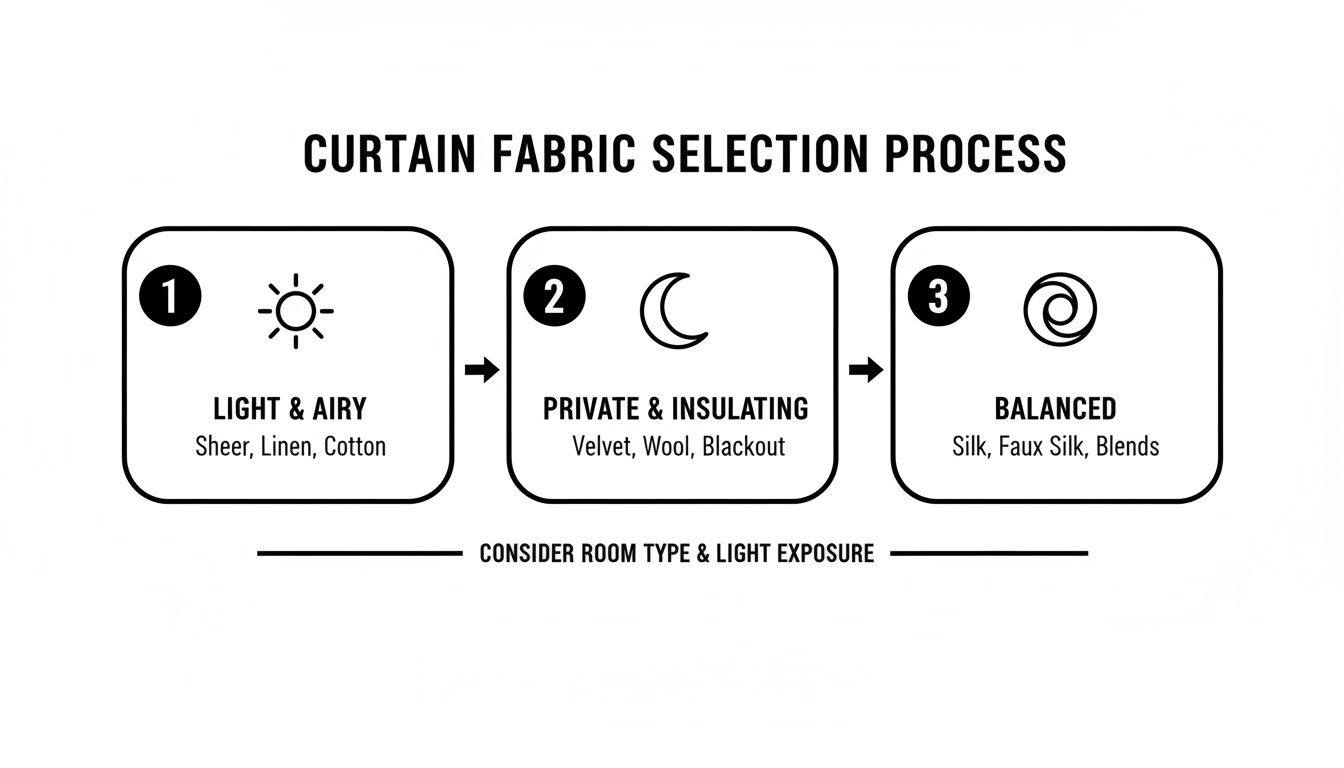
As you can see, your main goal—whether it's letting in tons of light, getting total privacy, or finding a happy medium—will point you directly to the perfect fabric for your door.
Ready to grab the tape measure? The short answer is: precision is key. Follow these steps for a perfect fit:
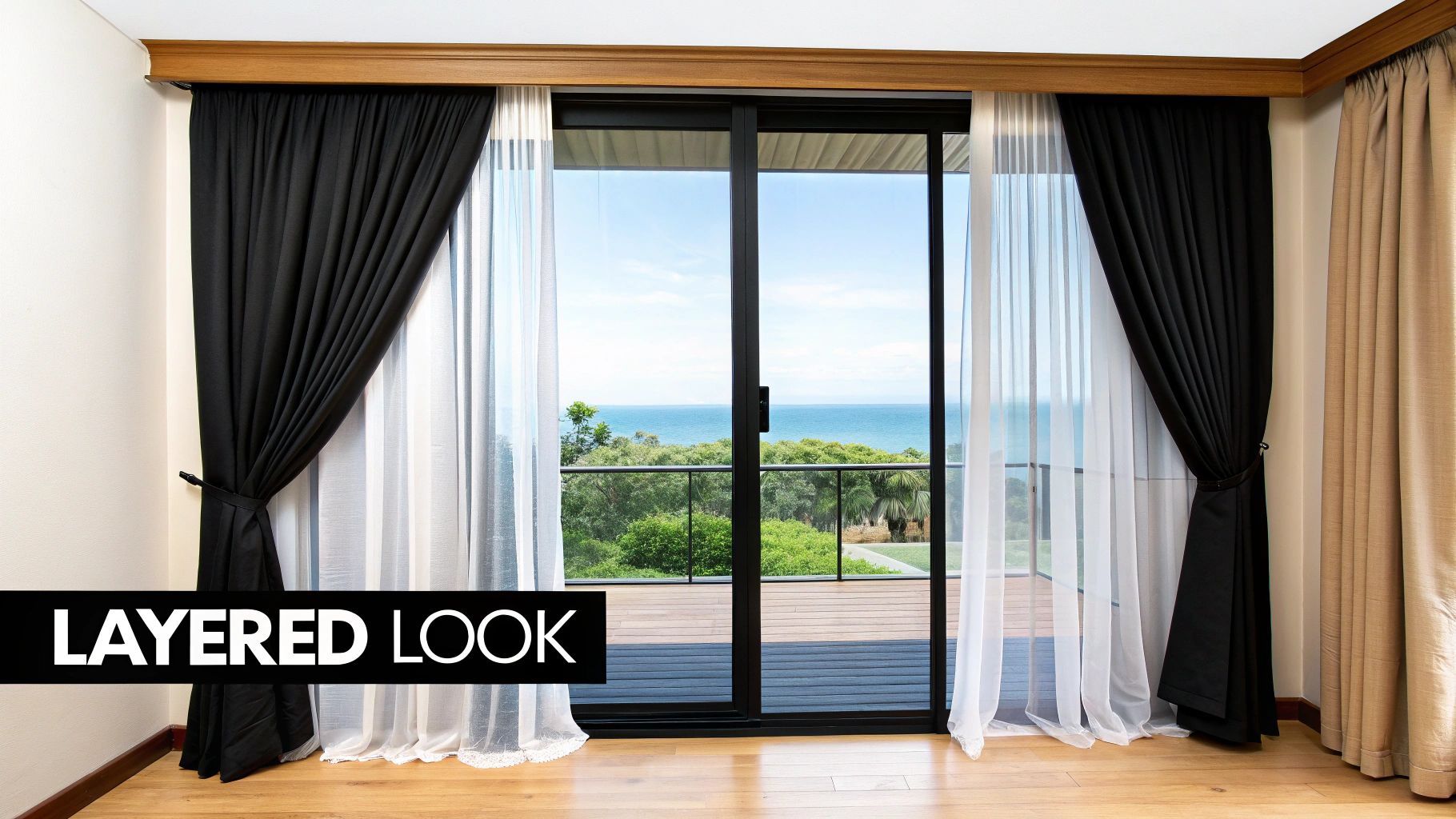
Moving beyond a single curtain panel is where the real magic happens. We’ve all seen it in design magazines—that plush, layered look that feels both luxurious and effortless. It’s not just about adding more fabric; it's about creating a versatile, high-end look that gives you total control over light and privacy. This is one of the best sliding glass patio door curtain ideas for turning a functional door into a stunning design feature.
The most popular and effective layering technique is the classic duo: pairing sheer curtains with opaque drapes. Think of it as having two different tools for the same job. During the day, you can keep the heavier drapes open and let the sheers soften harsh sunlight. This fills your room with a gentle, diffused glow while maintaining a bit of privacy.
When evening comes, simply draw the outer drapes for complete seclusion and a cozy, insulated feel. This setup gives you ultimate flexibility, adapting to your needs from sunrise to sunset.
Deciding on colors and patterns can feel overwhelming, but it really boils down to one question: do you want your curtains to blend in or stand out? There's no wrong answer—it's all about the effect you want to create in your space.
When you're layering, a great rule of thumb is to keep one layer simple. If you choose a patterned outer drape, pair it with a solid-colored sheer. On the flip side, if your sheers have a subtle texture or pattern, a solid outer curtain will create a balanced, uncluttered look.
The small details are what elevate your curtains from merely functional to truly finished. Accessories like tie-backs, holdbacks, and valances act as the jewelry for your window treatments, pulling the whole look together with a polished touch.
Designer Insight: A simple, elegant tie-back not only holds your curtains neatly in place but also creates a beautiful, graceful drape in the fabric. This small addition can significantly enhance the overall aesthetic, making your setup look more intentional and styled.
Here are a few finishing touches to consider:
Today’s curtains are so much more than pretty fabrics hanging on a rod. They’re a smart investment in your home's comfort, safety, and even security. They work quietly behind the scenes to make your home feel better and give you real peace of mind, proving that the best designs are often the most practical ones.
Think of your big sliding glass door as a thermal weak spot in your home. In the summer, it lets in a ton of solar heat, making your air conditioner work overtime. Come winter, it can be a major source of chilly drafts. This is where thermal and blackout curtains become your secret weapon against high energy bills.
These curtains are built with multiple layers of fabric, creating a powerful insulating barrier. Much like a thermos keeps your drink hot or cold, they trap air to slow down the transfer of heat. In fact, the U.S. Department of Energy found that medium-colored draperies with white plastic backings can slash heat gain by a whopping 33% in the summer. It's such a simple yet effective upgrade for any home.
For any household with curious kids or playful pets, traditional curtain cords are a serious and well-documented strangulation hazard. This is where modern, cordless designs step in—not just as a convenience, but as an absolute must-have for safety. The best sliding glass patio door curtain ideas always put family safety first.
Getting rid of those dangling cords is non-negotiable for a family-friendly space. Thankfully, the market is full of fantastic, safe alternatives that are both stylish and a breeze to use.
Here are the top cordless options to look for:
Motorization opens up a whole new world of possibilities, letting you weave your curtains right into your smart home setup. Imagine your curtains automatically closing at dusk for privacy or gently opening with the sunrise to help you wake up naturally.
Pro Tip: Scheduling your curtains to open and close at different times when you're on vacation can create the illusion that someone is home, adding a simple yet clever layer of security.
This kind of automation adds a touch of everyday luxury while also boosting your home's energy efficiency. When you're looking at smart curtain options, don't forget to consider how they'll affect the natural light for your indoor plants. Proper lighting is key, which involves understanding plant light requirements for indoor cacti and other houseplants to help them thrive.
Even with endless inspiration, it’s the practical questions that bring your sliding glass patio door curtain ideas to life. This is where we get into the nitty-gritty, answering the most common questions our customers ask us. Think of it as your personal cheat sheet for avoiding those small mistakes that can throw off a whole project.
The short answer is: extend your curtain rod 10 to 15 inches past the door frame on each side.
This extra width creates "stack back" space—the wall area where your curtains rest when fully open. This simple trick makes your doorway look wider, lets in the maximum amount of natural light, and keeps your view totally clear. If you have extra-wide doors or very heavy drapes, don't be afraid to extend it even further.
The best choice for a high-traffic door is a curtain hung on a traverse rod. These rods use a simple wand to move the curtains along an internal track, preventing wear and tear on the fabric from constant pulling.
Another great option is grommet-style curtains. The large metal rings slide so easily along a sturdy, smooth rod, making them a breeze for anyone in the family to open and close. Avoid rod pocket curtains, as the fabric sleeve creates too much friction for a frequently used door.
The short answer is: you should almost always use two separate curtain panels.
This setup, known as a "split draw," lets you part the curtains in the middle, perfectly mirroring the way your sliding door opens. Using two panels creates pleasing symmetry and is far more convenient for daily use. A single panel (a "one-way draw") can work, but it’s usually reserved for tricky situations where furniture or a lack of wall space prevents stacking curtains on both sides.
While vertical blinds are functional, many people feel their look is a bit dated compared to the soft texture and warmth of modern curtains. Today's design trends lean heavily toward fabric treatments for sliding doors, which add color, dimension, and a sense of coziness.
If you like the function of blinds but want an updated look, consider alternatives like panel track blinds or vertical cellular shades. However, for a timeless blend of style and function, a well-chosen set of curtains remains the top choice for most homeowners.
At Joey'z Shopping, we believe the right window treatments can completely transform a room. Explore our extensive collection of curtains, hardware, and accessories to find the perfect solution for your sliding glass door today.