
Join the Joey'z Family!

A curtain track system is a sleek, modern alternative to a traditional curtain rod. Instead of using rings, curtains attach to small gliders that slide smoothly inside a discreet channel. This setup provides a clean, minimalist look and finally ends the annoying snagging you get with rods, making it a lifesaver for heavy drapes or extra-wide windows.
This guide will walk you through everything you need to know about choosing, measuring for, and installing the perfect curtain track system for your home.
Table of Contents
Imagine your curtains gliding silently and effortlessly, like a high-speed train, instead of the stop-and-start shuffle of a standard rod. That’s the simple beauty of a curtain track system. It’s the secret hardware behind the perfectly uniform, wave-like drapes you see in high-end hotels and designer homes.
Unlike a decorative rod that is meant to be seen, a track is all about function. It's often designed to disappear, letting the curtain fabric be the star of the show. The system uses internal gliders or carriers that move within a channel, ensuring a smooth, uninterrupted pull every time. This makes them exceptionally good for a few tricky situations:
The biggest win with a curtain track system is its superior performance. We've seen a growing demand for track systems in places where reliability is key, like hospitality and healthcare, where curtains are opened and closed dozens of times a day. That same dependability translates into your home, solving common frustrations like snagging fabric and unevenly drawn curtains for good.
This flowchart can help you visualize the choice between a traditional rod and a modern track, depending on your desired look.
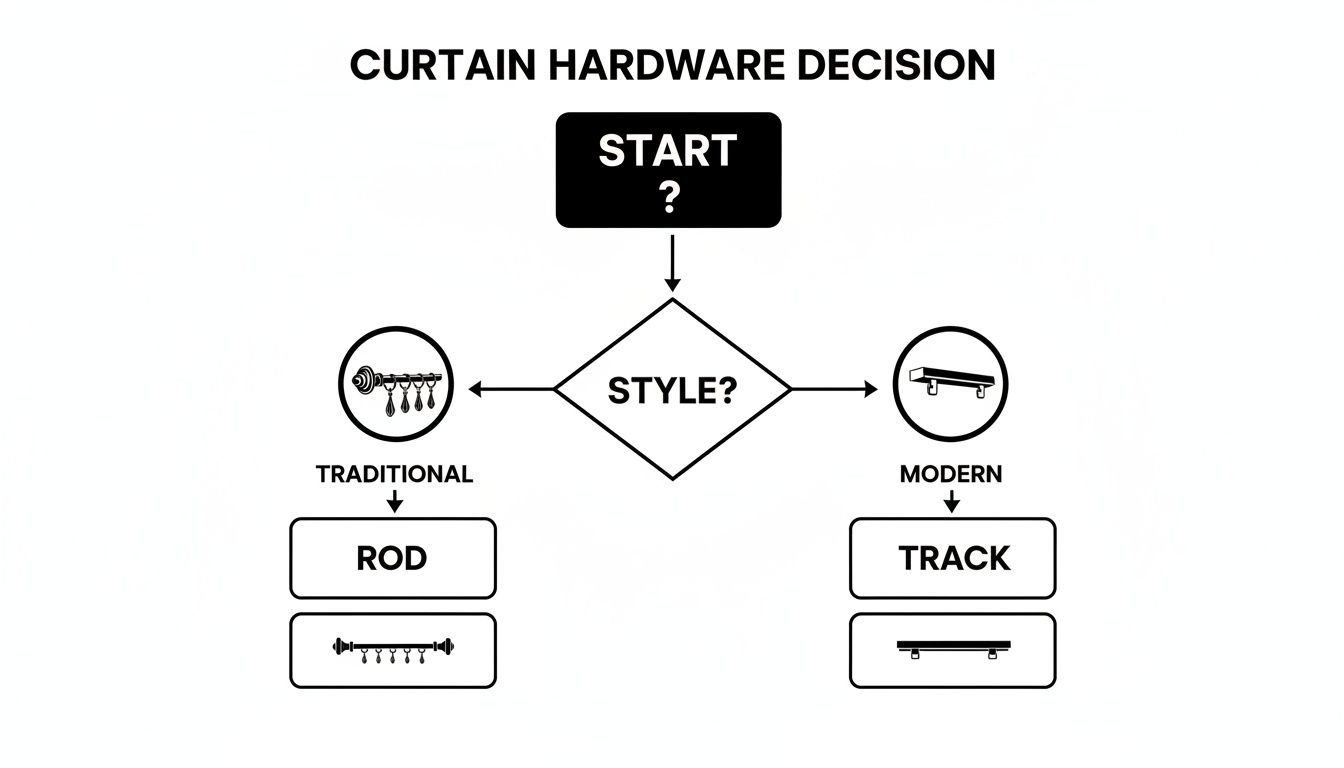
If a clean, modern, or architecturally integrated look is what you're after, a curtain track is the clear winner. By focusing on smooth function rather than decoration, a curtain track system provides a polished, professional finish that elevates a room's design.
Once you've decided a track system is the way to go, the fun begins: choosing the right one. This choice goes beyond aesthetics; it’s about finding hardware that complements your window's design and fits your lifestyle.
The main decisions come down to where you'll mount it, how many layers you want, and how you plan to operate your curtains. Not all tracks are built the same, so knowing the key differences will help you achieve that polished, professional look.
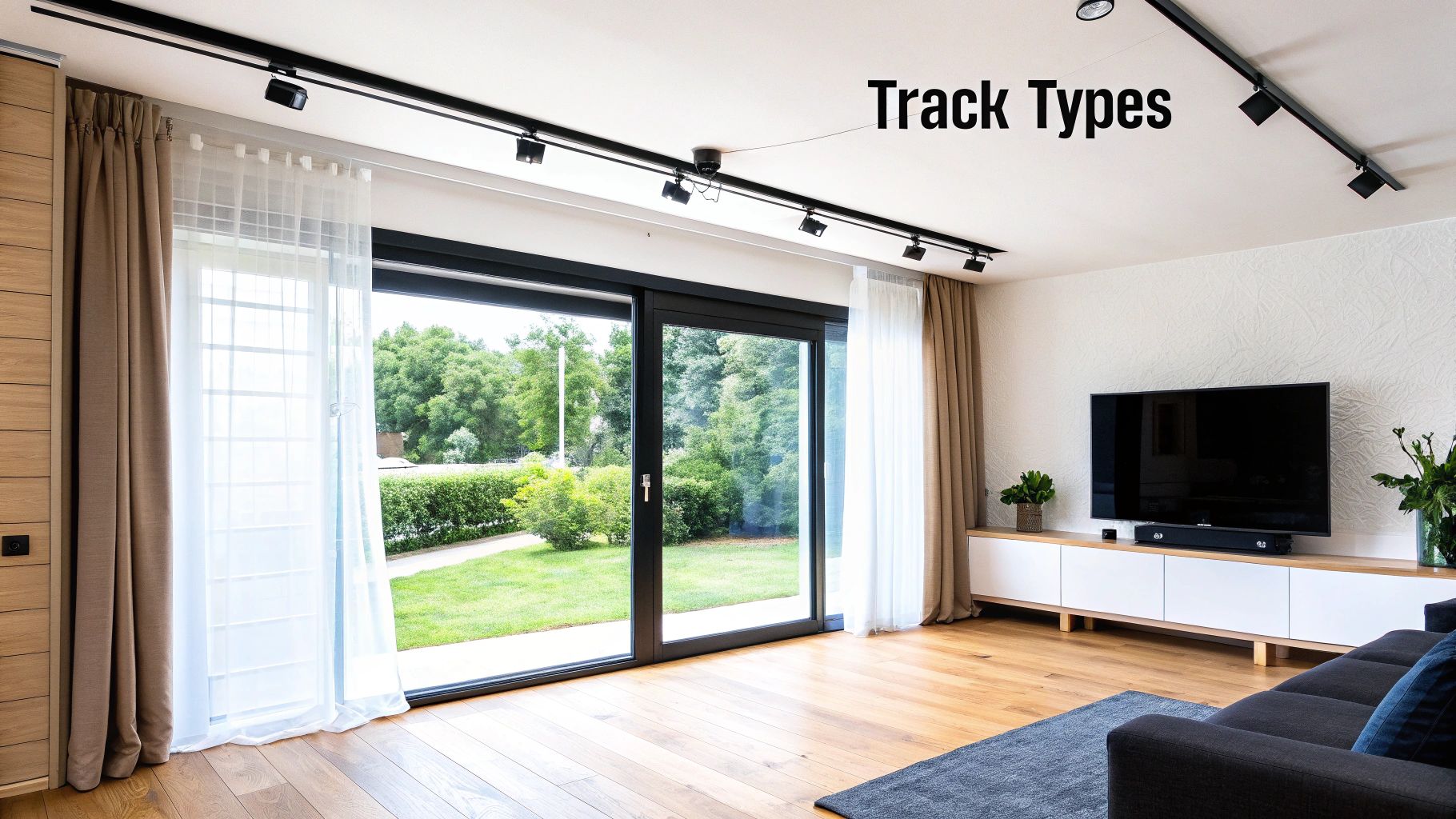
What is the difference between ceiling and wall mount tracks? The short answer is placement and visual effect. This first choice can completely change how tall and spacious a room feels.
Next up, think about layers. How many fabrics do you want to hang? This is all about balancing light control and privacy.
A single track is your go-to for one layer of curtains. It’s clean, simple, and perfect for either a single sheer panel or a heavy blackout curtain.
A double track system, on the other hand, offers incredible flexibility. It uses two parallel tracks, letting you hang two sets of curtains independently. The most popular setup is a sheer curtain on the inner track for daytime privacy, with a heavier decorative or blackout curtain on the outer track for total darkness.
Finally, how do you want to move your curtains? A manual track is simple and reliable—you pull the curtain by hand or with a wand. They’re budget-friendly and get the job done without any fuss.
Motorized tracks are where modern convenience comes in. With a remote, wall switch, or smart home app, you can open and close your curtains effortlessly. They're a lifesaver for massive windows, hard-to-reach spots, or for anyone needing extra accessibility.
A motorized curtain track system isn’t just about luxury; it’s a smart home essential. By automating when curtains open and close, you can improve your home's energy efficiency.
| Track Type | Best For | Key Benefit | Consideration |
|---|---|---|---|
| Ceiling Mount | Rooms with low ceilings; creating a room divider | Makes rooms feel taller and more spacious | Requires a flat, sturdy ceiling for installation |
| Wall Mount | High or vaulted ceilings; traditional window frames | Easy installation above most windows | The height of the brackets affects the final look |
| Single Track | A minimalist look; single-purpose curtains (e.g., sheers) | Simple, clean, and cost-effective | Limited to one layer of fabric |
| Double Track | Bedrooms and living rooms needing light/privacy control | Layer sheers and blackout curtains for total flexibility | Requires more space and a slightly higher budget |
| Manual | Most standard windows; budget-conscious projects | Reliable, affordable, and easy to use | Can be difficult for very large or tall windows |
| Motorized | Smart homes; hard-to-reach windows; accessibility needs | Ultimate convenience, luxury, and energy efficiency | Higher initial cost and requires a power source |
This table should give you a good starting point. Think about your room's specific needs, your daily routine, and your overall design vision.
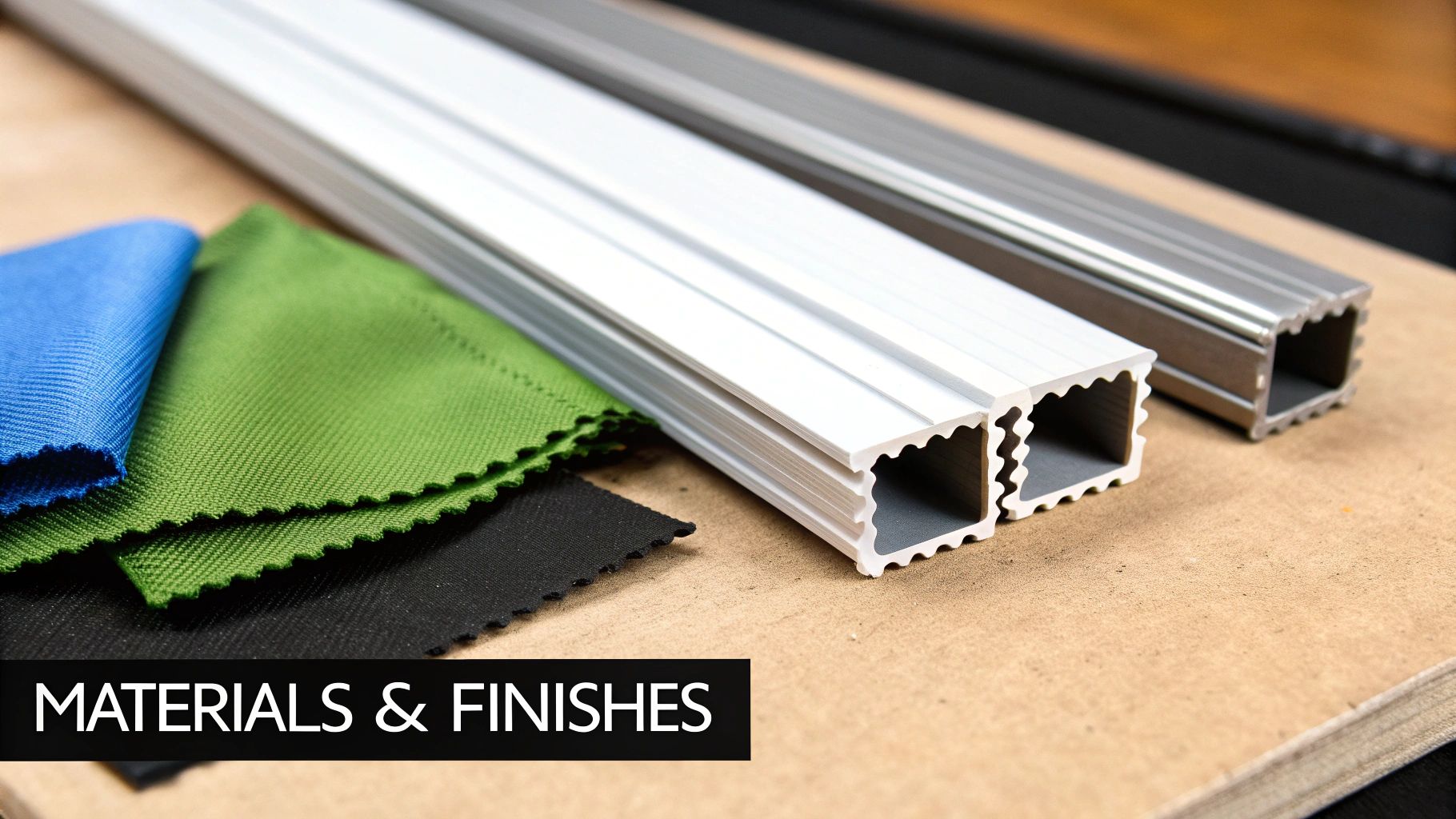
The material of your curtain track is more than a minor detail—it’s the backbone of the system. Choosing correctly is the difference between curtains that glide effortlessly for years and a setup that bends, sticks, and becomes a daily frustration.
You'll mostly find two materials: aluminum and plastic (PVC). Each has its place, and you can think of it like choosing cookware: you have your heavy-duty cast iron for serious cooking and your lightweight non-stick for a quick breakfast. Both are great, but for different jobs.
When you need pure strength, aluminum is the undisputed workhorse. Its defining feature is its strength and rigidity, making it the only real choice for a few key situations:
This is exactly why aluminum tracks are so common in commercial spaces like hotels and hospitals, where things have to work, every time.
Plastic, or PVC, tracks bring a different set of skills to the table: flexibility and affordability. While they lack the brute strength of aluminum, they are a fantastic solution for lighter-duty needs.
A flexible PVC track is a DIYer’s best friend for bay windows. Its ability to be bent by hand makes navigating curves a breeze without needing special tools or custom orders.
PVC tracks really shine in these scenarios:
Once you’ve locked in the material, the finish is the final touch. The goal is simple: either make the track blend in and disappear or turn it into a deliberate design element that matches your room’s hardware.
The track is only one part of the equation. If you’re curious about how all the little pieces come together, our guide on how to use curtain hooks and rings can help.
Getting your measurements right is the single most important step for a professional-looking finish. Think of it like a perfectly tailored suit—it only looks sharp if the measurements were spot-on.
So, how do you measure for a curtain track? The short answer is you must measure the exact width you want the track to cover, not just the window frame. A common mistake is measuring only the window, which can make curtains look cramped and prevent them from fully clearing the glass when open.
First, grab a reliable metal tape measure. Whether you're planning a wall or ceiling mount, the process starts by measuring the width of your window frame.
Next, decide on the height. For tracks mounted on the wall, a good rule of thumb is to position it 4 to 6 inches above the window frame. This creates an illusion of a taller window. For ceiling mounts, you'll install directly onto the ceiling for that dramatic, floor-to-ceiling look.
Now for the concept that makes all the difference: stack back. This is the space your curtains take up on the sides of the window when they're fully open. If you don't account for this, your curtains will permanently block a slice of your window and cut down on natural light.
To get it right, you just need to add extra length to your initial width measurement.
Pro Tip: As a general rule, add 15% to 25% to your total window width to accommodate stack back. For a 100-inch window, this means ordering a track that is 115 to 125 inches long. This gives your curtains enough room to frame your window beautifully without blocking the view.
| Measurement Step | What to Measure | Pro Tip |
|---|---|---|
| Window Width | The full width of your window, including the frame or trim. | For wall mounts, always include the molding for an accurate base measurement. |
| Desired Track Width | Add 15-25% to your window width for stack back. | Wider windows with heavy curtains might need closer to 25% extra space. |
| Mounting Height | For wall mounts, measure 4-6 inches above the window frame. | For ceiling mounts, you just need the total wall height to choose your curtain length. |
| Check for Obstructions | Note the location of light switches, outlets, or thermostats near the window. | Ensure your track and curtain stack back won't cover up anything important. |
Taking a few minutes to double-check these details can save a world of trouble. You can also find great general advice on how to measure a room for furniture that helps put everything in perspective.
For a more detailed walkthrough, see our complete guide on how to measure for window curtains.
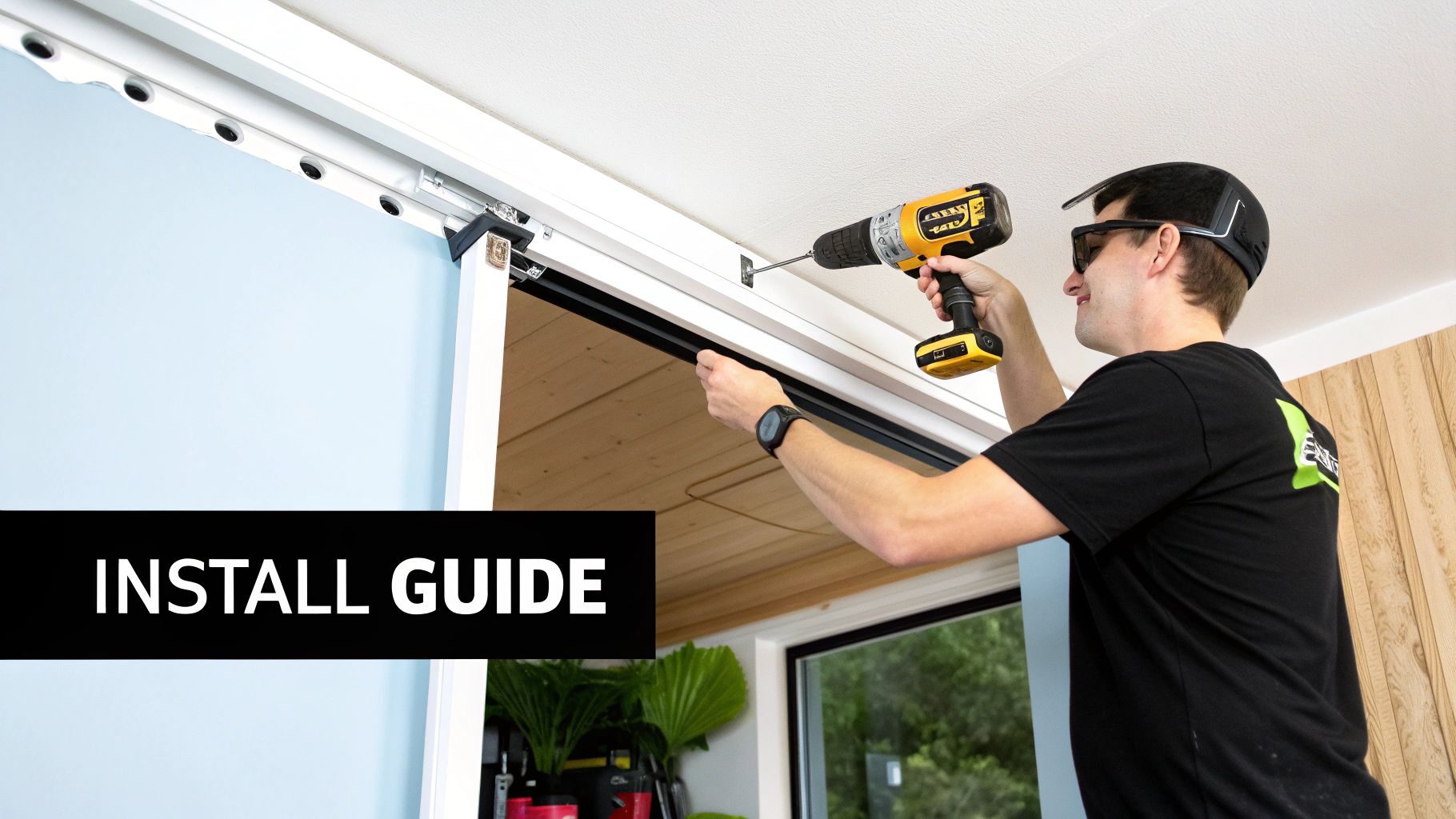
You’ve done the measuring, picked the perfect track, and now it’s time for the rewarding part: installation. This is often a surprisingly straightforward weekend project, and getting it right is what delivers that smooth, effortless glide.
The secret to a great installation? Preparation. Having the right tools and understanding the core steps before you start will help you sidestep most common headaches.
Before you drill, let’s get your gear together. Trust us, having everything in one place makes the process much smoother.
While every curtain track system is a little different (always follow the manufacturer’s instructions), the fundamental steps are universal.
Even simple projects can have tricky spots. One of the most common mistakes is using the wrong hardware for a wall type, which causes the track to pull away over time. Using sturdy wall anchors for drywall is non-negotiable.
Another classic pitfall is improper bracket spacing. Spreading them too far apart will cause the track to bow under the curtain’s weight, especially with heavier fabrics. Sticking to the recommended spacing is crucial for the long-term health of your curtain track system.
Still weighing your options? That’s perfectly normal. This is where we tackle the most common questions about curtain track systems with straight, simple answers.
The short answer is no, but most modern styles work beautifully. The secret is the curtain's heading—the top part of the fabric that connects to the track.
Curtain tracks are made for curtains that use specific attachments, such as:
However, tracks are not compatible with curtains made only for rods, like those with a rod pocket (a sewn-in channel) or large grommet rings.
This comes down to your goal. One isn't universally "better"; they just excel in different areas.
A curtain track system is superior for:
On the flip side, curtain rods are the winner for:
You’ll love this part—keeping a curtain track in top shape is incredibly simple. For regular upkeep, just wipe the inside channel with a dry microfiber cloth every few months to remove dust.
If you notice the glide isn't as smooth, use a tiny amount of silicone spray. The trick is to never spray it directly into the track. Instead, spray a little onto a clean cloth and then wipe the inside of the channel. For motorized tracks, just dust the motor housing and ensure nothing is blocking its path.
Yes, absolutely! But—and this is a big but—you must buy a track specifically labeled as bendable. If you try to curve a standard rigid aluminum track, you will damage it.
Look for products described as "bendable" or "flexible," usually made from pliable aluminum or heavy-duty PVC. Most can be curved by hand, allowing you to perfectly match the angles of your bay window for a single, continuous track.
Ready to find the perfect solution for your windows? At Joey'z Shopping, we offer a wide variety of curtain track systems and accessories to bring your vision to life. Explore our collection and discover how easy it is to achieve a polished, professional look in your home.
Shop Our Full Range of Window Treatments at JoeyzShopping.com