
Join the Joey'z Family!

Bay windows are a stunning architectural feature, but let's be honest: choosing the right bay window treatment designs can feel like solving a complex puzzle. The key challenge is balancing aesthetics with functionality. Deciding whether to treat the bay as one large, cohesive unit or as three individual windows is the first, most critical step. This single decision simplifies all subsequent choices, ensuring a beautiful result is well within reach, no matter your budget.
Bay windows do much more than add floor space. They provide panoramic views, flood rooms with natural light, and create cozy nooks perfect for reading or relaxing. It’s no surprise they are a sought-after feature in modern homes.
In fact, bay windows hold a significant 67.3% share of the global market for such architectural features, largely due to the character and value they add during home renovations. With residential properties making up nearly 80% of this market, it's clear homeowners appreciate the unique charm they bring.
However, their distinct angles—whether a gentle curve or a sharp box bay—present a design challenge. The goal is to enhance their shape, not hide it. This guide is designed to simplify the process for homeowners, renters, and anyone looking for safe, stylish upgrades.
Before diving deep, let's simplify the main choices. The three primary types of window treatments—curtains, blinds, and shades—each offer a different function and feel. To start, it can be helpful to step back and understanding the scope of interior design to see how these elements fit into the bigger picture of your home.
We've created this quick-reference table to break down the most popular choices and their best uses.
| Treatment Type | Best For... | Key Consideration | Joey'z Shopping Link |
|---|---|---|---|
| Curtains & Drapes | Creating a soft, elegant, and traditional look. Excellent for adding texture, color, and insulation. | The hardware is crucial. You'll need either a custom-bent rod for a seamless look or multiple straight rods with corner connectors. | Discover our collection of elegant curtains. |
| Blinds (Wood, Faux Wood, Venetian) | Precise light control and a clean, structured appearance. Ideal for modern, minimalist, or traditional decor. | Each blind is mounted individually within each window frame, which requires precise measurements for a clean fit. | Shop durable and stylish blinds for every room. |
| Shades (Roman, Cellular, Roller) | A clean, minimalist aesthetic with great functionality. Cellular shades offer insulation, while Roman shades add a soft, fabric touch. | Inside-mounted shades offer a streamlined look that's perfect for bay windows with built-in seats. | Find the perfect shades for your home. |
This should give you a clear starting point for what might work best in your space.
The key to success is deciding early whether to treat the bay as a single unit or as a collection of individual windows. This single decision will guide every choice you make, from the type of treatment to the hardware you select.
Treating the bay as one unit with a continuous curtain rod creates a grand, unified statement. Conversely, using individual blinds or shades for each section emphasizes the window's architectural angles for a crisp, modern feel. There is no wrong answer—only the one that best suits your style and functional needs.
Now that you've decided whether to treat the bay as one cohesive unit or three distinct windows, it's time for the fun part. Selecting the right style for your bay window treatment designs is like choosing the perfect accessory; it has the power to define the entire look and feel of your room.
Each option brings its own unique personality. You might lean towards the soft elegance of curtains or prefer the clean lines of modern shades. Let’s walk through the most popular styles to help you find the perfect match for your home, lifestyle, and personal taste.
Curtains are a timeless choice for bay windows, and for good reason. They introduce softness, color, and texture that can instantly make a room feel cozier, beautifully softening the bay's architectural angles.
The secret to making curtains work on a bay window lies in the hardware. For a seamless sweep of fabric, a custom-bent curtain rod is the best choice, as it follows the window's curve perfectly. For a more budget-friendly option that still looks fantastic, use three separate straight rods joined by corner elbow connectors.
While bow windows have a gentler curve, many of the same curtain principles apply. You can find more inspiration in our guide to window treatment ideas for bow windows.
For a cleaner, more contemporary vibe, blinds and shades are a brilliant choice. They fit neatly inside each window frame, emphasizing the crisp angles of your bay and maintaining a minimalist look. This style has become incredibly popular, especially with the rise of smart home technology.
The window covering market is projected to grow to $20.85 billion by 2032, with blinds and shades leading the charge. For homes with children or pets, cordless blinds are a particularly smart and safe choice, aligning with the growing focus on safety in home design. You can read more about these market trends on Fortune Business Insights.
Expert Tip: If your bay window has a built-in seat (lucky you!), inside-mounted blinds or shades are the perfect solution. They won't interfere with the seating area, keeping the space completely functional and uncluttered.
Here are a few of the most popular types:
Roman Shades: These offer the best of both worlds—the softness of fabric with the clean function of a shade. They stack into neat, elegant folds when raised.
Cellular Shades: Also known as honeycomb shades, these are champions of energy efficiency. Their unique pockets trap air, providing excellent insulation.
Roller Shades: Simple, sleek, and available in nearly any color or opacity, from sheer to complete blackout. They practically disappear when fully raised for an unobstructed view.
Pros: Blinds and shades provide precise control over light and privacy. They offer a clean, uncluttered look that's perfect for modern spaces.
Cons: Unless you choose a style like cellular shades, they typically offer less insulation than heavy drapes. You may also need custom sizes for a perfect fit, which can add to the cost.
Choosing between these styles can feel overwhelming, so we've created a simple table to help you compare them at a glance. Consider what matters most to you: privacy, style, or budget?
| Treatment Style | Privacy Level | Light Control | Average Cost | Best Aesthetic |
|---|---|---|---|---|
| Curtains | High | Good to High | $$ - $$$$ | Traditional, Cozy, Elegant |
| Blinds | High | Excellent | $ - $$$ | Modern, Minimalist, Clean |
| Shades | Varies | Excellent | $$ - $$$ | Versatile, Soft, Contemporary |
| Shutters | Excellent | Good | $$$$ | Classic, Architectural, Timeless |
As you can see, there's no single "best" option—it all comes down to what works for your home and lifestyle. Shutters offer a timeless look but come with a higher price tag, while simple blinds can be an effective and affordable solution.
Getting measurements right is the foundation for a flawless fit. Think of it as a recipe—if your ingredients are off, the final dish won’t turn out right. For this task, a tape measure, a pencil, and paper are your best friends.
Following these steps ensures your new treatments will fit perfectly, giving you a polished, professional look. We’ll break it down for each type of bay window so you can measure with confidence.
Before you begin, let's get your toolkit ready. Having everything on hand makes the process much smoother.
With your tools in hand, the next decision is your mounting preference, which dictates where you'll be measuring.
The first choice is whether you want an inside mount or an outside mount. An inside mount fits the treatment neatly within the window frame for a clean, built-in look. An outside mount attaches to the wall or trim above and outside the frame, which can make a window appear larger.
For bay windows, an inside mount is almost always the way to go. It highlights the window's unique angles and avoids bulky treatments bumping into each other at the corners. For a deeper dive, check out our guide on how to measure windows for curtains.
Angled and box bays are the most common types, and measuring them is a straightforward process. The trick is to treat each window section as its own unit.
A common mistake is only measuring once. Window frames are rarely perfectly square, so always measure each dimension in three different spots. This triple-check method is your best defense against measurement errors.
This visual simplifies the core treatment styles you might be measuring for, from classic curtains to modern blinds and shades.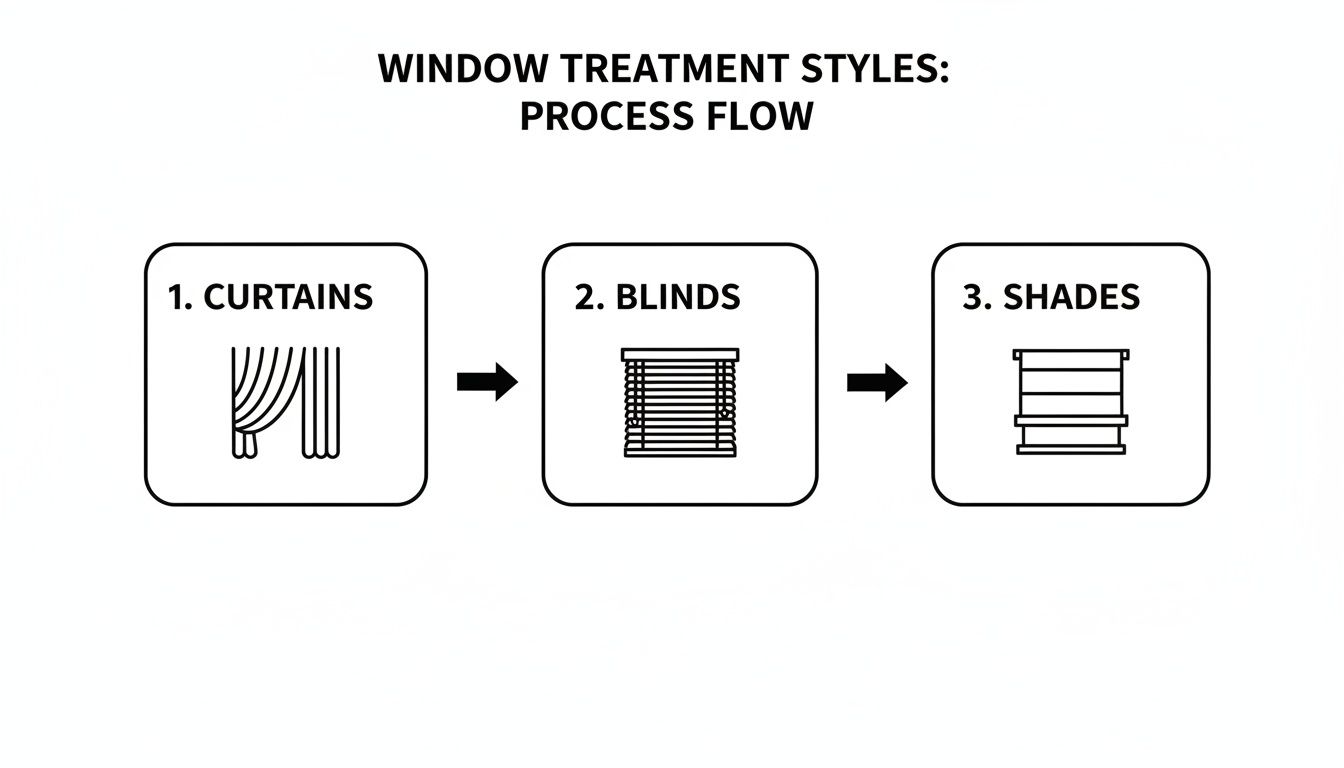
Seeing the options laid out clarifies how each treatment category requires a slightly different approach, reinforcing the importance of accuracy.
Think of your window treatment hardware as the skeleton of your design. It provides the structure and style that makes everything work. The right hardware ensures your curtains hang perfectly and your blinds operate smoothly, turning a good idea into a great one. This is especially true for bay windows, where unique angles demand extra thought.
The goal is to pick hardware that complements both your chosen treatment and the window's architecture. Whether you envision a seamless flow or a crisp, defined look, the mounting equipment brings that vision to life.
When hanging curtains on a bay window, you must decide: do you want a single, continuous rod or separate rods for each panel?
Don't forget the finish! Matte black, brushed nickel, or warm brass can tie everything together. Match it to other metals in the room for a cohesive design.
With blinds and shades, installation is about individual precision. These treatments are usually mounted inside each window frame, so the fit is everything.
Each blind or shade comes with its own mounting brackets. The trick is to install these brackets consistently across all sections so the treatments line up perfectly. A level is your best friend during this step, as even a tiny misalignment can be noticeable.
Expert Tip: Before you drill, double-check your frame depth. Some blinds, like classic wood blinds, need more mounting space than sleeker options like roller shades. Ensure your frame is deep enough to hold the hardware without it protruding.
Installing treatments on a bay window can present a few challenges, but with a little planning, they are all manageable.
Ever wonder how interior designers achieve that polished look? Layering window treatments is one of their best-kept secrets. For a bay window, this technique adds incredible depth, texture, and functionality.
This approach solves the problem of choosing between style and practicality. With layering, you get the best of both worlds. It’s an elegant solution that makes your beautiful bay window work even harder for you.
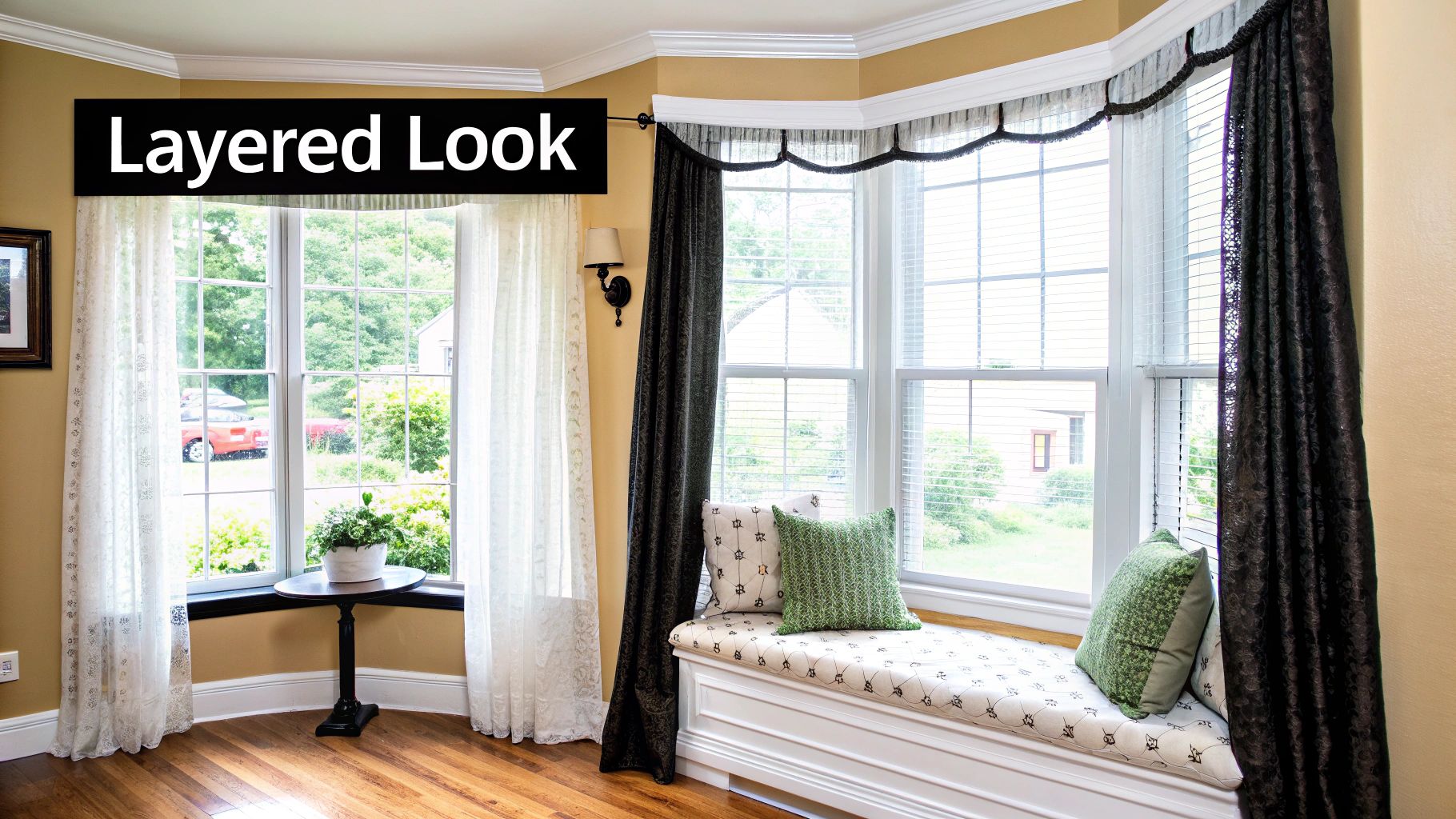
First, you need a solid foundation. This "workhorse" layer is chosen for practical benefits like light control, privacy, and insulation. Mount this layer inside the window frames for a clean, built-in look.
Here are great options for your base layer:
With the practical part handled, it's time for the decorative top layer. This is where you show off your personal style with color, pattern, and soft textures. Hang this layer on the wall, just outside and above the bay, framing it like art.
The magic of layering is in the endless combinations. This personalization is a huge trend in the window coverings market, which is expected to grow from USD 25.5 billion to USD 43.8 billion by 2035. Homeowners are even swapping lightweight linens for heavy velvet drapes in winter to cut energy bills by up to 30%. You can explore more emerging market insights to see where things are headed.
Designer's Tip: When layering, play with texture! The contrast between a smooth roller shade and a rich velvet curtain, or a rustic woven shade and a soft linen drape, creates a dynamic, high-end feel.
Here are a few popular pairings:
By thoughtfully combining these elements, your bay window will become a stunning and hardworking centerpiece.
Even with the best intentions, a few common slip-ups can turn your dream bay window project into a frustrating experience. Knowing what to watch for is the best way to get a flawless result. We’ll walk through the most frequent mistakes in bay window treatment designs and provide simple solutions.
Think of this as your design "insurance policy" against expensive errors.
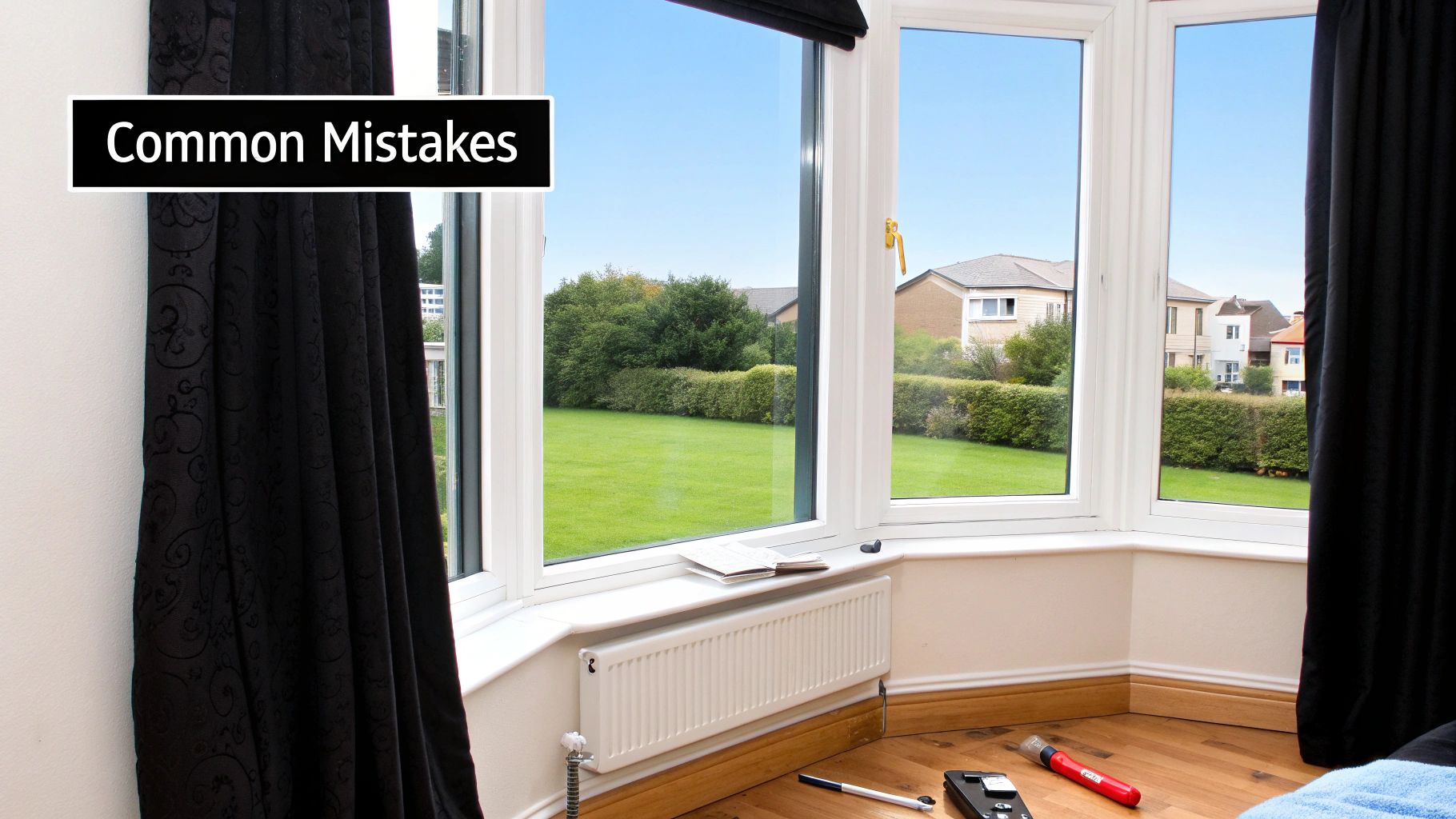
The biggest challenge with a bay window is its angles. A common mistake is choosing hardware that isn’t designed for corners, leading to an awkward fit where treatments collide or leave large gaps.
"Measure twice, cut once" is the golden rule for a reason. Inaccurate measurements are the number one cause of window treatment failures.
One measurement that often gets forgotten is depth. Ensure your window frame is deep enough for the mounting hardware of your chosen blinds or shades to avoid them hitting the glass or sticking out awkwardly.
The placement of your curtain rod has a huge impact on the feel of your room. Mounting the rod right on top of the window frame can make the ceiling feel lower and the window seem smaller.
Bay windows are often functional nooks with built-in seats or radiators. A major design foul is picking a treatment that blocks access or hinders function.
Thinking through the final touches can bring up a few last-minute questions. Here are our answers to the most common queries to help you make those final decisions with confidence.
The short answer is: it depends on your specific window setup. For an elegant, classic look that makes your room feel taller, curtains should either just "kiss" the floor or puddle slightly. This creates a beautiful, flowing line.
However, if your bay window has a built-in seat or a radiator underneath, stopping the curtains at the sill is the smarter choice. This keeps the seat usable and ensures the radiator can function efficiently.
While tempting, we strongly recommend using the same treatment on all windows within a single bay. A consistent look creates a cohesive, unified design. Think of the three windows as a single architectural feature that deserves one beautiful outfit.
If you crave variety, layering is the perfect solution. For example, install matching Roman shades on each window and add decorative curtain panels at the very ends of the bay to frame the entire feature.
A bay window with a built-in seat is a cozy feature to highlight. The best treatment designs are those that don't get in the way.
While custom treatments offer a flawless fit, they can be a significant investment. The good news is, you can achieve a high-end, custom look on a budget.
The secret to a budget-friendly custom look is smart shopping and clever installation. Combining the right ready-made products with the right hardware can deliver a result that looks just as stunning as a fully custom job.
Consider these wallet-friendly strategies:
Ready to find the perfect treatment for your bay window? At Joey'z Shopping, we offer a wide range of stylish and affordable curtains, blinds, and shades to help you bring your vision to life. Explore our collections and discover the ideal solution for your home.