
Join the Joey'z Family!

A curtain track wall mount is a versatile and modern alternative to a traditional curtain rod. It offers a sleek, low-profile system for hanging everything from lightweight sheers to heavy blackout drapes, using gliders that run smoothly inside a track. This creates a clean, architectural look perfect for contemporary spaces or for achieving a seamless floor-to-ceiling effect.
In short, it’s the secret to getting that effortless, hotel-style glide for your curtains.
Table of Contents
Choosing the right curtain track wall mount system isn’t just about grabbing hardware off the shelf; it’s about matching it to your specific needs. Unlike a one-size-fits-all curtain rod, tracks offer specialized functions that can completely change a room's feel and utility.
The first choice you'll face is between single and double tracks. A single track is a straightforward, reliable solution for one layer of curtains—clean, simple, and perfect for a minimalist look. A double track, however, offers much more versatility.
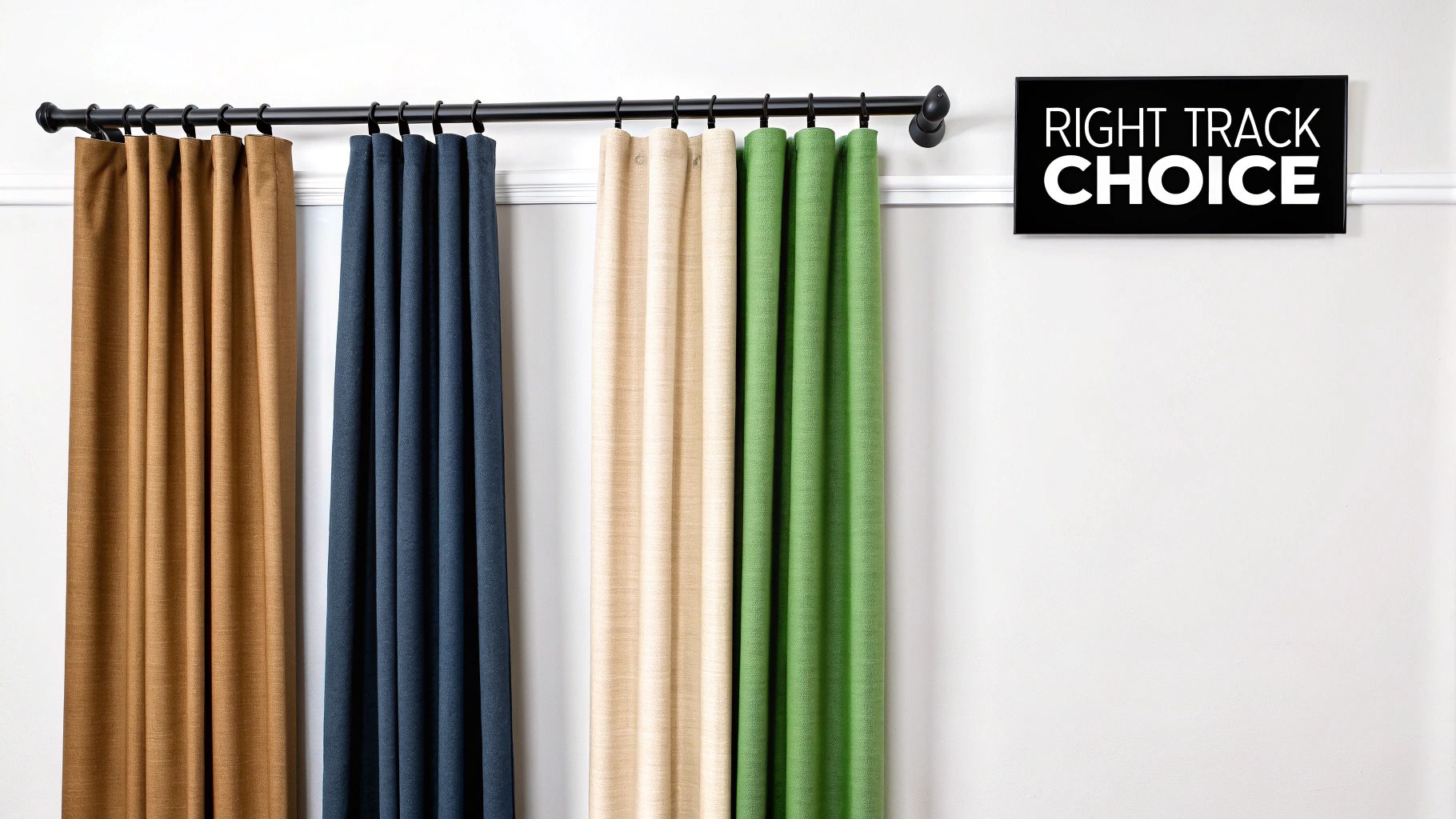
A double track system is a game-changer for rooms that need versatile light control, like bedrooms or living rooms.
This layering technique creates a polished, high-end look that is also incredibly functional. You get the best of both worlds without the bulk of clunky double rods.
The material of your track significantly impacts its longevity and how much weight it can support. While plastic tracks might seem budget-friendly, they are best reserved for extremely lightweight sheers in low-traffic areas, as they can warp and become brittle over time.
For a durable and reliable solution, metal is the superior choice.
Pro Tip: Always try to use a track made from a single, continuous piece, whether straight or custom-bent. DIY solutions with multiple sections screwed together often create weak points where gliders can snag, ruining that smooth, satisfying glide.
This quick comparison will help you choose the best material for your curtain track wall mount system.
| Material | Best For | Pros | Cons |
|---|---|---|---|
| Aluminum | Most residential uses, modern interiors, both light and heavy drapes | Lightweight, strong, rust-resistant, sleek profile | Can be more expensive than plastic |
| Steel | Very heavy drapes (velvet, thermal), commercial applications | Maximum strength, prevents sagging, very durable | Heavier, can be overkill for standard curtains |
| Plastic | Lightweight sheers, budget projects, temporary solutions | Inexpensive, easy to cut | Can warp, become brittle, low weight capacity, may snag |
Ultimately, metal tracks offer the best long-term value and performance. Aluminum is a fantastic all-around choice for its sleek profile, rust resistance, and impressive strength-to-weight ratio. Its reliability is well-established; aluminum profiles are a major part of the global curtain wall market, proving how trusted this material is.
For exceptionally heavy drapes like velvet or thermal-lined fabrics, heavy-duty steel tracks provide maximum support and prevent sagging. The finish—whether matte black, brushed nickel, or classic white—should complement your room's existing hardware, either blending in or standing out as a subtle design feature.
Making the right choice in materials is as crucial as getting the dimensions right, which is why it's also a good idea to check out a guide to standard curtain rod sizes to get the full picture on window treatment hardware.
A flawless, professional-looking curtain installation begins long before you drill the first hole. It all starts with methodical preparation. Having the right tools and taking precise measurements are the foundation for a curtain track that looks great and functions perfectly.
Before marking the wall, assemble your toolkit. This saves time and ensures you can work safely and accurately from start to finish.
Here’s what you'll need:
The goal isn't just to cover the window; it's to enhance the entire room. A classic interior design trick is to mount the hardware higher and wider than the actual window frame.
Mounting the track 4-6 inches above the frame draws the eye upward, creating an illusion of a taller ceiling. Extending the track beyond the window frame makes the window itself appear larger and more impressive.
Key Takeaway: Don’t just measure the window frame. Measure where you want the visual impact to be. By going higher and wider, you transform your window from a simple opening into a stylish focal point.
A common mistake is forgetting to account for stack back—the space your curtains occupy when fully open. If you don't plan for it, your curtains will block a significant portion of your window and natural light.
The goal is for the curtains to frame the window, not obscure it.
This extra space allows the curtain panels to stack neatly against the wall, leaving your window fully exposed. For a deeper dive, our guide on how to measure curtains provides an in-depth look at getting every dimension just right.
The secret to a secure and professional-looking curtain track wall mount is understanding the surface you're working with. This guide will help you achieve an unshakable mount, whether your walls are drywall, plaster, concrete, or have metal studs.
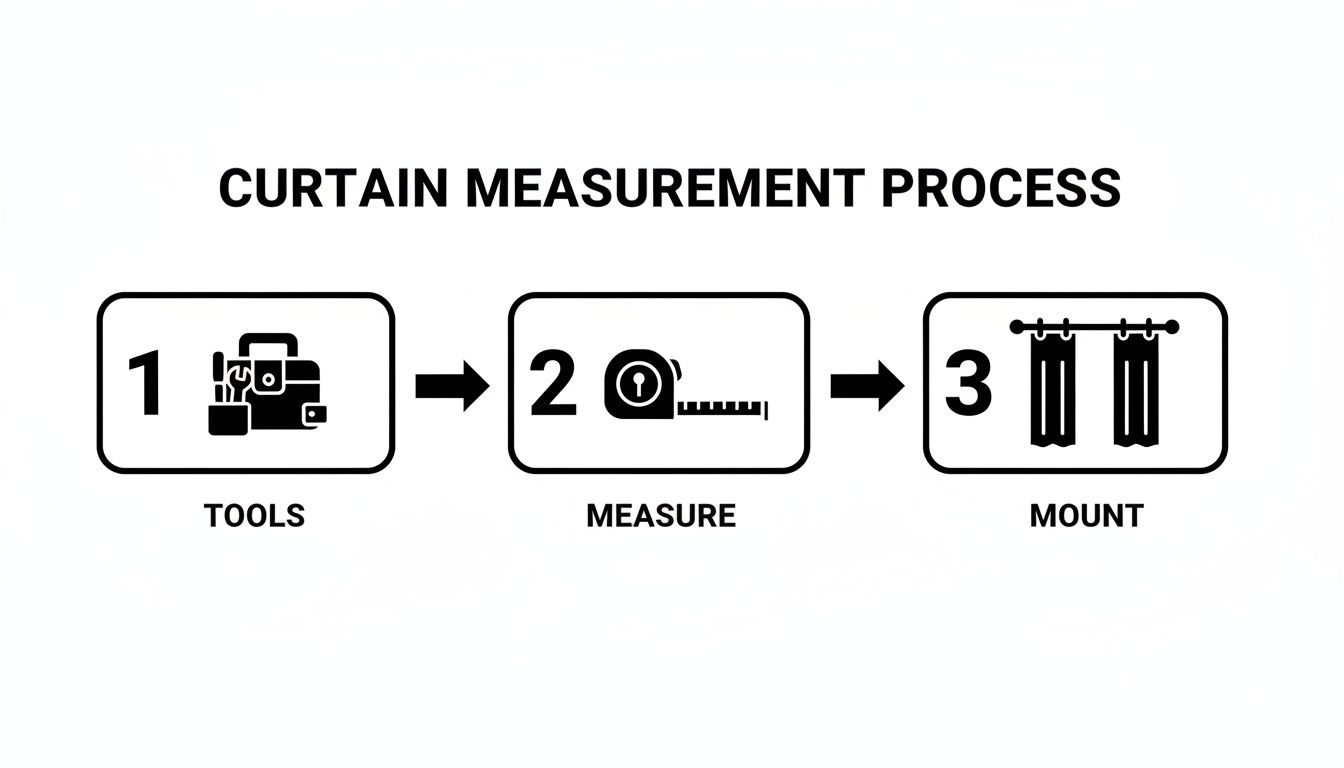
This infographic breaks down the core process into three simple, visual steps.
Most modern homes feature drywall. While easy to work with, it demands the right anchors to support weight. Simply driving a screw into the gypsum core is a recipe for failure.
The best practice is to locate the vertical wood studs behind the drywall using a stud finder and drive your mounting screws directly into them. But what if a stud isn't conveniently located? This is where wall anchors are essential.
Expert Tip: Never rely on the simple plastic expansion anchors often included in hardware kits. They are not strong enough to handle the weight and daily movement of curtains.
Our guide on how to hang curtain rods in drywall offers more detail, as many principles apply here.
Older homes often have plaster walls, which are harder and more brittle than drywall. To avoid cracks, place painter's tape over the spot you intend to drill. This helps prevent chipping.
Use a sharp drill bit and start slowly, letting the drill do the work. Just like with drywall, finding a wood stud is ideal, but toggle or molly bolts are excellent alternatives for hollow sections.
Mounting on masonry requires a hammer drill and specialized hardware, but the result is an incredibly strong installation.
Look for masonry-specific anchors:
Always wear safety glasses when drilling into masonry.
If you encounter metal studs, you'll need self-drilling screws designed specifically for metal. These have a special tip that drills its own pilot hole.
For heavier curtain tracks, a snap toggle anchor is a must. It provides a very secure hold in the hollow space between metal studs.
For broader insights into various styles, this guide to quick and easy window treatments may be helpful.
Once your track is securely mounted, you can get creative. Use your track system to solve tricky architectural problems and give your windows a high-end, custom finish. Think elegant curves, smart home automation, and even flexible room dividers.

Bay windows and curved walls are a nightmare for standard rods, but this is where a curtain track wall mount system shines. Flexible or custom-bent tracks create a seamless, flowing curtain that follows the exact contour of your wall.
A continuous track enhances the architecture instead of fighting against it.
Motorized curtain tracks are an increasingly popular smart home upgrade. These systems let you open and close your drapes with a remote, an app, or voice commands.
The global market for electric curtain tracks was valued at USD 1.2 billion in 2024 and is projected to more than double by 2033. This growth is directly tied to the rise of smart homes. You can explore the data behind this trend and discover more insights about the electric curtain track market.
Insider Tip: If you're planning for a motorized track, consider your power source early. Most systems need a nearby outlet, but excellent battery-powered options offer a completely wire-free installation.
A floor-to-ceiling curtain on a wall-mounted track is an elegant and versatile way to create a flexible room divider in an open-concept space. Unlike a permanent wall, a curtain can be pulled back to instantly restore an open, airy feel.
This is a perfect solution for:
Mount a track high on opposing walls and pair it with a stylish, heavy fabric to create a beautiful design element that is also incredibly practical.
Even with careful planning, you might hit a snag. When you’re installing a curtain track wall mount, these issues are usually minor bumps in the road. This guide will help you smooth them out.
The Problem: You've hung your curtains, and there's a noticeable dip in the middle of the track.
The Cause: The most common reason for a sagging track is insufficient support for the weight of the curtains. Bracket spacing is likely too wide.
The Solution: Add more support. If your brackets are spaced more than 24-30 inches apart, install another bracket in the center of the sag. If a bracket isn't secured into a stud, replace its plastic anchor with a heavy-duty toggle or molly bolt for a stronger hold. You can find durable mounting hardware for any job.
The Problem: The curtain gliders catch, snag, or don't move smoothly.
The Cause: Debris in the track or a lack of lubrication.
The Solution: First, check the track channel for debris from the installation (like drywall dust) and clean it with a dry cloth or compressed air. If the track is clean, apply a dry silicone lubricant spray. This reduces friction without leaving a sticky residue that attracts dust.
Pro Tip: Do not use an oil-based lubricant like WD-40. It will attract dust and gunk up the track over time, making the problem worse.
The Problem: Despite using a level, one side of the track appears slightly lower than the other.
The Cause: Even a tiny discrepancy can become obvious once the full weight of the fabric is hanging.
The Solution: This fix is easier than you think. Loosen the screws on the brackets at one end of the track. Hold your level against the bottom of the track, adjust it slightly until the bubble is centered, and then re-tighten the screws. A small shift is usually all it takes.
To ensure your drapes hang perfectly, explore our collection of elegant curtains and drapes, designed to pair beautifully with any track system.
Yes, absolutely. Most aluminum and plastic tracks are designed to be cut for a custom fit. Use a fine-toothed hacksaw for a clean cut, then gently file the end to smooth out any sharp edges. This ensures the end caps fit snugly and gliders won't snag.
One isn't inherently "better"—it depends on your goal.
A track system is only as strong as its weakest link. A heavy-duty aluminum track can support heavy fabrics like velvet, but only if it's securely anchored. Space brackets no more than 24-30 inches apart and screw them into wall studs whenever possible. For drywall installations, using high-quality toggle bolts is non-negotiable to prevent sagging.
Definitely! This is where track systems truly excel. You can use a flexible track that bends by hand to follow the curve or order a rigid track custom-bent to your specifications. Either option provides a seamless, continuous run for your curtains, eliminating the awkward joints and light gaps common with multiple rods. This adaptability is driving a 30–34% increase in demand for high-performance window treatments in energy-efficient design. You can learn more about trends in curtain wall systems and their role in modern architecture.
At Joey'z Shopping, we believe that the right hardware can completely transform your space. From sleek tracks to elegant curtains, we have everything you need to bring your vision to life.
Explore our complete collection of window treatments and hardware at JoeyzShopping.com today!