
Join the Joey'z Family!

Choosing the right curtain hanging style is a design secret that can completely transform a room. It’s not just about fabric or color; the header—the very top of the curtain—dictates its look, function, and the hardware it needs. This single detail is your key to elevating your window treatments from functional to fabulous.
Understanding the different curtain hanging styles is the first step to creating a polished, intentional look in your home. Let's dive into how this small choice makes a big impact.
Trying to decide how to hang curtains can feel overwhelming, but it’s simpler than you think. The curtain’s header style is the key that unlocks its potential, transforming a space from formal and elegant to casual and relaxed. It's a powerful tool for a quick room refresh.
It’s no surprise that homeowners are paying more attention to their windows. The global market for curtains and window blinds recently swelled to USD 26.1 billion, according to market research, showing a significant investment in quality window coverings that make our homes feel more personal.
Think of the header as the curtain's personality. It determines everything from the neatness of the folds to how easily the panels open and close. Once you grasp this, making a confident choice becomes much easier.
Here’s what the header style influences:
A well-chosen curtain hanging style does more than cover a window; it frames your view, plays with light, and adds a layer of texture that ties the room together. It’s the finishing touch that elevates your home's design.
To get you started, here is a quick overview of the most common styles. This chart will give you a bird's-eye view before we dive into the specifics of each one.
| Style | Look & Feel | Hardware Needed | Best For |
|---|---|---|---|
| Grommet/Eyelet | Modern, clean lines, uniform waves | Decorative curtain rod | High-traffic areas, contemporary spaces |
| Rod Pocket | Casual, soft gathers, traditional | Standard or decorative curtain rod | Stationary panels, bedrooms, country-style decor |
| Tab Top | Relaxed, informal, cottage-like | Decorative curtain rod | Lightweight fabrics, casual living rooms |
| Pinch Pleat | Formal, structured, elegant | Traverse rod with pins or a decorative rod with rings | Dining rooms, formal living rooms |
| Ripple Fold | Sleek, contemporary, uniform S-curves | Special ripple fold track system | Modern interiors, floor-to-ceiling windows |
This chart is a starting point to help you see which styles might resonate with your vision. Before we explore each type, it helps to have a good handle on the basics. If you haven't already, take a look at our guide on how to select curtains. It’s the perfect roadmap for your design choices.
Now that you see how a curtain's header shapes its personality, let's explore the most popular curtain hanging styles. Each one brings a different look and feel, turning a simple window covering into a statement piece.
This diagram breaks down the three core things to consider: the header style, the hardware it needs, and the curtain's primary function.
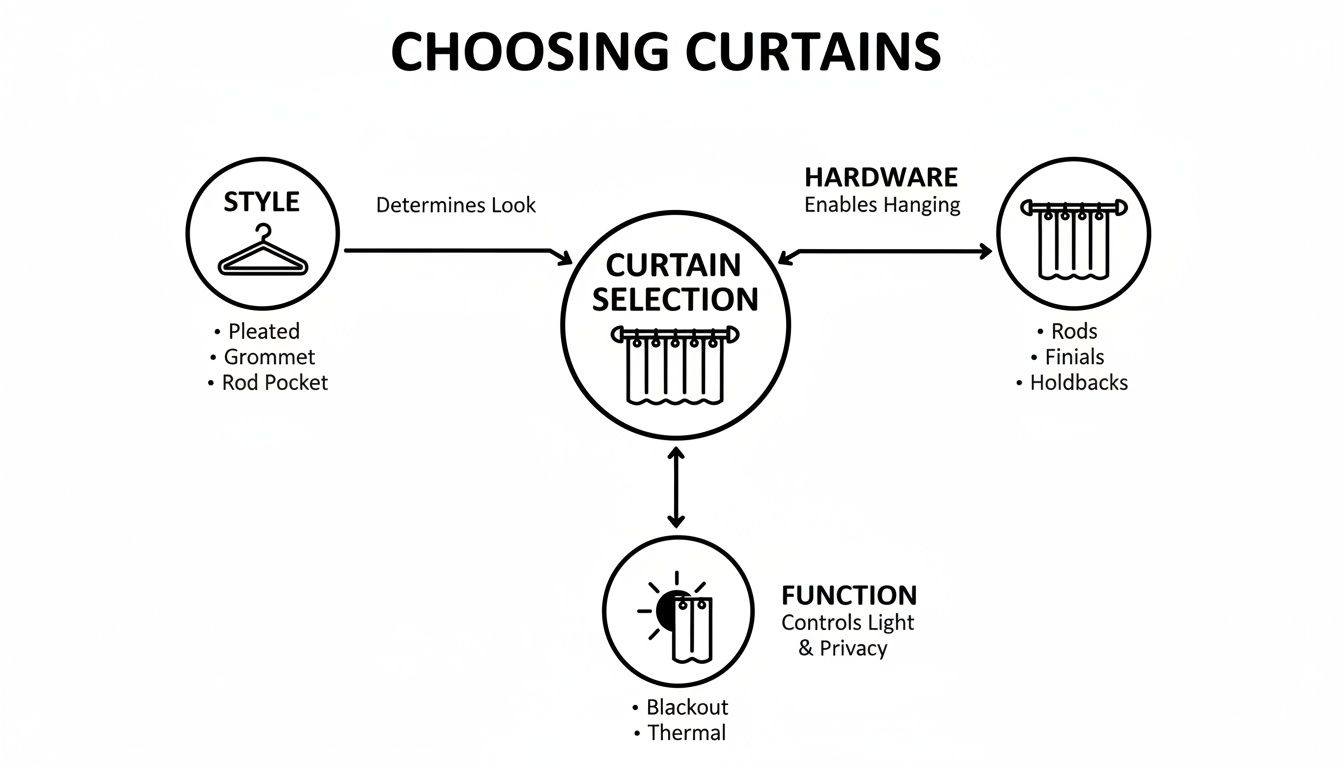
As you can see, these three elements are interconnected. Change one, and it affects the others, which helps guide you to the perfect choice for your room.
Grommet curtains are defined by the large metal or plastic rings pressed into the fabric at the top. The curtain rod slides through these rings, creating large, uniform S-shaped folds that look clean and modern.
Pros & Cons:
The Rod Pocket, or pole pocket, is one of the most traditional and straightforward styles. It features a sewn channel at the top of the panel where the curtain rod slides through, bunching the fabric for a soft, gathered look.
Pros & Cons:
Tab Top curtains feature charming fabric loops sewn onto the top of the panel, which hang directly over the curtain rod for a relaxed, cottage-like vibe. Its cousin, the Back Tab curtain, has loops hidden on the back of the panel.
The hidden loop design gives Back Tab curtains a more polished and tailored look. The fabric appears to float just below the rod, creating soft, elegant pleats. If you want to learn more, check out our deep dive into what are tab top curtains.
For a formal and tailored aesthetic, Pinch Pleat curtains are an excellent choice. The fabric at the top is gathered into tight bunches, or "pleats," which are stitched into place. These pleats attach to the rod with drapery pins and rings.
This classic style comes in variations like the two-finger pleat, the common three-finger pleat, and the decorative Goblet pleat, each creating a different level of fullness.
Insider Tip: To keep pinch pleat curtains looking sharp, use a drapery pin at both the top and bottom of each pleat when stacking them open. This "trains" the fabric to hold a perfect, crisp shape.
For a sleek and modern look, Ripple Fold curtains are in a league of their own. This style hangs from a special track system using carriers that snap onto the curtain header, creating a perfect, continuous S-curve.
This precise wave is created by the spacing of the carriers, not the fabric itself. Designers love Ripple Fold curtains for creating a high-end, hotel-like atmosphere, especially with floor-to-ceiling windows.
Beyond the main styles, a few others serve specific, wonderful purposes.
You’ve found the perfect curtain style, but without the right hardware, it can fall flat. The relationship between your curtain header and its hardware is crucial for ensuring your curtains hang beautifully and function correctly.
The hardware is an entire system that includes brackets, rods, and decorative finials. Understanding how these pieces work with different curtain hanging styles removes the guesswork from installation.
Let's tackle some common hardware dilemmas to help you pair your curtains with the perfect support system.
Q: Which rod works best for heavy blackout curtains?
A: The short answer is a sturdy, larger-diameter rod. For heavy fabrics like velvet or lined blackout panels, you need a rod that won’t bow under the weight.
Q: Can I use any curtain on a tension rod?
A: Not exactly. Tension rods are great for lightweight curtains where you can’t drill holes, such as in rental apartments or for café curtains.
However, they are not designed to support heavy drapes. Stick to sheer or lightweight cotton panels to avoid the rod collapsing. Tension rods are a solution built for convenience, not heavy-duty support.
A double rod system is a game-changer for layering treatments, like pairing breezy sheer curtains for daytime privacy with heavy blackout curtains for nighttime. This setup uses a special double bracket that holds two rods, giving you ultimate control over light and privacy.
For curtains that use drapery pins, like pinch pleats, you'll need a rod designed to work with rings or a traverse track. The pins hook into the rings, which then slide along the rod. Our guide on how to use curtain hooks and rings breaks this down, making it simple to achieve a professional look.
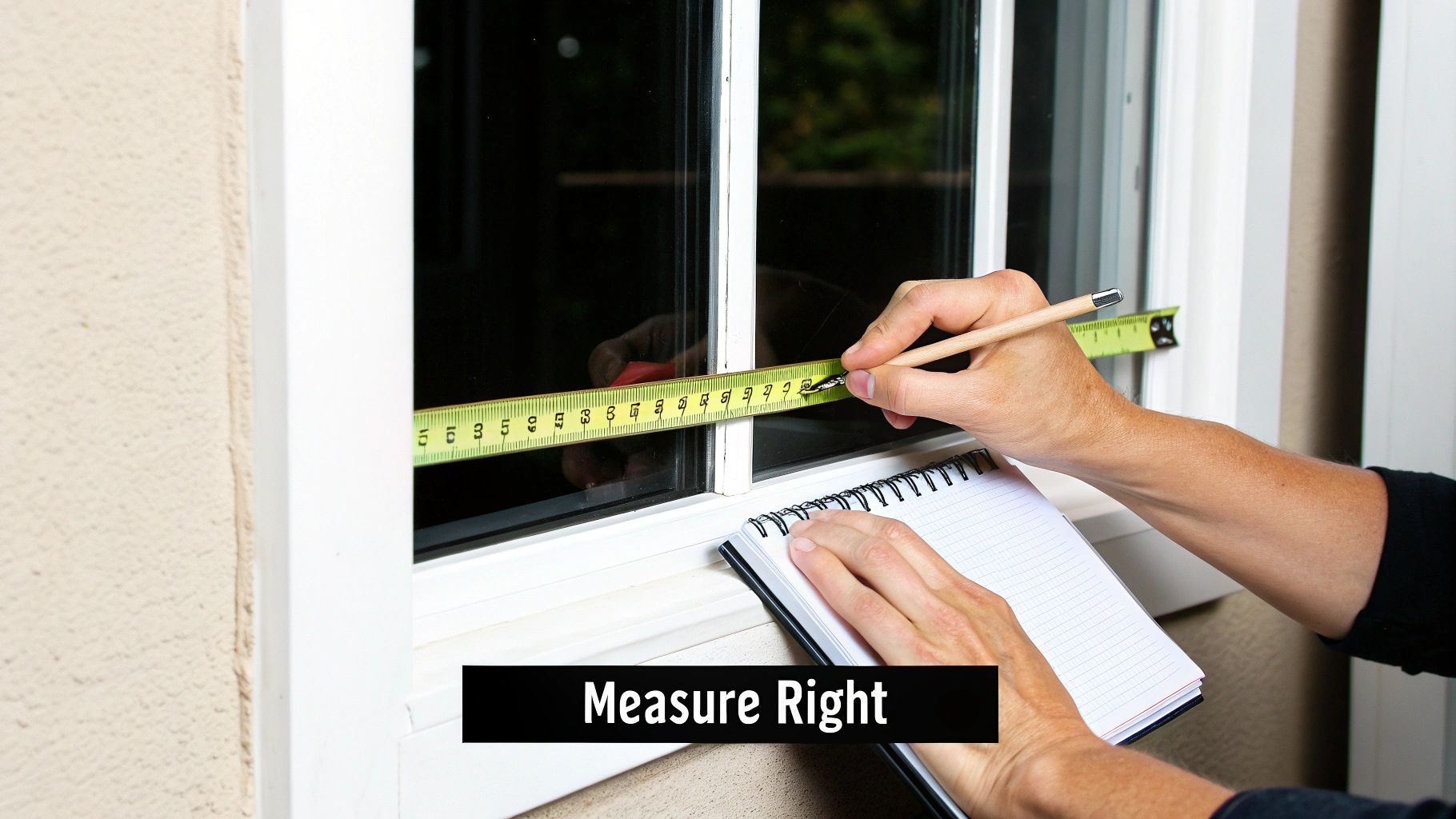
Correct measurements are the key to a professional-looking window treatment. Before you choose from the various curtain hanging styles, you need to know your window's dimensions. Nailing this step ensures your curtains hang beautifully rather than looking awkward.
Even the most luxurious curtains will look ill-fitting if they're too short or not wide enough. We'll walk you through the three key measurements you need: rod width, curtain length, and return depth.
An interior designer’s secret for making any room feel bigger is the "high and wide" method. This trick creates the illusion of larger windows and taller ceilings. Before you start, ensure your window's structure is sound; if you spot damage, it's worth learning how to replace a windowsill.
Here’s how this powerful trick works:
This one adjustment can completely change a room's feel, turning your curtains into a thoughtful design element that beautifully frames your view.
Ready to measure? All you need is a metal tape measure for accuracy and a notepad.
Your curtains are up, but the magic is in the finishing touches. A few extra moments spent on styling and proper care can elevate your windows into a true design feature that looks fantastic for years.
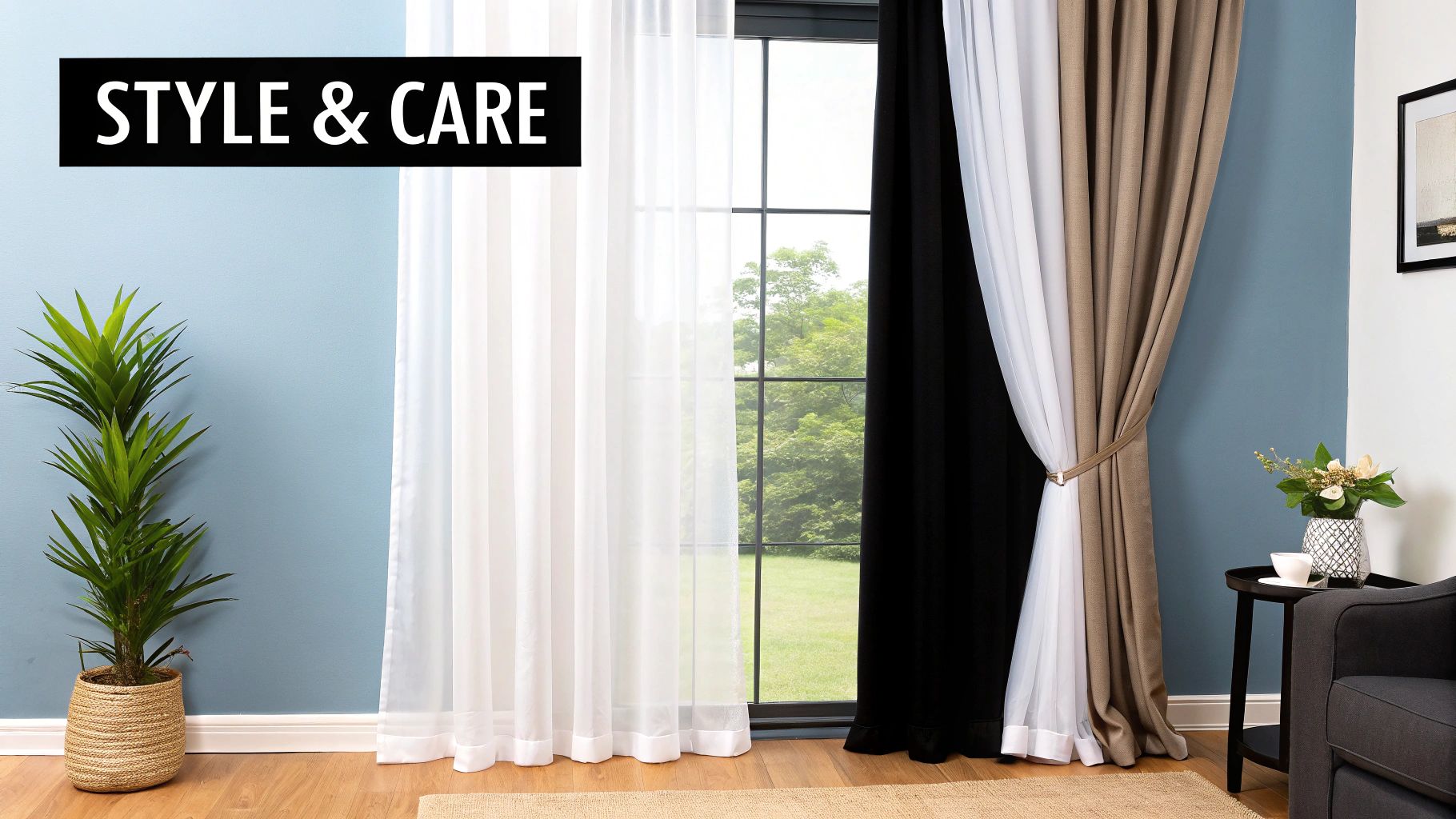
Here’s a pro trick: "train" your curtains. After hanging, arrange the fabric into neat, even folds. Gently tie the folded panel in a few places with soft fabric strips. Leave them tied for two or three days. When you undo the ties, you'll have beautifully formed folds that hold their shape.
Layering adds depth and versatility to a window treatment.
Don't underestimate accessories. A well-chosen tie-back not only holds curtains open but also acts as jewelry for your window, tying the whole look together.
A little care goes a long way. Always check the manufacturer's care label first. For general upkeep, use the upholstery attachment on your vacuum cleaner once a month to remove dust. Spot-clean durable fabrics like polyester immediately. For delicate materials like velvet or silk, trust them to a professional dry cleaner.
If you're looking for more inspiration, these 10 feature wall design ideas can beautifully complement your new window treatments.
Still have a few questions about curtain hanging styles? Let's walk through the most common ones.
The most popular styles are Grommet (or Eyelet) and Rod Pocket.
To block light effectively, get the curtain fabric as close to the wall as possible.
Ripple Fold curtains on a ceiling-mounted track are a brilliant solution, as their continuous S-wave leaves almost no gap at the top. Another great option is pairing Grommet curtains with a wrap-around curtain rod. This hardware curves back toward the wall, allowing the curtain to hug the frame and seal off light. Always start with a true blackout fabric for the best results.
For the most part, yes. Curtain rings with clips are versatile and can hang almost any panel that doesn't have a built-in header, like a simple hemmed fabric.
They are especially useful for upgrading Rod Pocket or Tab Top curtains. Clipping rings to the top lifts the panel off the rod, eliminating friction and allowing the curtains to glide open and closed with ease.
Feeling inspired to give your windows a fresh new look? At Joey'z Shopping, we have a wide selection of beautiful and affordable curtains to match any decor.