
Join the Joey'z Family!

Bare windows can make a room feel unfinished, but the thought of custom treatments and their shocking price tags often stops redecorating projects cold. The good news? A stunning refresh is completely within your reach. We’ve pulled together some practical DIY window treatment ideas that deliver big on style without breaking the bank.
Tackling window treatments yourself is one of the most rewarding home improvement projects you can take on. It’s your chance to inject personal style, solve real problems like privacy and light control, and completely change the feel of a room without draining your bank account.
Whether you're a renter looking for damage-free options or a homeowner itching for a weekend project, there's a perfect solution waiting for you. This guide offers step-by-step ideas to help you create beautiful, functional window coverings that reflect your taste and expertise.
The appeal of DIY goes way beyond just saving money, though the financial perks are hard to ignore. When you take on the project yourself, you get total creative freedom—you pick the exact fabric, the perfect color, and a style that genuinely complements your decor.
It also puts you in the driver's seat. You aren’t waiting weeks for installers or settling for off-the-shelf options that are almost right. For more inspiration, check out our guide on other low-cost window coverings that make a huge impact.
This hands-on approach is becoming more popular. The global window coverings market was valued at USD 14.36 billion in 2024, and DIY options are a huge part of that growth. By doing it themselves, homeowners and renters often slash installation costs by up to 60% compared to hiring a pro. You can dig into more stats about the window covering market over at Fortunebusinessinsights.com.
Picking the right project really comes down to your budget, time, and the specific needs of your space. This comparison table breaks down the most popular DIY window treatment ideas to help you decide.
| Treatment Type | Average Cost | Skill Level | Time to Complete | Best For |
|---|---|---|---|---|
| No-Sew Curtains | $20 - $70 | Beginner | 1 - 2 hours | Quick, easy updates and renter-friendly decor |
| No-Drill Rods/Shades | $30 - $80 | Beginner | < 1 hour | Renters or anyone wanting a damage-free setup |
| Peel-and-Stick Valance | $25 - $60 | Beginner | 1 - 2 hours | Adding a decorative touch without commitment |
| Cordless Shade Hack | $15 - $40 | Beginner | < 1 hour | Making existing shades child- and pet-safe |
| DIY Fabric Roller Shade | $40 - $100 | Intermediate | 3 - 5 hours | Custom patterns and achieving a high-end look |
Whether you're after a quick fix or a more involved custom creation, there’s a DIY path that will get you there.
Think of this guide as your go-to resource for a whole range of projects, designed for different skill levels and styles. We’re going to walk you through:
Our goal is to give you the confidence and the practical steps to turn your windows from drab to absolutely dynamic.
Curtains have an amazing ability to add softness, color, and warmth to a room. But for many, the moment a sewing machine enters the picture, the whole idea feels like a non-starter. The short answer is: you can create gorgeous, professional-looking drapes without a single stitch.
This is easily one of my favorite diy window treatment ideas because it's so accessible. Forget the needle and thread. Your new best friends are tools like fusible bonding web (iron-on hem tape) and specialty fabric glues. These gems create a bond so strong and clean, it looks just like a sewn hem but takes just minutes to do.
First, you’ll need to measure your windows to figure out how much fabric you need. A good rule of thumb is to make the fabric width 1.5 to 2 times the width of your actual window. This ensures you get that full, beautifully gathered look instead of a flat sheet hanging there.
Once you’ve cut your fabric to size, simply fold the edges over to create your hem, tuck the bonding tape inside the fold, and press it with a hot iron. It’s that simple.
Insider Tip: Want to elevate the look without any extra work? Use clip-on rings. They instantly create these elegant, uniform pleats and let the curtains glide smoothly along the rod. It's a small touch that adds a surprising amount of sophistication to a no-sew project.
This DIY approach isn't just easy; it’s incredibly smart. The demand for curtains is growing, with a projected 8.7% CAGR from 2024 to 2030, largely because DIY installation is so much cheaper—often 50% cheaper than custom orders. Plus, choosing the right material, like a solar-blocking fabric, can cut down on heat gain by up to 80%. You get style and real energy savings. You can dig into more market trends in this detailed industry analysis.
The best part about going no-sew is the creative freedom. You're not stuck with what's on the shelf. You can really get your hands dirty and make something unique.
Think outside the box with ideas like these:
These techniques are fast, stylish, and often completely reversible. For a complete walkthrough, check out our guide on how to hem curtains without sewing for even more detailed tips and tricks.
If you're after a clean, minimalist look with fantastic light control, you really can't beat modern blinds and shades. They’re a perfect starting point for anyone hunting for DIY window treatment ideas that are both sleek and super functional. And forget about complicated installations—today's options are truly designed for everyone.
You can find everything from peel-and-stick temporary shades that go up in minutes to clever kits for converting old corded blinds into a safer, cordless design. These projects pack a serious punch, giving you a high-impact upgrade without the high-end cost or hassle.
The first step to a flawless fit is getting your measurements right. It all starts with one crucial decision: are you going for an inside mount or an outside mount?
A Quick Tip: For an inside mount, always measure the width at the top, middle, and bottom of the window frame. Use the narrowest of the three measurements. This little trick ensures your blinds won't get stuck.
Beyond just looking good, modern shades offer incredible functionality. Top-down/bottom-up cellular shades, for instance, are a total game-changer. They give you the ultimate balance of natural light and privacy because you can lower them from the top to let light pour in while keeping the bottom half covered.
These upgrades are also a smart financial move. Blinds and shades accounted for 43.2% of global window covering sales in 2024, largely because of their energy efficiency. Tackling the installation yourself can also slash costs by 50-70% compared to hiring a professional. For more detailed instructions, our guide on vertical window blinds installation has great advice.
Sometimes, you might want to pair hard treatments like shades with soft fabrics. The infographic below shows just how simple it is to whip up some no-sew curtains.
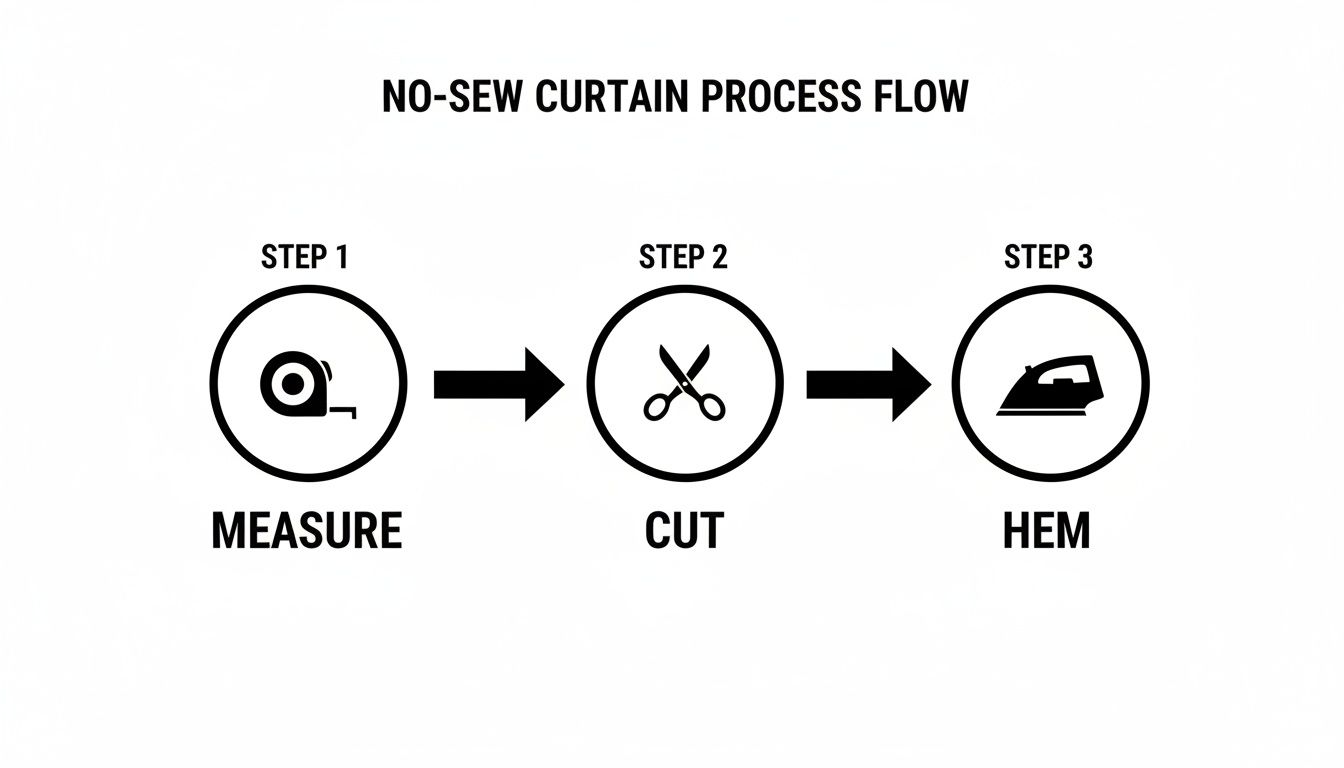
This visual breaks a potentially intimidating task down into three totally manageable steps, showing just how accessible DIY window projects can be.
And don't forget about those less-common windows. Specialized options like skylight blinds and shades use a similar DIY mindset to effectively manage light and heat from overhead, but they're tailored for a completely different kind of opening.
With so many options, picking the right type of blind or shade can feel overwhelming. This table breaks down the most popular choices to help you decide what's best for your space.
| Type | Light Control | Insulation Value | Child/Pet Safety | Best Room |
|---|---|---|---|---|
| Cellular Shades | Excellent | High | Excellent (cordless) | Bedrooms, Living Rooms |
| Roller Shades | Good to Excellent | Low to Medium | Excellent (cordless) | Kitchens, Offices |
| Roman Shades | Good | Medium | Good (cordless options) | Dining Rooms, Bedrooms |
| Faux Wood Blinds | Very Good | Medium | Fair (corded) | Bathrooms, Kitchens |
| Vertical Blinds | Very Good | Low | Fair (wand control better) | Patios, Large Windows |
Ultimately, the best choice hinges on what you value most—be it insulation, safety for your little ones, or simply achieving that perfect look.
When you're ready to move beyond the standard-issue curtains and blinds, it's time to let your windows make a statement. This is where you can really have fun and explore diy window treatment ideas that show off your unique style. These projects are proof that you don't need a massive budget to get a custom look that feels personal and thoughtfully designed.
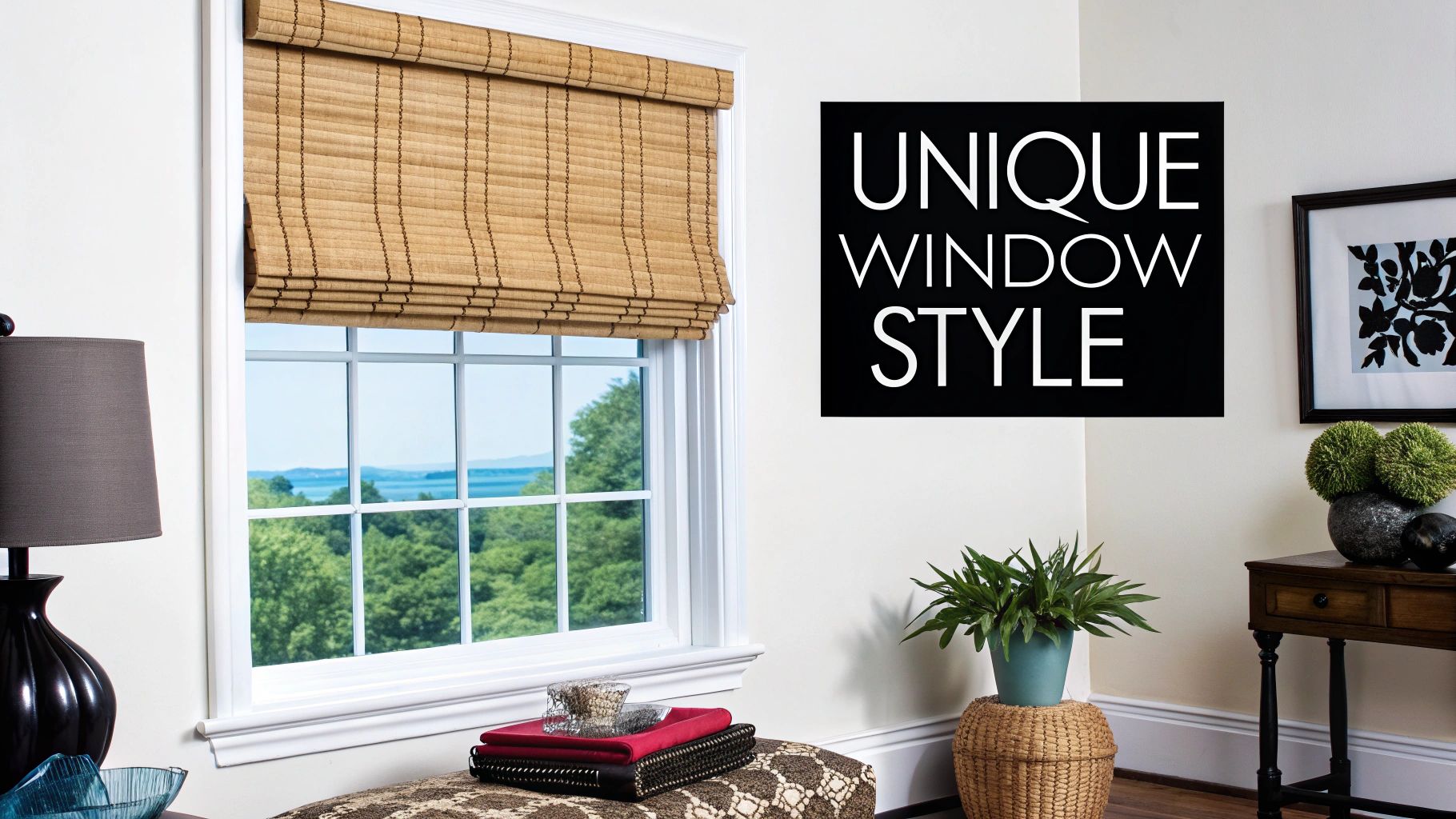
Many of the most unique treatments are surprisingly simple to pull off. It's often about repurposing materials or using unexpected items to craft something truly one-of-a-kind. Before you know it, you've turned a functional necessity into a focal point of your room.
A simple wood valance is a fantastic project that adds a touch of rustic charm while cleverly hiding curtain rods or blind hardware. It creates a polished, built-in look that feels much more expensive than it actually is. All you really need are a few pieces of pine, some wood stain, and brackets.
To get started, measure the width of your window frame and tack on a few extra inches to each side—this helps create a more balanced, intentional look. From there, you just cut your boards, assemble them into a simple box shape, and apply a stain or paint that complements your room. The result is a high-impact architectural detail that instantly elevates the space.
If you love the elegant look of frosted or stained glass but not the high price tag, decorative window film is an incredible solution. This self-adhesive film gives you privacy while still letting that beautiful natural light filter through. It’s perfect for bathrooms, front doors, or any window where you want both style and seclusion.
The application is a total breeze:
This is a brilliant, renter-friendly option because it peels right off without leaving any sticky residue behind. It's a non-permanent way to add a ton of character.
Expert Tip: Don't limit yourself to just traditional materials. I've seen incredible DIY projects using everything from vintage scarves as cafe curtains to repurposed closet rods spray-painted a metallic finish to serve as chic, industrial curtain rods.
Ready for a truly creative project? You can craft a chic, functional Roman shade from something as unexpected as a simple bamboo floor mat or even a placemat. This approach adds fantastic natural texture and warmth to a room.
For this one, you’ll need a bamboo mat, a cord lock and pulleys from a Roman shade kit, and some sturdy mounting hardware. By strategically attaching a few eye hooks and threading the cord through, you can create a fully operational shade that rolls up neatly. It’s a stylish and incredibly budget-friendly alternative to expensive woven wood shades and is sure to be a conversation starter.
Living in a rental doesn't mean you're stuck with whatever window treatments (or lack thereof) the landlord left behind. Getting that security deposit back is priority number one, but that doesn't mean you have to sacrifice style.
Thankfully, finding temporary, stylish, and completely damage-free solutions is easier than you might think. These diy window treatment ideas are designed for anyone who wants a personalized space without picking up a drill.
The undisputed hero of the no-drill world has to be the tension rod. This simple gadget adjusts to fit snugly inside your window frame, using—you guessed it—tension to stay put without a single screw. It's the perfect way to hang lightweight curtains and add some softness to a room in literally minutes.
Beyond the classic tension rod, the world of adhesive window treatments has really come into its own. These are your go-to for achieving a more structured or modern look without committing to permanent hardware.
These options are a lifesaver for tricky spots like bathrooms, street-facing windows, and front doors where you need privacy but don't want to block all the light.
Renter's Rule of Thumb: Always, always test an adhesive product on a small, hidden spot first. A little patch on the inside of the frame or wall can save you a headache later by making sure it won't peel paint or leave gunk behind.
What if you want a more substantial, traditional curtain look? You still don't need a drill.
Try using heavy-duty, damage-free command hooks—the kind designed for hanging pictures or heavier decor. Place one on each side of your window frame, and you can rest a lightweight dowel or curtain rod right on top.
This trick works best for stationary curtain panels that are more for framing the window than for daily opening and closing. The key is to check the weight limit on the hooks to make sure they can handle your rod and fabric combo.
Decorating your home with a conscience is easier—and more stylish—than you might think. When you’re brainstorming DIY window treatment ideas, weaving in sustainability not only helps the planet but also brings a natural, grounded warmth into your space. It’s all about making responsible choices that look just as good as they feel.
A great place to begin is with the materials themselves. Fabrics like organic linen, bamboo, recycled cotton, and hemp offer a beautiful, textured look without the heavy environmental footprint that often comes with conventional textiles. These materials typically need less water and fewer pesticides to grow, making them a healthier choice for both your home and the Earth.
Before you buy anything new, take a look around your home or a local thrift store. One of the most impactful sustainable actions is simply giving old items a new life, and you might find some hidden gems just waiting to be transformed into unique window coverings.
This is where you can let your creativity run wild:
A Pro Tip for Sustainability: Keep an eye out for materials with certifications like GOTS (Global Organic Textile Standard) or OEKO-TEX®. These labels guarantee the fabric was produced without harmful chemicals from start to finish, so you can be sure you're making a genuinely green choice.
Sustainable styling isn't just about materials; it’s also about the long-term impact on your home's energy consumption. Choosing energy-efficient window treatments is a practical way to shrink your carbon footprint by adding an extra layer of insulation.
Cellular shades, often called honeycomb shades, are fantastic insulators. Their unique, pocket-like structure is designed to trap air, which helps keep your home warmer in the winter and cooler in the summer. This means your HVAC system doesn't have to work nearly as hard, leading to lower energy bills and a more comfortable home all year round. It’s a smart, eco-conscious investment that pays for itself.
Jumping into a DIY project can feel like a big step, and it's totally normal to have a few questions before you get started. Here are direct answers to some of the most common queries.
The cheapest way to cover a window is typically by using temporary peel-and-stick paper shades or creating your own no-sew curtains from inexpensive fabric. Both options require minimal hardware and materials, often costing under $20 per window. Decorative privacy film applied directly to the glass is another highly affordable and stylish alternative.
To cover windows without drilling, your best option is a tension rod. It uses pressure to fit securely inside the window frame, allowing you to hang lightweight curtains without making a single mark. Other damage-free solutions include adhesive-mounted shades and removable window films that stick directly to the glass.
As you get ready to tackle your DIY window treatments, you'll want the windows themselves to look their best. A little prep work goes a long way, so check out the best way to clean windows at home for a professional, streak-free shine that makes your new treatments pop.
Yes, absolutely. The savings alone are a huge motivator—you can save up to 70% compared to what you'd spend on custom-made or professionally installed treatments. Beyond the cost, DIY window treatments give you complete creative control to match your decor perfectly and the satisfaction of adding a personal, handmade touch to your home.
The safest window treatments for homes with children and pets are always cordless designs. Cordless options eliminate the strangulation hazards posed by dangling cords. Prioritize these types for maximum safety:
You can also find DIY kits that allow you to convert existing corded blinds into a safer cordless system. This is a straightforward upgrade that provides significant peace of mind.
Ready to bring your creative vision to life? At Joey'z Shopping, we offer a wide selection of beautiful and affordable curtains, blinds, and hardware to get you started on your next DIY project.
Explore our collection and start transforming your windows today!