
Join the Joey'z Family!

Staring at those stark vertical blinds and dreaming of a style upgrade? I get it. The great news is, you absolutely can hang drapes over vertical blinds, and it's a project that delivers a massive impact with minimal fuss. This guide will show you exactly how to hang drapes over vertical blinds to instantly elevate your room, softening harsh lines and layering in luxurious color, texture, and depth.
Layering drapes over vertical blinds isn't just about covering them up; it’s a smart design choice that merges form and function. Vertical blinds are practical, especially for large windows and sliding doors, but they can feel a bit dated or cold. Adding drapes is the perfect solution.
This combination lets you keep the light-filtering functionality of your blinds while gaining the softness and style of curtains. It’s the best of both worlds, creating a finished, cohesive look that makes the entire room feel more inviting.
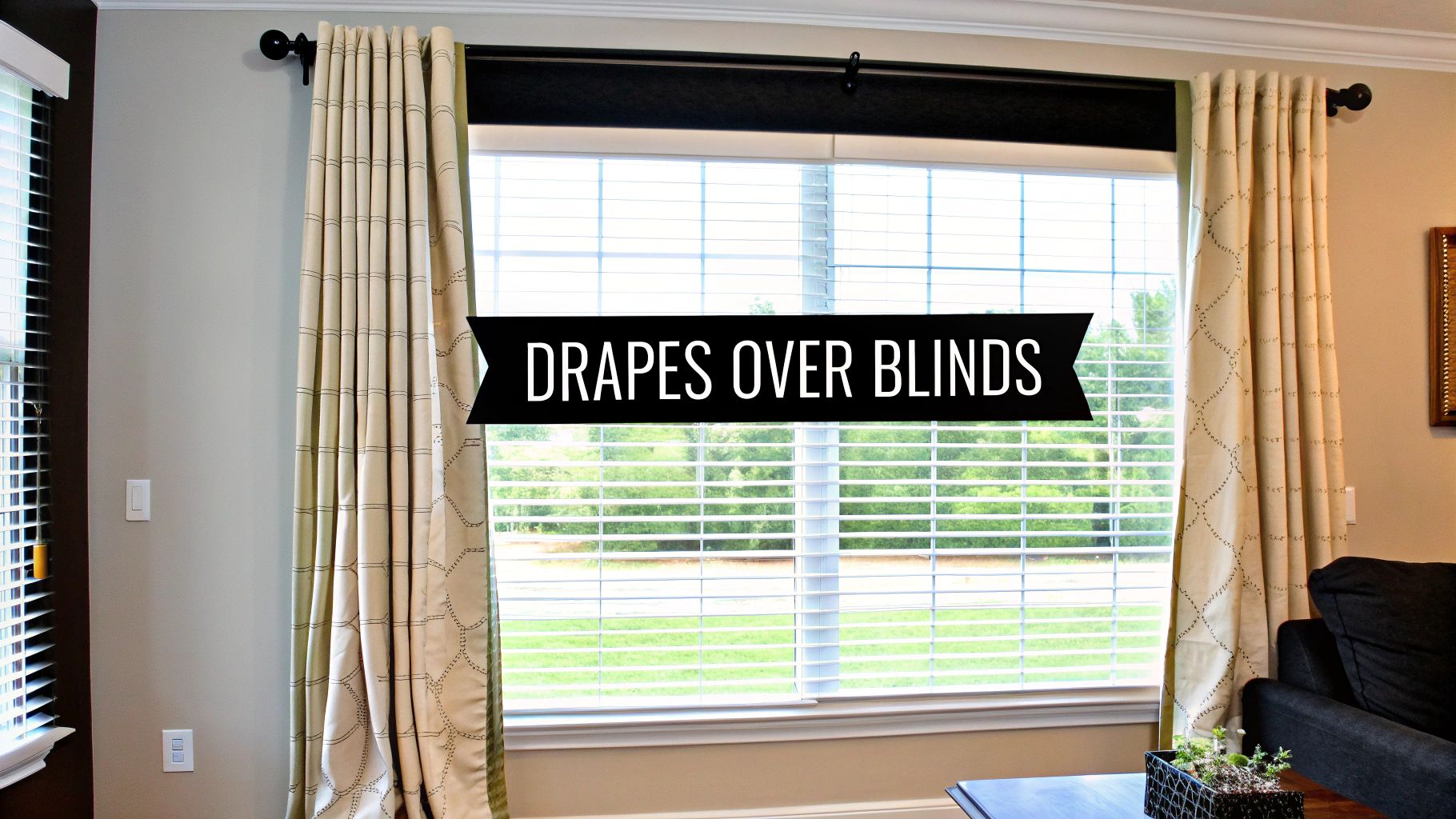
Adding drapes offers more than just a visual improvement. This simple DIY project provides several practical advantages.
| Benefit | Key Improvement | Quick Tip |
|---|---|---|
| Improved Aesthetics | Hides the clunky blind headrail and frames the window beautifully. | Choose a decorative rod and finials to add an extra style element. |
| Enhanced Privacy & Light Control | Gives you dual control—tilt blinds for soft light, close drapes for total privacy. | Sheer curtains can be a great middle-ground for daytime privacy. |
| Better Insulation | Adds an extra layer to reduce heat loss in winter and keep cool air in summer. | Look for thermal-lined or heavyweight drapes for maximum effect. |
| Noise Reduction | The fabric helps absorb outside sounds, creating a quieter, more peaceful room. | Thicker fabrics like velvet or heavyweight linen work best for sound dampening. |
Insider Tip: Think of your vertical blinds as the workhorse for light control and your drapes as the stylish element that ties the room together. They don't compete; they complement each other perfectly.
As you prepare, remember that hanging drapes is a key part of the bigger picture of elevating your living room design. Ready to begin? Let's dive into the most crucial step: measuring.
The secret to making your layered window treatments look professionally installed isn't fancy tools—it’s precise prep work. Before you even think about buying drapes, grabbing a tape measure is the most important thing you’ll do.
Think of it this way: your vertical blinds are the functional base, and your new drapes are the frame that elevates the whole picture. If that frame is crooked or too small, the effect falls flat. That's why getting the measurements right is non-negotiable for a polished look.
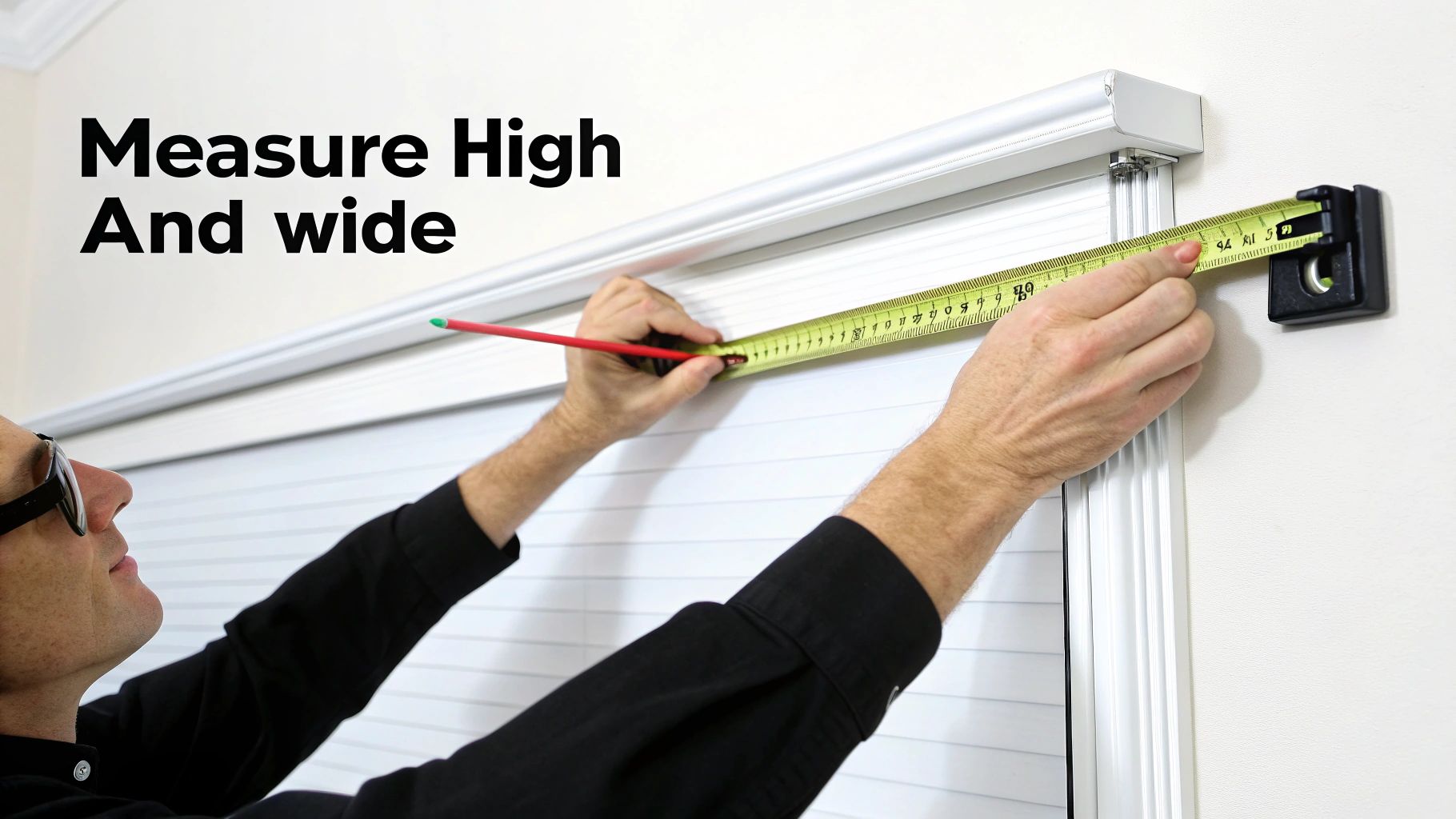
When you're learning how to hang drapes over vertical blinds, the key concept is the "high and wide" principle. This means you'll place your curtain rod significantly higher and wider than the window frame or the blind headrail itself.
Here are the golden rules for this method:
Once you know where your rod will go, you need to determine the right size for your drapes to create a sense of fullness. To get that plush, gathered appearance, follow the 2x to 2.5x rule. Measure the total width of your curtain rod (including the extra inches on the sides) and multiply it by 2 or 2.5. The result is the total width your curtain panels should add up to for a full, professionally styled look.
Pro Tip: This kind of precision isn't just for windows. The same principle of careful measurement applies to other big home projects, like learning how to accurately measure a room for carpet to ensure a perfect fit.
The final measurement is the length, which dramatically changes the room's vibe. From your planned rod mounting spot, measure straight down to where you want the drapes to end.
Here are the three most popular styles:
Recent data shows that 68% of U.S. homeowners with vertical blinds add decorative drapes for aesthetic enhancement. Mounting the rod 4-6 inches above the headrail is a key technique that succeeds in 95% of DIY attempts when measured correctly.
Now for the fun part—picking out the drapes and hardware. The hardware you choose is the unsung hero of this project. It must be strong enough to hold your drapes while giving your vertical blinds enough room to operate.
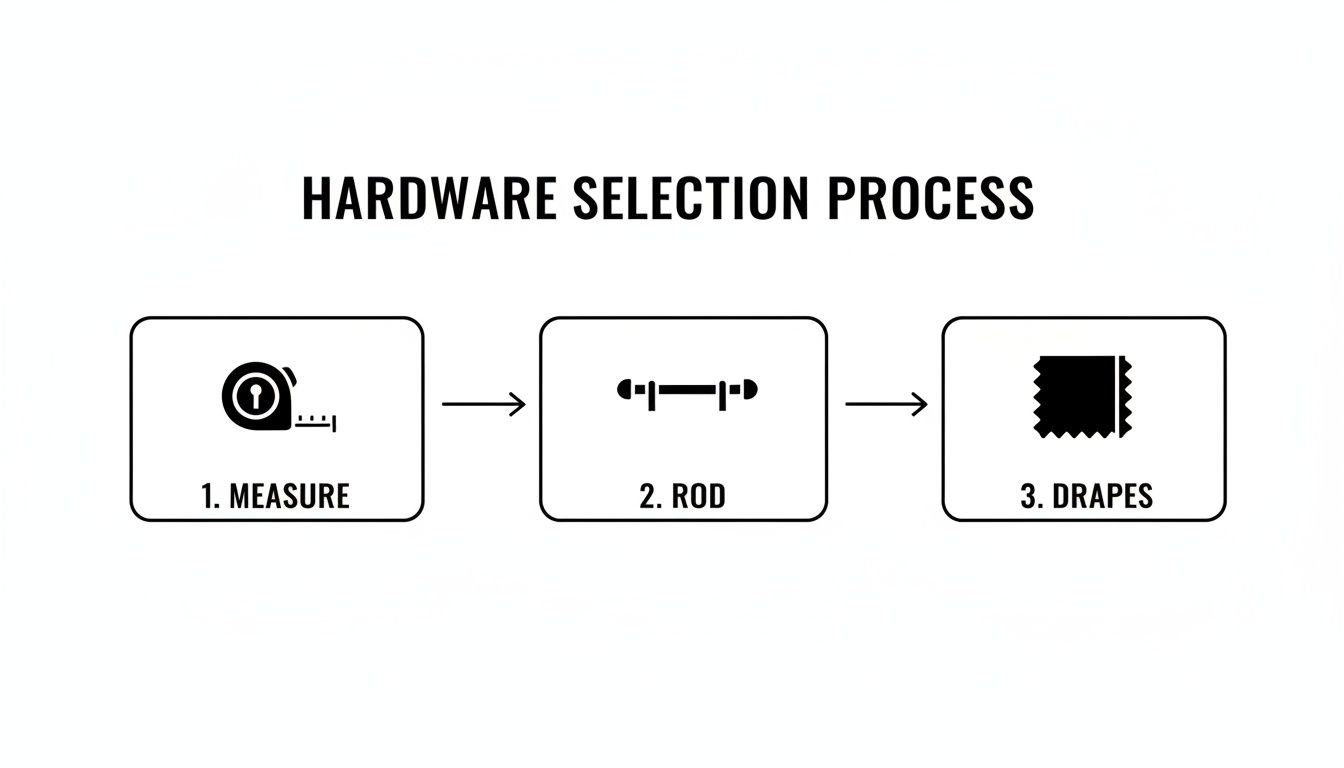
The curtain rod sets the entire tone. The main goal is to pick a rod that projects far enough from the wall to clear the blinds, allowing them to open, close, and tilt without snagging.
| Rod Type | Best For | Installation Note |
|---|---|---|
| Single Curtain Rod | A simple, clean look with one layer of drapes. | Ensure the brackets provide at least 3-5 inches of clearance to go over the blind's headrail. |
| Double Curtain Rod | Creating a high-end, layered look with sheers and drapes. | The outer rod naturally provides more clearance, making it a great choice for bulky blinds. |
| French Return Rod | Maximum light blockage and a modern, seamless appearance. | The curved ends mount directly to the wall, eliminating the need for finials and closing side gaps. |
Expert Takeaway: I almost always recommend a rod with at least a 1-inch diameter for layering over vertical blinds. It has the strength needed to span wider windows without bowing and looks more balanced.
The fabric you choose has a massive impact on the room's feel. Breezy linen or cotton blends offer a relaxed, airy vibe. Rich velvet or heavyweight thermal-lined fabric provides fantastic insulation, keeping your home cozier in winter and cooler in summer. Our guide on how to choose drapes can help you find the perfect match.
The impact is real. The U.S. Department of Energy states that medium-colored draperies with white-plastic backings can reduce heat gains by 33 percent. Adding drapes can also improve insulation, potentially saving on energy bills.
Beyond fabric, consider the curtain's header—the top part that connects to the rod. The header style affects both the look and how easily the drapes slide. For high-traffic areas like a sliding glass door, a grommet top or back tab style slides smoothly. A rod pocket, while classic, can be fussier to move.
You've planned, measured, and picked your hardware. Now it's time to install. This process is more straightforward than you might think. A little patience now ensures a polished, professional-looking result.
Before you start, get everything within arm's reach.
This is the moment of truth. Using your "high and wide" measurements, mark exactly where your brackets will go.
Pro Tip: Use painter's tape to create temporary placement marks. You can stick a piece of tape where each bracket will go, step back, and see how it looks before drilling.
With your spots marked, it’s time to drill. If you're drilling into drywall, using wall anchors is essential. Drapes can put a lot of strain on the wall, and screws alone won't hold up.
Drill a pilot hole on each pencil mark, then gently tap the anchor in until it's flush with the wall. Position your bracket over the anchor and drive the screw in until it's snug and secure. Our guide on how to install a curtain rod offers extra tips for this step.
You're on the home stretch!
Want to hang drapes over vertical blinds without damaging the walls? For renters or anyone who dislikes drilling, there are clever damage-free solutions that still deliver a polished look.
One of the most effective no-drill tricks is using brackets made to attach directly to your existing vertical blind headrail. These gadgets are a renter's dream.
They work like small, adjustable clamps that clip onto the metal headrail of your blinds. Once tightened, they provide a standard cradle to hold a curtain rod, just like traditional brackets.
Insider Insight: These brackets use the existing, securely mounted blind hardware as their anchor, meaning they can often hold more weight than you'd expect.
This approach is becoming very popular. A recent report found that 55% of renters in major cities now lean towards no-drill methods for hanging drapes. Solutions like these not only prevent wall damage but also save an average of $150 in potential repair fees. You can find more data on these hassle-free installation methods to see why so many people are making the switch.
Heavy-duty tension rods are another fantastic no-drill option, especially for windows set inside a deep frame. These rods use a spring-loaded mechanism to create pressure against the inside of the window casing. However, their success depends on a few factors:
Yes, absolutely. The short answer is that with proper installation, your blinds will remain fully functional. By mounting the curtain rod "high and wide" (4-6 inches above and 5-6 inches wider on each side), you create enough clearance for the blinds to tilt, open, and close without obstruction. The drapes will stack neatly on the wall, completely out of the way.
The best rod depends on your desired look. A standard single decorative rod is perfect for one layer of drapes. A double rod is necessary if you want to layer sheer curtains behind your main drapes. For maximum light control, a French return rod curves back to the wall, eliminating side light gaps. Regardless of type, ensure the brackets provide at least 3-5 inches of clearance from the wall.
No, you don't need special curtains. Standard drapery panels work perfectly. However, consider the curtain's header type. Grommet top or back tab curtains slide more easily along the rod, making them ideal for high-traffic areas like sliding glass doors. Rod pocket curtains are classic but can be more difficult to open and close frequently.
Ready to find the perfect drapes and hardware to bring your project to life? At Joey'z Shopping, we have a huge selection of high-quality, affordable window treatments for every style. Come explore our collection and make your vision a reality.