
Join the Joey'z Family!

Learning how to pick out curtains starts with a simple, unavoidable truth: measurements are non-negotiable. Before you even dream about fabric or color, grabbing a tape measure is the single most important step. It prevents the #1 curtain-buying mistake—improper fit—and ensures your drapes look intentional and polished, not like a sloppy afterthought.
Table of Contents
It’s tempting to jump straight to the fun part and start browsing beautiful fabrics. I get it. But the real secret to achieving that professional, high-end look lies in the foundational work of measuring your windows correctly. This one task dictates everything that comes after.
Taking the time for precise measurements ensures your curtains provide the right amount of coverage, hang beautifully, and perform their function. Whether you want to block the morning sun, add privacy, or frame a gorgeous view, it all starts with knowing the dimensions of your space. An ill-fitting curtain can instantly make a room feel smaller and less cohesive.
One of the best-kept secrets in interior design is that you aren't just measuring the window frame itself. To make your windows appear larger and your ceilings feel higher, you need to mount the curtain rod strategically. This is a game-changer.
Expert Tip: Never mount the rod directly on the window frame. Placing it higher and wider is the fastest way to make any room feel grander and more thoughtfully designed without spending an extra dime.
This quick visual breaks down the three essential measurements for getting a perfect fit every time.
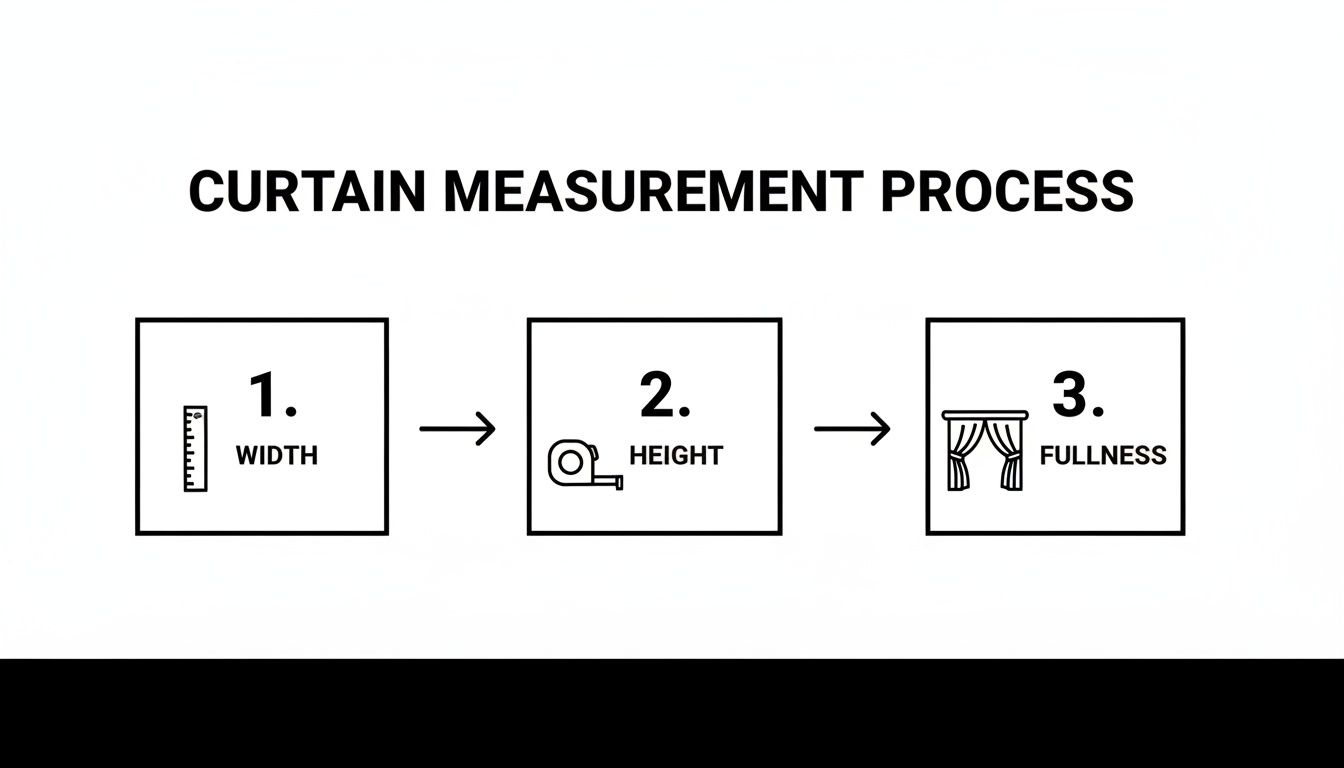
Following this sequence—width, then height, then calculating fullness—ensures you cover all your bases for a flawless result. With these numbers in hand, you’re ready to explore the exciting world of beautiful curtain fabrics and styles.
A quick reference guide for accurately measuring your windows for curtain rods and panels to achieve a professional look.
| Measurement Type | What to Measure | Expert Tip |
|---|---|---|
| Rod Width | Measure the window frame width, then add 3–6 inches on each side. | This extra width makes your window look bigger and lets more light in when curtains are open. |
| Panel Length | Measure from where the rod will be ( 4–6 inches above the frame) down to your desired hemline. | For a modern look, have them "kiss" the floor. For drama, add a few inches for a "puddle" effect. |
| Panel Fullness | Multiply your final rod width by 1.5–2.5 to determine the total width of the curtain panels you need. | Don't skip this! Skimpy curtains look cheap. A fullness of 2x the width is a safe bet for a lush, full look. |
Keep this guide handy, and you'll avoid common pitfalls and end up with window treatments that look like they were professionally installed.
The fabric you choose for your curtains is about so much more than a pretty color or pattern. It’s the soul of your window treatment, dictating everything from how the panels hang to how they manage sunlight and privacy. Making the right choice ensures your curtains are as practical as they are beautiful.
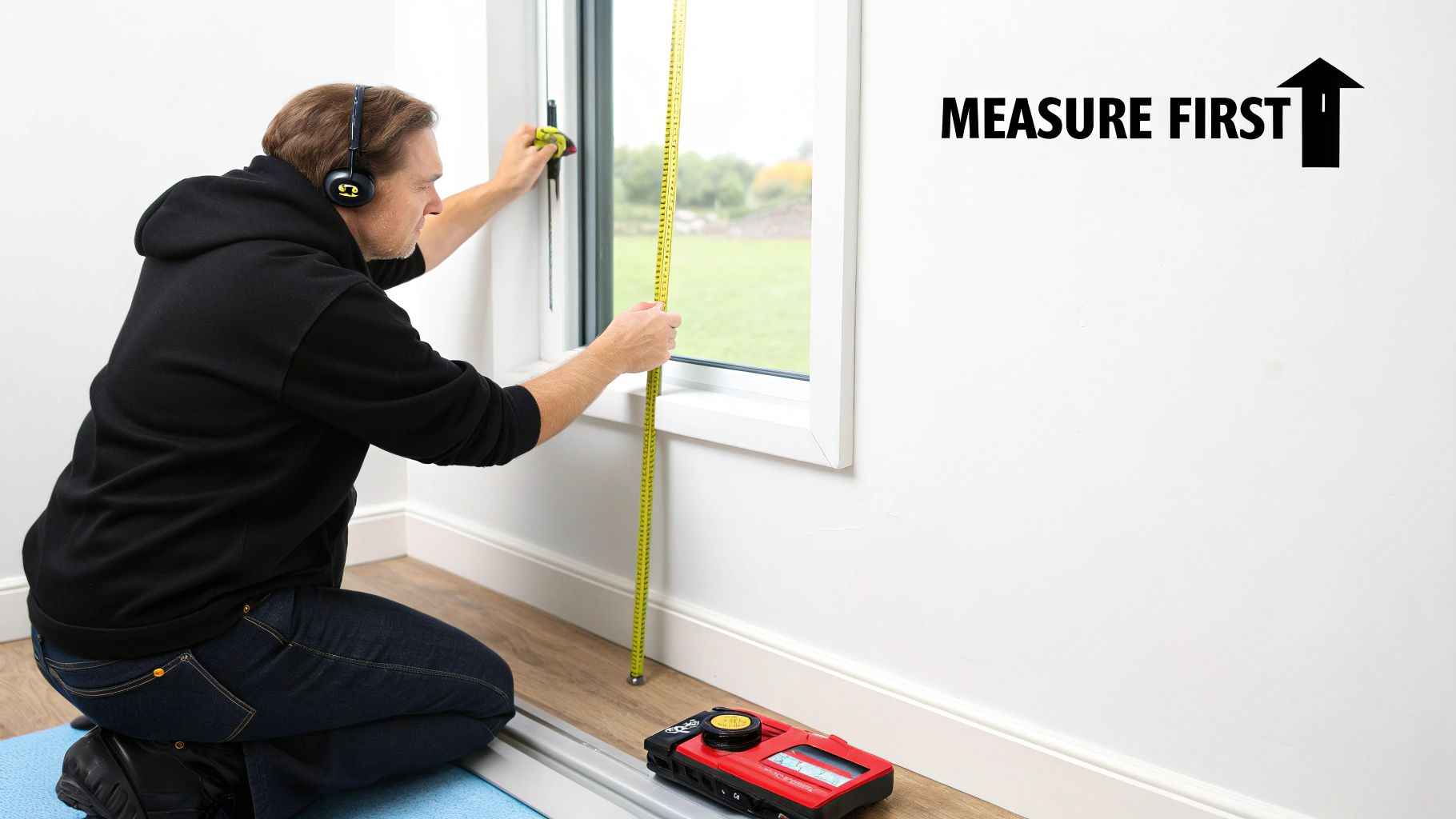
Before you start looking at swatches, think about the room's purpose. A sun-drenched living room might call for something light and airy, while a bedroom needs a material that prioritizes darkness for a good night's sleep. This simple consideration will narrow down your options significantly.
Every material brings its own unique vibe to a space. Lighter fabrics create a casual, breezy feel, and heavier ones can lend a sense of formality and drama. So, what’s the best fabric for your needs?
Here’s a quick rundown of the most common choices:
When you're deciding how to pick out curtains, remember that the fabric's weight directly impacts how it hangs. A stiff, heavy material will create structured, formal pleats, while a lightweight linen will flow more softly. If you're still exploring, our in-depth guide can help you understand different curtain cloth types in more detail.
Lining is the unsung hero of custom-looking drapes. It adds body and weight, helping your curtains hang more professionally while also protecting the main fabric from sun damage. But its biggest job is managing light and temperature.
Key Takeaway: A quality lining can transform a simple curtain panel into a high-performance window treatment. It's an investment in better sleep, enhanced privacy, and even lower energy bills.
For rooms where you need ultimate control, blackout linings are the answer. According to research by Transparency Market Research, the global curtains and blinds market is steadily growing, reflecting a strong consumer interest in functional window treatments.
These curtains can block up to 99% of light and can also reduce heat loss significantly, making them a smart choice for energy efficiency year-round.
Curtains are one of the most powerful tools in your design toolkit. They can either tie a room together as a quiet, cohesive backdrop or stand out as a stunning focal point. Knowing how to pick curtains that work with your existing decor creates that polished, intentional look we're all after.
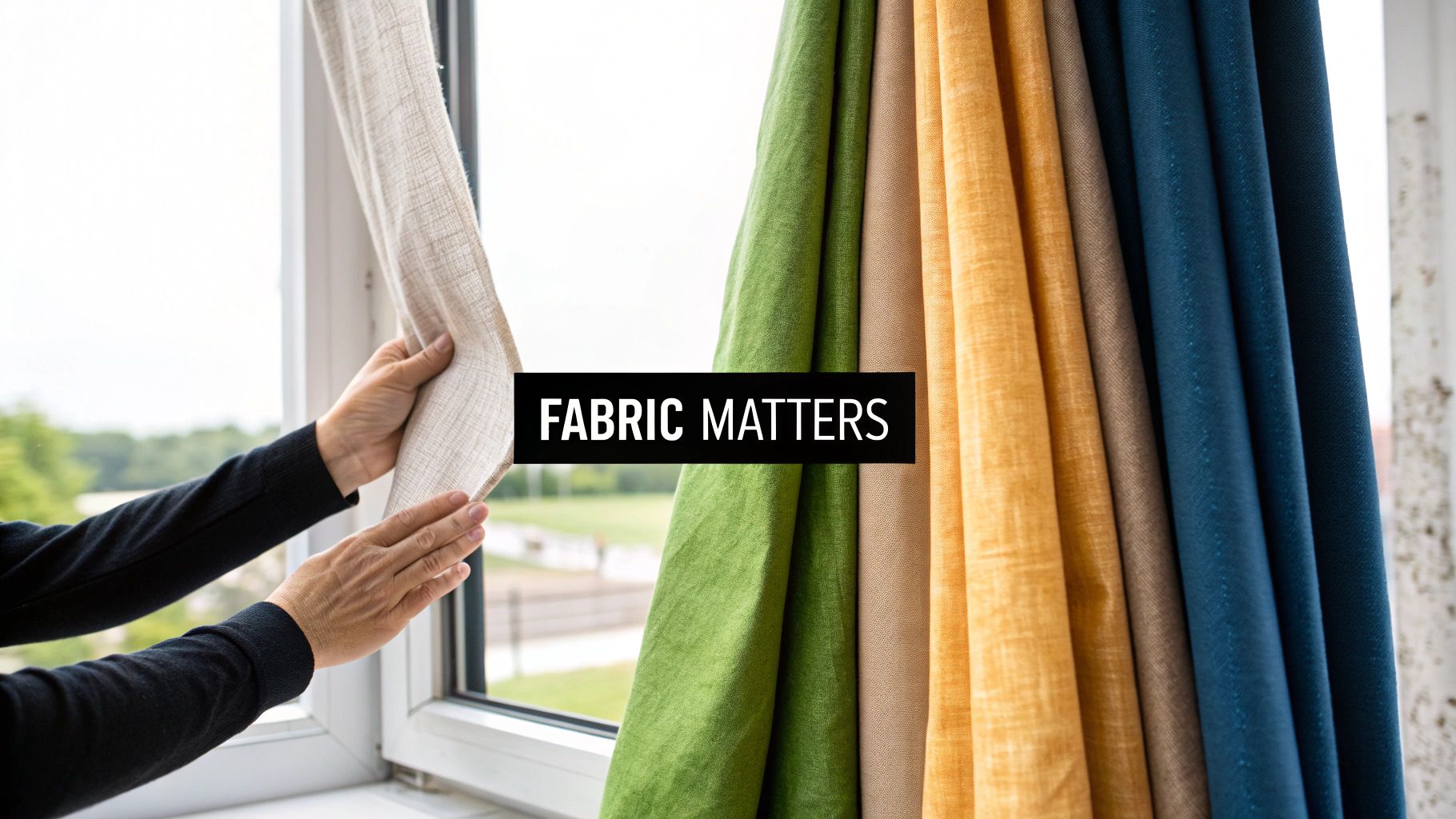
The biggest question is often solids versus patterns. A good rule of thumb I always follow is to figure out what the "star" of the room already is. If you've invested in a bold, patterned rug or a piece of statement furniture, solid-colored curtains in a complementary shade will create a much-needed sense of balance.
But if your room is mostly solid colors, a patterned curtain is the perfect way to inject personality and visual interest. It's no surprise that cloth curtains dominate with their versatility, with the global market expected to reach $58.5 billion by 2034. You can find more details about these market trends.
Don't be intimidated by pairing patterns. The secret is all about playing with scale and color. For example, if your rug has a large, sweeping floral design, look for curtains with a small, subtle geometric print. The key is to make sure the patterns aren't fighting for attention.
Here are a few tips I've picked up over the years for creating harmony:
Insider Tip: To make any room feel taller, hang your curtains 6-12 inches above the window frame. This pro-level trick is used in over 70% of professional designs to create an illusion of height and elegance. It works every time.
The very top of the curtain, called the header, has a huge impact on the overall feel. It dictates how the fabric drapes and attaches to the rod, defining the final look.
Choosing the right header is just as important as picking the fabric or color. Think of it as the finishing touch that solidifies your curtain's style.
The length and fullness of your curtains can make or break a room's entire vibe. These two elements are what create the atmosphere—whether you're going for something airy and casual or a look that's more dramatic and elegant. Nailing them is the secret to avoiding that all-too-common design mistake: curtains that just look… skimpy.
Proper fullness is what gives your drapes that plush, intentional look when they're closed. Without it, they can end up looking flat and cheap. You want enough fabric to create soft, rich folds even when the curtains are pulled all the way across the window.
So, how wide should your curtain panels be? Start by figuring out the final width of your curtain rod, which should include that extra 3–6 inches you added on each side of the window frame. Got that number? Good. The rest is simple math.
The Fullness Formula: For a classic, full look, the combined width of your curtain panels should be 1.5 to 3 times the width of your curtain rod. I find that aiming for 2x the rod width is the sweet spot for a traditional, lush appearance.
Let's say your rod is 60 inches wide. For a minimal look, you'd want a total curtain width of at least 90 inches (60 x 1.5). For that richer, more traditional fullness, you'd be looking at 120 inches (60 x 2).
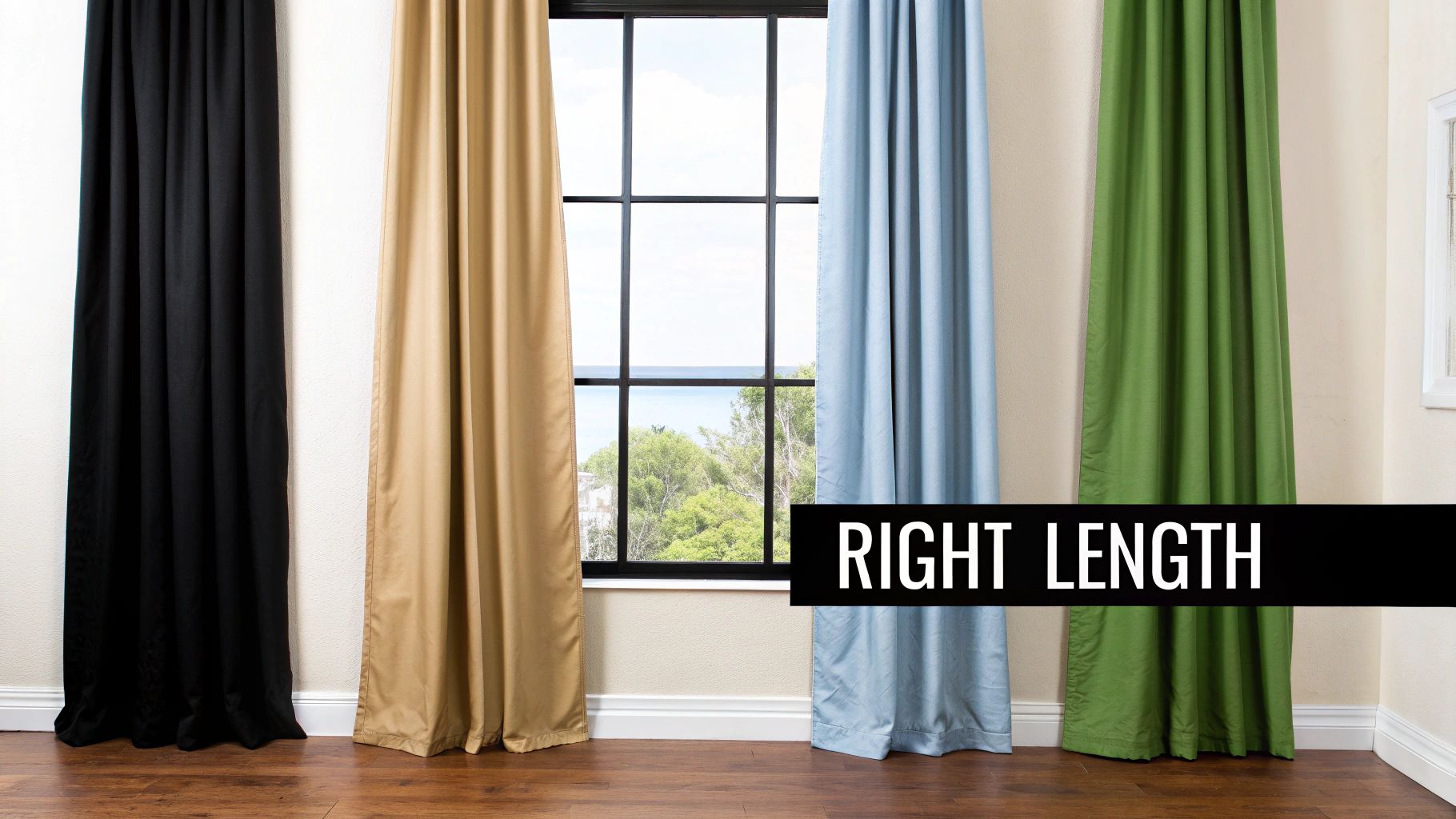
Curtain length is where you really get to define the style of the room. Each standard length has a different personality and serves a distinct purpose. Our complete guide to curtain lengths dives even deeper, but here are the most popular options I recommend:
It's clear people are investing more in their windows. Data Insights Market Research predicts the window curtain market will grow significantly, with a strong consumer shift toward energy-efficient materials that can slash energy bills.
Curtain hardware is that final, essential touch that really pulls your entire window treatment together. Think of it as the jewelry for your drapes—it transforms simple fabric panels into a polished, intentional design statement. Choosing the right hardware isn't just about looks; it’s about making sure everything is supported correctly and works beautifully.
Function should always be your first thought. A heavy set of velvet or lined curtains needs a sturdy, robust rod that won’t start to bow under the weight. On the flip side, lighter fabrics like sheer linen can easily be supported by a more delicate, slender rod. Always double-check the weight capacity before you buy.
The finish of your hardware should complement the existing metals and fixtures in your room. This simple act of coordination is what creates that cohesive, professionally designed feel. If your light fixtures and cabinet pulls are brushed nickel, a curtain rod in a similar finish will tie everything together seamlessly.
Here are a few popular hardware finishes and the styles they really shine in:
Pro Tip: Don't stress about matching every single metal in the room perfectly. A cohesive feel is way more important than an exact match. Think of it as coordinating rather than matching—a warm brass can pair beautifully with a dark oil-rubbed bronze, for instance.
The diameter of your curtain rod also plays a big role in the overall aesthetic. A thicker rod (around 1.25 inches or more) makes a more substantial statement and is better suited for larger windows and heavier drapes. A thinner rod (around 0.75 inches) offers a more minimalist look that’s great for smaller windows or lightweight curtains. If you're feeling unsure, our curtain rod size chart can give you specific guidance.
Finally, think about finials—the decorative end caps of the rod. They can be as simple as a basic cap or as ornate as a carved acorn or a crystal sphere. It's all about personality.
Choosing hardware might be the final step, but it’s a crucial one. The right rod, finish, and finials will elevate your window treatments.
Even with a plan, a few questions always pop up right before you make a final decision. To help you feel completely confident, we’ve put together answers to some of the most common things people ask when picking out new curtains.
The best choice depends on your budget, timeline, and window size. Ready-made curtains are a fantastic, wallet-friendly option for standard-sized windows, perfect for a quick refresh. You can find a huge variety of styles, like our popular sheer curtain collection, and have them hanging the very same day. Custom curtains are tailored to your window’s exact measurements, offering limitless fabric and style choices for a flawless, high-end fit, especially for odd-sized windows.
For total privacy and light control, nothing beats blackout curtains. They're designed to block over 99% of incoming light, which makes them ideal for bedrooms and nurseries. Lined drapes, especially with a thermal or heavy interlining, are another excellent choice for privacy while providing insulation. For ultimate flexibility, layer sheer curtains under a set of heavier, opaque curtains to get filtered light during the day and complete privacy at night.
As a general rule, aim to clean your curtains every 3–6 months to remove dust, pet dander, and allergens. This can change depending on your home; if you have pets, smokers, or family members with allergies, you might need to clean them more often. Always check the care label on the panel itself before cleaning. Many cotton and polyester curtains are machine washable, while delicate fabrics like silk and velvet usually require professional dry cleaning.
Absolutely! Mixing patterns is a great way to add personality and depth to a space. The secret is to create a look that feels cohesive, not chaotic. To do this successfully, stick to a consistent color palette by picking patterns that share at least one common color. Also, play with scale by pairing a large, bold pattern with something smaller and more subtle, ensuring the patterns complement each other instead of competing for attention.
At Joey'z Shopping, we believe the perfect window treatments can completely transform a room. Explore our extensive collection of curtains, shades, and hardware to find the ideal style for your home.