
Join the Joey'z Family!

You can absolutely shorten curtains without sewing, and the easiest way is with iron-on hemming tape. This heat-activated adhesive provides a crisp, durable hem in minutes using just an iron and a measuring tape. Other fantastic no-sew options include fabric glue and simple folding techniques with clips.
This guide explores the best methods, helping you achieve a polished, custom-fit look without threading a single needle.
Finding the perfect curtains is a design win, but discovering they're too long can feel like a DIY letdown. The good news? You don’t need a sewing machine or a pricey tailor to get that polished, custom-fit look.
These techniques are game-changers for renters, busy homeowners, and anyone who breaks out in a cold sweat at the thought of threading a needle. Consider this your roadmap to getting professional results, quickly and affordably.
The appeal of no-sew solutions goes beyond just avoiding a needle. It’s about saving time, money, and preventing perfectly good fabric from ending up in a landfill.
Surprisingly, ill-fitting curtains are a common issue. While the global home decor market reached $125.6 billion in 2023, a HomeAdvisor survey revealed that 68% of homeowners cited "curtains being too long" as their top frustration. This often leads to discarding new panels. No-sew methods fight this waste, saving an average of $45 per panel compared to professional tailoring.
No-sew hemming has major advantages:
Pro Tip: Always hang your curtains on the rod before you measure. The fabric's weight and the rod's style can slightly alter how they hang. Measuring them in place ensures your final hem is exactly where you want it.
Getting this right from the start saves headaches. For a detailed walkthrough, understanding how to accurately measure windows for curtains is key. You can also check our guide on how to measure curtains for specific tips.
For a durable, long-lasting finish that looks professionally tailored, iron-on fusible tape is the undisputed champion. This is the perfect route if you’re confident about your curtain length and want a crisp edge that holds up over time—even through wash cycles.
The magic is a heat-activated adhesive that bonds fabric together, creating a surprisingly strong connection. Before you start, gather your tools: a steam iron, measuring tape, sharp fabric scissors, and a quality roll of hemming tape.
Honestly, the most important part of this process happens before you plug in the iron. Your measurements must be spot-on. A wonky measurement leads to a crooked hem, so take your time.
The experts at Mistral Home have a great step-by-step curtain shortening method: they suggest measuring from the rod to the floor, subtracting 2 cm to let the curtain hover slightly, then adding 10 cm for a substantial hem. Their process has a 92% durability rating in user tests.
Key prep steps you can’t skip:
With your curtain measured and cut, it’s time for the main event. Fold the fabric along your marked hemline and use your iron to press a sharp crease. This creates a professional look and a clear guide for the tape.
Next, open the fold. Place the strip of iron-on hem tape inside the crease, with the adhesive side facing down onto the fabric. Ensure the tape doesn’t peek over the edge.
Insider Tip: I learned this the hard way—work in small sections of 12 to 18 inches. Trying to iron the entire length at once can cause the fabric to shift, leading to wrinkles or an uneven hem. A little patience makes a huge difference.
Set your iron to the correct temperature for your fabric. Press and hold it on the folded hem for 5-10 seconds—don't glide. This allows the heat to fully activate the adhesive. Lift the iron, move to the next section, and repeat until the entire hem is bonded. Let it cool completely before hanging.
Not ready for a permanent change? This section covers clever, non-permanent ways to shorten curtains that are perfect for renters or anyone who loves to switch up their decor.
The beauty of these solutions is their flexibility. You can tweak the length on a whim, test a new style, or return your curtains to their original state in seconds. No damage, no regrets.
The fold-up is the most straightforward answer to how to shorten curtains without sewing. Simply fold the extra fabric under to create a new, shorter hem. The trick is securing it so it looks clean.
Fold the bottom of the panel inward and upward, creating a crisp, hidden fold. You can make this fold as deep as needed to get the length just right. Once it’s perfect, make it stay put.
For a completely invisible fix from the front:
For a more decorative solution, use curtain rings with clips. This technique shortens your curtains while adding a touch of elegance, creating a bloused or "puddling" effect that looks intentional. Many high-end curtain and drapery sets are styled this way for a reason.
Instead of hemming from the bottom, adjust the length from the top. Fold the top edge of the panel over (away from the front), making the fold deep enough to lift the curtain to your desired length. Then, attach the clip rings evenly along this new, folded top edge.
Expert Tip: Space your clips about 4-6 inches apart to create uniform, graceful pleats. This method works wonderfully with medium-weight fabrics that hold a fold well, giving your window treatments a custom, designer feel.
The result is a beautiful drape that shortens the curtains and adds visual interest. Best of all, it's instantly adjustable.
Getting your no-sew project right comes down to picking the perfect technique for your curtains. Not all methods are created equal, and what works for a light cotton panel might be a disaster for heavy velvet.
When figuring out how to shorten curtains without sewing, first look at the material. The fabric's weight, weave, and texture will guide you to a professional-looking finish.
For most lightweight to medium-weight fabrics—like cotton, linen, and many polyester blends—iron-on hemming tape is a fantastic choice. It creates a crisp, clean bond that looks almost exactly like a machine-sewn hem.
However, the heat makes it a no-go for delicate sheers or synthetics that could scorch. Heavy fabrics like velvet or thick blackout curtains also present a challenge, as their weight can be too much for standard tape.
For trickier materials, pivot your approach:
Key Takeaway: Always test your chosen method on a small, hidden spot first. This is non-negotiable for iron-on tape or glue to prevent discoloration or damage.
Use this quick-reference chart to find the ideal no-sew shortening method based on your curtain's fabric type.
| Fabric Type | Iron-On Tape | Fabric Glue | Clips/Pins | Clip Rings |
|---|---|---|---|---|
| Cotton/Linen | Excellent | Good | Good | Good |
| Polyester | Excellent | Good | Good | Good |
| Sheers/Voile | Not Recommended | Not Recommended | Fair (can snag) | Excellent |
| Velvet/Chenille | Fair (may not hold) | Excellent | Good | Fair (heavy) |
| Blackout | Good (heavy-duty) | Excellent | Good | Not Recommended |
| Silk/Satin | Not Recommended | Fair (can stain) | Fair (can snag) | Good |
Your home's style also plays a huge part. The final look you're going for should guide your decision, especially if you use curtains to add pops of color without painting.
If your home is modern or minimalist, the clean line from iron-on tape is hard to beat. If your style is more relaxed or bohemian, the soft drape created by clip rings is a perfect match. The final length matters, too; our guide on whether curtains need to touch the floor can help you decide.
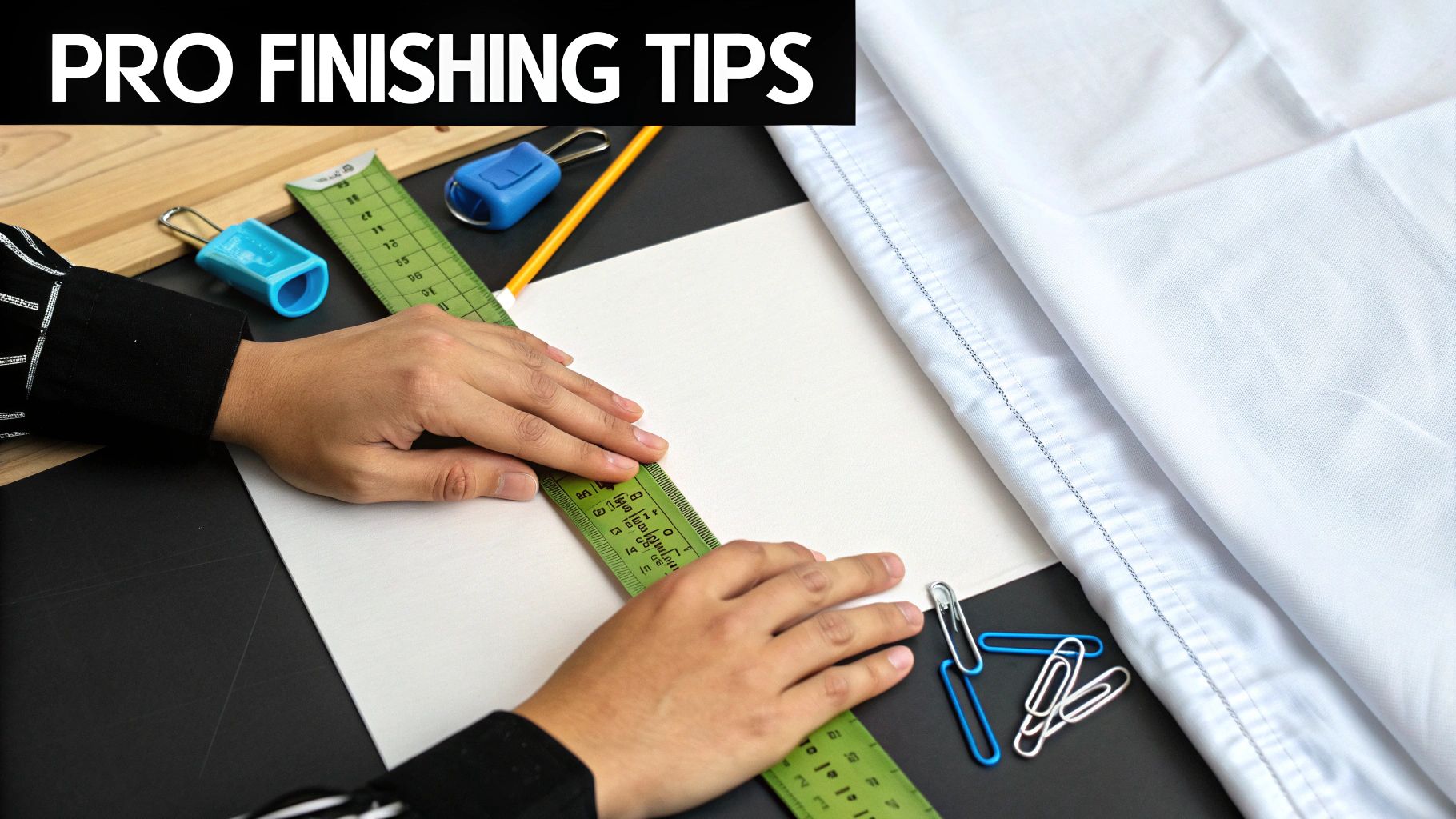
Ready to take your project from “DIY” to designer-done? The secret is in the details. These tricks will give your no-sew project a truly flawless finish.
The old mantra "measure twice, cut once" is everything here. For a perfectly straight hem, use a T-square or a long metal ruler to guide your marks. It’s a simple step that prevents the wobbly edges that can ruin the look.
Working with patterned curtains requires extra care. Before folding or applying adhesive, lay the panel flat to ensure the pattern aligns perfectly along your new hemline. A mismatched pattern is a dead giveaway of a DIY job.
Here’s another pro technique: shorten your curtains from the top. This is a brilliant move if your curtains have a beautiful, weighted, or detailed hem you want to keep. You preserve that original design element while getting the length just right.
Even the simplest no-sew methods come with potential traps. Steering clear of these common mistakes will make all the difference.
Getting the hem right is only half the battle. Hanging the final product correctly is just as important. For a complete guide, check out our article on how to hang curtains properly.
Yes, absolutely! While iron-on tape is popular, it’s not your only option. If you don't have an iron or are working with delicate fabric, you have great alternatives:
The short answer is: it depends on the method. A quality iron-on hemming tape like HeatnBond Ultrahold is designed to be machine washable and is surprisingly tough. While the bond might weaken over many wash cycles, it holds up very well.
Fabric glue can be a mixed bag; check the label to see if it’s machine-washable. Temporary fixes with clips or pins must be removed before laundry day. For best results, use a cool, gentle cycle and consider air-drying your curtains to reduce stress on the bonded seam.
Don't panic! Most no-sew mistakes are fixable. If you used iron-on tape and it’s crooked, you can usually re-press it with the iron to reactivate the adhesive and shift it into place. To remove it completely, gently reheat the area and peel the tape away while the glue is warm (test this on a hidden spot first).
With fabric glue, you must act fast. If you catch it before it cures, you might be able to wipe it away. For temporary methods like pins, fixing a mistake is as easy as unpinning and starting over.
You certainly can, but you need a heavy-duty approach. These curtains are heavy and have multiple layers, so standard hemming tape often isn't strong enough and can lead to a droopy hem.
Your best bets for heavy curtains are:
Ready to give your windows the perfect look? At Joey'z Shopping, we offer a wide selection of curtains and drapes to fit any style or budget. Explore our collections today and find the perfect foundation for your next DIY project.
https://joeyzshopping.com