
Join the Joey'z Family!

Hanging curtains can feel intimidating, but learning how to use drapery hooks with rings is the secret to achieving a high-end, custom look without the designer price tag. The short answer is simple: insert the sharp end of a drapery hook into the back of the curtain's top header, then loop the curved end through the small eyelet on a drapery ring. That's it.
However, the real magic lies in the details—like choosing the right hardware and getting your spacing just right. This guide will walk you through every step, turning a potentially tricky task into a simple and satisfying project.
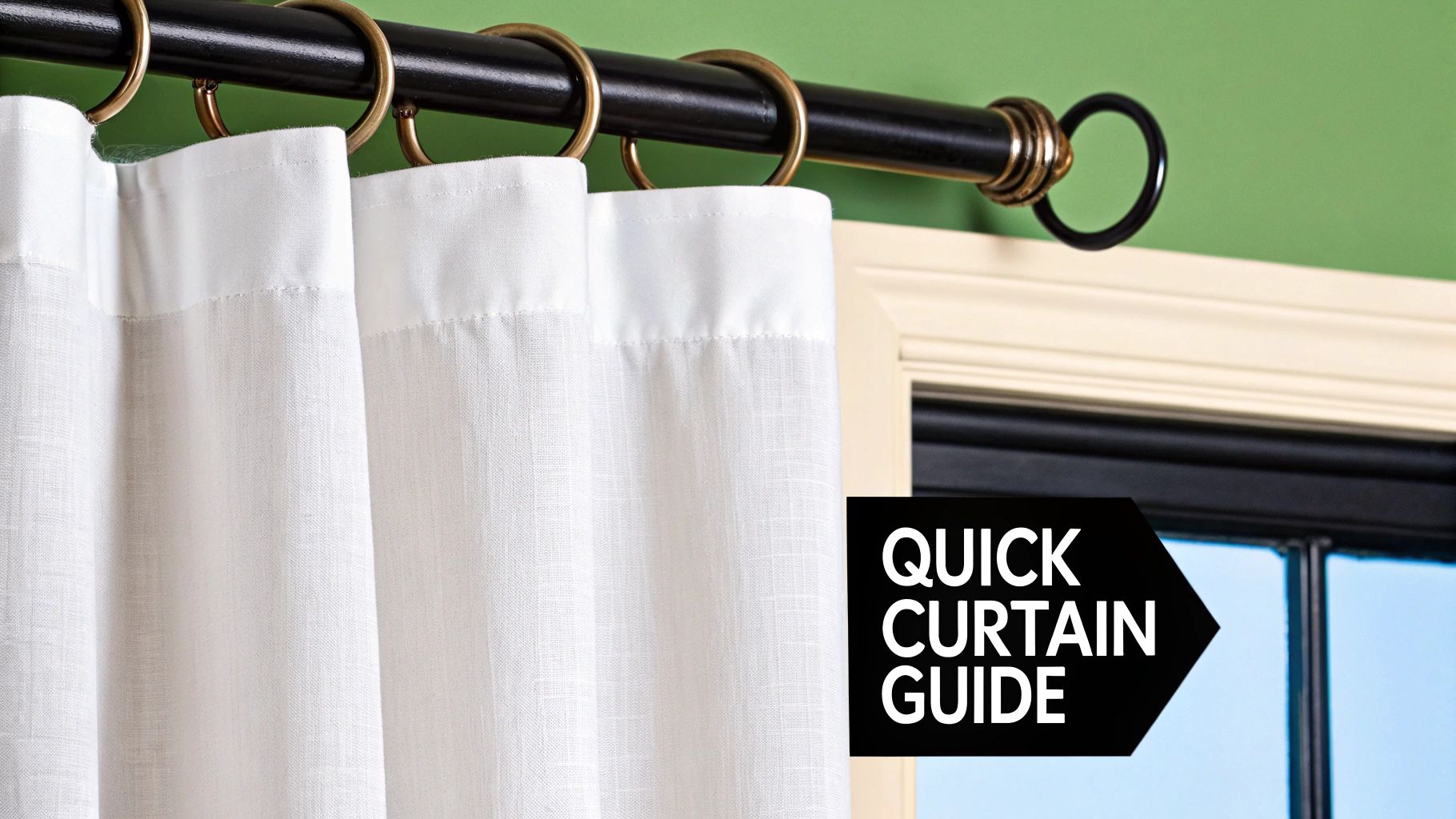
Before diving into the "how-to," let's quickly cover why this classic hardware combination is a designer favorite. Using drapery hooks with rings instantly elevates your window treatments. It's what creates those uniform, elegant pleats and allows your curtains to glide effortlessly along the rod, providing a much more polished look than simple rod-pocket styles.
Having your tools laid out makes the whole process smoother. Trust me, you don't want to be hunting for a measuring tape with a curtain panel half-hung.
| Item | Purpose | Pro Tip |
|---|---|---|
| Curtain Rod | The foundation of your window treatment. | Make sure it’s securely installed first. If you need help, check out our guide on how to hang a curtain rod. |
| Drapery Rings | These slide onto the rod and hold the hooks. | Ensure you have enough for your curtain width—usually one ring every 4–6 inches. |
| Drapery Hooks | The small but mighty connectors for your curtains. | Pin hooks are the most common and versatile type for most pleat styles. |
| Curtains with a Header | The reinforced top section that holds the hooks. | A stiff header tape (buckram) is key for creating crisp, lasting pleats. |
| Tape Measure | For ensuring even spacing between hooks. | A metal, retractable tape measure is much easier to work with than a soft one. |
This combination marries function and style perfectly. The rings reduce friction, making even heavy drapes feel effortless to open and close. Meanwhile, the hooks give the fabric structure, creating those beautiful, evenly spaced folds that signal a professional installation.
What's great is how versatile this setup is, working with everything from airy linens to heavy velvets. According to industry analysis, the global drapery hardware market is projected to reach USD 9.21 billion by 2035, a testament to its enduring popularity. Thankfully, this has led to standardized sizing, allowing us to mix and match components with confidence. Ultimately, getting your windows right is a crucial part of your home's overall feel and a key strategy for staging home interiors effectively.
The secret to a beautiful, flowing drape often comes down to the hardware. Picking the right drapery hooks and rings is about matching them to your curtain’s fabric, style, and weight. Think of it as casting the perfect supporting actors for your window’s main star.
For example, a heavy velvet drape demands a sturdy metal hook and a robust ring to hold its weight. On the other hand, a delicate sheer panel would be overwhelmed by chunky hardware. This is where a little know-how makes all the difference.
Not all drapery hooks are created equal. The right choice is almost entirely dictated by the header style of your curtains. Getting this pairing right is the first step in learning how to use drapery hooks with rings like a pro.
Insider Tip: When in doubt, start with pin-on hooks. Their adjustability is a lifesaver for achieving that perfect "floor kiss" length without needing a sewing machine.
To make things even clearer, here’s a quick guide to find the perfect hook for your curtain style.
| Curtain Header Style | Recommended Hook Type | Why It Works Best |
|---|---|---|
| Pinch Pleat | Pleater Hooks | The multi-prong design fits into pleat pockets, creating a sharp, uniform look. |
| Rod Pocket (with rings) | Pin-On Hooks | Pierces the back of the header tape, allowing you to use rings for smoother sliding. |
| Flat Panel | Pin-On Hooks | Offers maximum flexibility for creating your own pleats or a simple gathered style. |
| Sheer or Lightweight | S-Hooks or small Pin-On Hooks | A simple, lightweight design that won't weigh down delicate fabrics. |
Once you’ve settled on your hooks, it’s time to pick the rings. The two most important factors are material and size.
The material is mostly about aesthetics—wood, metal, and resin can match any decor. We love our collection of classic Metal Curtain Rings for their durability and smooth glide, perfect for curtains you open and close daily.
Size, however, is a non-negotiable detail. The inner diameter of your drapery rings must be at least a half-inch larger than the diameter of your curtain rod. This gap is crucial to prevent friction and ensure your curtains open and close effortlessly.
Alright, let's get hands-on. Consistent spacing and proper technique make all the difference between curtains that look okay and curtains that look professionally hung.
First, lay one of your curtain panels out on a clean, flat surface like a bed or a clean floor. This gives you a stable workspace to measure and place your hooks accurately. It’s also a good time to double-check you've taken accurate curtain measurements to ensure they hang exactly as you envisioned.
The key to achieving deep, rhythmic folds is consistent hook spacing.
Start by placing your first and last hooks about an inch from each end of the panel. Then, divide the remaining space evenly. A small piece of masking tape is a great way to mark your spots without leaving residue.
A Quick Pro Tip: Count your rings! Make sure the number of hooks you plan to use on a panel matches the number of rings you’ve set aside for it (excluding any rings placed on the outside of the rod brackets).
Now, attach the hooks. If you're using standard pin-on hooks, the technique is simple but requires a gentle touch.
Hold the hook with the sharp point facing the curtain’s stiff header tape. Gently push the pin through the back of the header, being careful not to poke it all the way through to the front. The goal is to secure it within the stiff header material for maximum support. For a standard look, I insert the pin about a half-inch from the top edge.
This simple visual breaks down the hardware selection process.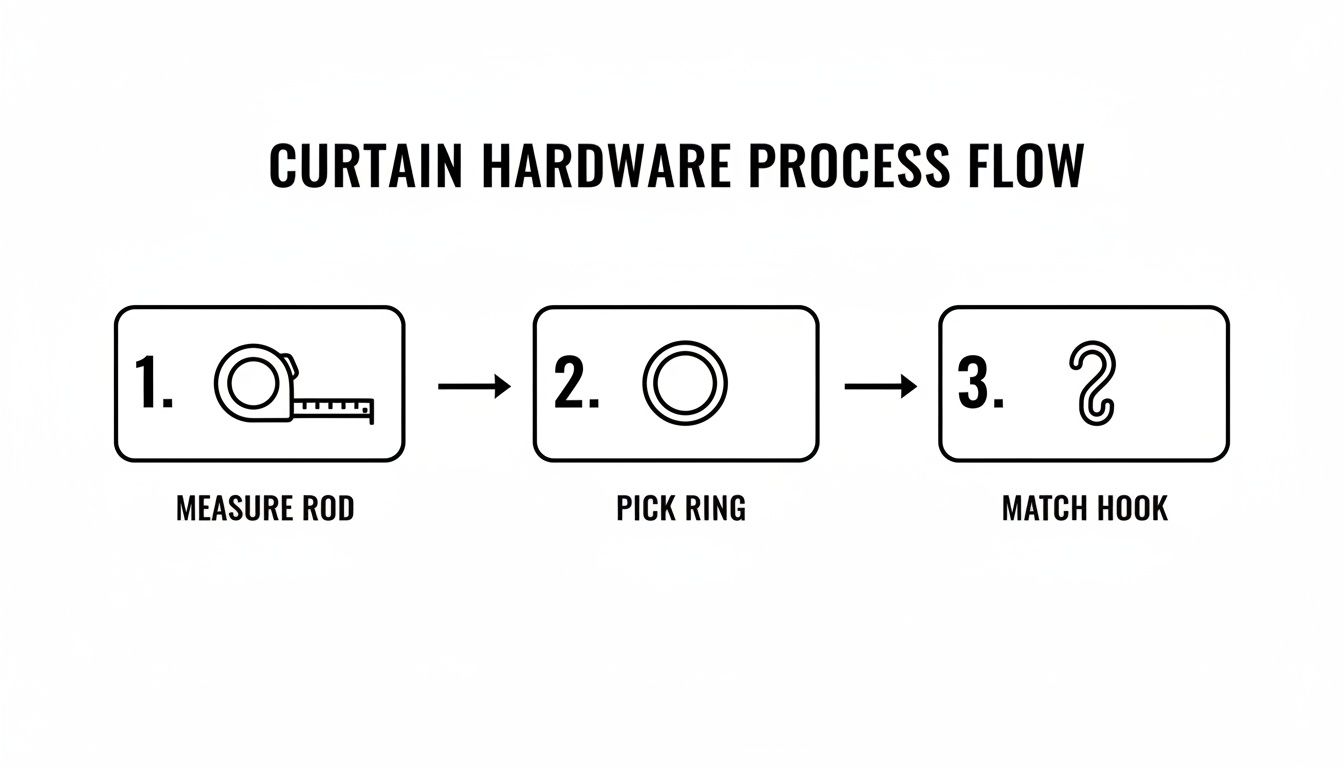
With the hooks in place, the final steps are a breeze. First, slide your drapery rings onto the curtain rod. If you need help mounting the rod, our guide on how to hang curtain rods in drywall has you covered.
Next, take your prepped curtain panel and simply loop the curved end of each hook through the small eyelet on the bottom of each ring. Work your way down the panel, one hook at a time. Once all hooks are attached, step back and admire your work.
The art of using drapery hooks with rings is adapting your approach to suit the curtain's specific style. This is how you achieve a truly custom look without the designer price tag.
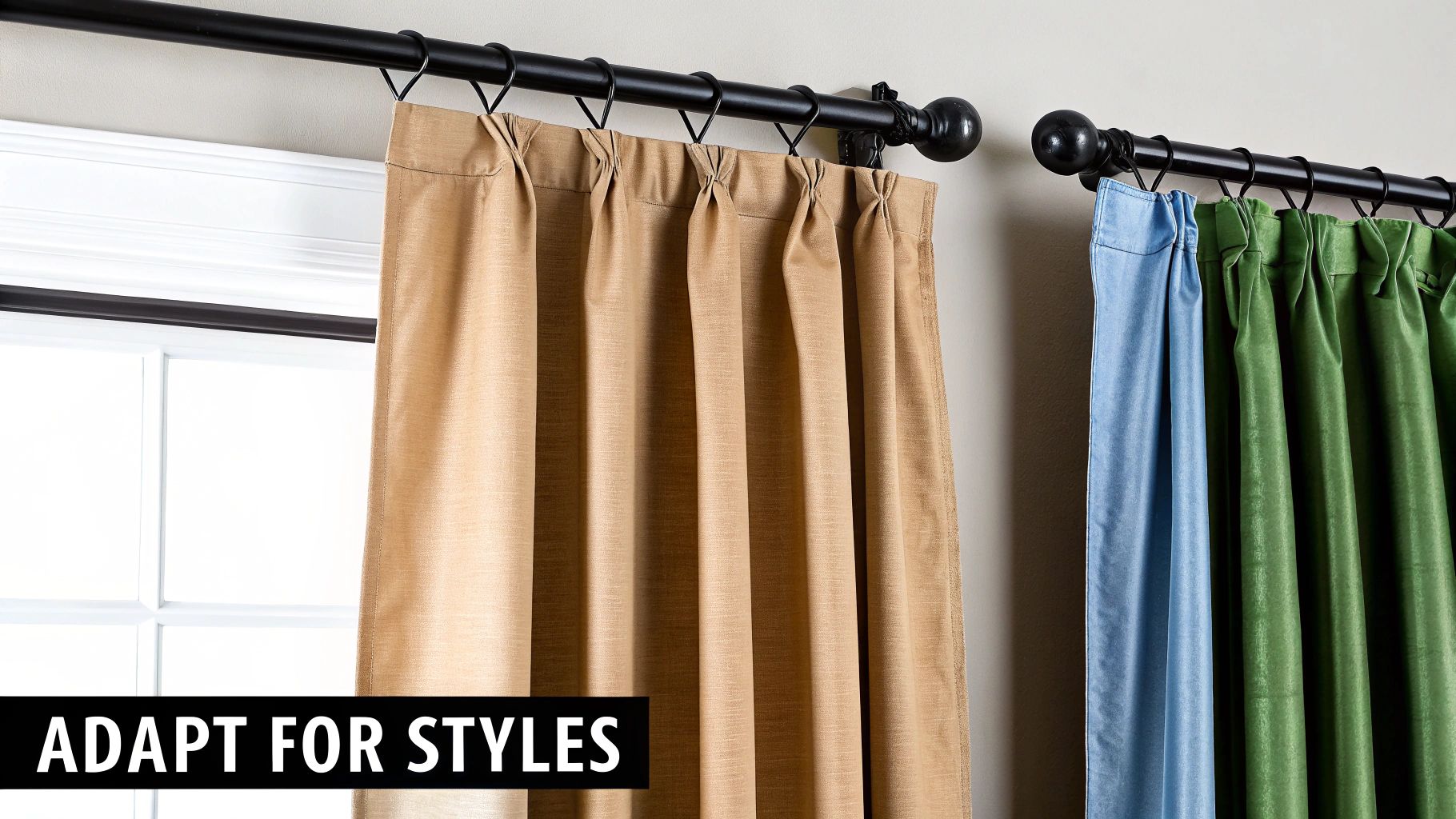
Whether you're working with classic pinch pleats or want to upgrade a set of rod pocket curtains, we've got you covered.
Pinch pleat curtains are a classic for a reason. The pleats do most of the hard work for you.
To hang them, take your drapery hook (a multi-prong pleater hook is ideal, but a standard pin hook also works) and insert it directly into the back of the stitched pleat. Position the hook so the top of the curtain panel aligns with or sits just below the bottom of the drapery ring for a clean finish. Learn more in our detailed guide on what pinch pleat curtains are.
Here’s a favorite DIY secret: you can use hooks and rings with standard rod pocket curtains. This simple conversion makes them look far more expensive and functional.
You'll ignore the pocket completely and treat the top header as a flat panel.
This method creates soft, uniform folds and allows the curtains to glide open and shut effortlessly—a total game-changer.
The principles remain the same for other styles: focus on strong support and even spacing.
Even with perfect planning, sometimes curtains don't hang quite right on the first try. Don't worry—most common issues are surprisingly simple to fix.
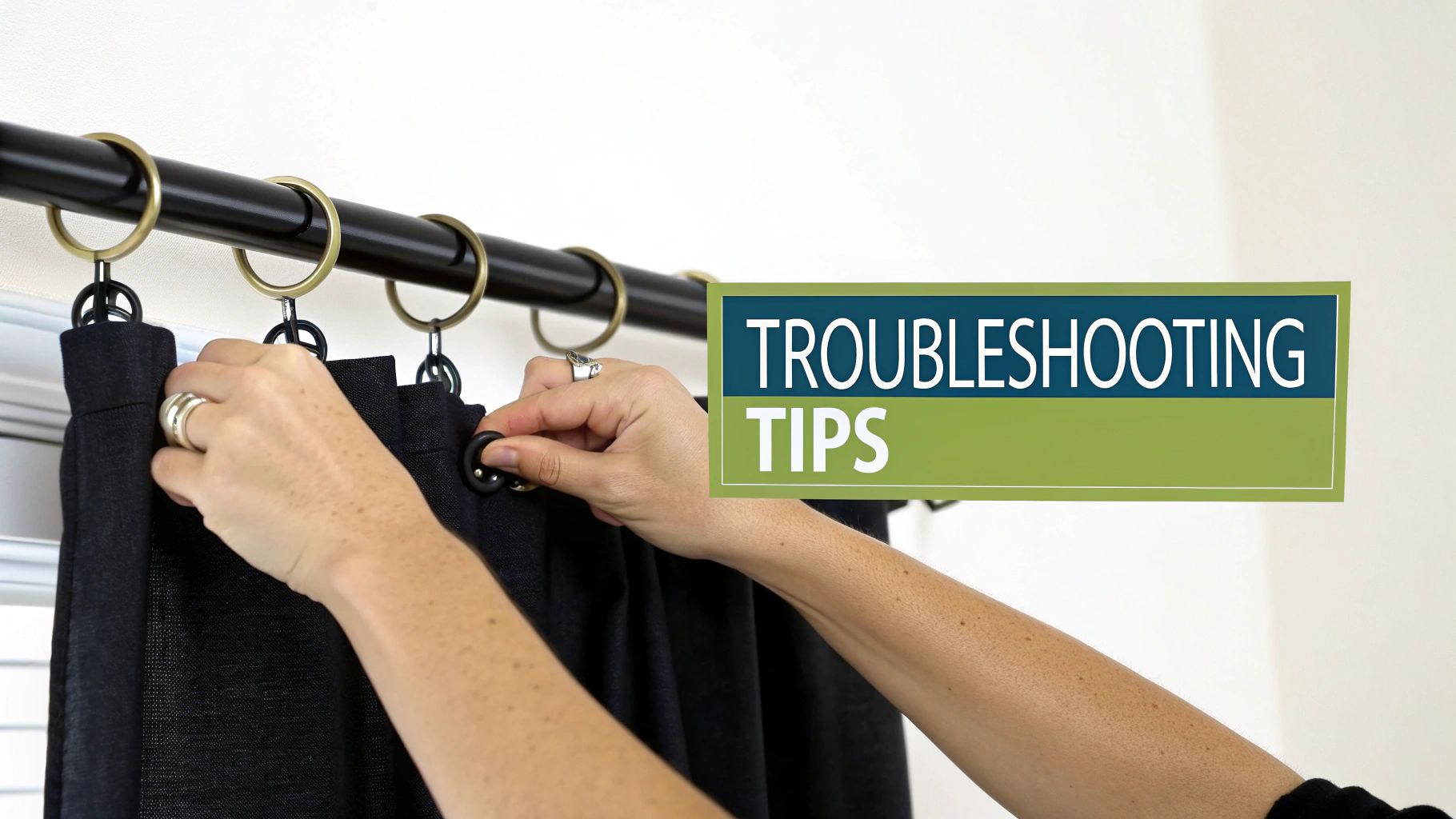
Whether you’re dealing with an uneven hemline or sticky rings, a few simple adjustments are usually all you need.
One of the most frequent issues is a curtain panel that hangs crooked. This is where the adjustability of pin-on hooks is a lifesaver.
Instead of taking the panel down, make tiny adjustments. If one side is too low, pull out the hooks in that section and re-insert them a bit higher on the header tape. If a section is too high, move the hooks a fraction lower. This targeted approach lets you level the hem without a major headache.
There’s nothing more annoying than rings that snag. This usually points to one of two culprits:
Insider Tip: To anchor the end of your curtain panel, place one ring on the outside of the rod bracket. This stops it from sliding inward and neatly hides the bracket.
If your curtains feel a bit sparse, the fix is simple: add more fullness. This classic designer trick instantly makes drapes look more expensive.
Just grab a few extra drapery rings and space your hooks closer together—think 3-4 inches apart instead of 5-6. This forces the fabric into deeper, more luxurious folds, adding high-end volume.
Here are the answers to the most common questions we get about using drapery hooks and rings.
For a beautiful, even drape, the ideal spacing for drapery hooks is between 3 to 5 inches apart. If you're working with pinch pleat curtains, simply insert one hook into the back of each pleat. Consistency is key to creating uniform folds.
Yes, absolutely! This is a great way to upgrade standard rod pocket curtains. Instead of using the pocket, insert pin-on drapery hooks into the stiff header tape just below the pocket seam. Then, hang the hooks from your drapery rings for a more functional and elegant look.
The main difference is how they attach. Pin-on hooks have a sharp point designed to pierce the fabric, giving you precise control over placement. S-hooks are simpler; one end goes through a pre-sewn loop while the other hangs from the ring, offering less adjustability.
Sticking rings are usually a sizing issue. The golden rule is to ensure the inner diameter of your rings is at least a half-inch larger than the diameter of your curtain rod. This space is crucial for a smooth glide. If they still catch, a quick spray of dry silicone lubricant on the top of the rod works wonders.
At Joey'z Shopping, we believe getting a high-end look shouldn't be complicated. Explore our full collection to find the perfect finishing touches for your home.