
Join the Joey'z Family!

Pinch pleat curtains are a classic, tailored window treatment defined by fabric gathered and stitched into neat groups, or 'pleats,' at the top. Think of them as a bespoke suit for your windows; they create a structured, luxurious drape that feels both formal and timeless, making them a consistently popular choice for interior designers.
Their enduring appeal lies in this built-in structure. Unlike casual curtains that bunch up on a rod, the pleats are permanently sewn in, ensuring the fabric always hangs in uniform, ripple-like folds. This intentional design allows the material to cascade gracefully to the floor for a full, opulent look.
If you've ever admired window treatments that look effortlessly elegant and perfectly formed, you were probably looking at pinch pleat curtains. There's a good reason this style has remained a favorite among interior designers for so long: it brings a sense of intention and polish to any space.
Unlike more casual styles where the fabric just gathers along the rod, the pleats here are permanently sewn in. This means your curtains will always hang in uniform, ripple-like folds every single time you draw them. It’s this built-in structure that allows the fabric to cascade so gracefully to the floor, creating a full and opulent look that works just as well in traditional homes as it does in modern ones.
The heart of this style is the "pinch"—a gathering of fabric sewn together a few inches down from the top. From this stitched point, the fabric fans out above and below, creating a distinctive 'V' shape. It’s this small detail that gives the curtain its controlled, elegant flow.
Also known as French pleats, these curtains are traditionally built with two or three distinct folds stitched together. You can find more insights about this classic construction from industry experts like Home Vogue.
Insider Tip: The number of "fingers" or folds in each pleat—usually from two to five—directly impacts the curtain's final look. More fingers create a fuller, more traditional appearance, while fewer fingers offer a cleaner, more contemporary feel.
This built-in structure comes with a few key benefits that we love:
Before we dive deeper, here's a quick summary to help you keep the main features in mind.
This table provides a simple overview of what makes pinch pleat curtains a standout choice.
| Feature | Description |
|---|---|
| Header Style | Fabric is gathered and stitched into groups (pleats) at the top, creating a tailored, structured look. |
| Drape & Fullness | The sewn-in pleats ensure a uniform, ripple-like drape that cascades gracefully, providing a full appearance. |
| Versatility | Complements a wide range of decor styles, from formal and traditional to clean and contemporary. |
| Hardware | Typically hung using pin hooks on a traverse rod or with rings on a decorative curtain rod. |
| Common Variations | Two-finger, three-finger (most common), four-finger, and five-finger pleats, affecting overall fullness. |
| Best For | Living rooms, dining rooms, and bedrooms where an elegant and polished aesthetic is desired. |
This quick-glance table helps put the core concepts together, but let's explore the different styles you can choose from.
To really get what pinch pleat curtains are all about, you have to look past their elegant surface and understand how they're made. Think of them like a well-tailored suit—every single stitch and fold has a job to do, working together to create that classic, structured look. The real magic happens at the curtain header, which is the very top of the panel where the pleats are carefully sewn in.
The "pinch" is exactly what it sounds like: it’s the spot where the fabric is gathered up and stitched tight, forming the base of each pleat. From that single point, the fabric fans out, creating a beautiful shape that controls how the rest of the curtain hangs. This deliberate construction is why pinch pleat curtains always fall in such uniform, graceful columns.
This visual helps break down the core ideas that make this window treatment a timeless classic.
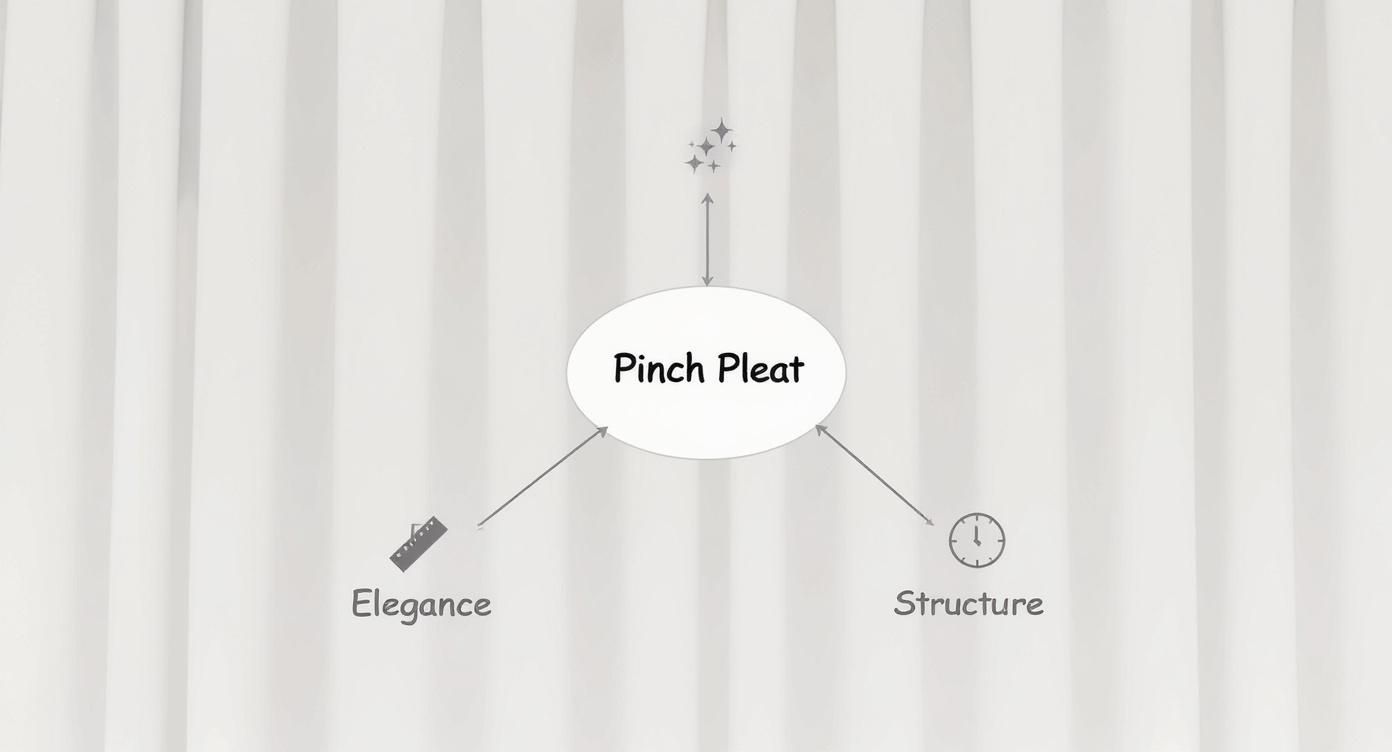
As you can see, it all comes down to their built-in elegance, structural integrity, and enduring appeal.
A huge part of what makes these curtains work is something called fullness. This is just a simple way of talking about how much fabric is used compared to the width of your window. With pinch pleats, you need a generous amount of fabric so the pleats can keep their rich, defined shape without looking stretched thin when you close them.
Typically, a custom drapery panel uses fabric at a 2:1 or 2.5:1 ratio. This means for every 10 inches of window width, 20 to 25 inches of fabric are used to create the pleated header. Professionals often form the final drapery panels by machine-stitching two or three pleats into a group, leaving a consistent gap of about 10 centimeters between each cluster. If you want to dive deeper into how a full drapery panel is constructed, check out our guide on what is a drapery panel.
Getting comfortable with a few key terms will make you feel much more confident when you're shopping for or just talking about pinch pleat curtains.
Once you get the hang of what pinch pleat curtains are, this is where the fun really starts. Not all pleats are created equal, and the style you pick can completely shift the mood of a room from buttoned-up and formal to breezy and chic. The main difference comes down to the number of "fingers," or folds, gathered into each pleat.
Think of it like choosing a tie for a suit—a wider knot feels more traditional, while a slimmer one reads more modern. The same idea applies here. More folds give you a denser, more luxurious look, while fewer folds create a cleaner, more contemporary line. Getting to know these variations is the first step to finding that perfect tailored finish for your space.
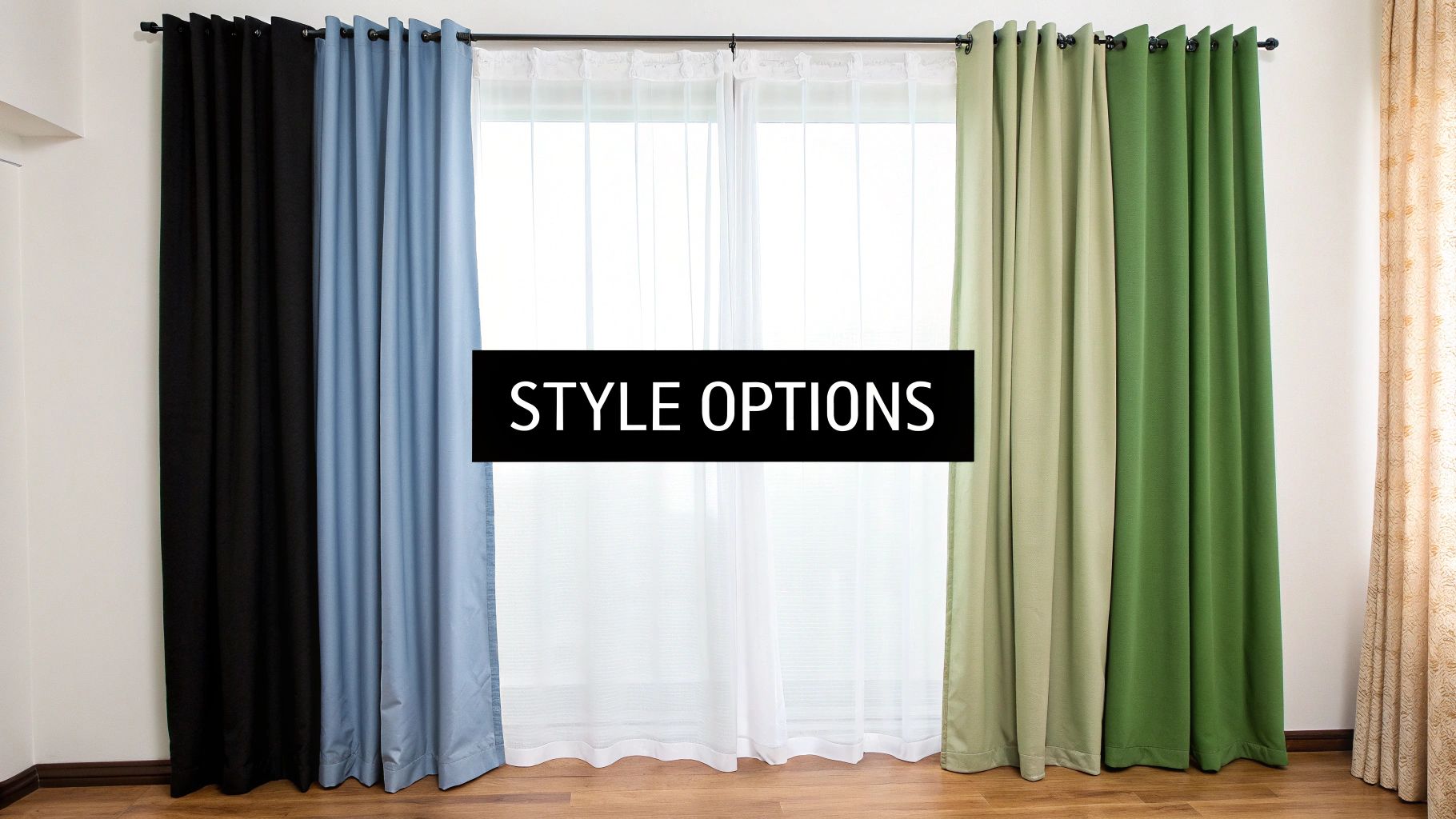
The styles you’ll see most often are the two-finger and three-finger pleats. They are the absolute go-to choices for achieving that timeless, elegant appearance that never goes out of style.
Three-Finger Pleat: This is the quintessential pinch pleat, often called a French pleat. It features three uniform folds gathered and stitched together, creating a full, luxurious fan shape right at the top. It delivers a classic, formal drape that looks right at home in dining rooms, primary bedrooms, and traditional living spaces.
Two-Finger Pleat: A slightly more modern take, the two-finger pleat is less full but still beautifully tailored. With only two folds per pleat, it uses less fabric and results in a cleaner look that nicely bridges the gap between traditional and contemporary design. It's a fantastic option for smaller rooms or for showcasing a bold pattern you don’t want to hide with heavy folds.
For anyone who loves a more relaxed yet sophisticated feel, the Euro pleat (sometimes called a Parisian pleat) is a brilliant choice. The secret is where the pleat is tacked. Instead of being pinched a few inches down from the top, the Euro pleat is tacked right at the very top of the header.
This simple change allows the fabric to cascade in a gentle, unbroken S-curve from the rod straight to the floor. It creates a beautiful waterfall effect that feels more fluid and casual than its classic cousins, making it perfect for modern, transitional, and minimalist interiors.
Of course, fabric choice is just as important as the pleat style. If you're wondering how different hues can impact the feeling of a room, this helpful guide to colour psychology in interior design can offer some great insights.
Expert Takeaway: Let your room’s existing decor be your guide. A formal space with ornate furniture practically begs for a classic three-finger pleat, while a sleek, modern living room would be complemented perfectly by the clean lines of a Euro pleat.
To help you visualize the differences and decide what’s best for your home, here’s a quick comparison of the most popular styles.
| Pleat Style | Best For | Formality Level | Key Feature |
|---|---|---|---|
| Three-Finger (French) Pleat | Formal living rooms, dining rooms, master suites | High | Full, fan-like shape creates a rich, classic look |
| Two-Finger Pleat | Bedrooms, offices, transitional spaces | Medium | Tailored but less full; great for modern patterns |
| Euro (Parisian) Pleat | Modern and minimalist interiors, living rooms | Low-Medium | Tacked at the very top for a clean, waterfall drape |
Ultimately, the right pleat style comes down to the look you're trying to achieve. Each one brings its own personality to a window.
Choosing the perfect style is a huge step in the process. For more guidance on making the best selection for your windows, our complete overview on how to choose drapes offers even more valuable tips.
So, you're considering pinch pleat curtains. To really know if they’re the right choice for your home, it’s helpful to look at the full picture. They offer a stunning, tailored look, but they also come with a few considerations that might not fit every space or budget. Let’s get into the good, the bad, and the beautiful to help you decide with confidence.
We want you to know exactly what to expect, moving beyond the gorgeous photos to the practical realities of living with this classic window treatment.
Pinch pleat curtains bring a whole host of benefits that have kept them at the top of designers' lists for decades. Their biggest strengths come down to their beautiful structure and surprising versatility.
Unmatched Elegance: First things first—the sewn-in pleats create a structured, luxurious drape that just looks polished and intentional. This timeless look instantly elevates any room, whether it’s a formal dining area or a peaceful primary bedroom.
Superior Light Control: The built-in fullness of the fabric gives you excellent window coverage right from the start. When you pair them with a quality lining, like our popular blackout curtains, they become incredibly effective at blocking light and giving you total privacy.
Perfect for Motorization: That uniform pleat and hook system makes them a perfect match for traverse rods, which are easily motorized. This makes pinch pleats a fantastic choice for smart homes or for anyone who wants the convenience of opening and closing their curtains with the touch of a button.
While the upsides are pretty compelling, there are a few potential drawbacks to think about before you commit. These mostly have to do with cost, the hardware you'll need, and their distinct look.
Higher Initial Cost: It's just a fact of their construction. Because they require more fabric to create that full, pleated look and skilled hands to sew them, these curtains often come with a higher price tag than simpler styles like grommet or rod-pocket panels.
Specific Hardware Needs: Pinch pleats can't just hang on any old rod. You’ll need either a traverse rod or a decorative rod with rings and pin hooks. This can add to the overall cost and make installation a little more involved.
A More Formal Look: Their structured, tailored appearance definitely leans toward a traditional or formal style. This might not be the best fit if your home is ultra-minimalist, industrial, or has a very casual, laid-back vibe. In those cases, a more relaxed curtain might feel more at home.
Ultimately, weighing these factors will tell you if this classic, elegant style is the perfect finishing touch your windows have been waiting for.
Getting your measurements right is probably the single most important part of making sure your new curtains look professionally installed. Think of it like getting a suit tailored—that precision makes all the difference. When you get this step right, your pinch pleat curtains will hang perfectly and work just the way they should from the moment you put them up.
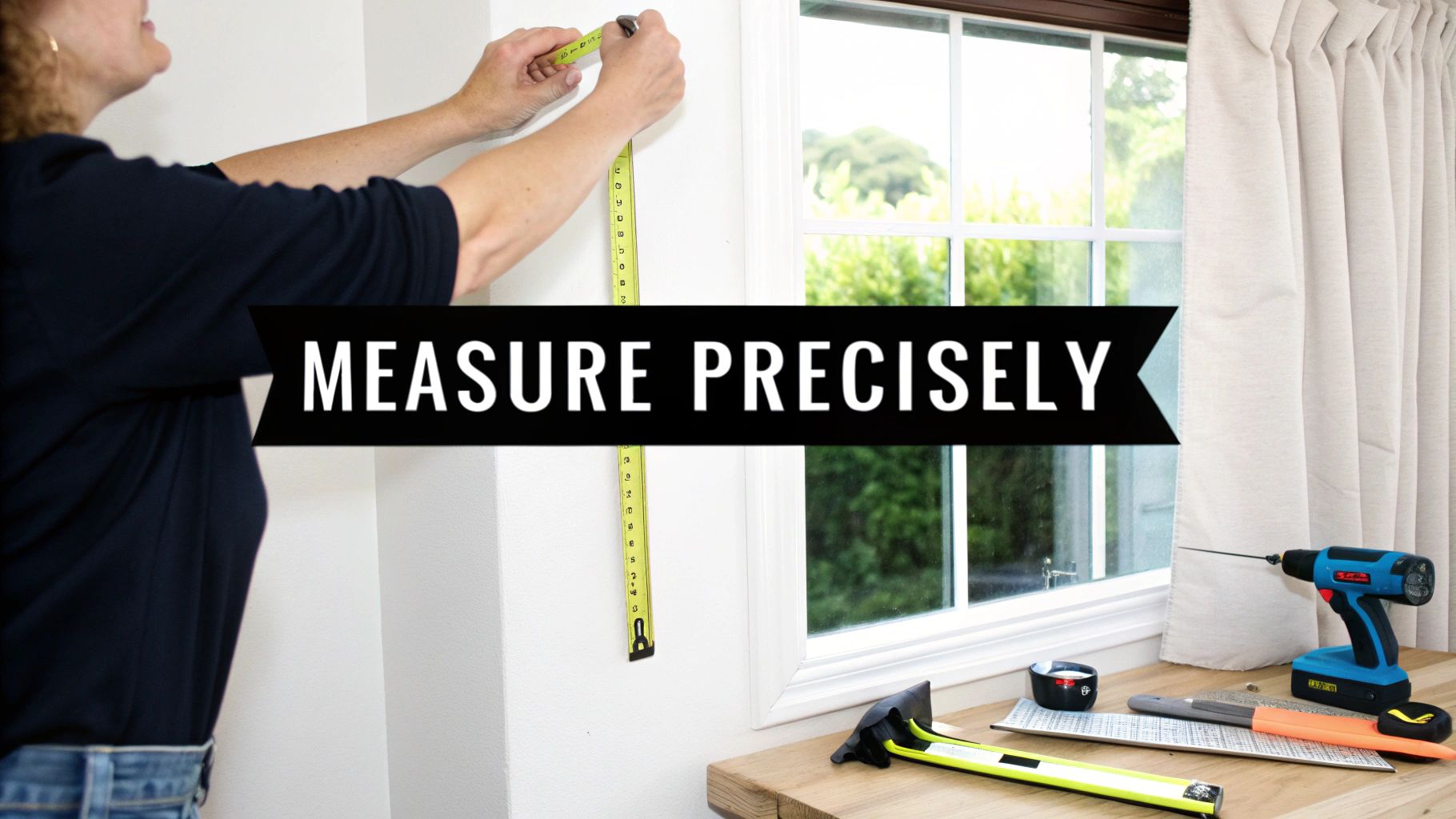
Let's walk through this process step-by-step. A few minutes with a good metal tape measure right now can save you a world of frustration with ill-fitting curtains down the road. It’s all about creating an illusion of height and width that makes your windows feel bigger and more grand.
First things first, you need to decide where your curtain rod will go. Here’s a little designer secret: to make a window feel larger, mount the rod 4-6 inches above the window frame. Then, let it extend 3-6 inches past the frame on both sides. This simple trick lets your curtain panels rest against the wall when they're open, which means you get as much natural light as possible flooding into the room.
Once you know where the rod is going, measure the total width you want the curtains to cover, from one end of your planned rod to the other.
Key Takeaway: For pinch pleat curtains to have that rich, full look, their combined panel width needs to be at least 2 to 2.5 times the width of the area you just measured. That fullness is what gives you those beautiful, deep folds.
Now it's time to figure out the length. Start your measurement from where you plan to install the top of the curtain rod and measure down to the point where you want the curtains to end. You’ve got a few classic options here, and each one creates a different vibe.
The length you choose really sets the tone for the room, whether you're going for something crisp and modern or soft and formal.
Last but not least, don't forget about your hardware. Pinch pleat curtains hang from special pin hooks that you attach to either carriers on a traverse rod or rings on a decorative rod. The great thing about these hooks is that you can move them up or down on the back of the curtain header.
This little bit of adjustability is a lifesaver, giving you some wiggle room to get that perfect "floor-kiss" length just right. Taking a moment to think about these details now removes all the guesswork and sets you up for a truly professional result. For an even more detailed walkthrough, our complete guide on how to measure windows for curtains has extra tips and visuals to help you out.
Long before we started obsessing over pleat styles and fabric choices, our ancestors just needed a way to keep the wind and rain out. The story of curtains really begins with pure, simple function, not decorative flair. It’s a history that stretches back thousands of years, evolving from the most basic coverings into the sophisticated design elements we cherish today.
When you understand this journey, you get a whole new appreciation for modern styles like pinch pleat curtains. You start to see how their tailored structure connects to a long tradition of both practicality and artistry. The curtains hanging in your home are part of a rich, ongoing story.
The very first window coverings were probably just animal hides slung over an opening to block the sun and drafts. In fact, there’s evidence suggesting curtains are one of our oldest interior design features, with some form of them used in ancient Egypt as far back as 3100 BC. As societies grew, so did their textiles. The Romans and Greeks used heavy, simple fabrics to create partitions and add a layer of insulation.
But things got a lot more interesting during the Renaissance. Wealthy European families in the 15th and 16th centuries began draping their windows in luxurious materials like velvet and silk damask. These weren't just for privacy anymore; they were a bold statement of status, featuring intricate patterns and rich colors that put a family's fortune on full display.
For centuries, these elaborate, beautiful window dressings were a luxury only the elite could afford. The real game-changer was the Industrial Revolution. When textile production became mechanized in the 18th and 19th centuries, gorgeous fabrics suddenly became more affordable and accessible than ever before.
Window treatments were no longer exclusive to the wealthy; they started appearing in homes across a much broader swath of society. You can dive deeper into this transformation and the invention of curtains on Quickfit Blinds and Curtains. This massive shift is what paved the way for the incredible diversity of styles we get to choose from today, including the meticulously crafted pinch pleat.
Still have a few questions floating around? You’re not alone. We've pulled together the most common questions we hear to give you the clear, straightforward answers you need.
Not a chance. While they have a classic history, pinch pleat curtains are timeless, not outdated. Think of them like a tailored suit—they never go out of style. Their structured elegance can lean traditional or surprisingly modern depending on the fabric and hardware you choose. A bold geometric print or breezy linen on a sleek metal rod feels entirely contemporary.
Yes, absolutely. While a traverse rod is a traditional choice, you can easily hang pinch pleats on a standard decorative rod using curtain rings. The pin hooks on the back of the pleats simply attach to the small eyelets on the bottom of the rings. This approach gives you the tailored look of the pleats while letting you show off a beautiful, exposed curtain rod.
For that lush, full look, the golden rule is to use fabric that is 2 to 2.5 times the width of your window. This ensures the pleats stay crisp and well-defined, preventing a stretched-out look when closed. So, if your window is 50 inches wide, you'll want curtain panels with a combined width of 100 to 125 inches.
The main difference is the header style and formality.
Essentially, pinch pleats are fixed and formal, while pencil pleats are adjustable and relaxed.
At Joey'z Shopping, we believe the right window treatments can completely change the feeling of a room. We hope this guide has answered your questions about pinch pleat curtains and maybe even inspired you to bring their timeless elegance into your home.
Ready to find the perfect fit? Browse Our Full Collection of Curtains and Home Decor at JoeyzShopping.com.