
Join the Joey'z Family!

Deciding between plantation shutters vs blinds often comes down to one key question: are you making a long-term architectural investment or a flexible design choice? Plantation shutters are a permanent upgrade that boosts your home’s character and value, while blinds are a versatile, budget-friendly solution perfect for evolving styles. The right choice depends on your budget, style, and long-term goals for your home.
This guide breaks down the core differences in aesthetics, function, cost, and value to help you make an informed decision.
Choosing window treatments is about more than just covering a window. It’s a decision that shapes your home's style, daily function, and even its overall value. The classic debate of plantation shutters vs. blinds isn't just about looks—it's about two fundamentally different ways to approach window design.
Plantation shutters are often called "furniture for your windows," and for good reason. They are custom-built, permanent fixtures that become part of your home’s architecture, making them a durable, high-impact upgrade. Blinds, on the other hand, are adaptable treatments you can easily swap out to match new decor, offering incredible flexibility at a more accessible price.
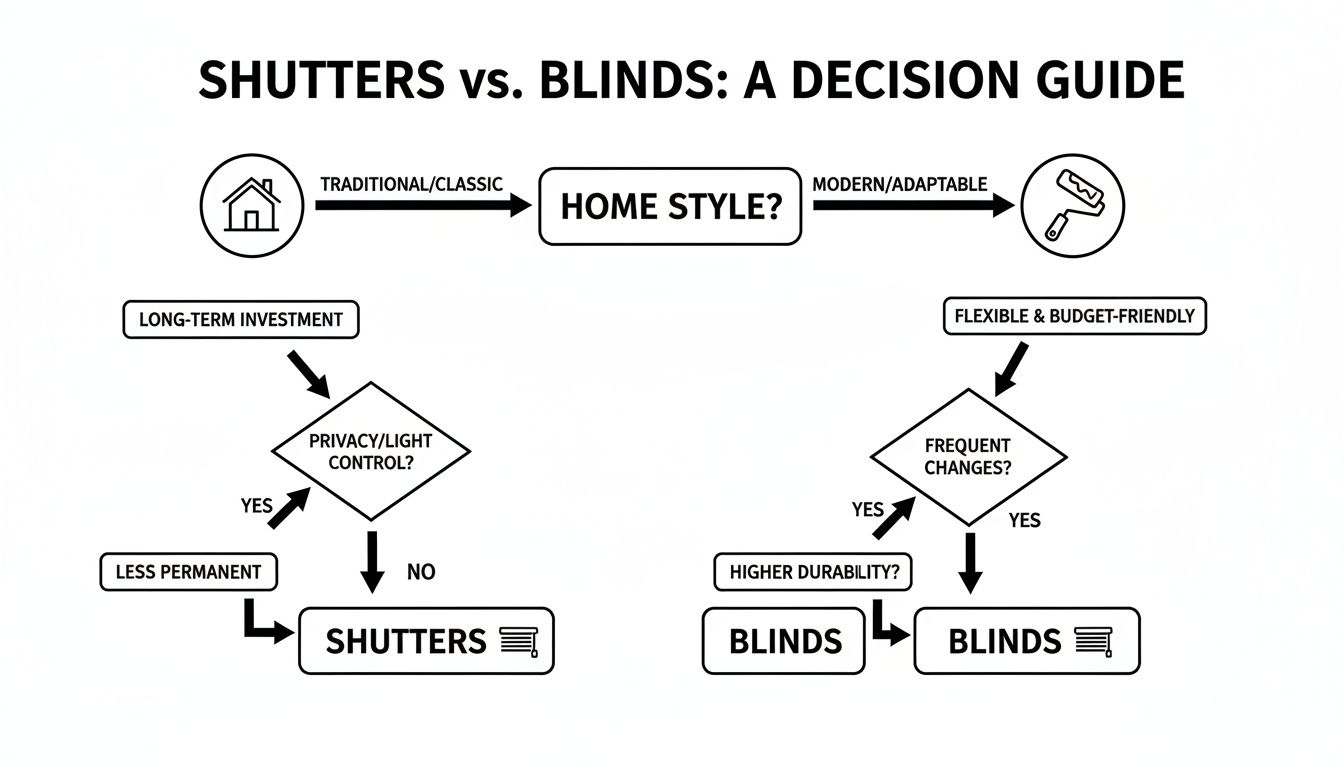
As this flowchart shows, the first question is whether you value long-term architectural enhancement or a style that can evolve with your tastes. If you want to explore this further, our complete guide on how to choose window treatments offers even more detailed insights.
Before we dive deep, here's a quick rundown of the key differences. This table sets the stage for a more detailed look at what each option brings to the table.
| Feature | Plantation Shutters | Blinds |
|---|---|---|
| Typical Cost | Higher initial investment | Lower upfront cost |
| Lifespan | 15–20+ years | 5–12 years |
| Installation | Permanent architectural fixture | Removable window treatment |
| Light Control | Excellent, wide louvers | Precise, narrow slats |
| Durability | Very high; fewer moving parts | Varies by material; cords can wear |
| Energy Efficiency | High; creates a solid barrier | Moderate insulation |
| Resale Value | Can increase home's appraised value | Minimal impact on home value |
| Maintenance | Easy to wipe clean | More surfaces to dust |
This quick comparison highlights the core trade-offs: shutters offer longevity and value at a higher price, while blinds provide affordability and flexibility with a shorter lifespan. Now, let's get into the specifics.
When you're choosing between plantation shutters and blinds, you're making a decision that will shape the personality of your room. One choice acts as a permanent piece of architecture, while the other is more like a flexible design accessory. The right fit comes down to the kind of statement you want your home to make.
Plantation shutters are built directly into the window frame, becoming a solid, integrated part of your home’s structure. This permanence adds a sense of weight and timeless appeal. Their clean, substantial lines work beautifully with a range of styles, from coastal cottages to traditional colonial homes, boosting curb appeal from the outside just as much as they define the style inside.
Shutters don't just cover a window; they frame it. Their solid build and wide louvers—typically 2.5 to 4.5 inches—create a bold, structured look. This makes them a fantastic choice if you're trying to add architectural interest to a room that feels a little plain.
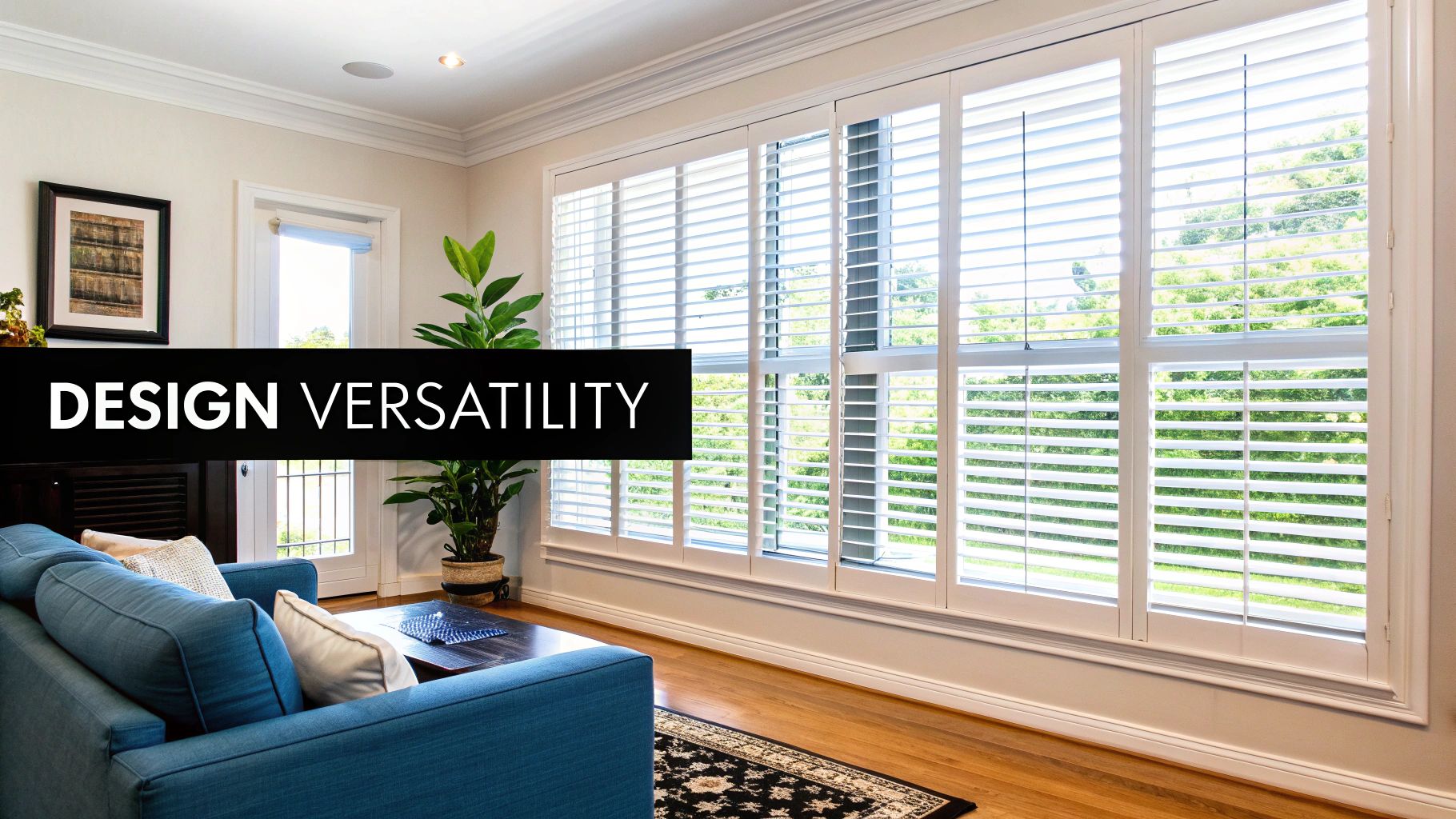
This architectural role is why shutters feel so at home in styles that celebrate structure and timeless design:
Key Takeaway: Choose plantation shutters when you want a window treatment that feels like a permanent, high-value upgrade to your home’s architecture, not just a decorative afterthought.
On the other hand, blinds offer a kind of design flexibility that’s hard to beat. While shutters are a long-term commitment, blinds are the ultimate design chameleons, able to adapt to changing tastes and trends with little fuss or expense.
The sheer variety of materials and finishes is staggering. You can go for the natural warmth of real wood, the rugged durability of faux wood, or the sleek modernism of aluminum. This lets you fine-tune the look of your windows to perfectly match your current decor. For instance, our Joey'z Shopping Faux Wood Blinds give you a classic, polished look but are also moisture-resistant, making them perfect for kitchens and bathrooms.
The best way to decide is to think about your long-term vision for the space. Are you creating a forever home with a consistent, classic style, or do you love refreshing your decor every few years?
Ultimately, the choice between plantation shutters and blinds is a question of permanence versus adaptability. Shutters provide a timeless architectural foundation, while blinds offer the freedom to express your evolving style.
When you're weighing plantation shutters vs. blinds, you're really deciding how you want to live with light and privacy every day. The right choice should feel like a natural extension of your home and lifestyle. The core difference is in how they’re built: shutters are a solid, framed unit with wide louvers, while blinds are a collection of individual slats.
The short answer is: shutters create broad, diffused light, while blinds offer more precise, directional control.
Plantation shutters are renowned for their light management. Their substantial louvers—usually 2.5 to 4.5 inches wide—let you paint the room with soft, ambient light. You can angle them to bounce sunlight onto the ceiling for a gentle glow or snap them shut for a room-darkening effect perfect for bedrooms.
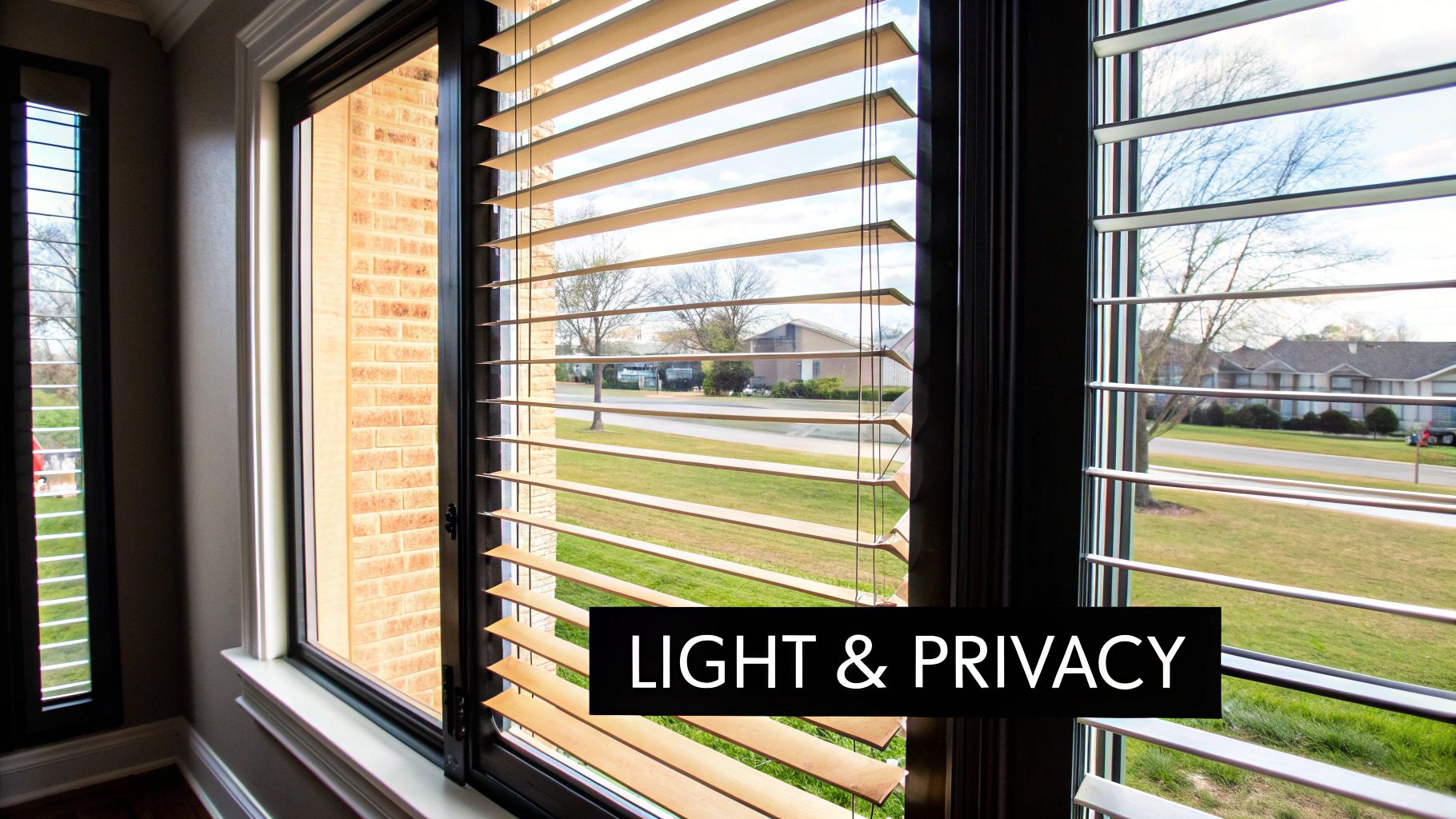
While shutters excel at setting a mood, blinds often win for precision. The narrower slats on Venetian or faux wood blinds give you fine-tuned control to direct light exactly where you want it. However, blinds can have minor light leaks around the edges or through cord holes. Because shutters are custom-built into a solid frame, they create a much tighter seal.
For absolute, no-questions-asked privacy, the solid frame and interlocking louvers of a plantation shutter provide a more complete visual block than the separate slats of a blind. When you close shutters, they form an almost impenetrable barrier to the outside world, making them a fantastic choice for street-facing windows or bathrooms.
Blinds also provide excellent privacy, but their lighter build means a strong breeze could cause them to sway, creating brief sightlines.
The sturdy build of plantation shutters is made for constant interaction. Adjusting the tilt rod—or often just a single louver—provides smooth, dependable control with few parts that can wear out.
Blinds operate with a more complex system of cords and wands. Over time, cords can tangle or fray, and tilting gears can wear down, particularly in a busy home. If you're looking to sidestep those issues, our guide on what cordless blinds are explores how newer designs are solving this problem.
When we talk about plantation shutters vs. blinds, the conversation about long-term value is one of the most important. You’re considering how your choice will stand up to daily use and sunlight. One is built like a permanent part of your home, while the other is designed as a more flexible, replaceable furnishing.
The short answer is: shutters last significantly longer due to their simpler, more robust construction.
Plantation shutters are engineered for the long haul. Crafted from solid wood or tough composite materials and installed as a fixed part of your window frame, they have an impressive lifespan, often lasting 15–20+ years. Blinds are made from lighter materials and rely on more complex mechanisms, giving them a shorter average lifespan of 5–12 years.
This difference in durability boils down to design. Shutters have few moving parts. Blinds depend on a network of thin cords and delicate tilting components that can wear out. Common issues include:
Expert Insight: Think of shutters as a one-time investment in your home’s core structure, like new countertops. Blinds are more like a fresh coat of paint—a fantastic update you'll likely refresh every few years.
Market data from Market Research Future shows the wood segment of plantation shutters commands a significant market share, largely due to its proven durability.
How easy something is to care for also plays a huge role in how long it lasts. Plantation shutters, with their wide, flat louvers, are incredibly simple to clean. A quick wipe-down with a microfiber cloth is usually all it takes.
Blinds are a different story. Their narrow slats and dangling cords can be a chore to dust, requiring you to clean each one individually. When cleaning is difficult, dust and grime can build up, which can degrade the materials over time. Our guide on wood vs. faux wood blinds details how material choice affects maintenance and lifespan.
Beyond looks and light control, the choice between plantation shutters vs blinds can genuinely affect your home's energy bills. Windows are a primary spot for heat to transfer. The right covering acts as a crucial layer of insulation, leading to real, long-term savings.
The short answer is: shutters provide superior insulation due to their solid construction and snug fit.
Plantation shutters are custom-built to fit tightly within the window frame, creating a sealed barrier when closed. This design dramatically cuts down on thermal transfer. During hot summers, closed shutters block radiant heat. In winter, that same barrier traps warm air inside, meaning your HVAC system doesn't have to work as hard.
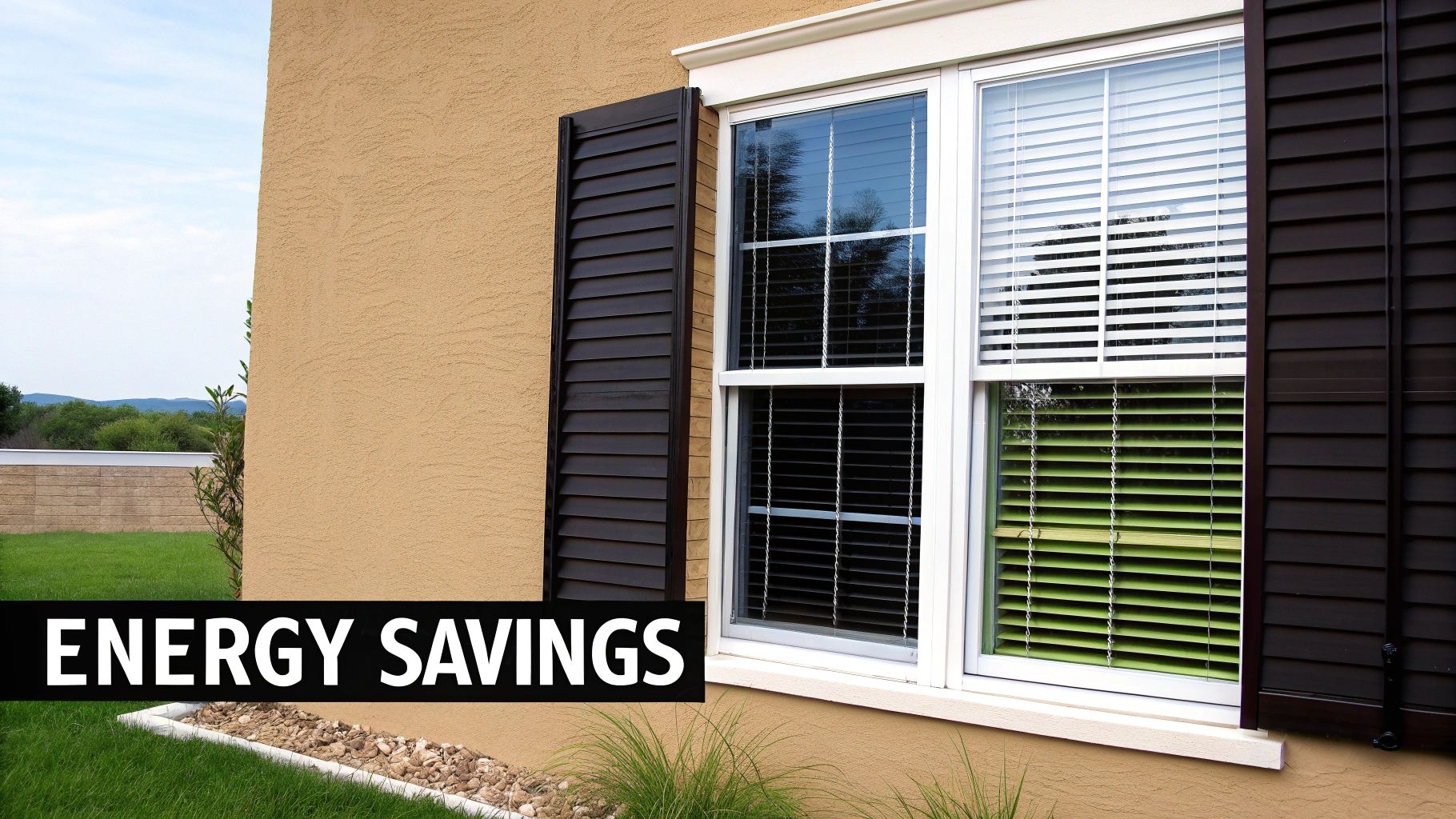
Key Financial Insight: The superior insulation of plantation shutters can lead to significant savings. While the initial cost is higher, their energy efficiency contributes to a strong return on investment over their 20+ year lifespan.
Most standard vinyl or aluminum blinds offer very little insulation. Air moves freely around their thin slats. However, not all blinds are created equal in this regard.
The long-term savings from plantation shutters can be substantial. According to some industry reports, their superior heat control can help reduce residential energy costs. This positions them as a smart financial move compared to blinds, which you might replace multiple times over a shutter's lifespan. You can explore more data on plantation shutter market trends to see their growing value.
When you're weighing plantation shutters vs blinds, the price tag is often a deciding factor. Let’s be clear: plantation shutters come with a much higher upfront cost. That price reflects premium materials, skilled craftsmanship, and professional installation to guarantee a perfect fit.
The financial story doesn't stop at the initial receipt. The key is to think beyond the immediate expense and see it as a long-term investment. Blinds are a decorative accessory, while shutters are a permanent upgrade to your home.
This distinction makes all the difference when it comes to home valuation. Appraisers often see plantation shutters as a permanent fixture that adds tangible value, much like built-in shelving. Blinds are usually considered personal property and rarely impact a home's appraised value.
The Financial Bottom Line: Choosing shutters is like making a capital improvement to your home—an investment that can pay dividends at resale. Blinds are a budget-friendly decorative expense with little to no impact on your home's long-term financial worth.
To get a clearer picture, it helps to calculate the "cost per year of ownership." A quality blind might last 8-12 years before needing replacement. A well-maintained plantation shutter can easily last for over 20 years.
Let's imagine a quick scenario:
While the initial sticker shock is real, the long-term cost gap narrows significantly once you account for replacement cycles. As you plan your budget, you can explore detailed pricing information to see how different window treatments stack up.
The market for high-end window treatments reflects this value difference. Plantation shutters are a desirable feature that signals quality and permanence to potential home buyers. In a competitive real estate market, upgrades that make a house feel polished and move-in ready can set your property apart.
For rooms with high humidity, moisture-resistant composite or vinyl plantation shutters are the best choice. They are built to handle constant exposure to steam and moisture without warping, cracking, or peeling. While faux wood blinds also hold up well against moisture, the solid frame of a shutter offers a more durable and permanent solution for these tough spaces.
Plantation shutters are inherently safer because they are cordless. You don't have to worry about dangling loops or cords, which are a serious strangulation hazard for children and pets. While many modern blinds are available in cordless styles, it's essential to specifically choose a cordless model if you opt for blinds. Our guide to cordless window treatments explores these safer options in detail.
While technically possible for a very skilled DIY enthusiast, professional installation is highly recommended for plantation shutters. They demand precise measurements and a perfect fit to operate smoothly and look right. Most blinds, however, are designed for DIY installation and can be installed by the average homeowner with basic tools.
Yes, they often do. Appraisers and potential buyers view plantation shutters as a permanent, high-end upgrade, similar to hardwood floors or built-in cabinetry. They become part of the home's architecture and can be a significant selling point that boosts your home's value. Blinds are typically considered personal decor and do not have a significant impact on an appraisal.
Ready to transform your windows with style and functionality? At Joey'z Shopping, we offer a wide selection of beautiful and affordable window treatments to suit any home. Explore our collection today!