
Join the Joey'z Family!

Choosing a window treatment often starts the same way. You want softness, privacy, and a finished look, then you realize every shade style asks you to give something up. A roller shade is easy. A flat Roman shade is tidy. Relaxed Roman shades are the option people fall for when they want a room to feel less strict and more lived-in.
That's also where the confusion starts.
A relaxed Roman shade can look effortless in a photo, but it isn't a no-thought purchase in real life. The curved bottom is beautiful. The day-to-day operation is less precise. The fabric can look dreamy in a sitting room and slightly fussy in a hard-working kitchen. If you're weighing style against convenience, this is one of the most honest window treatment decisions you'll make.
Primary keyword: Relaxed Roman shades
Suggested URL: /relaxed-roman-shades
Meta description: Relaxed Roman shades add soft, style to windows. Learn fabric, lining, safety, measuring, and room-by-room trade-offs before you buy.
You're standing with fabric swatches in one hand and a phone full of inspiration photos in the other. One shade looks crisp and squared off. Another has a softer lower edge that seems to curve inward at the center. That second one is usually the relaxed Roman.
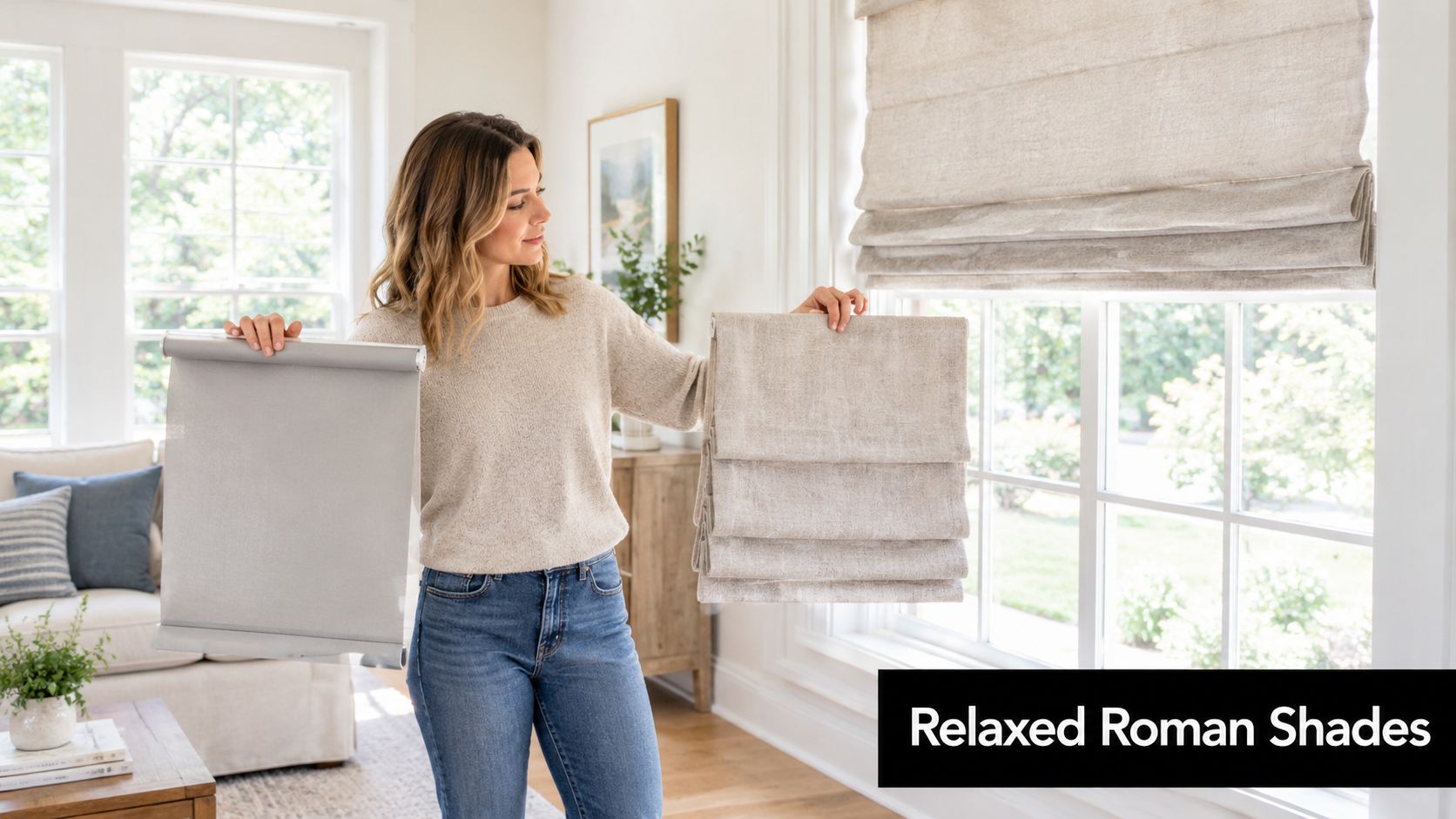
The short answer is this. Relaxed Roman shades are a Roman shade style with a gentle curved or softly draped bottom edge instead of a straight, structured one. Their lineage goes back to ancient Roman shading concepts, with historical references tied to the Colosseum era around AD 70 to 80 and preserved evidence at Pompeii from 79 AD, which puts the broader Roman shade idea at roughly 2,000 years old according to this history of Roman shades.
The softness isn't an accident. A relaxed Roman is built so the fabric can drape under its own weight, which creates the slight center sag and the curved lower edge. A technical workroom guide notes that the style is intentionally made to “smile” at the bottom, often with minimal fullness such as small end pleats or fabric wrapped around the headrail returns for a softer finish and a cleaner outside mount appearance in this construction overview.
That's what gives the shade its charm. It looks neat, but not rigid.
Relaxed Roman shades sit in a meaningful part of the market. One industry report estimated Roman shades at 35% of shade sales overall in 2026, while another projected relaxed Roman shades at 24.8% market share in 2025 within the Roman shade segment, behind flat Roman shades at 38.4% in the same segment, according to these window treatment industry figures.
Practical rule: Choose relaxed Roman shades because you want softness on purpose, not because you assume they work like every other shade.
They do have trade-offs:
For the right room, they're lovely. For the wrong room, they can feel high-maintenance fast.
You notice the difference fastest when the shades are halfway up.
At that point, each style shows what it is trying to do. A relaxed Roman shade softens the window with a curved bottom. A flat Roman shade keeps a straight, quiet face. A hobbled shade creates rounded, repeated folds that stay visible even when lowered. Cascade styles stack in a more controlled, waterfall-like pattern.
That visual difference is not just decoration. It affects how formal the room feels, how clearly a fabric pattern reads, and how forgiving the shade will be in daily use.
Relaxed shades have the loosest silhouette of the group. They read more like fabric drapery than a precise shade, which is why they suit rooms that want softness, movement, and a little informality.
Flat shades are the opposite in temperament. Their front panel stays smooth, so stripes, florals, and geometric prints show with fewer interruptions. Hobbled shades add volume. They look fuller, more traditional, and more decorative even before you add a patterned fabric. Cascade shades sit nearby stylistically, but with a more controlled rhythm from fold to fold.
| Style | Look When Raised | Fabric Behavior | Best For |
|---|---|---|---|
| Relaxed | Soft curved bottom, gentle swag | Drapes under its own weight | Casual, decorative rooms |
| Flat | Straight, crisp folds | Lies smooth across the face | Modern, structured interiors |
| Hobbled | Repeating poufed folds | Uses extra fullness to hold shape | Traditional, more formal rooms |
| Cascade | Waterfall-like stacked folds | Structured folding pattern | Polished spaces needing strong visual rhythm |
A simple way to picture the difference: flat shades behave like a pressed shirt, while relaxed shades behave more like a washed linen blouse. Both can look beautiful. They just communicate different levels of crispness.
Style also changes what living with the shade feels like.
Flat Roman shades are usually the easiest if you want a compact, orderly look every time you raise them. Hobbled shades build in fullness, so the stack at the top is larger and more visually present. Cascade shades rely on even pleating, which means small measuring or installation errors can show more clearly.
Relaxed shades ask for the most acceptance. Their charm comes from softness, but softness brings trade-offs that comparison charts often skip over. The bottom curve is less exact. Light control is less precise at the sides. Manual dressing is common because the folds may need a quick hand adjustment to fall nicely after use. Motorization is also less common with true relaxed constructions, so they are usually a better fit for someone comfortable with a more hands-on window treatment.
Choose relaxed Roman shades because you want that softer, decorative effect on purpose, not because you expect them to behave like a flat shade.
This matters most in rooms with a clear job. In a breakfast nook, that easy drape can feel welcoming. In a media room, home office, or any spot where you want sharp light control and repeatable performance, a flat shade often makes life simpler.
Pick a relaxed Roman shade if you want the window treatment to act like part shade, part soft furnishing. It adds atmosphere first.
Pick a flat Roman shade if alignment, cleaner edges, and pattern clarity matter more to you. Pick hobbled or cascade styles if you want the folds themselves to be a visible design feature.
A good test is personal tolerance. If you are happy fluffing a pillow or straightening a throw blanket, a relaxed shade may feel natural. If uneven lines catch your eye right away, flat is usually the calmer choice.
Fabric is where a relaxed Roman shade either works beautifully or starts fighting you. The soft curve depends on drape, so the face fabric and liner matter as much as the style name.
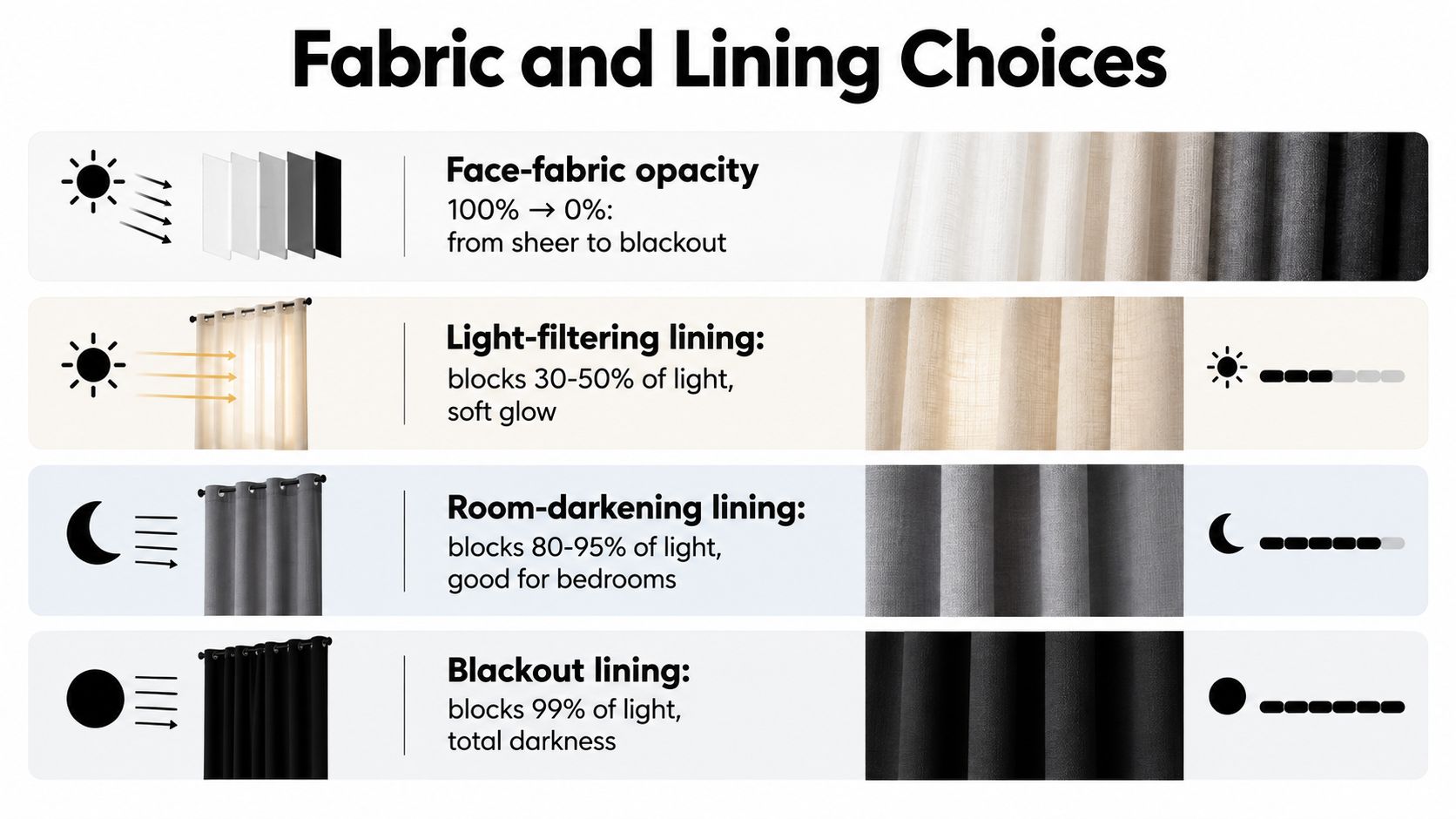
The short answer is this. Lightweight fabrics usually drape best, while lining adds privacy, body, and light control. A wholesale opacity guide classifies light-filtering fabrics around 3% to 5% open, room-darkening around 1% open, and blackout at 0% open, with blackout performance typically relying on coated multi-layer construction or a metallized film layer rather than color alone, according to this opacity and blackout guide.
For the signature relaxed look, many homeowners prefer:
Heavier velvets or stiff decorative fabrics can still be used, but they change the mood. The bottom curve looks firmer, not floaty.
A practical reference point for DIY and thermal applications is insulated quilting fabric 54 x 15 yd, which helps illustrate how added body can shift a shade from purely decorative drape toward stronger insulation and opacity.
A relaxed Roman shade can be made with face fabric alone for the softest drape. Add a privacy or blackout lining and you gain more opacity and structure, but the lower curve usually looks a bit stiffer.
Use lining choices to match the room:
If you're sorting through lining options before you order, Joey'z has a helpful explainer on lining material for curtains.
A quick visual can make those trade-offs easier to spot.
Even a well-lined relaxed Roman shade won't behave like a sealed blackout panel. The curved shape leaves room for side light leakage, especially on an inside mount. That doesn't make it a bad choice. It just means you should buy it for the right reason.
Bad measurements ruin more Roman shades than bad fabric choices. With relaxed styles, they also change how the swag sits, which means a small mistake can show up visually every single day.
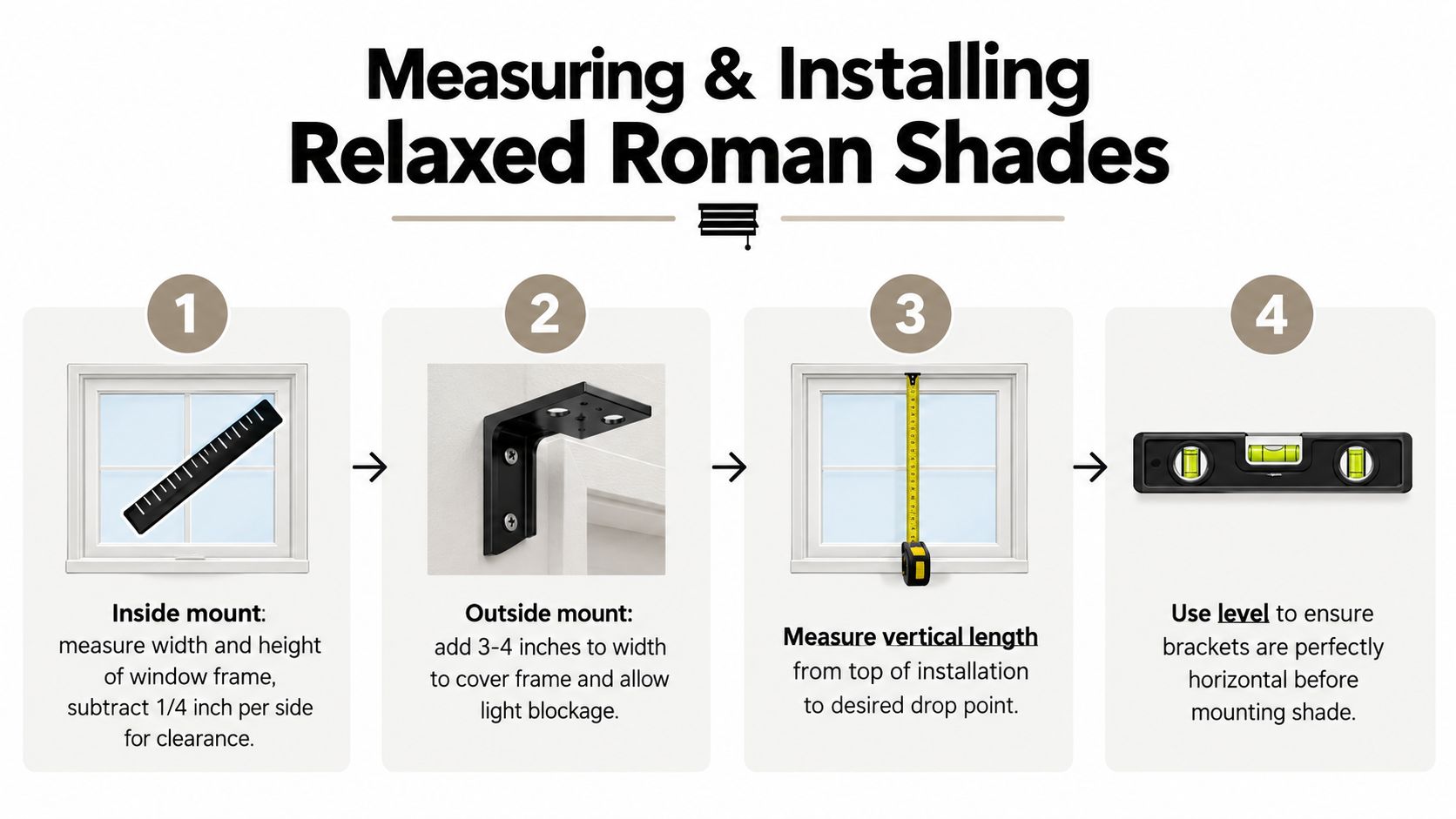
The short answer is this. Decide on inside mount or outside mount before you measure anything else.
An inside mount sits within the frame and looks built-in. An outside mount sits above or beyond the trim and often helps a small window look taller and more dressed.
A sewing guide for relaxed Roman shades shows how much allowance math matters. One tutorial notes adding 6 inches to width and 6 inches to length for hems and mounting-board wrap, while another project guide uses width plus 16 inches and additional top and hem allowances, which shows these shades are not sized like simple curtain panels in this relaxed Roman measuring reference.
Before drilling, mark bracket positions carefully and confirm level. Relaxed styles are forgiving in mood, but not in hardware alignment.
Use this checklist:
A relaxed Roman that's slightly off level won't look charming. It'll look crooked.
If you want a brand-specific walkthrough for mounting order, bracket alignment, and testing the mechanism, Joey'z also has a guide to Roman shades installation.
Relaxed Roman shades aren't just flat shades with prettier fabric. A DIY reference explains that the shade is typically built from a flat shade pattern with a deliberately longer bottom section, and one example says the fabric is cut about 21 inches longer than a regular Roman shade to create the bottom pleats, with lower rings tied together to form the drape in this construction discussion.
That's why the finished shape depends on both measuring and internal build, not just taste.
This is the section where pretty photos stop helping and real-life use takes over.
The strongest case against relaxed Roman shades isn't their look. It's that they're a convenience compromise. Decorative relaxed styles require manual dressing, and a major Roman shade style guide positions them as a decorative option that needs dressing each time and isn't compatible with motorization in this Roman shade comparison.
If you raise the shade every morning and lower it every evening, you may get tired of adjusting the folds by hand. If you want repeatable, one-touch operation, this style works against you.
That makes relaxed Roman shades a narrower fit for:
Cord exposure matters even more. A window-covering safety alert states that Roman shades can never be made safe in the closed position because of exposed cords and should not be used where accessible to children in this child safety alert for window coverings.
That's a much stronger warning than “keep cords out of reach.”
| Lift Type | Child Safety | Accessibility | Cost Impact |
|---|---|---|---|
| Traditional corded | Lowest, especially in accessible areas | Familiar but not ideal | Lower upfront |
| Cordless | Better choice for family spaces | Easier for many users, still manual | Moderate |
| Remote or motorized alternative in another Roman style | Strong for ease of use | Best for frequent operation | Higher |
For shoppers comparing safer lift systems, Joey'z has a practical overview of Roman shades cordless options.
Choose relaxed Roman shades only if you're comfortable treating them as a decorative layer first and an everyday mechanism second.
A relaxed Roman shade doesn't behave the same way in every room. In one space it looks graceful. In another it looks like the wrong tool wearing a nice outfit.
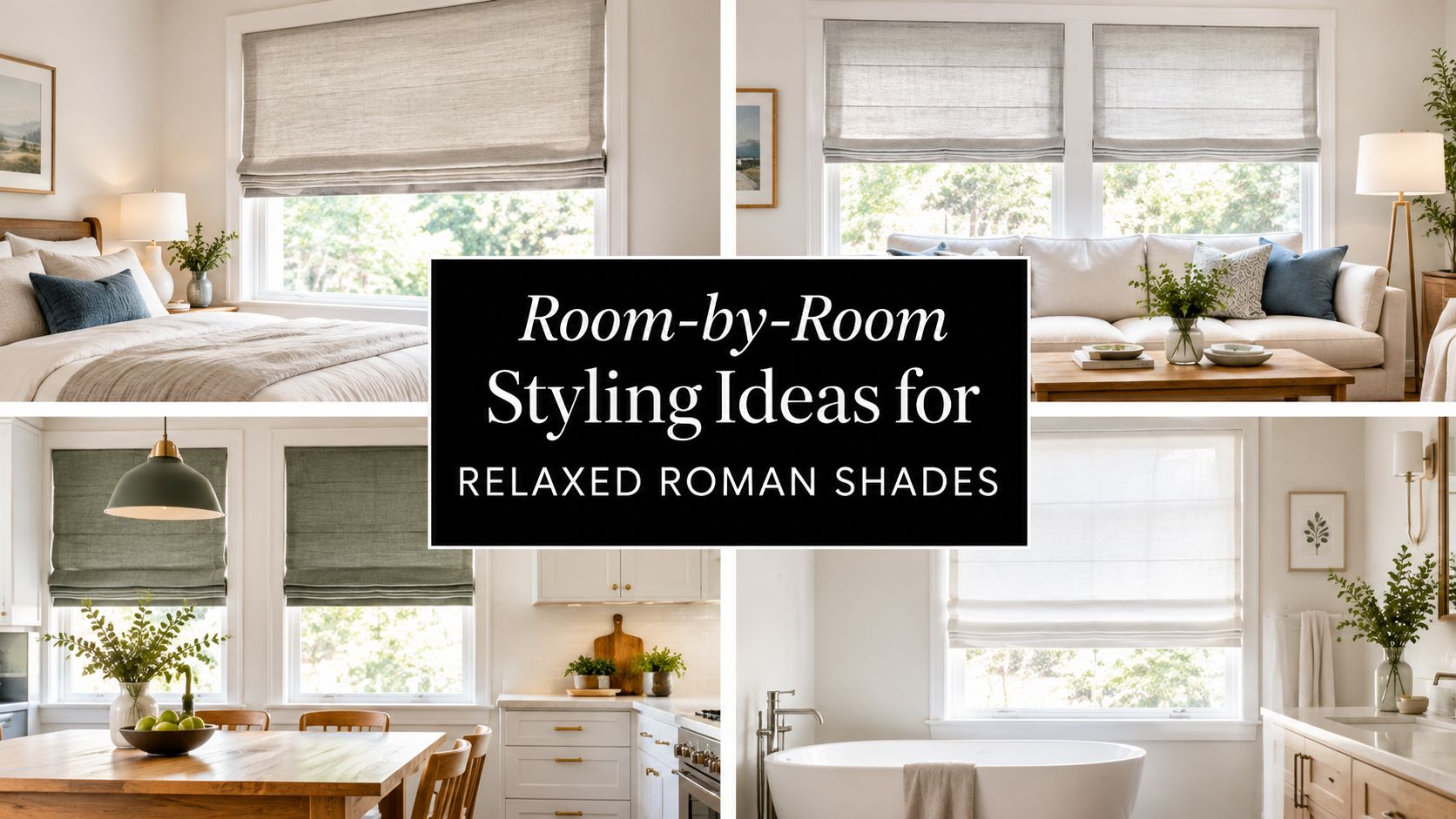
A linen-cotton or soft polyester blend gives you filtered light, visual warmth, and a slightly structured feel without making the room dark. Relaxed Roman shades fit especially well in homes aiming for organic, layered interiors.
That style direction isn't random. A Hunter Douglas FAQ notes that Roman shades are benefiting from demand for warm, natural interiors and cites a 48% rise in Roman-shade search volume from October 2024 to June 2025 in this relaxed Roman shades FAQ.
Bedrooms can work, but only if you go in with realistic expectations. A lining adds privacy and helps with light control, yet the curved sides can still allow some light to slip in. If darkness is a priority, many homeowners layer the look with a more functional treatment behind or beneath it.
Use caution here. A kitchen asks for easy cleaning, moisture tolerance, and a treatment that won't feel precious. If you love the shape, choose a washable performance fabric and keep the shade away from heavy splatter zones.
The look is sweet. The safety question is not. Because of the safety concerns covered earlier, this is a room where the decorative appeal needs to take a back seat to lift system choice and placement.
A good design rule is simple:
They also tend to look best against softer architecture such as painted trim, cottage details, vintage furnishings, or rooms that already have some textile warmth.
Buying a relaxed Roman shade gets easier when you stop treating it like one decision. It's really three decisions. Can you operate it comfortably, are the materials appropriate for your values and space, and does the price match what you're getting?
Start with operation. A shade that looks lovely but feels annoying to raise won't stay lovely for long.
Ask these questions before checkout:
Sustainability isn't just about fiber content. It also includes how the lining is made, how much packaging the order uses, and whether the brand discloses anything useful about sourcing or offcuts.
A practical shopping checklist:
Instead of chasing a perfect price, compare what each tier includes.
| Budget Tier | What You'll Usually See | What to Verify |
|---|---|---|
| Value | Simpler fabric options, fewer custom choices | Lift type, lining choices, return policy |
| Mid-range | More fabric selection, better finishing details | Mounting hardware, care instructions, sizing flexibility |
| Premium | Broader customization and upgraded materials | Warranty terms, exact construction details, accessibility options |
Buying shortcut: If accessibility is your top concern, rule out anything that depends on frequent fold styling before you fall in love with the fabric.
That one filter saves a lot of second-guessing.
Usually, yes. The folds and soft fabric face collect dust more readily than flatter, tighter treatments. Vacuuming gently with a brush attachment and spot-cleaning small marks is often enough, but delicate fabrics may need professional cleaning rather than machine washing.
They can be risky if cord exposure is part of the design. Cordless is the better default in family homes, and any accessible window near young children deserves extra caution because Roman shade cords present a known safety issue.
The honest answer is that this style is a poor match for standard motorized convenience. The decorative fold still needs hand dressing, so even if a workaround exists, it won't behave like an effortless everyday shade.
They shine in decorative rooms and become less convincing in hard-working spaces. Use the quick matrix below as a starting point.
| Room | Recommended Fabric Weight | Lining | Lift System |
|---|---|---|---|
| Living room | Lightweight to medium | Optional privacy lining | Cordless if possible |
| Bedroom | Medium with good drape | Privacy or blackout lining | Cordless, with realistic light-gap expectations |
| Kitchen | Easy-care lightweight synthetic blend | Moisture-conscious lining if needed | Simple manual operation |
| Nursery | Soft fabric only if safety needs are fully addressed | Blackout lining when darkness matters | Cordless preferred |
| Bathroom | Generally avoid unless well ventilated | Minimal lining if used | Only where moisture and safety are well managed |
For day-to-day care after installation, regular dusting, pet-hair removal, and fabric-specific stain treatment matter more with this style than people expect.
If you're narrowing down window treatments and want practical guidance instead of showroom fluff, Joey'z Shopping offers shade and curtain resources that help you compare lining, cordless options, and installation details before you buy. It's a useful place to sort out whether a relaxed Roman shade fits your room, your routine, and the way you live.