
Join the Joey'z Family!

Choosing the right curtain rod can feel daunting, but it’s simpler than you think once you understand standard curtain rod lengths. The great news is you rarely need a custom solution. Most curtain rods are cleverly designed to be adjustable, sold in common size ranges that make finding the perfect fit for your windows a breeze.
Think of them as the S, M, L, and XL of the home decor world—one size range is almost guaranteed to work for you. This guide will walk you through everything you need to know, from common sizes to the golden rule of measuring.
What is a standard curtain rod? A standard curtain rod is an adjustable pole designed to fit a range of common window widths. By using an inner rod that slides into a slightly larger outer one, these rods provide the flexibility needed for a perfect fit without the custom price tag.
Choosing the right curtain rod is the foundation of a beautiful window treatment. It’s like picking the right frame for a painting; get it wrong, and the whole setup looks awkward. Standard sizes exist to remove the guesswork, offering flexible options that work for most homes.
While you might find small variations between brands, the curtain rod market sticks to a few key size ranges. These are engineered to cover everything from a small bathroom window to a grand picture window.
You'll typically see standard curtain rod lengths fall into four main categories: 28-48 inches, 48-84 inches, 66-120 inches, and 120-170 inches. These ranges are designed to accommodate the most common window widths found in modern homes. For a deeper dive into industry standards, resources like Spiffy Spools offer great insights.
Insider Tip: Always choose an adjustable rod where your final measurement falls somewhere in the middle of its range. A rod stretched to its absolute limit will be weaker in the center and more likely to sag, especially with heavier curtains.
For more clarity, here’s a quick reference table.
This table breaks down the most common adjustable rod sizes and the window widths they're best suited for.
| Standard Rod Length Range (Inches) | Ideal for Window Widths (Inches) | Common Use Case |
|---|---|---|
| 28" – 48" | Up to 36" | Small bathroom, kitchen, or laundry room windows |
| 48" – 84" | 36" – 72" | Standard bedroom and living room windows |
| 66" – 120" | 54" – 108" | Wide windows, double windows, or smaller sliding doors |
| 120" – 170" | 108" – 158" | Large picture windows, patio doors, and wide open-plan areas |
Here’s what those sizes mean in practice:
The secret to a stunning window treatment isn't the rod you buy, but how you use your measuring tape. Getting this first step right separates an amateur look from a polished, professional one. It all boils down to one simple, non-negotiable principle: the "golden rule."
The rule is this: your curtain rod must extend well beyond the window frame. Forgetting this is the single most common mistake homeowners make. It forces curtains to bunch up over the glass, which blocks precious sunlight and makes the entire window seem cramped and small.
To get it right, just aim to extend your rod 4 to 10 inches past the window frame on each side. This extra space is what designers call "stack back," and it gives your drapes a dedicated place to rest when they're open.
Achieving that professional look only requires two key measurements. When you get both of these right, you create an illusion of grandeur that can elevate the entire room.
This simple process—measure, extend, and mount—is how you achieve perfect curtain rod sizing every time.
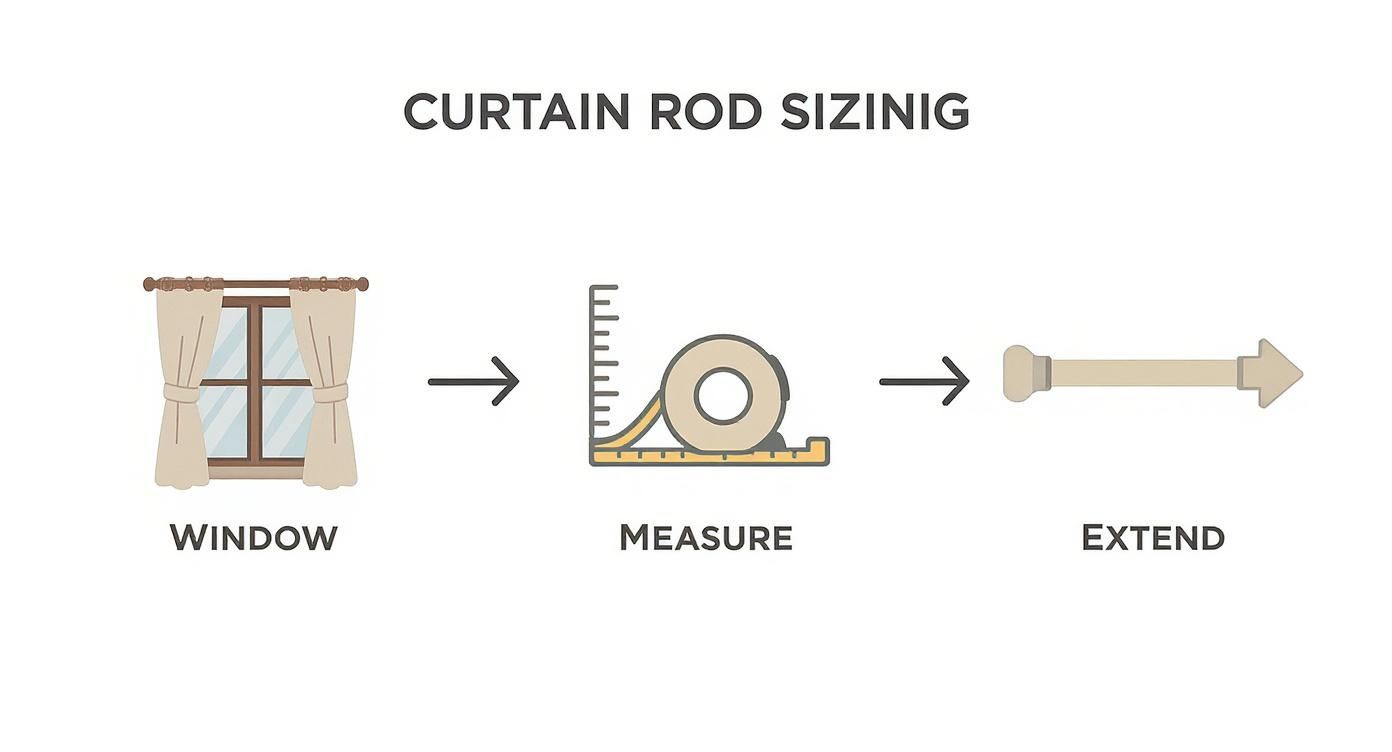
This visual guide reinforces that extending the rod is a crucial step. And while we're focused on rods, don't overlook the basics. Knowing how to measure window size accurately is the foundational skill for any window project.
Following these guidelines does more than just hang your curtains; it actively improves your room’s design. It ensures that when your curtains are fully open, the whole window is exposed, maximizing the natural light that fills your space.
By extending the rod wider and mounting it higher, you're essentially reframing your window. You're telling the eye that the window is bigger and the ceiling is higher than it actually is—it's one of the oldest and most effective tricks in the interior design playbook.
This strategic placement creates a more balanced, intentional look. For a deeper dive, our guide on how high to hang curtains provides even more expert tips for getting that perfect placement.
Your curtain rod is more than just hardware; it’s your curtains' silent partner. Getting the pairing right is a balancing act of style and strength, ensuring your window treatments look thoughtful and function perfectly.
The two biggest factors are fabric weight and curtain heading style. You wouldn't put a heavy winter coat on a flimsy wire hanger, would you? The same idea applies here. A delicate sheer curtain will look stunning on a slender 5/8-inch diameter rod. But for heavy blackout drapes, you’ll need the brawn of a rod that's 1-inch thick or more to prevent bowing.
Choosing between a single or double rod comes down to the look you're trying to create.
That layered look adds instant depth and luxury to a room. If this approach is for you, our guide on how to hang double curtain rods can walk you through it.
The top of your curtain, known as the heading, also influences your rod choice.
Key Takeaway: For curtains you'll open and close daily—like grommets or those on rings—prioritize a sturdy, smooth metal rod. For stationary decorative panels, you have more flexibility with materials like wood or intricate designs.
While understanding standard curtain rod lengths covers most projects, what about windows that don't play by the rules? Bay windows, extra-wide doors, and awkward corners don’t have to be a decorating dead end. With the right hardware, you can dress any window beautifully.
Think of it like a specialized toolkit. For most jobs, a standard screwdriver works. But for tricky spots, you need an angle adapter. The same logic applies here; specialty windows just call for specialty solutions.
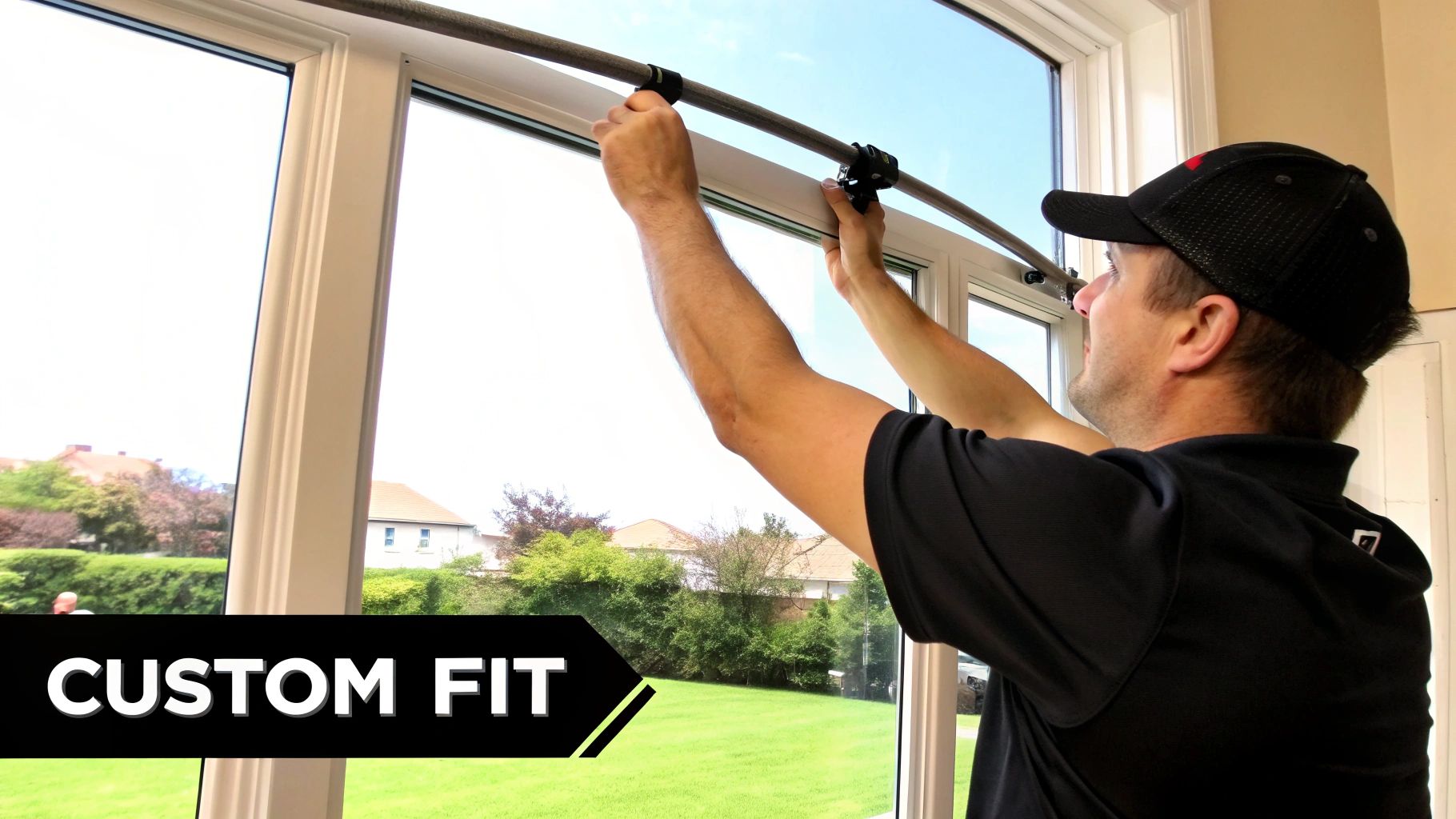
Let's break down the most common challenges and how to solve them.
| Window Challenge and Curtain Rod Solution | |||
|---|---|---|---|
| Window Type | Common Challenge | Recommended Rod Solution | Pro Tip |
| Extra-Wide Windows (e.g., Picture Windows, Sliding Doors) | Exceeds the length of even the longest standard rods. | Use a connector screw to join two standard rods, or purchase a single extra-long rod. | Joining two rods is budget-friendly, but a single long rod provides a cleaner look and better support for heavy drapes. |
| Bay Windows | Standard straight rods can't follow the angled shape. | Use hinged corner connectors to join three separate rods that follow the window's angles. | Measure each window section individually. This ensures each part of the rod is the perfect length before you connect them. |
| Corner Windows | Two windows meet at a 90-degree angle, making a single rod impossible. | An elbow or corner connector is designed specifically to join two rods at a right angle. | Ensure the rods on both sides of the corner are mounted at the exact same height for a professional, level finish. |
| Floor-to-Ceiling Windows | The sheer weight of long, heavy curtains can cause standard rods to bow or sag. | Choose a heavy-duty rod with a diameter of at least 1 1/8 inches and add extra support brackets. | Place support brackets every 30-36 inches to distribute the weight evenly and prevent any sagging over time. |
For expansive sliding glass doors or huge picture windows, you have two great options. First, you can create a custom-length rod by joining two standard rods with a small, threaded piece of hardware called a connector screw. This is a cost-effective DIY solution.
Alternatively, many retailers offer extra-long, single-piece rods designed for these situations. While they may cost a bit more, they provide a sleek, uninterrupted look and superior strength.
Corner and bay windows add character, but they can be a puzzle for curtain rods. For these angles, you’ll need specialized hardware:
Expert Tip: For bay windows, treat each section as an individual window when measuring. Measure each flat pane, then use hinged corner connectors to join the rods. This ensures a perfect fit.
Floor-to-ceiling windows are breathtaking but demand serious support. The sheer weight of the drapery means a standard-duty rod won't cut it.
The key here is strength. Opt for a rod with a larger diameter—at least 1 1/8 inches—made from a strong material like steel. It’s also critical to use more support brackets; plan for one every 30-36 inches to prevent sagging. A strong installation is everything, so check out our advice on how to hang curtain rods in drywall to ensure your hardware is secure.
Ever wonder why curtain rods all come in those specific adjustable sizes? It’s not random. The system behind standard curtain rod lengths is designed to make your life easier and your projects more affordable.
The short answer is mass production efficiency. It's much more cost-effective for companies to produce a handful of adjustable sizes that fit the vast majority of windows, rather than dozens of fixed-length rods. Like t-shirts in S, M, and L, this approach streamlines manufacturing and keeps prices reasonable for consumers.
This isn’t just about making things cheaper; it’s about accessibility. By focusing on a few popular adjustable sizes, manufacturers can better predict demand and reduce waste. That efficiency is a huge deal in the home decor world.
The global market for curtain rods was valued at USD 100 billion in 2023 and is projected to grow significantly. What’s fueling that growth? The accessibility that standardization provides. If you're curious, you can dive deeper into the full curtain rods market analysis.
The materials used also influence the sizes and styles you see in stores.
At the end of the day, standard curtain rod lengths are all about balancing cost, convenience, and style. Understanding the logic behind them makes it easier to choose the right one for your home.
A great curtain rod does more than just hold up drapes. By thinking beyond aesthetics, we can choose hardware that makes our homes more accessible and kinder to the planet.
This modern approach to home decor comes down to two things: ensuring window treatments are easy for everyone to use and considering the long-term environmental impact of our purchases.
For most of us, opening curtains is a simple task. But for individuals with mobility challenges or those with high, hard-to-reach windows, it can be a daily frustration. Thankfully, clever solutions are making window treatments easier to manage.
Sustainable decorating is about choosing products that are better for the planet and built to last. When shopping for curtain rods, a few key things can steer you toward a greener purchase.
Look for rods made from recycled or sustainable materials. Many metal rods, especially aluminum, contain a high percentage of recycled content. If you love the look of wood, seek products with certifications like the Forest Stewardship Council (FSC), which guarantees the wood was harvested from responsibly managed forests.
The most sustainable choice is often the one you don't have to replace. Investing in a high-quality, durable curtain rod from the start means less waste in landfills and fewer resources used in the long run.
To wrap up, let's answer some of the most common questions about choosing and hanging curtain rods. Getting these final details right makes the difference between a project that looks okay and one that looks truly professional.
A curtain rod should extend 4 to 10 inches past the window frame on each side. This "sweet spot" allows you to pull the curtains completely clear of the glass, maximizing natural light and creating the illusion of a larger window. For a small window, a 3-inch extension may suffice, while for massive windows with heavy drapes, extending up to 12 inches per side provides ample room for the fabric to stack neatly.
While technically possible with an inside-mounted tension rod, it's not recommended for standard decorative rods. A rod that is the same width as the frame forces the curtains to cover part of the glass even when fully open. This makes the window feel cramped and blocks daylight. For an open, airy, and intentional look, always choose a rod that is wider than the window itself.
Standard rods are ready-made, adjustable products sold in stores in common ranges (like 48-84 inches). They are affordable, widely available, and suitable for most situations. Custom rods are cut to a specific, fixed length for a particular window. They are a bigger investment but offer a seamless, perfect fit for unusual dimensions or high-end design projects. If you need a flawless finish, you might consider professional curtain installation services to get it just right.
As a rule of thumb, mount your curtain rod 4 to 6 inches above the top of the window frame. This classic interior design trick draws the eye upward, creating an illusion of height that makes the whole room feel taller and more spacious. If you have very high ceilings, you can mount the rod about halfway between the top of the window frame and the ceiling for an even more dramatic effect.
Ready to find the perfect hardware for your windows? At Joey'z Shopping, we offer a wide selection of stylish and durable curtain rods to fit any home. Explore our collection and elevate your space today at https://joeyzshopping.com.