
Join the Joey'z Family!

Let's get right to it: standard curtain rod sizes aren't fixed lengths but come in handy adjustable ranges. The three you'll see most often are 28–48 inches, 48–84 inches, and 84–120 inches. These are designed to fit the vast majority of windows in most homes, so we’re confident you’ll find one that works perfectly for your space.
Choosing a curtain rod can feel a little daunting, but the good news is that the industry has made it surprisingly simple. Instead of making rods in dozens of specific, fixed lengths, most are designed to be telescoping—meaning they expand and contract to fit a range of widths. We think this design is brilliant because it takes the guesswork out of the equation for you.
The most important thing to remember is to choose a rod that can extend at least 4-6 inches beyond the window frame on each side. We can't stress this enough! This extra space is known as "stack back," and it's what allows you to pull the curtains completely off the glass. This little trick maximizes natural light and creates an illusion, making your window feel much larger and grander.
These standard sizes aren't random; they became popular to match the common window dimensions that appeared in homes built during the post-WWII housing boom. Even today, these three adjustable ranges make up an estimated 70–85% of all curtain rods sold, making them the go-to choice for most of us. You can explore more about their history and market dominance and see how this simple standardization makes shopping so much easier.
Let's take a quick look at the most common adjustable rod sizes and what windows they're best suited for. This table breaks down the essentials, helping you match a rod to your window width and curtain type in seconds.
| Standard Rod Size Range | Ideal for Window Width | Total Recommended Rod Length (with Overhang) | Best for Curtain Type |
|---|---|---|---|
| 28–48 inches | 20–38 inches | 32–48 inches | Lightweight panels (sheers, cotton) |
| 48–84 inches | 38–74 inches | 52–84 inches | Medium-weight curtains (linen, polyester) |
| 84–120 inches | 74–110 inches | 88–120 inches | Heavy drapes (velvet, blackout) |
| 120+ inches | 110+ inches | 128+ inches | Heavy drapes requiring center support |
As you can see, the key is finding a range where your ideal total length (window width plus overhang) falls comfortably in the middle, not at the very end. This ensures the telescoping sections have plenty of overlap, which gives the rod strength and stability.
Here’s a simple breakdown of what you'll typically find:
Ultimately, once you understand these three basic ranges, you can shop with confidence. You’re not hunting for an exact measurement but for the adjustable range that best fits your window, ensuring a perfect, professional-looking result every time.
Getting the right curtain rod isn't just about measuring the window itself; it's about creating a feeling of space and elegance. We’ll walk you through the simple, three-step process that designers swear by, making sure your windows always look professionally styled.
What's the biggest secret to getting it right? It's all about the overhang. This is that crucial extra bit of length you add to each side of the window frame. If you skip this part, your curtains can end up blocking precious light and making your window feel cramped. But when you get the overhang just right, you turn a simple window covering into a real design statement.
Ready to measure like an expert? It’s much easier than you might think. Following these steps will help you find the perfect rod from all the standard curtain rod sizes out there.
Measure Your Window Frame: Grab a steel tape measure to get the most accurate reading. Measure the width of your window from the outside edge of the frame on one side all the way to the outside edge on the other. Jot this number down—this is what we'll call your "base width."
Calculate Your Overhang: Now for the designer trick. You need to add a little extra room on both sides of the frame. This allows your curtains to "stack back" nicely when they're open, completely showing off the glass. A good rule of thumb is to add between 4 to 12 inches on each side of the window.
Find Your Total Rod Length: Now, just add your base width to your total overhang. For example, if you have a 50-inch window and you decide on a 6-inch overhang for each side (12 inches total), you'll need a rod that is at least 62 inches long. This final number is your guide for picking the right adjustable rod.
This straightforward process of measuring the window, selecting the right rod, and installing it is the foundation for a truly beautiful window treatment.
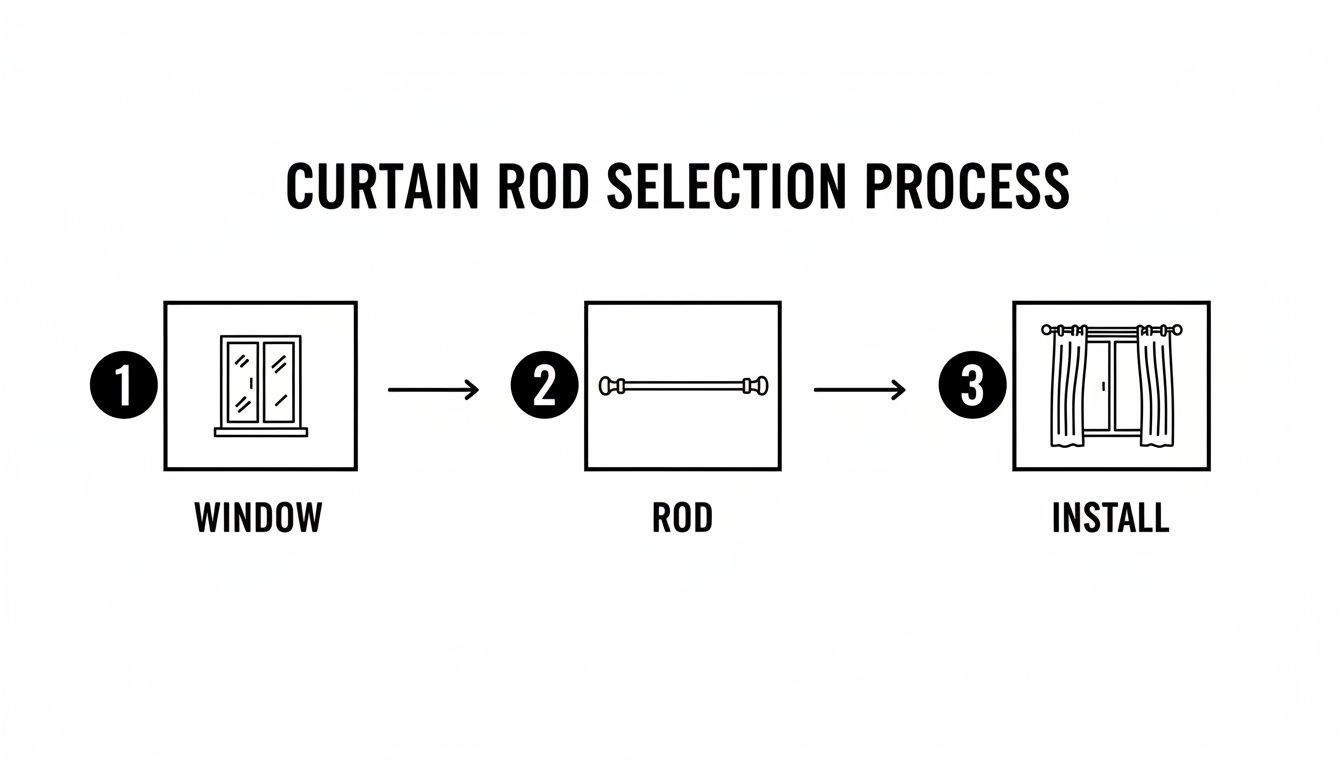
This method of adding overhang to your window's width is standard practice for professional interior designers. It’s the best way to make sure your curtains completely clear the glass when you open them, letting in the maximum amount of sunlight and making your windows appear much wider than they actually are.
Pro Tip: When in doubt, it’s always better to go a little wider with your curtain rod. A wider rod gives you more styling flexibility and instantly makes a room feel more spacious and luxurious. It's a small detail that makes a huge impact.
Getting measurements right is key to a well-designed room, and it doesn't stop with your windows. If you're looking to furnish your space, this guide on how to measure furniture is a great resource to make sure everything fits perfectly. And for an even deeper dive into window-specific techniques, check out our own comprehensive guide right here: how to get precise window curtain measurements.
Once you have the perfect length figured out, the next big decision is the rod's diameter and material. It’s easy to focus on looks, but think of a curtain rod's diameter as its backbone. It's all about structural strength and its ability to hold your curtains without bowing or sagging over time.
A rod's thickness is directly tied to how much weight it can handle. A skinny rod is like a delicate branch—perfect for light, airy sheer curtains. A thicker rod, on the other hand, is more like a sturdy tree limb, built to support heavy, luxurious drapes like velvet or blackout panels. Getting this right is the key to making sure your window treatments hang beautifully and work just as they should.
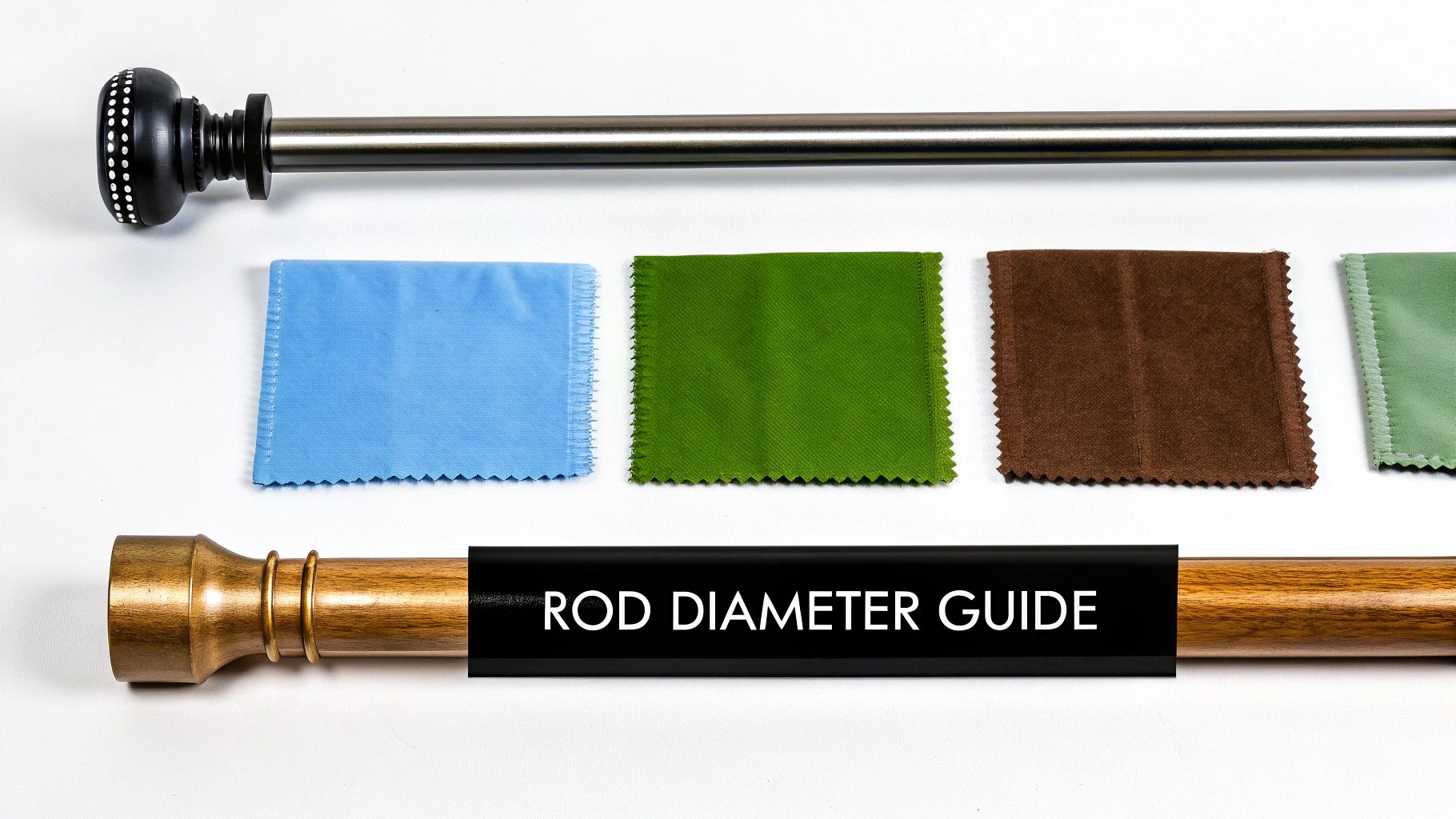
Thankfully, standard curtain rod diameters are pretty consistent across the board, which makes choosing the right one fairly simple. The main goal here is to match the rod’s strength to the weight of your fabric.
Here’s a quick rundown of the most common diameters you’ll come across:
5/8 to 3/4 Inch: This is the slimmest standard option you'll find. It’s ideal for lightweight curtains like sheers, voiles, or simple cotton panels, especially over smaller windows. We recommend these for any curtains weighing under 5 pounds.
1 Inch to 1 1/8 Inch: This is probably the most versatile and popular diameter out there. It strikes that perfect balance of strength and style, easily supporting medium-weight fabrics like linen, polyester blends, and most grommet-style curtains. It's a reliable workhorse for curtains weighing up to 20 pounds.
1 3/8 Inch and Larger: When you're dealing with heavy-duty fabrics—think velvet, thermal blackout liners, or extra-long drapes—a thicker rod is non-negotiable. These robust rods are engineered to prevent sagging across wider windows and can typically hold 25 pounds or more.
To help you visualize the best fit, here’s a quick guide matching rod diameter to curtain type and weight.
| Rod Diameter | Typical Weight Capacity | Best for Curtain Types | Common Materials |
|---|---|---|---|
| 5/8" to 3/4" | Under 5 pounds | Sheers, voiles, lightweight cotton panels | Steel, Aluminum, Resin |
| 1" to 1 1/8" | Up to 20 pounds | Linen, polyester blends, grommet curtains | Steel, Wood, Wrought Iron |
| 1 3/8" or larger | 25 pounds or more | Velvet, blackout, thermal-lined, long drapes | Solid Wood, Wrought Iron, Heavy-Duty Steel |
Choosing the right diameter from this chart ensures your curtains will hang beautifully without putting stress on your hardware.
If you need a deeper look into selecting the right hardware, our detailed guide on curtain rods for heavy curtains has you covered.
Beyond its thickness, the material of your curtain rod plays a huge role in both the look and durability of your setup. From classic wood to sleek, modern metal, each option brings its own unique character to a room. This is your chance to tie the whole decor theme together.
Metal is a fantastic choice for its sheer strength and versatility. Steel rods, especially those with a brushed nickel or matte black finish, are incredibly popular for modern, industrial, and minimalist homes. They are more than strong enough to support heavy drapes without breaking a sweat.
Insider Tip: Hollow metal rods are lighter and a bit easier to install, while solid metal or wrought iron rods offer maximum strength for those exceptionally heavy or extra-wide window treatments.
Wood brings a natural warmth and classic charm that’s hard to beat. It’s a perfect fit for traditional, farmhouse, or rustic decor styles. While plenty strong, just be aware that wooden rods can sometimes bow over very long spans if you don’t use a center support bracket.
If you're looking for a touch of glamour or a uniquely modern statement, resin and acrylic rods are wonderful choices. Often designed with intricate finials or a crystal-clear finish, they can turn your window treatments into a true focal point. They are best suited for light to medium-weight curtains.
Not all windows are simple rectangles, and that's perfectly okay. Some of the most beautiful architectural features, like sweeping bay windows or elegant French doors, just need a little creative problem-solving to look their best. We're here to help you tackle those tricky spots with confidence, making sure every window in your home is dressed to impress.
One of the most common challenges we see is dressing extra-wide windows, like large picture windows or sliding glass doors. A single, long rod is the key to creating a clean, unified look. But without the right support, even the sturdiest rod can start to sag in the middle under the weight of the curtains.
For any rod spanning more than 60 inches, a center support bracket is an absolute must. For those really long spans over 120 inches, you'll want to plan on using a bracket every 30-40 inches to keep everything straight and secure.
Corner and bay windows might seem intimidating, but the right hardware makes them surprisingly simple to manage. Instead of trying to piece together separate rods that create awkward gaps, it's best to look for solutions designed specifically for these unique spaces.
Corner Windows: A corner connector (sometimes called an elbow connector) is your best friend here. This small, hinged piece joins two curtain rods together, letting them meet perfectly at a 90-degree angle. It’s the secret to a continuous, professional-looking treatment that flows right around the corner.
Bay Windows: Just like with corner windows, bay windows use hinged connectors. The main difference is you’ll need connectors with adjustable angles to match the specific turns of your bay. Most bay window kits come with two angled connectors and three rod sections to fit the space perfectly.
A unique situation can arise when installing rods over windows with secondary glazing, as this might require special mounting considerations. No matter the window type, always make sure your brackets are anchored securely into a wall stud or with heavy-duty anchors, especially if you're hanging heavier, layered curtains.
What about those other unique features, like French doors or arched windows? They deserve treatments that enhance their charm without getting in the way of their function.
For French doors, the best approach is often to use two separate, smaller rods—one for each door. This allows the doors to swing open and shut independently, so the curtains never get tangled. If you're going for a more grand, dramatic effect, a single long rod mounted high above the door frame can treat the doors as one large window.
Arched or oddly shaped windows present a wonderful opportunity to get creative. While flexible rods exist that can be bent to match a curve, a simpler and often more elegant solution is to mount a straight rod directly above the arch. Hanging curtains this way actually highlights the window's beautiful shape while still giving you the privacy and light control you need. It frames the architectural detail, rather than trying to hide it.
Now for the final touch: installation. Getting this part right is what separates a decent window treatment from a truly stunning design feature. It’s your last step to a picture-perfect window, and we’re here to walk you through it.
The most important rule in our playbook is what we call the golden rule of mounting height. Always, always aim to place your curtain rod 4 to 6 inches above the top of the window frame. This simple trick does something magical—it draws the eye upward, creating an illusion of height that makes your entire room feel taller and more spacious. It’s a small adjustment with a massive impact.
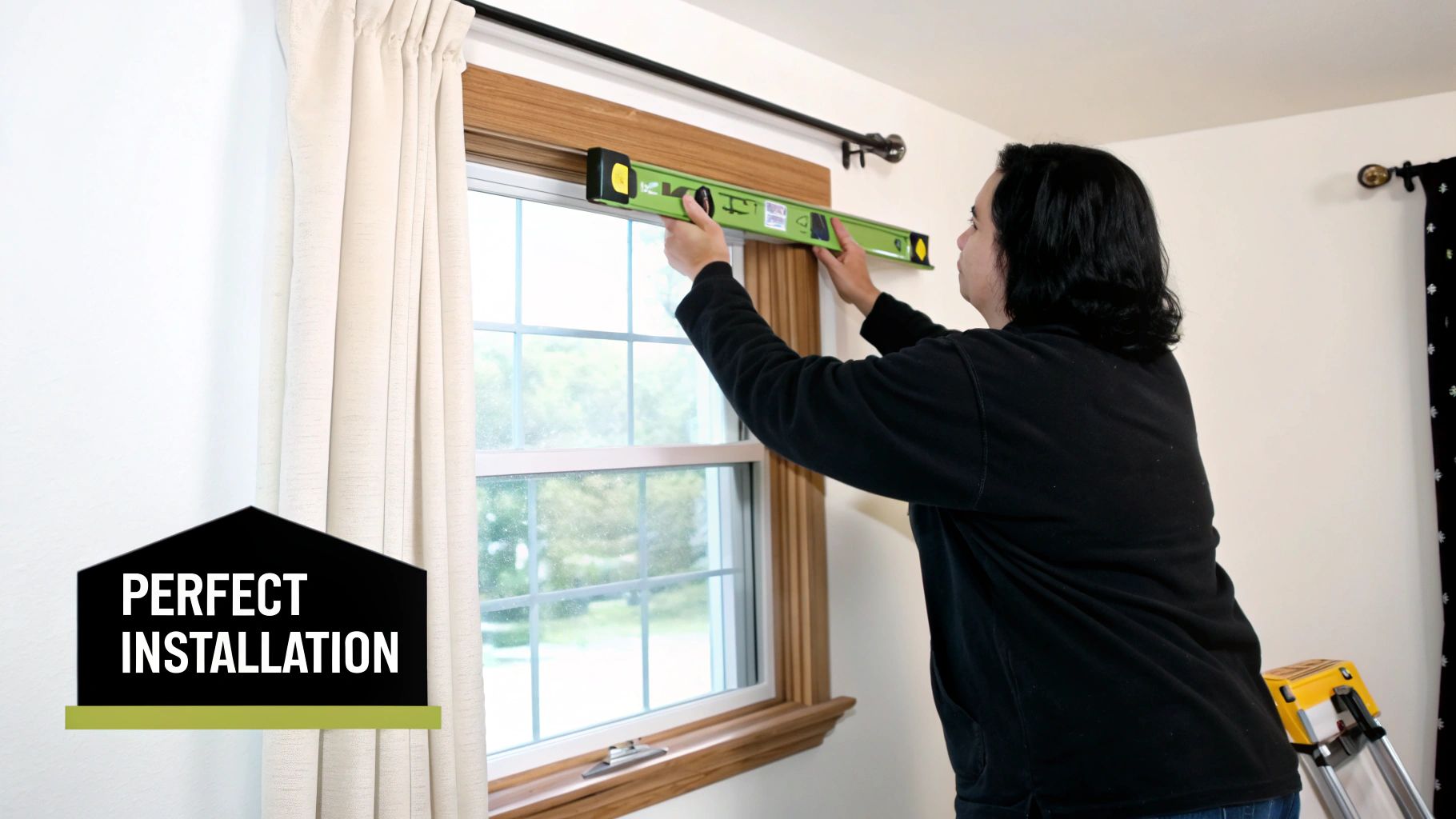
Once you’ve marked your height, the next critical step is making sure everything is perfectly level. We can’t stress this enough: a bubble level is your best friend here. Even a slight angle can throw off the whole look of the window.
After you've marked your bracket holes with the level, it’s time to drill pilot holes and pick the right anchor for your wall. This part is crucial for a secure fit.
One of the most common mistakes we see is people forgetting to use a center support bracket for a long curtain rod. If your rod is over 60 inches, a center bracket is absolutely essential. It prevents that dreaded sag in the middle and keeps your curtains hanging beautifully for years.
Getting these technical details right is what ensures your setup is both beautiful and secure. For a complete walkthrough, our guide on how to install a curtain rod covers every single step you'll need.
By following these simple guidelines—placing your rod high and wide, using a level, and adding support where needed—you’ll avoid all the common pitfalls. Your final result will look secure, elegant, and professionally done, even on your first try. It’s the finishing touch that truly elevates your space.
Even after you've measured twice, a few nagging questions can pop up right before you commit. We get it. Think of this section as that final, reassuring checklist to help you choose your curtain rods with complete confidence.
The short answer is to always go with the larger size. Let’s say your window measurement, plus the extra inches for overhang, comes out to 48 inches. You’ll see two options: a 28–48 inch rod and a 48–84 inch rod. The right choice is the 48–84 inch one, every time. An adjustable rod is at its weakest when it's stretched to its absolute limit, creating a flimsy point right in the middle. Choosing the larger rod means the telescoping pieces overlap more, giving you a much sturdier, more stable foundation for your curtains.
The number of brackets you'll need comes down to rod length and curtain weight. For rods up to 60 inches, two end brackets are usually fine. For rods over 60 inches, a center support bracket is non-negotiable to prevent bowing. For extra-wide spans over 120 inches, plan on using a support bracket every 30 to 40 inches to keep everything straight and secure.
While you can use most standard rods, the diameter is what really matters for grommet curtains. The key is to ensure the grommet's inner hole is at least 1/2 inch larger than the rod's diameter, allowing it to glide smoothly. For a versatile, no-fail option, a rod with a 1-inch or 1 1/8-inch diameter is a safe bet for almost any grommet curtain out there.
Custom-cut rods offer a seamless, high-end look that’s incredible for unique windows or big design projects. However, for most homes, today's adjustable rods provide amazing style, flexibility, and value for a fraction of the price. The sheer scale of the global curtain rod market, valued at over $1.5 billion in 2022, is why manufacturers focus on these versatile standard sizes. You can discover more about the market dynamics that shape the products you find in stores. While custom rods are a beautiful luxury, modern adjustable standard curtain rod sizes are the practical, versatile, and budget-friendly choice.
Ready to find the perfect foundation for your window treatments? At Joey'z Shopping, we offer a curated selection of high-quality, adjustable curtain rods in all the standard sizes you need. Explore our collection and give your windows the stylish support they deserve by visiting Joey'z Shopping.