
Join the Joey'z Family!

Choosing the right window treatment can completely transform a room, but the number of options can feel dizzying. You’ve got classic Venetian blinds, sleek roller blinds, elegant Roman blinds, and super-efficient cellular blinds. Knowing these core types of blinds is the first step to finding the perfect match for your home.
This guide is your personal map for navigating the world of window coverings. The right choice isn't just about decor; it's about getting the light control, privacy, and even energy savings you need. Making an informed choice matters, and we're here to help you get it right.
Picking out blinds is much more than decorating. It’s about finding that sweet spot between form and function that makes your daily life better. The global blinds and shutters market is a testament to this, valued at an estimated USD 69.9 billion in 2025 and projected to reach USD 151.5 billion by 2035. That's a lot of windows getting a serious style and function boost.
The right window treatment can:
Before you fall in love with a style, remember one crucial thing: a perfect fit is everything. Taking accurate measurements is the most important step to ensuring your new blinds look and work as they should. Getting it wrong can lead to annoying light gaps, clunky operation, or a look that just feels... off.
If you're new to this, we’ve got your back. Our step-by-step guide on how to measure for blinds will walk you through it and save you a ton of headaches.
Expert Insight: At its core, a window blind is a simple machine designed to solve a complex problem: how to manage light, privacy, and temperature with elegance. The "best" type is simply the one that solves your specific problem most effectively.
Alright, let’s get into the fun part—exploring the most popular types of blinds. Think of each style as a unique tool designed for a specific job. Some are masters of minimalism, while others are champions of classic design or energy efficiency.
This visual map breaks down the key decisions you'll make when choosing blinds, focusing on the interplay between style, light control, and privacy.
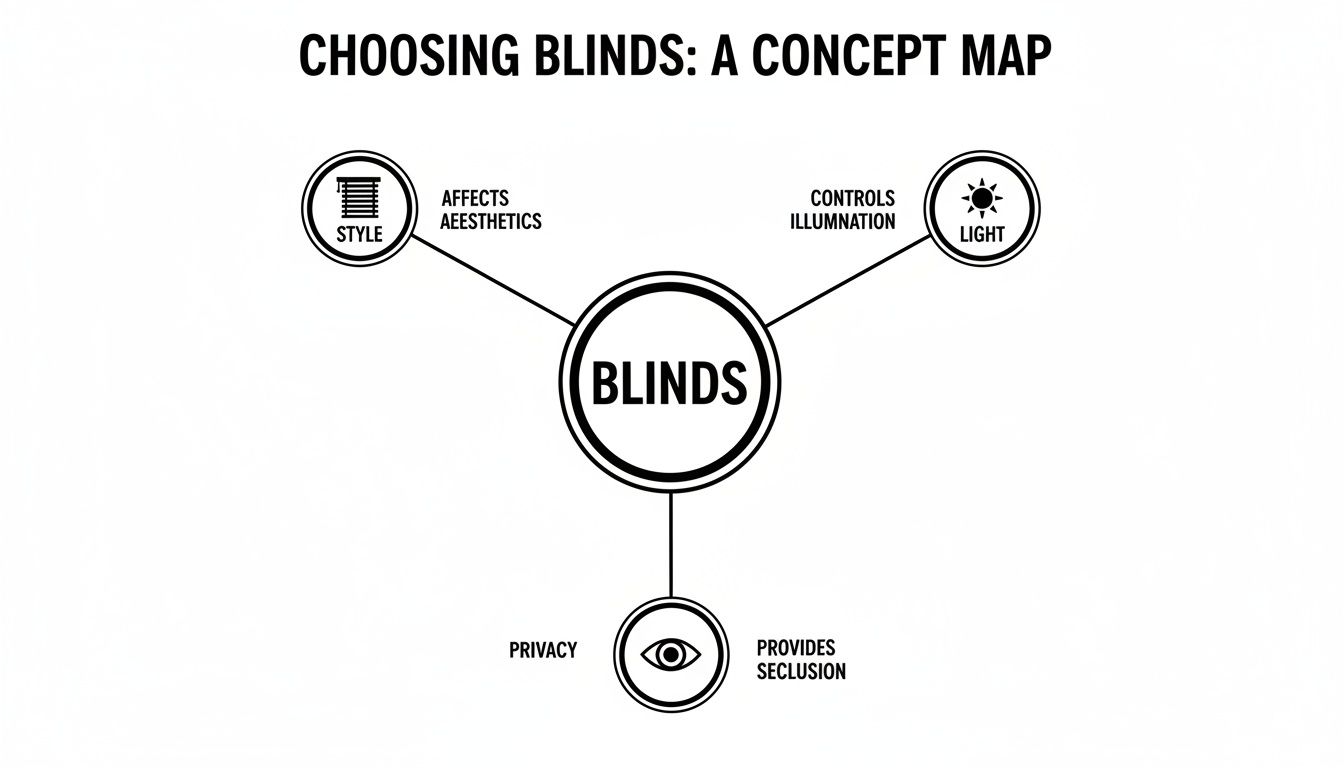
As you can see, these three elements are deeply connected. The blind you ultimately choose will determine how they balance out in your space.
If window treatments had a "less is more" champion, it would be the roller blind. This style is simple: a single piece of fabric that wraps around a casing in your window frame. They’re sleek, clean, and incredibly versatile, offering an uncluttered look that’s a perfect match for modern decor.
It's no surprise that roller blinds are a dominant choice globally, commanding an estimated 33.74% of total revenue in 2025. Their popularity comes from a practical design and minimal profile. You can dive deeper into the latest window treatment market data to see the trends for yourself.
Venetian blinds are the quintessential classic. Composed of horizontal slats made from materials like wood, faux wood, or aluminum, they're suspended by cords or fabric strips. Their enduring appeal is all about their unparalleled light control.
With a simple twist of a wand or pull of a cord, you can tilt the slats to precisely manage the amount and direction of light entering a room. This makes them a highly functional choice for just about any space.
Expert Insight: Think of Venetian blinds as the ultimate light managers. They give you granular control, letting you direct sunlight away from screens, protect furniture from fading, or create the perfect ambient glow without sacrificing privacy.
We offer a great selection of durable and stylish faux wood Venetian blinds that stand up beautifully to the humidity in bathrooms and kitchens.
What if you love the soft, luxurious look of drapes but need the crisp functionality of a blind? That's where Roman blinds come in. Made from a single piece of fabric, they stack up in neat, even folds when raised, adding texture and warmth to a room.
When lowered, they lie flat like a roller blind, giving you excellent privacy and light blockage. They are an ideal choice for creating a cozy, upscale feel in living rooms, dining rooms, and bedrooms.
Also known as honeycomb blinds, cellular blinds are the unsung heroes of energy efficiency. Their unique design features honeycomb-shaped pockets that trap air at the window, creating a powerful insulating barrier. This helps keep your home warmer in the winter and cooler in the summer.
That extra insulation can lead to real savings on your energy bills. In fact, according to the U.S. Department of Energy, some cellular shades can reduce heat loss through windows by 40% or more.
For large windows and sliding glass doors, vertical blinds are the go-to solution. Instead of horizontal slats, they use vertical vanes that run along a track at the top of the window. This design allows them to be drawn completely to one side, giving you unobstructed access.
While you might associate them with older office buildings, today’s vertical blinds have come a long way. They are now available in a wide range of materials, including fabric, vinyl, and even wood. Check out our collection of modern vertical blinds to see just how fresh and stylish they can be.
Standard blinds handle most windows without a fuss. But what about sprawling sliding glass doors, massive picture windows, or that desire for a warm, natural touch? For these situations, you need a specialist. Specialty blinds are the problem-solvers of the window treatment world.
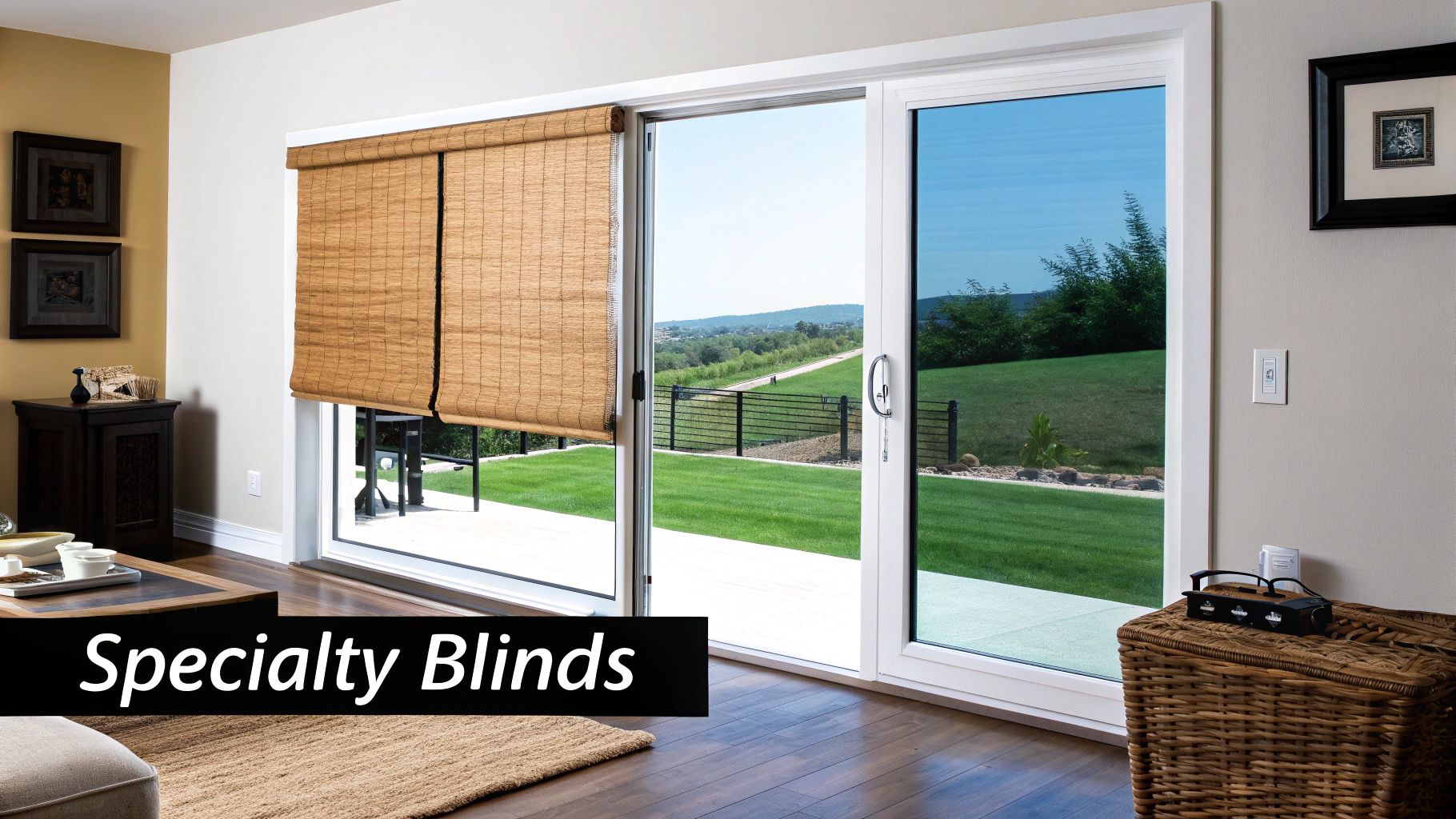
Imagine a modern, elegant alternative to vertical blinds. That’s what panel track blinds are. Instead of narrow vanes, they feature wide fabric panels that glide effortlessly along a track. This makes them a perfect match for huge glass areas like patio doors or even as chic room dividers.
If you're trying to bring a bit of the outdoors inside, woven wood blinds are your answer. Crafted from natural materials like bamboo, reeds, and grasses, they introduce an organic texture and warmth that manufactured materials can't match. Each blind is unique, with subtle variations that make it a one-of-a-kind piece.
Sometimes you just need a simple, functional blind for a small or shallow window, like those in doors or tight bathroom spaces. This is where micro and mini blinds come to the rescue. They operate just like standard Venetian blinds but are built with much slimmer slats.
For the ultimate modern convenience, nothing beats motorized and smart blinds. With a simple button press or voice command, you can control every blind in your home. This is a game-changer for hard-to-reach windows in vaulted ceilings or tucked behind a sofa.
Motorized blinds also boost your home's security—you can schedule them to open and close while you're on vacation, making it look like someone is home. Many motorized options are cordless by design, a key safety feature you can learn more about in our guide on what cordless blinds are.
Picking out a blind style is the fun part, but the material you choose is where the magic really happens. The material dictates a blind’s look, durability, and even how you'll clean it. It really comes down to finding that sweet spot between aesthetics and practicality.
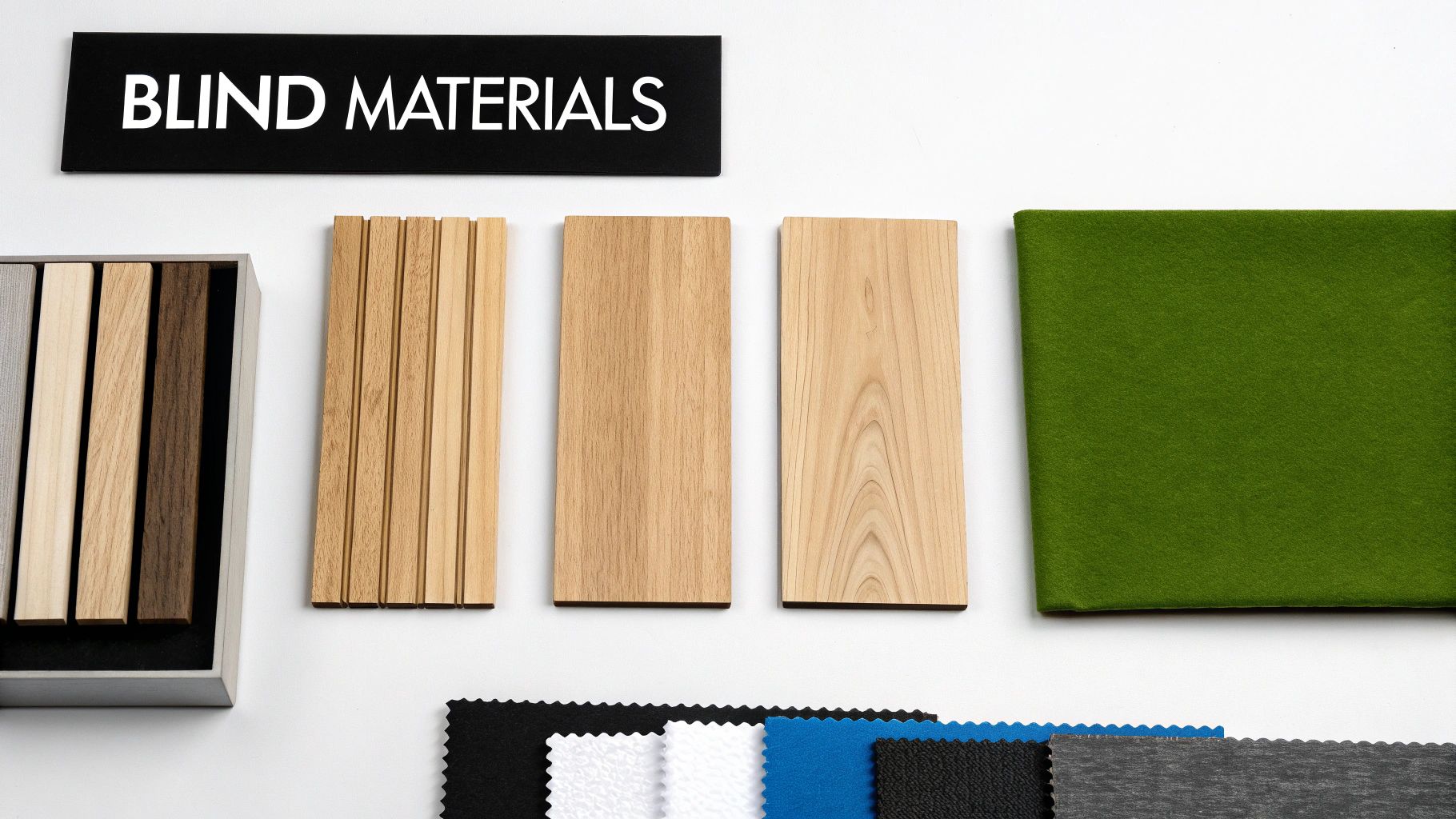
Real wood blinds bring an unmatched natural warmth to any space. They're surprisingly lightweight yet strong, offering great insulation and an upscale look. The only catch? Wood can warp in high-humidity areas, making them a fantastic choice for living rooms and bedrooms, but not the best pick for bathrooms or kitchens.
That’s where faux wood blinds step in. Made from tough, moisture-resistant materials like PVC, they give you the handsome look of real wood without the worry. They are incredibly easy to clean and won't warp, crack, or fade, making them the undisputed champion for kitchens and bathrooms.
To see how they stack up, check out our detailed guide on wood vs. faux wood blinds.
When you need something both durable and affordable, aluminum blinds are a top contender. These blinds are lightweight, completely resistant to moisture, and come in a massive range of colors. Their slim, clean lines make them a go-to for modern spaces.
Vinyl blinds are another budget-friendly powerhouse. Just like their faux wood cousins, vinyl is moisture-resistant and exceptionally easy to wipe clean, which is why you see them so often in high-traffic areas and kids' rooms.
If you're aiming for a softer, more textured look, fabric blinds are the way to go. This huge category covers the materials used in Roman, roller, and cellular shades, giving you an incredible variety of patterns, textures, and light control options.
Alright, you've looked through all the different styles and materials. Before you make that final click, let's walk through the practical details that make the difference between a blind you like and one you absolutely love. Getting these final touches right is what separates a good window treatment project from a great one.
First things first: safety. This is non-negotiable, especially if you have little ones or curious pets. Dangling cords have long been a serious hazard, which is why the industry has shifted toward safer designs.
Cordless blinds are now the gold standard for a reason. Instead of a pull cord, you just gently push or pull the bottom rail to position them. This clean design completely removes the risks tied to old-school cords, giving you peace of mind.
Choosing a cordless option is one of the single best decisions you can make for a safer home.
Next up, the mood of your room. How much light do you want, and how much privacy do you need? It all comes down to the opacity of the material. Think of it as a dial you can turn from bright and airy to completely dark.
Here's a quick rundown of the levels:
Our blackout cellular shades are a huge hit because they combine top-notch light blocking with fantastic insulation.
A perfect fit starts with perfect measurements. I can't stress this enough—this is the one step where you must be precise. A tiny mistake can lead to blinds that don't quite fit, leaving annoying light gaps.
The process itself is straightforward, but you need to be meticulous. First, decide if you want an inside mount (fitting snugly inside the window frame) or an outside mount (overlapping the frame). Always use a steel tape measure for accuracy.
Last but not least, think about upkeep. The great news is that most modern blinds are designed to be incredibly easy to care for. A quick dusting is usually all it takes to keep them looking brand new.
For a deeper clean, check the material. Faux wood and vinyl blinds are a breeze—just wipe them with a damp cloth. For real wood, stick to a dry cloth. Fabric blinds can usually be spot-cleaned or vacuumed with a soft brush attachment.
The best blinds for bedrooms provide excellent privacy and light control. The short answer is blackout cellular blinds or room-darkening Roman blinds. Blackout fabrics block nearly 100% of incoming light, making them ideal for light-sensitive sleepers. Cellular shades also absorb sound, helping to muffle street noise for a more peaceful room.
For bathrooms, moisture resistance is the most important factor. The humid environment can damage materials like real wood. Your best options are faux wood blinds, vinyl roller shades, or aluminum mini blinds, as they are all durable, water-resistant, and easy to clean.
The easiest blinds to clean are those with smooth, hard, non-porous surfaces. The hands-down winners are faux wood, vinyl, and aluminum blinds. A quick pass with a duster or a damp cloth is usually all it takes. Simple vinyl roller shades are also incredibly easy to wipe clean.
Yes, absolutely. Cellular or honeycomb blinds are the undisputed champions of energy efficiency. Their unique honeycomb-shaped pockets trap air, creating an insulating barrier that helps keep your home warmer in the winter and cooler in the summer. This can lead to significant savings on your energy bills.
This refers to how your blinds are installed.
Our collection of versatile cellular shades looks fantastic with either mounting style.
For any home with children or pets, safety is non-negotiable. The safest choice, without a doubt, is a cordless blind. These designs eliminate dangling cords, which are a serious strangulation hazard. You operate them with a simple push or pull on the bottom rail. All motorized blinds are also naturally cordless.
Ready to find the perfect blinds for your home? At Joey'z Shopping, we offer a wide range of stylish, safe, and affordable window treatments to fit any room and budget. Explore our complete collection and transform your space today at https://joeyzshopping.com.