
Join the Joey'z Family!

Ever wondered how interior designers achieve that seamless, floor-to-ceiling curtain look you see in luxury hotels and magazines? The secret is ceiling track curtains. Forget the traditional rod; this modern system uses a discreet track mounted directly on the ceiling, letting drapes glide effortlessly. The result is a clean, uninterrupted line that makes any room feel taller, more spacious, and decidedly more elegant.

If you've ever felt that old-school curtain rods make a room feel cluttered or visually shorter, you're not alone. The solution sweeping through modern home design is the ceiling track curtain, a system that delivers a polished look with incredible functionality. Think of it as a hidden railway for your drapes, letting them glide effortlessly while solving common design headaches.
This approach feels far more intentional than a standard rod. Mounting the track on the ceiling naturally draws the eye upward, creating an instant illusion of height. It’s a simple trick that can make an 8-foot ceiling feel like a grand 10-foot one, a favorite technique for professionals opening up smaller spaces.
The buzz around ceiling track curtains isn't just about looks; it's rooted in practical advantages traditional hardware can’t match. This system is a lifesaver where wall space is tight, like above large sliding glass doors or in rooms with stunning floor-to-ceiling windows.
But their versatility is where they truly shine. You can use them to:
Today's homes are often multi-functional, and ceiling-hung curtains provide the exact flexibility we need. They're especially helpful for creating distinct zones in studio apartments or carving out privacy in shared living spaces. This adaptability, paired with their minimalist look, is what makes them feel so current.
A key principle of modern design is maximizing light and space. Hanging curtains from the ceiling, extending them wide beyond the window frame, achieves both. It makes the window appear larger and allows the maximum amount of natural light to flood the room when the curtains are open.
Ultimately, this system is more than just a window treatment. It becomes a fundamental part of the room’s architecture, able to redefine its dimensions and function. It offers a high-end, custom look that’s surprisingly easy to achieve.
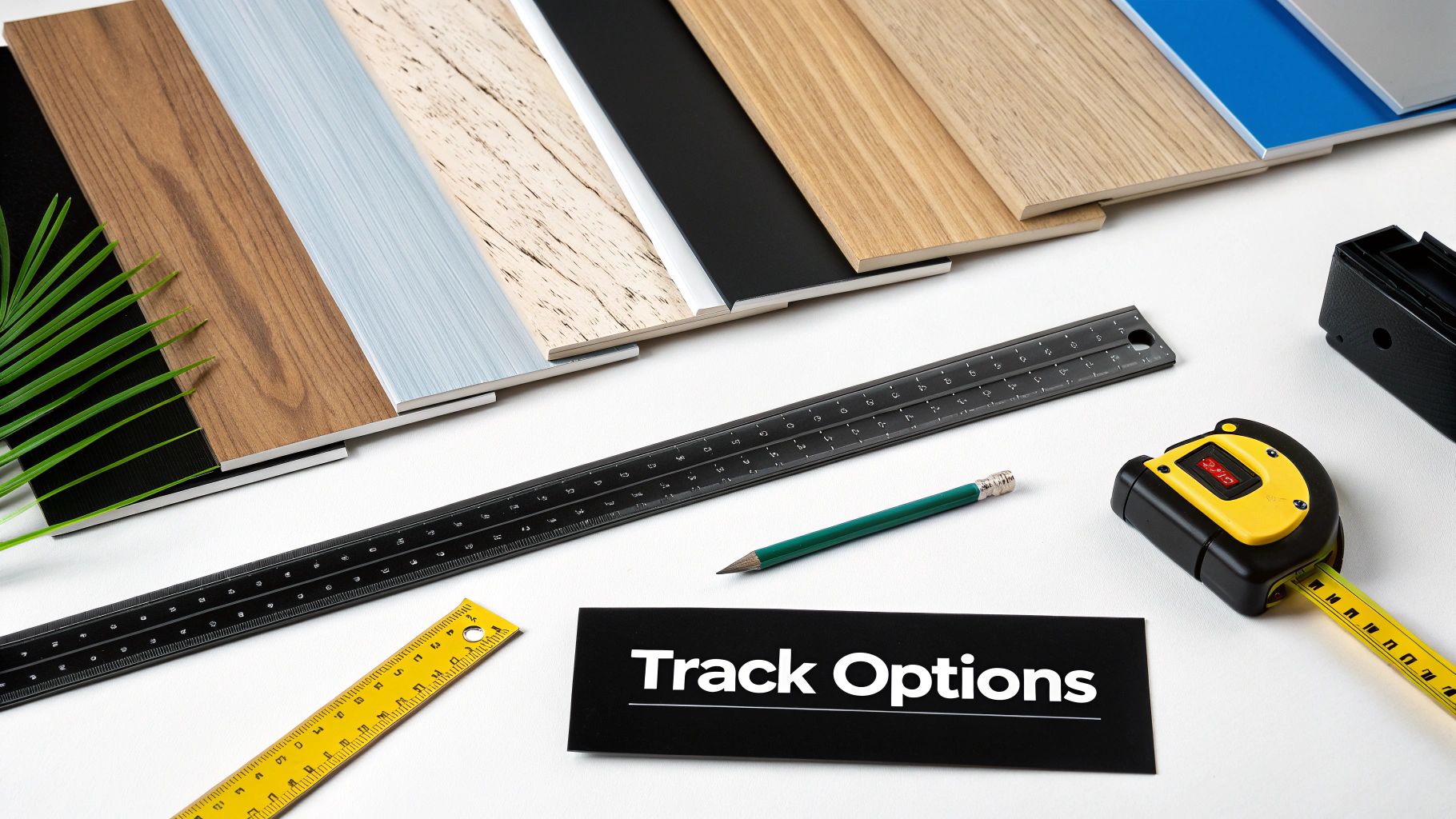
Picking the right ceiling track curtains system isn't just about grabbing the first one you see. It’s more like matchmaking—finding the perfect hardware for your unique space. Since not all tracks are created equal, let's walk through the options to find your ideal fit.
The first big choice is between a rigid and a flexible track. Rigid tracks are champions of long, straight lines, perfect for running across a wide wall of windows or cleanly dividing a large room. Flexible tracks, on the other hand, are designed to be shaped by hand, making them a lifesaver for tricky spots like bay windows or for creating elegant, curved room dividers.
For an ultra-clean, minimalist look, a recessed track is the way to go. These are installed directly into the ceiling so they're flush and completely hidden. The result? Your curtains look like they’re floating down from nowhere, a small detail that makes a huge impact, much like how choosing the right windows and doors for renovations can tie an entire home design together.
Once you’ve landed on the type of track, it’s time to think about the material. This decision really comes down to your budget and the weight of the curtains you’ve fallen in love with.
To make things easier, here's a quick comparison of the most common materials.
| Material | Best For | Pros | Cons |
|---|---|---|---|
| Aluminum | Heavy blackout or thermal drapes in any room. | Lightweight but very strong; rust-resistant. | Can be more expensive than plastic options. |
| PVC/Plastic | Lightweight sheer or standard curtains. | Budget-friendly; often used for flexible tracks. | Not suitable for very heavy fabrics; can become brittle over time. |
| Steel | The heaviest fabrics, like velvet or soundproof curtains. | Maximum strength and durability; will not bend or bow. | Heavier and can be more difficult to install; susceptible to rust in damp areas. |
Each material has its place, so be sure to match its strength to the job you need it to do. A beautiful curtain deserves a track that can support it effortlessly.
A common mistake is pairing a lightweight track with heavy drapes. Always check the weight capacity of your chosen system to ensure smooth, long-term operation. A well-matched system glides effortlessly; an overloaded one will stick and frustrate.
The world of ceiling track curtains is getting a major upgrade with smart home technology. Motorized tracks let you open and close your drapes with a remote, a tap on your phone, or even a simple voice command. This isn't just about convenience; it's a game-changer for accessibility, perfect for high, hard-to-reach windows or for anyone with mobility challenges.
This tech-savvy approach is catching on fast. The market for concealed motorized ceiling curtain tracks was already valued at US$ 1.33 billion in 2023 and is projected to continue growing. This aligns with a broader trend where, according to industry analysis, approximately 55% of new homes are being built with IoT-ready solutions for window treatments.
For a closer look at the different parts that make up these systems, check out our guide on understanding the complete curtain track system. Taking extra time to choose the right components will pay off with a final result that’s both beautiful and works like a charm.
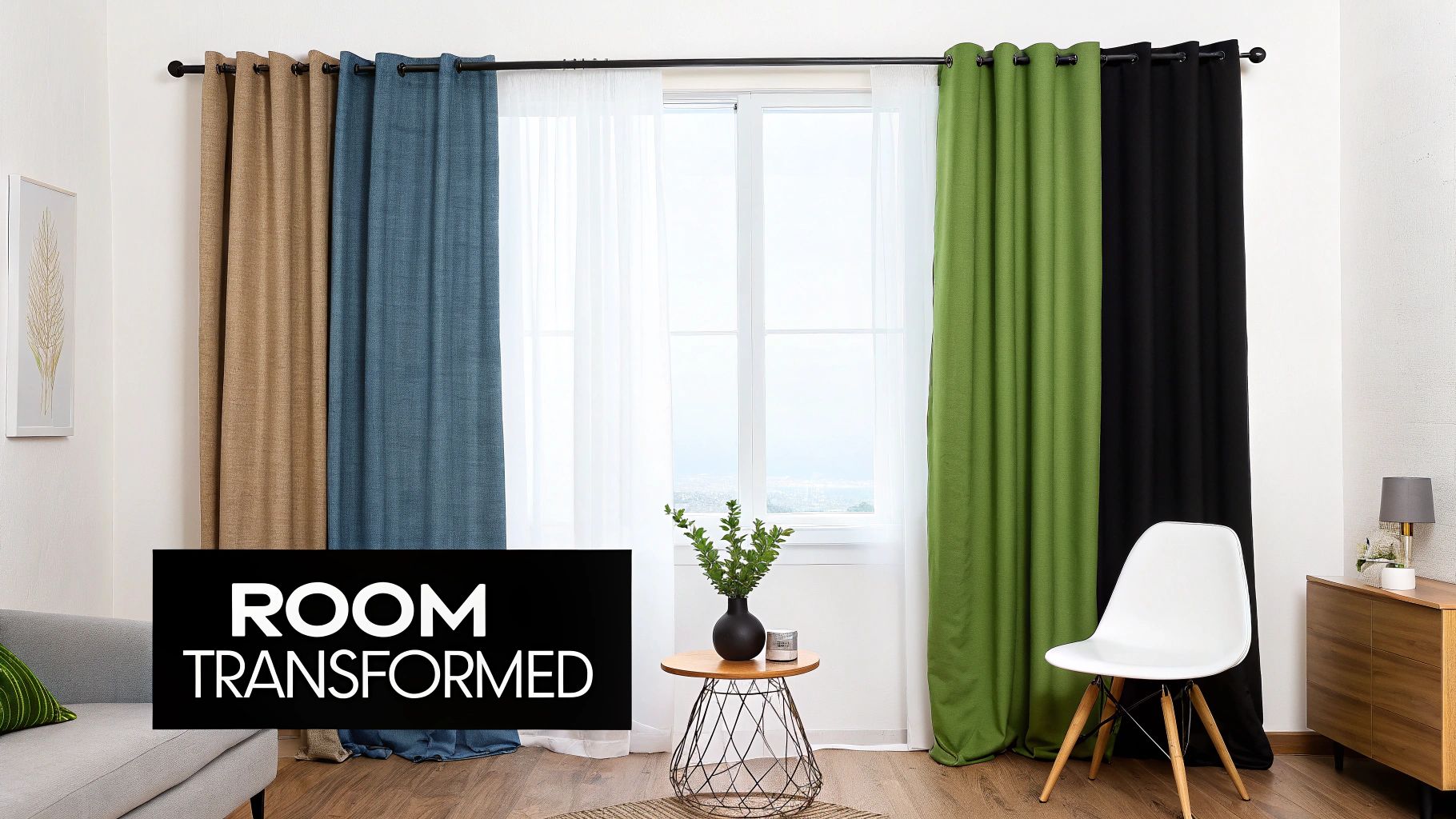
When we think of curtains, we usually picture them hanging from a rod over a window. But ceiling track curtains go way beyond simple window dressing, completely changing the feel and function of a room. Designers love using their secret weapon: creating a powerful illusion of height.
By mounting the track directly on the ceiling, the drapes create a seamless, unbroken line from top to bottom. This trick draws your eye upward, making any space feel taller, grander, and more open. It’s a fantastic way to make a room with standard 8-foot ceilings feel airy and luxurious without major construction. Think of it like wearing pinstripes—the continuous vertical line adds visual length, opening up the entire room.
The practical benefits of ceiling track curtains are just as compelling as the aesthetic ones. Because the track sits flush against the ceiling, it eliminates that annoying light gap you see with traditional rods. This is a game-changer for bedrooms and home theaters where you need total light control to achieve near-perfect blackout conditions.
But their real magic lies in how they can redefine a space. Imagine carving out a private home office in a studio apartment or a cozy reading nook in a sprawling living room—all without building a single wall.
Ceiling-mounted systems are the ultimate flexible design tool. They empower you to divide open-concept areas, conceal storage, or create zones with different moods, all with the simple slide of a curtain. This adaptability makes them perfect for modern, multi-purpose living.
One of the most important benefits, especially for families, is safety. Ceiling track systems are a perfect match for cordless curtain designs. Getting rid of dangling cords and chains removes a significant strangulation hazard for young children and pets, which brings incredible peace of mind.
This focus on safety isn't just a personal preference; it's a major industry trend. The curtain rail sector, valued at USD 15.17 billion in 2023, has seen a huge push toward safer designs. Since 2022, an estimated 80% of U.S. retailers have adopted updated safety standards, making cordless options the responsible choice for any home.
These systems are a fantastic solution for large openings, like the ones we discuss in our sliding glass patio door curtain ideas article, where you need a seamless and safe way to open and close your curtains. Choosing ceiling track curtains is a decision that elevates both the style and the safety of your home.
Let’s be honest: a flawless curtain installation comes down to the numbers. Taking a few extra minutes with a tape measure now is the single best thing you can do to get that sleek, professional look you’re dreaming of.
Whether you're framing a beautiful window or creating a clever room divider, the process is simple. I'll walk you through exactly how to measure for both your track and your curtains, ensuring everything not only fits perfectly but looks incredible.
First, let's figure out how long your track needs to be. This depends on what you're trying to achieve with your curtains.
For Window Coverage: Here’s a designer trick I love—extend the track well beyond the window frame. A good rule of thumb is to add 6-10 inches on each side. This lets you pull the curtains completely clear of the glass when they're open, which floods the room with light and makes the window feel much bigger.
For Room Dividers: This one is easy! Just measure the full distance you want to cover, from one wall to the other. If you're planning to go around a corner with a flexible track, be sure to include that length in your total measurement.
Pro tip: Always use a steel tape measure for the best accuracy. And measure everything at least twice! A tiny mistake here can really show up in the final result, so it’s worth the double-check.
Next up, it’s time to decide on the curtain length. The height of your curtains truly sets the mood for the whole space. Start by measuring from the bottom of where your track will be installed all the way down to the floor.
Once you have that key number, you can pick your favorite look:
The Float: For a clean, modern vibe, subtract about half an inch from your total measurement. The curtains will hang perfectly straight, hovering just above the floor. This is a great, practical choice for busy areas.
The Kiss: This is my personal favorite for a custom, high-end look. The curtain hem just barely skims the floor. It takes precision, but the result looks sharp and intentional.
The Puddle: For something more dramatic and luxurious, add an extra 2-4 inches to your measurement. This creates a beautiful "puddle" of fabric on the floor that adds softness and romance—perfect for bedrooms or formal living areas.
If you want to dive deeper, our guide on how to measure windows for curtains has even more great visuals and tips.
Okay, this is the final, crucial step that people sometimes forget. You need to make sure your track can handle the weight of your curtains.
Heavier fabrics, like lush velvets or thermal blackout curtains, need a sturdy, heavy-duty aluminum or steel track to glide smoothly. On the other hand, lightweight sheers will be perfectly happy on a standard PVC or light aluminum track. Always check the weight capacity of the track system before you buy—it's the key to a flawless, long-lasting installation.
So, you're ready to hang your new curtains? Installing a ceiling curtain track can feel a little intimidating, but it’s a surprisingly straightforward DIY project that delivers that high-end, designer look. With a few common tools and a bit of care, you can create that seamless, floor-to-ceiling effect on your own.
Before you get started, gather your tools. You’ll just need a tape measure, a pencil, a drill with the right bits, a level, and the mounting hardware that came with your track. It’s a simple toolkit for a project that makes such a big difference.
The first and most important step is figuring out exactly where the track will go. Using your pencil and tape measure, lightly mark a straight line on the ceiling. If you're hanging curtains over a window, a good rule of thumb is to place the track about 2-4 inches away from the wall. This gives your curtains enough room to hang beautifully and glide without snagging.
Insider Tip: Take a moment to double-check that your line is perfectly parallel to the window or wall. A level is your best friend here—it ensures your track won’t look slanted, which is something you'd definitely notice once the curtains are up.
With your line marked, it’s time to get the track mounted. If you’re lucky, your line will fall right over the ceiling joists (the wooden support beams behind the drywall). Drilling directly into these gives you the strongest possible hold. If not, don’t worry—that’s exactly what drywall anchors were made for!
Drill your pilot holes at the marked spots, pop in the anchors if you need them, and then screw the track brackets securely to the ceiling. After that, you just snap the track itself into the brackets. Give it a gentle tug to make sure everything feels solid before you move on.
This simple chart breaks down the measurement process before you even pick up a drill.
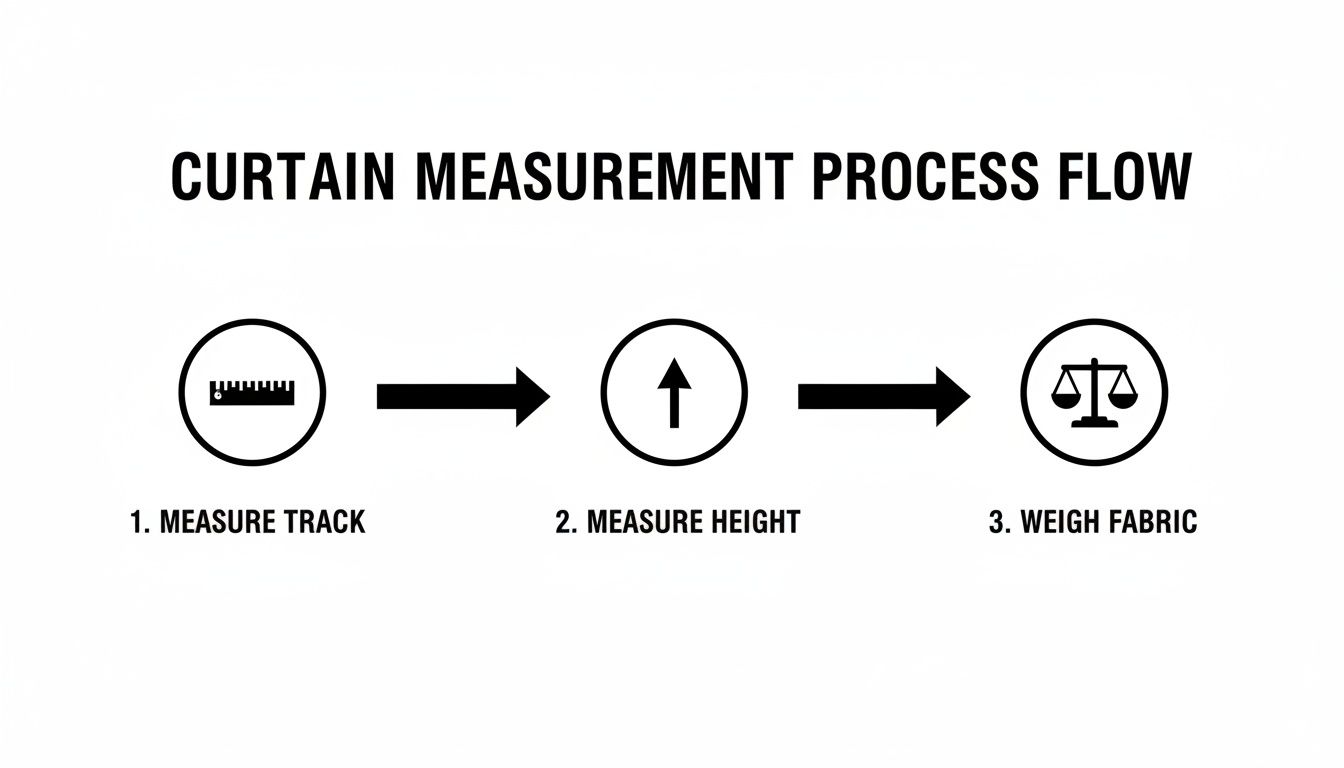
As you can see, getting it right comes down to three things: measuring the track length, the curtain drop height, and knowing your fabric's weight.
Now for the best part! Slide the gliders or carriers into the track, attach the end caps so they don’t fall out, and then hang your gorgeous new curtains. Take a step back and admire your work—you've just completed a project that will elevate your space for years.
This easy installation is a huge reason why so many professionals prefer ceiling track systems. In fact, 68% of interior decorators favor them for their clean look and versatility. They also point out that these systems can reduce installation time by up to 40% compared to traditional curtain rods. For anyone looking for a blend of style and efficiency, it’s an obvious choice. You can learn more about what’s trending in this detailed industry report.
When you're jumping into a new home project, a few questions are always going to come up. We get it. To make things easier, we’ve put together the most common questions we hear about ceiling track curtains and answered them all in one spot.
The short answer is yes, absolutely. This is where they truly shine. The secret isn't about the curtains, but about picking the right track system. A heavy-duty aluminum or steel track is more than capable of supporting substantial fabrics like thermal drapes, sound-dampening panels, or heavy velvet curtains. The key is ensuring the track is securely fastened into ceiling joists or using high-quality drywall anchors designed for heavy loads. Always check the weight capacity of your track before you buy.
The short answer is not usually. If you're comfortable with basic tools like a drill and a level, installing a ceiling track is a very doable weekend project. Many find it simpler than putting up a traditional curtain rod. Success comes down to careful prep work. Double-checking your measurements and making sure the track is securely anchored are the most important parts. A little patience goes a long way toward getting a professional-looking result.
The short answer is yes, but it's an advanced installation. Standard tracks are made for flat, level ceilings, so tackling a slope requires specialized hardware. You will likely need angled mounts, suspension cables to level the track, and specialized carriers that prevent curtains from sliding down the slope. Given the complexity, we recommend consulting a professional installer for sloped ceilings to ensure the system is safe and functional.
The short answer is with simple, periodic cleaning. One of the best things about ceiling track curtains is how low-maintenance they are. To keep them in top shape, just wipe the inside of the track with a soft, damp cloth to clear out any dust. If gliders ever start to stick, a quick spray of a dry silicone lubricant inside the track will have them moving effortlessly again. Avoid oily lubricants, as they can attract more dust and gunk up the works over time.
Ready to find the perfect system for your home? At Joey'z Shopping, we offer a wide range of high-quality tracks and curtains to bring your vision to life. Explore our collection and discover how easy it is to achieve a modern, designer look.