
Join the Joey'z Family!

So, you're standing in front of a bare window, wondering what to hang. The terms "drapes" and "curtains" get tossed around like they're the same thing, but spoiler alert: they're not. Knowing the difference is key to picking the perfect window treatment.
What is the main difference between drapes and curtains? The short answer is drapes are heavy, lined, and formal, designed to block light and insulate a room. Curtains are lightweight, unlined, and casual, intended to filter light and add a decorative touch.
This guide will break down everything you need to know in the great drapes vs. curtains debate, helping you choose with the confidence of a seasoned interior designer.
Before we dive deep, let's clear up the confusion. While people often use the terms interchangeably, drapes and curtains serve different purposes. Drapes are the functional heavyweights; curtains are the stylish lightweights.
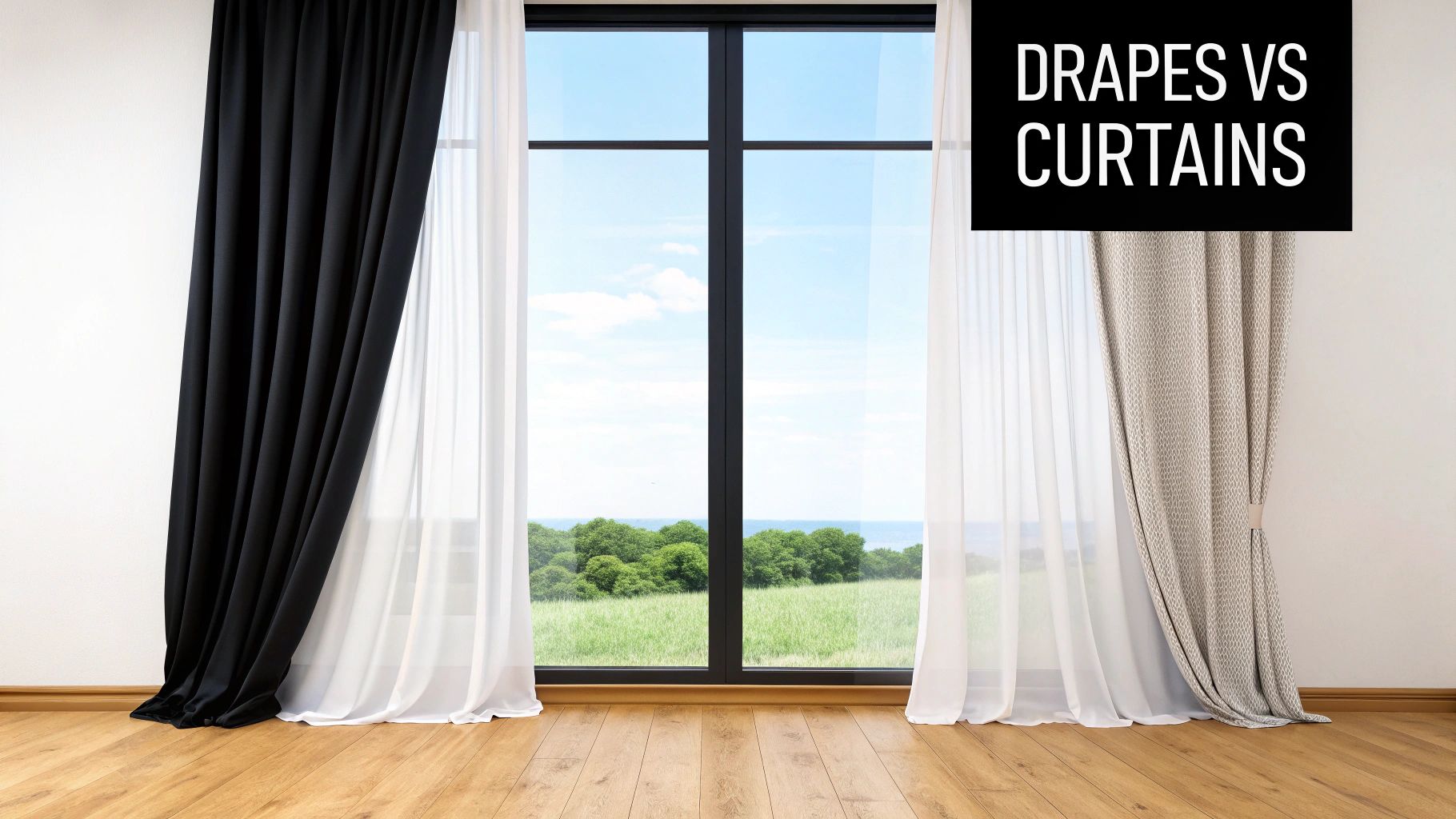
Choosing the wrong one isn't just a style misstep—it can affect your sleep, privacy, and even your energy bills. Imagine thin, breezy curtains in a bedroom where you need total darkness. Not ideal. Likewise, heavy, formal drapes might overwhelm a small, sunny kitchen.
To make it simple, here's a direct comparison.
This table breaks down the essential characteristics that set these two popular window treatments apart.
| Feature | Drapes | Curtains |
|---|---|---|
| Fabric & Weight | Heavy, thick materials (velvet, silk, jacquard) | Lightweight fabrics (cotton, linen, polyester) |
| Construction | Always lined, often with thermal or blackout layers | Typically unlined, sometimes sheer |
| Light Control | Excellent (room-darkening to full blackout) | Minimal (light-filtering) |
| Insulation | High thermal and sound insulation properties | Very little to no insulation |
| Style & Formality | Formal, elegant, and structured (often pleated) | Casual, airy, and informal |
| Typical Length | Usually hang to the floor or puddle beneath it | Various lengths (sill, apron, or floor) |
Think of drapes as a functional investment for privacy, darkness, and insulation. Think of curtains as a stylistic accessory for enhancing a room's aesthetic with color and filtered light. Whether you need the powerful performance of our thermal insulated curtains or the breezy style of simple panels, knowing the difference is everything.
The real story in the drapes vs. curtains debate begins with the fabric. The material's weight, texture, and construction dictate everything from light control and insulation to the overall mood of a room.
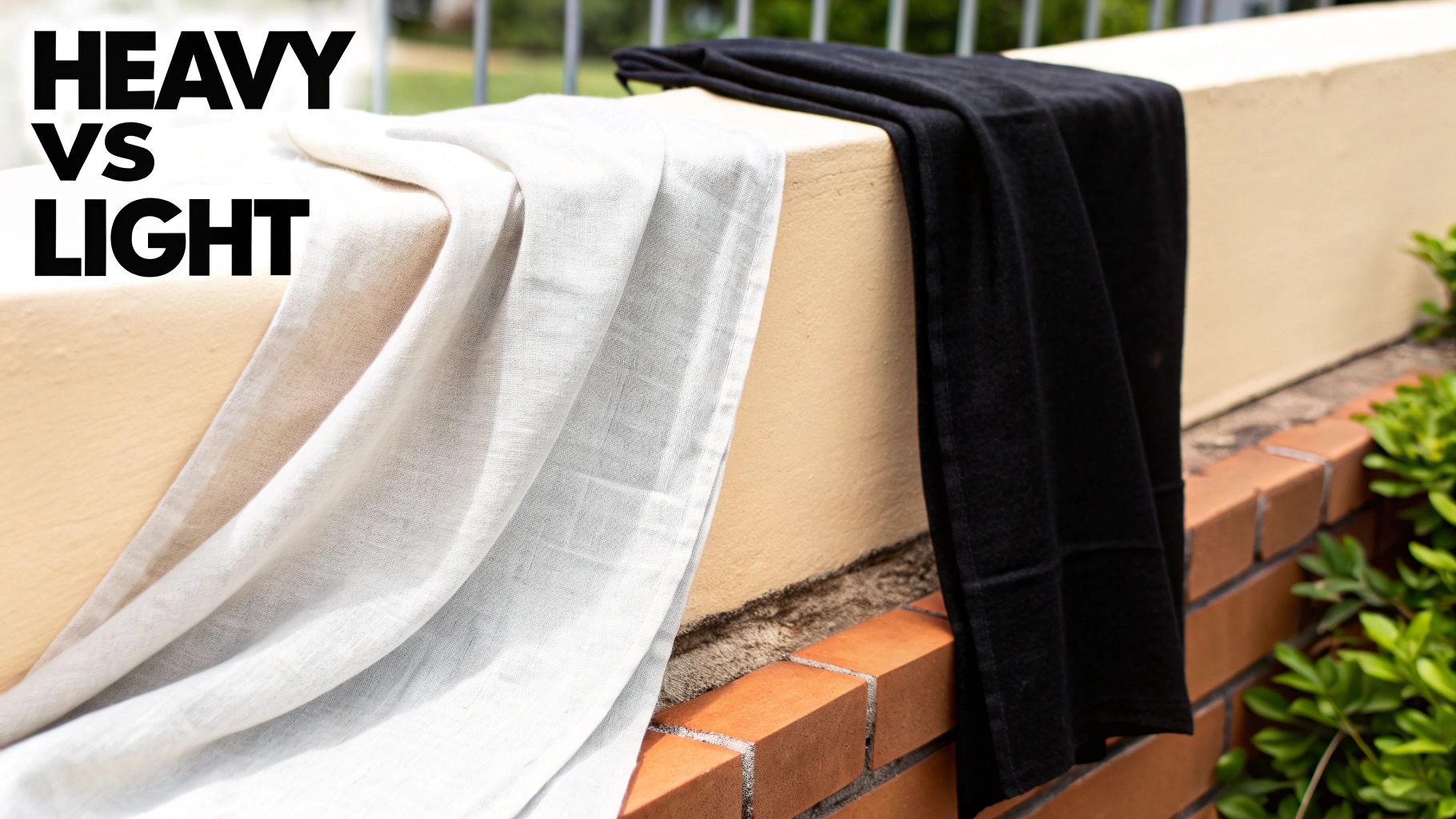
What makes drapes so effective? It’s their multi-layered construction, designed for maximum performance.
This sophisticated build is why drapes offer superior thermal and acoustic insulation. It gives them a formal, structured appearance, allowing them to hang in uniform pleats.
Curtains, on the other hand, embrace simplicity. They are typically crafted from a single layer of a lightweight fabric, making them a casual and accessible choice. For a deeper look, check out our guide on curtain cloth types.
Popular curtain materials include:
These fabrics are chosen for their ability to gracefully diffuse sunlight, creating a soft, ambient glow rather than blocking it out. Since they’re usually unlined, they are often easier to wash and maintain, making them a practical pick for high-traffic areas like kitchens and living rooms.
Beyond aesthetics, the practical performance of your window treatments is crucial. This is where the drapes vs. curtains comparison really matters, impacting your comfort, sleep quality, and even your utility bills.
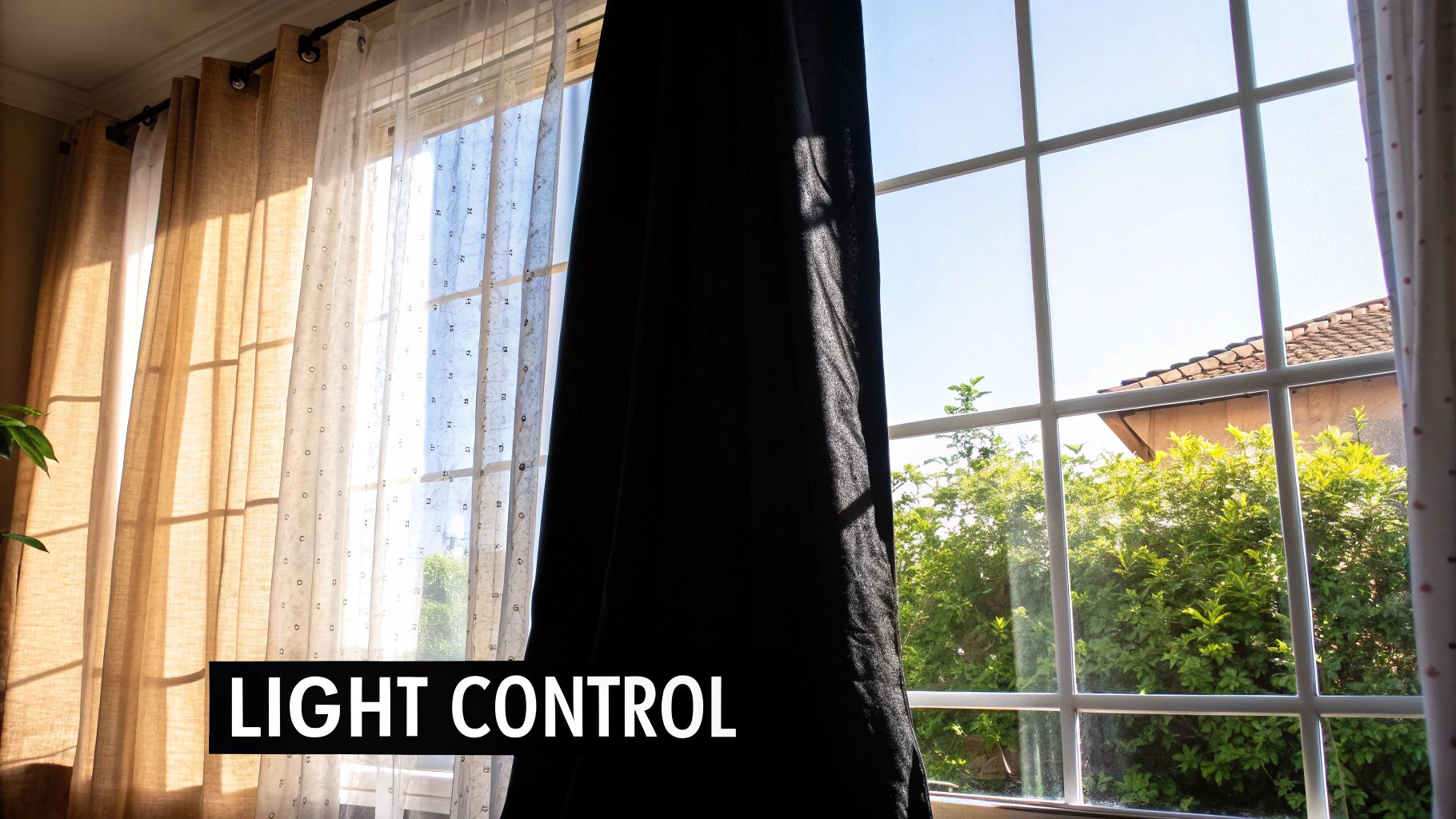
If your main goal is room darkening, noise reduction, or insulation, drapes are the undisputed champion. Their heavy, lined construction is your best defense against unwanted light and temperature fluctuations.
Curtains offer a more flexible approach. Instead of blocking light, they are designed to filter and soften it, creating a bright, airy ambiance without harsh glare.
Sheer or light-filtering curtains are perfect for:
This versatility is their greatest strength. They strike a beautiful balance, adding a decorative element while managing light in a less absolute way than drapes. Combining them with the right window screen material types can further enhance a room's comfort and efficiency.
Choosing between drapes and curtains is a key design decision that helps define a room's personality. The right window treatment can either blend in seamlessly or become a dramatic focal point.
Drapes are synonymous with elegance. Their floor-length construction and luxurious fabrics like velvet or silk bring a sense of grandeur that is a natural fit for:
For example, deep burgundy velvet drapes with pinch pleats can add a layer of opulence to a traditional living room. Historically, drapes have always been linked to luxury; the high-end window treatment sector, valued at USD 4.49 billion in 2024, still sees them as a premium choice. You can find more insights on the high-end curtain market at SkyQuestT.
Curtains are perfectly at home in modern, minimalist, or casual interiors. Their lighter fabrics and simpler designs create an airy, relaxed atmosphere.
Consider these perfect pairings:
Expert Tip: To create a cohesive look, pull a secondary color from a rug, throw pillow, or piece of art and use that for your curtains. This simple trick ties the whole room together. For more tips, check our guide on how to select curtains for your home.
Beyond style and function, your budget and the installation effort often play a deciding role in the drapes vs. curtains choice. Let's break down the practicalities.
Generally, curtains are the more wallet-friendly option. Their simpler, unlined design and use of lighter fabrics like cotton or polyester mean lower material and production costs. You can find a huge variety of stylish, ready-made curtains at retailers like Joey'z Shopping, making them a great choice for a quick decor refresh without a major investment.
Drapes typically come with a higher price tag. Their heavy, layered construction uses premium, more expensive fabrics. Furthermore, drapes are often custom-made to fit a window perfectly, which adds to the overall cost. The global curtains market reflects this, with curtains holding over a 50% share due to their affordability and accessibility, as reported by global market trends on GlobeNewswire.
When it comes to installation, curtains are the clear winner for simplicity. Hanging curtains is a classic DIY project that most people can handle with basic tools. A simple curtain rod, brackets, and a level are usually all you need.
Drapes, however, are more demanding.
The "drapes vs. curtains" decision becomes much easier when you consider each room's specific function. The ideal window treatment balances aesthetics with practical needs like light control and privacy.
| Room | Best Choice | Primary Reason |
|---|---|---|
| Bedroom & Nursery | Blackout Drapes | Maximum light blockage and noise reduction for better sleep. |
| Living Room | Layered Drapes & Curtains | Offers flexibility for both daytime brightness and nighttime privacy. |
| Kitchen | Lightweight Curtains | Easy to clean, moisture-resistant, and allows plenty of natural light. |
| Bathroom | Polyester Curtains | Withstands humidity and provides necessary privacy without feeling heavy. |
| Dining Room | Floor-Length Drapes | Adds a touch of formality and elegance perfect for entertaining. |
| Home Office | Light-Filtering Curtains | Reduces screen glare while maintaining a bright, productive work environment. |
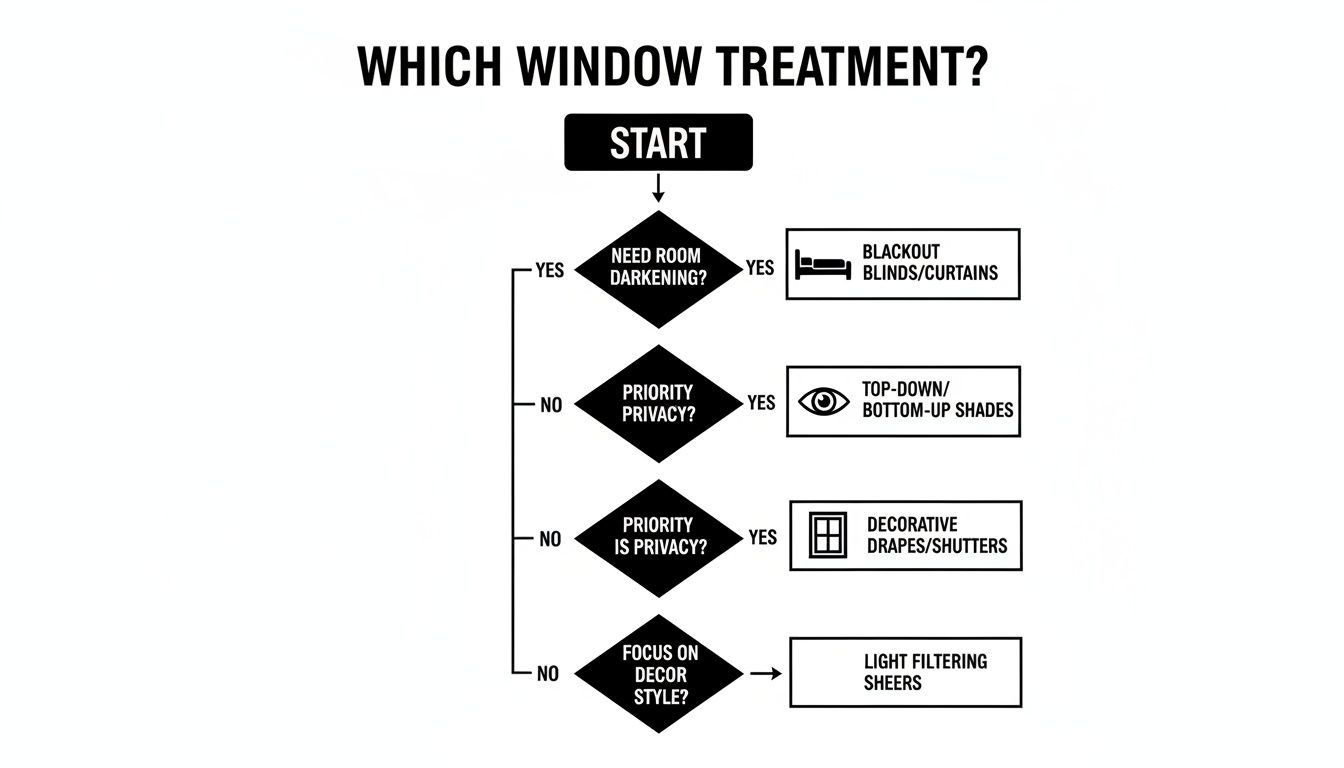
Here are answers to some of the most common questions we get about drapes and curtains.
Yes, absolutely! Layering is a popular and highly functional design strategy. You can hang a sheer curtain on an inner rod for daytime privacy and filtered light, with heavier drapes on an outer rod to close at night for total darkness and insulation. This combination truly offers the best of both worlds.
In most cases, curtains are easier to clean. The majority are made from machine-washable fabrics like cotton or polyester. Drapes, especially those made of velvet, silk, or with thermal linings, often require professional dry-cleaning to maintain their shape and texture. Always check the care label first.
When it comes to energy efficiency, drapes are the clear winner. Their thick, lined construction provides a powerful thermal barrier. According to the U.S. Department of Energy, medium-colored drapes with a white plastic backing can reduce heat gain by up to 33% in the summer. For peak performance, look for drapes specifically labeled as "thermal" or "blackout."
At Joey'z Shopping, we believe the right window treatment is the finishing touch that transforms a house into a home. Whether you need the hardworking function of drapes or the light, airy style of curtains, we have a collection to help you create your perfect space.