
Join the Joey'z Family!

Knowing where to hang curtains is an interior design secret that can completely transform a room. The simple answer is to hang them high and wide. This single technique creates an illusion of height and space, making any room feel bigger and brighter without touching a single can of paint.
This guide, written from my years of experience in home decor, will walk you through the exact steps to get that professional, polished look. We'll cover the core "high and wide" rule, how to choose the right length and width, and tackle those tricky windows that stump everyone.
So, what does "high and wide" actually mean? It’s a core design principle that involves placing your curtain rod significantly higher and wider than the window frame itself. Instead of mounting the hardware right on the edge of the window, you strategically extend it to trick the eye.
This method transforms your windows from a simple opening into an elegant, intentional focal point. It draws the eye upward, making ceilings appear taller, and allows maximum natural light to flood the room when the curtains are open. In fact, when you look into how to stage a home for selling, this is one of the first tricks designers use to maximize a room's perceived size and appeal.
Hanging curtains 4-6 inches above the window frame and extending the rod 6-12 inches beyond each side is the go-to formula. This small adjustment can honestly make a room feel 20-30% larger.
The goal is to frame the window, not just cover it. When you extend the rod, the opened curtains rest against the wall, leaving the entire glass pane exposed to light.
This simple infographic breaks down the basic flow of measuring and hanging your curtains for the best effect.
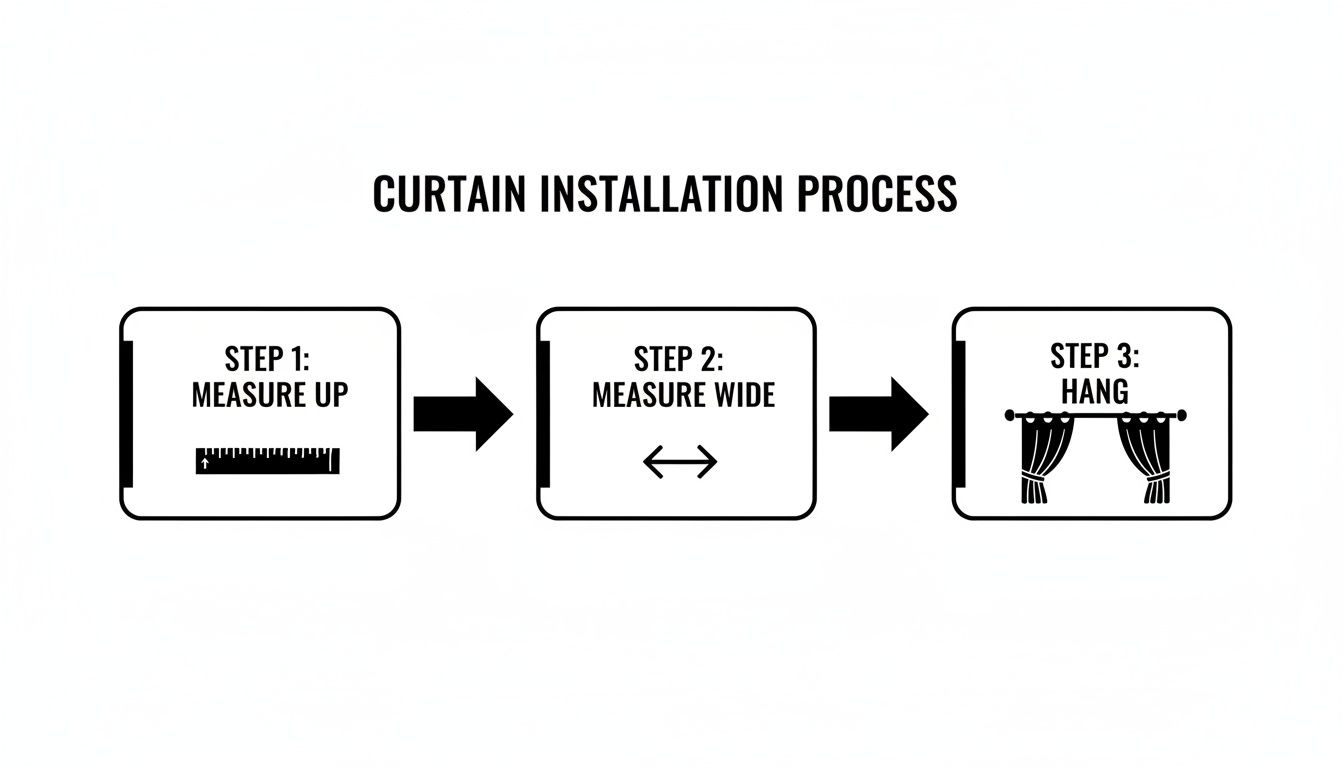
As you can see, the process starts with measuring up from the frame and then out to the sides before you even think about drilling. This approach ensures your windows look as grand and impactful as possible.
Of course, getting the right hardware is a huge piece of the puzzle. You need a rod that's long enough to achieve this wide look without sagging. We've put together a guide on standard curtain rod lengths to help you pick the perfect one.
For a quick summary, here are the key measurements you'll want to remember. Sticking to these guidelines will give you that professional, designer look every time.
| Placement Rule | Standard Measurement | Pro Tip For Impact |
|---|---|---|
| Height Above Frame | 4 to 6 inches | Go even higher if you have tall ceilings to really draw the eye up. |
| Width Beyond Frame | 6 to 12 inches per side | Wider is better; it makes the window feel much larger and lets in more light. |
| Curtain Length | "Kiss" the floor | Curtains that just touch or slightly puddle on the floor look the most polished. |
Following this simple table will help take the guesswork out of the process, ensuring your windows become a stunning feature rather than just an afterthought.
Once you’ve embraced the “high and wide” rule, the next big question is about length. Where your curtains end in relation to the floor is a small detail that can make a room look either just okay or truly stunning. This is where you really define the personality of your window treatments.
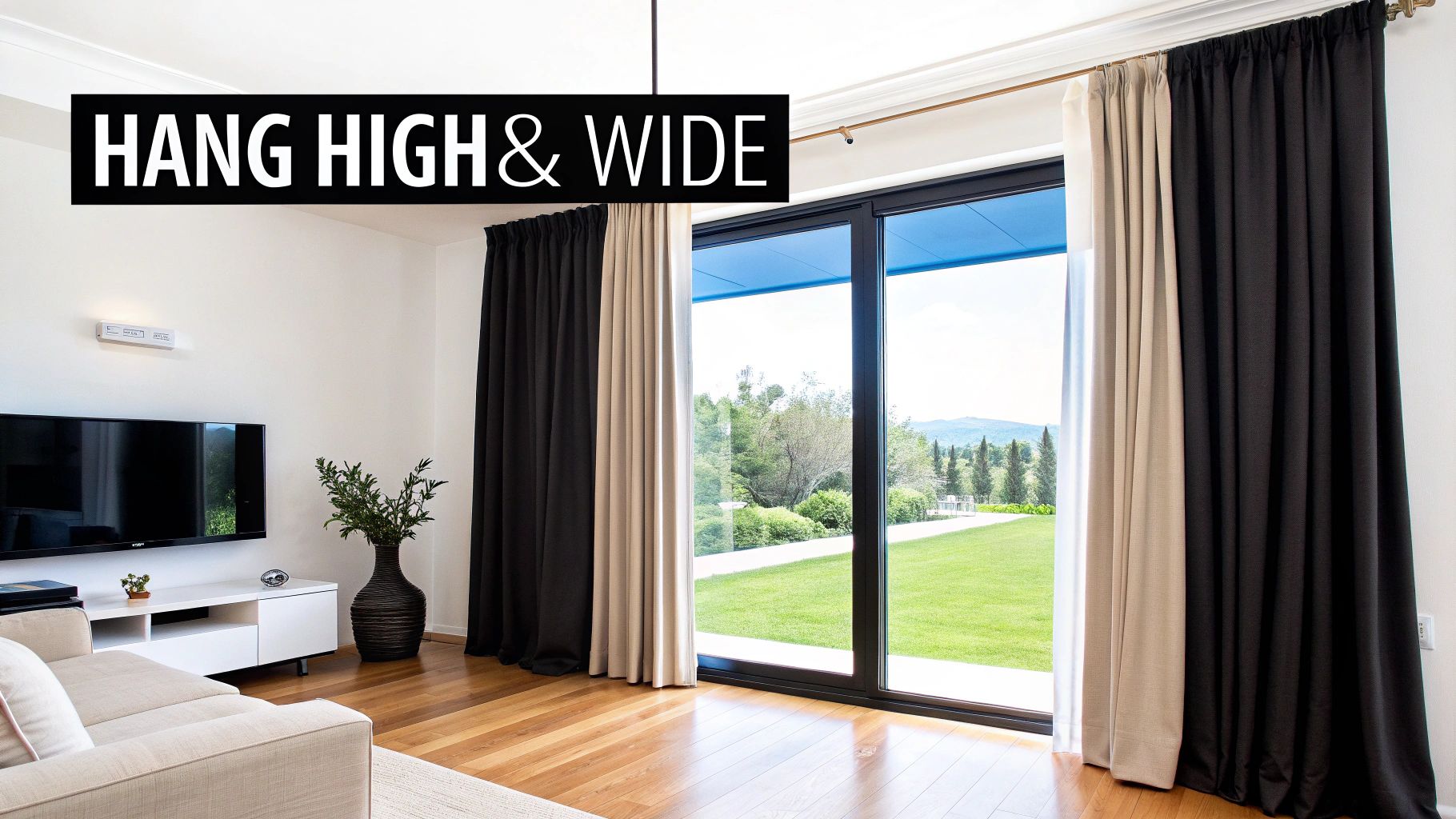
There’s no single right answer for curtain length; it’s all about picking a style that fits your space and how you live in it. Most designers rely on three classic approaches, and each one brings a completely different vibe to the room.
Think of these as the good, better, and best options for achieving that polished, intentional look. Each has its own place, depending on the room’s purpose and your personal taste.
Insider Tip: If you're unsure, "the kiss" is the most popular and versatile option for a modern home. It looks thoughtful and clean, and you’ll avoid that "waiting for a flood" look that happens when curtains are just a bit too short.
Choosing floor-length curtains isn't just about style—it's also a smart move for your wallet and the environment. Curtains that reach the floor are surprisingly effective insulators. You can find more details in our complete guide on how high to hang curtains for perfect placement.
This simple design choice can lead to real energy savings. Hanging curtains so they just brush the floor or puddle slightly can reduce heat loss by up to 30% in the winter and block 45% of the sun's heat in the summer. At Joey'z Shopping, our sustainable drapes are perfect for this, as they trap air and act as an insulator, which can slash heating bills by 15-20% each year.
To get the length spot-on, you have to measure from where the curtain rod will be, not from the top of the window frame. This is a common mistake!
Start your tape measure at the bottom of where the curtain rod will sit and measure all the way down to the floor. From there, just decide if you want a float, kiss, or puddle and adjust your final curtain panel length accordingly. This little step is the key to buying the right size the first time around.
Getting the height right is half the battle, but choosing the perfect curtain width is just as critical. The goal isn't just to cover your window; it's to frame it. One of the most common mistakes I see is skimping on width, which leaves windows looking strangled and blocks out precious natural light.
The secret is to extend your curtain rod well beyond the window frame. This simple trick makes your windows feel significantly larger and gives your curtains space to "stack back" neatly against the wall when they're open. Instead of bunching up over the glass, they’ll create an elegant frame that maximizes sunlight.
For the best effect, your curtain rod should extend 6 to 12 inches beyond the window frame on each side. If you have plenty of wall space, don't be afraid to go even wider! This extra room is what allows the curtains to be pulled completely clear of the window, making the entire setup feel grander.
This one change completely transforms the perception of your window's size. By letting the drapes rest on the wall, you're not sacrificing any of your view or light, which is a common problem with rods that are too short.
Now, let’s talk about the fabric itself. To avoid that stretched-thin, flimsy look when your curtains are closed, you need to account for fullness. Flat panels of fabric just look skimpy and unfinished.
Pro Tip: For a lush, custom appearance, the total width of your curtain panels should be 1.5 to 3 times the width of your window. For most standard curtains, aiming for 2 times the width is a safe and beautiful bet.
Here’s how to get it right every time:
Getting this right ensures your drapes have those beautiful, soft pleats and folds, even when fully drawn. If you want to dive deeper, you can learn more about calculating the perfect width for your curtains in our detailed guide.
Not all windows are simple rectangles, and that's where the real fun begins. Knowing where to hang curtains on a standard window is one thing, but tackling awkward shapes and tricky placements is what separates a good-looking room from a great one. From charming bay windows to grand arches, every unique window has a smart solution.
Think of this as your guide to solving those common window puzzles. We'll walk through everything from multi-angled bays to renter-friendly fixes, making sure every window in your home looks its absolute best.
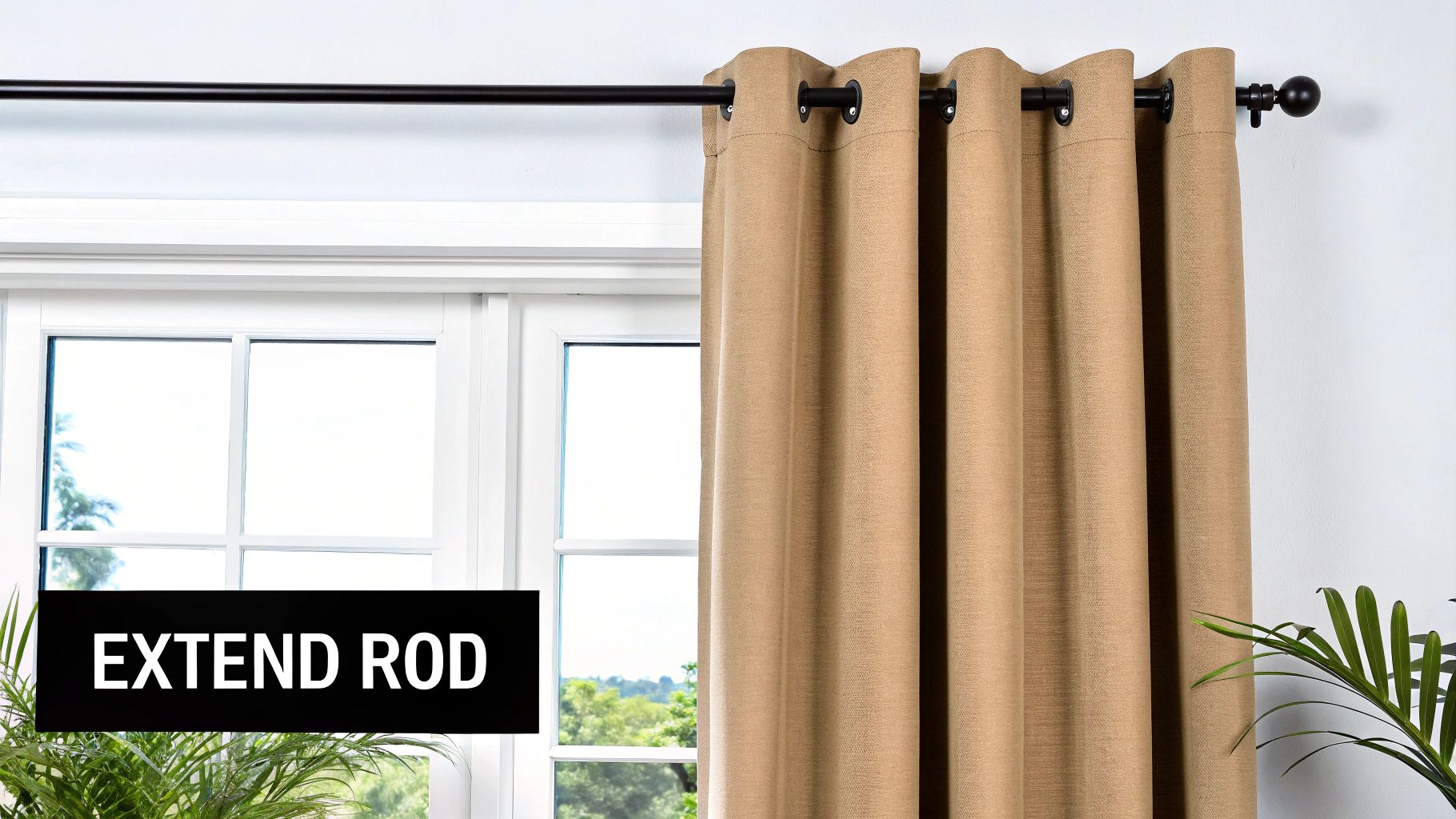
Bay and corner windows add incredible character, but they can feel intimidating to dress. The secret is using a single, continuous rod system. Trying to use multiple individual rods often looks choppy and disconnected.
Arched windows are stunning architectural features, and the last thing you want to do is hide them. The goal is to accentuate the arch, not cover it up.
Mount a straight curtain rod well above the arch—at least 4-6 inches above the highest point of the curve. This simple trick draws the eye upward, celebrating the window's unique shape while still giving you the privacy and light control you need.
For soaring ceilings, a ceiling-mounted track system can be an incredibly elegant solution. This creates a modern, floor-to-ceiling drapery effect that adds a ton of drama and sophistication.
In rooms like kitchens and bathrooms, full-length drapes just aren't practical. An inside-mount curtain is a fantastic choice here, where you hang hardware directly inside the window casing for a clean look.
This approach is perfect for "cafe curtains," which cover only the bottom half of the window. It's a classic look for a reason; curtains claimed a 39.8% market share in 2024. This cafe style is a favorite for homeowners updating living areas, as it offers both function and charm. You can find more details about these trends in the latest in window coverings market reports.
Living in a rental or just want to avoid holes in your walls? You've got options.
The hardware you choose is the unsung hero of your window treatments. It provides the essential support that makes or breaks the final look. Think of it as the jewelry for your window—it needs to be both beautiful and strong.
Picking the right curtain rods, finials, rings, and brackets ensures your curtains hang perfectly without sagging, drooping, or pulling away from the wall.
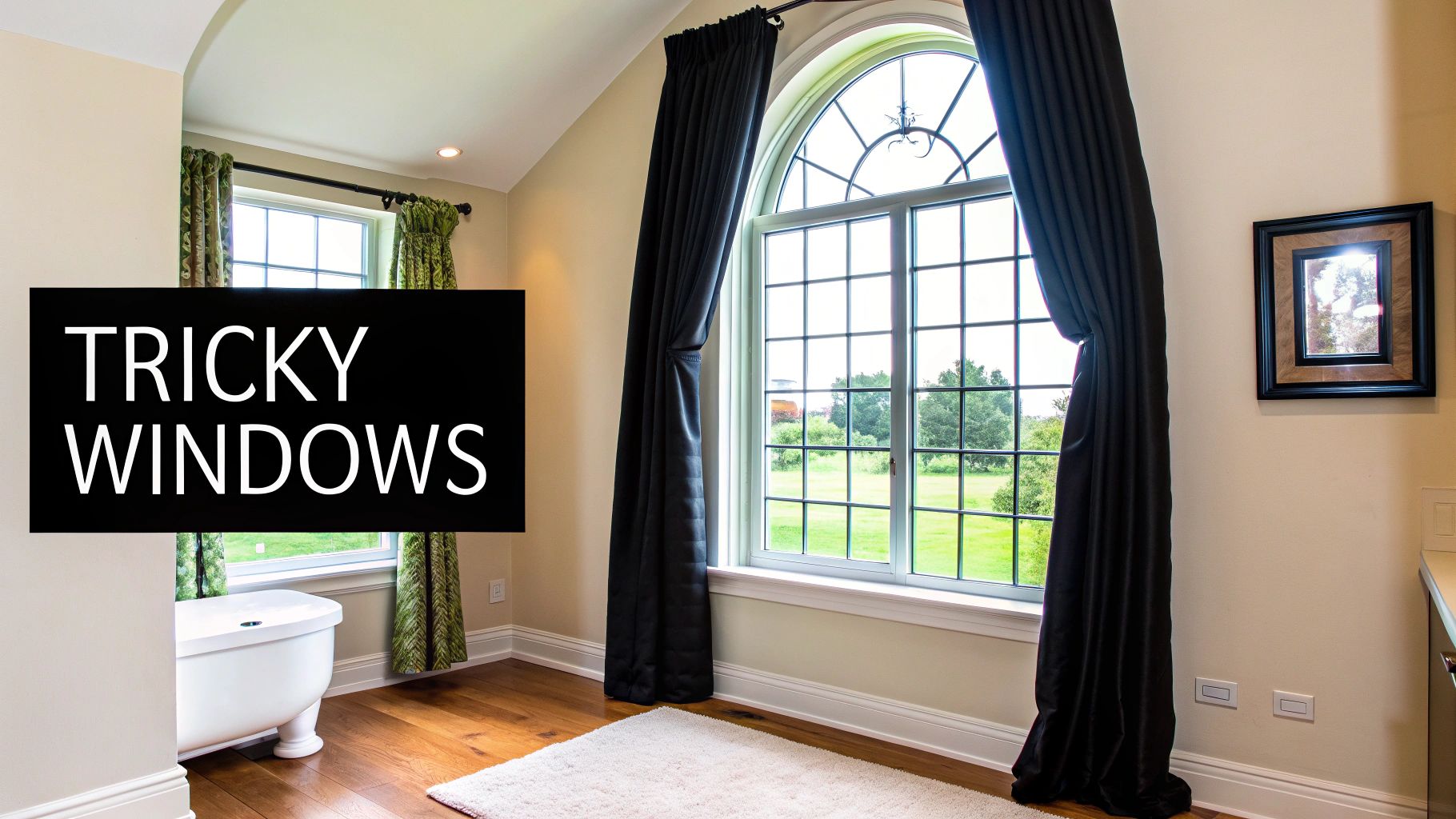
This process is about more than just aesthetics; it’s about physics. The material and diameter of your curtain rod are critical, especially if you're hanging heavy drapes like velvet or blackout panels. A flimsy rod will inevitably bow under the weight, cheapening the entire room.
When picking out a rod, consider two things: the weight of your curtains and the width of your window. A wider window needs a sturdier rod with at least one center support bracket to prevent sagging.
Here's a quick guide:
Pro Tip: If your window span is wider than 60 inches, a center support bracket is non-negotiable. For every additional 30-40 inches of width after that, add another bracket for maximum stability.
The little details in your hardware make a huge impact. The brackets hold the rod, the anchors secure it to the wall, and finials add that final decorative touch. Whatever you do, don’t just screw brackets directly into drywall.
Using wall anchors is essential for a secure, long-lasting installation. These small plastic sleeves expand behind the drywall, giving the screw the grip it needs to stay put.
Finally, pick finials that match your room’s style. At Joey'z Shopping, we offer a wide range of decorative curtain rods that come with everything you need. For families with young children or pets, we also highly recommend exploring cordless blinds and shades as a safe and stylish alternative.
Even with the basics covered, a few questions always pop up right before you start. Here are direct answers to the most common queries I hear from customers.
The short answer is 4 to 6 inches above the window frame. This is a tried-and-true guideline that tricks the eye into seeing a taller, more elegant window without making the rod look like it's floating. If you have high ceilings (9 feet or more), a great designer trick is to mount the rod about halfway between the top of the window trim and the ceiling to draw the eye upward.
Yes, in almost every case, curtains should touch the floor. Curtains that stop short ("highwaters") look awkward and unfinished. The real question isn't if they should touch the floor, but how. The three main styles are "the float" (hovering half an inch above), "the kiss" (just grazing the floor), and "the puddle" (extending 1-4 inches onto the floor for a dramatic look).
If your window frame goes right up to the ceiling, you have two excellent options. The first is a ceiling-mounted curtain track, a sleek, modern alternative that lets curtains hang seamlessly from above for a dramatic floor-to-ceiling effect. The second option is an inside-mount rod, where you install the hardware directly inside the window casing, perfect for a clean, minimalist look.
Your curtain rod should extend 6 to 12 inches beyond the window frame on each side. This extra width is crucial. It allows you to pull the curtains completely off the glass when they're open, a technique called "stack back." This floods your room with natural light and makes the window itself look much larger and more impressive.
Ready to put these tips into practice? Find the perfect hardware to beautifully frame your windows at Joey'z Shopping. Take a look at our collection of high-quality, stylish curtain rods and accessories to complete your project today.