
Join the Joey'z Family!

Feel that persistent chill near your windows? It’s not your imagination. A drafty window can steal your home's warmth, making rooms uncomfortable and driving up your energy bills. Learning how to block drafts from windows is a satisfying DIY project that pays off in both comfort and savings.
The fix can be as simple as applying a fresh line of caulk or as stylish as hanging a new set of thermal curtains. This guide, based on my years of helping homeowners create more energy-efficient spaces, will walk you through the most effective solutions, step-by-step.
A drafty window is more than just a minor annoyance; it's a significant energy leak. That constant stream of cold air forces your heating system to work much harder, leading directly to higher utility bills. According to the U.S. Department of Energy, drafts can waste 5% to 30% of your energy use.
But the issue isn't just financial. Drafts create cold spots and inconsistent temperatures that make your living space genuinely uncomfortable. Sealing those leaks is a clear win-win: you save money and reclaim your home's comfort.
This isn't just a small-time problem—it's a huge factor in national energy use. There's a reason the market for energy-efficient windows and coverings is booming, valued at a whopping USD 16.3 billion. It's because an estimated 40% of U.S. homes are dealing with these exact draft issues.
Tackling this problem head-on makes a real difference. For example, a quality sun blocking screen for windows can help manage heat gain in the summer, addressing the flip side of the same energy-loss coin. These solutions get to the root cause of what's draining your budget.
Taking an afternoon to block those drafts brings some pretty great rewards. Here’s what you can expect:
Plus, exploring different solutions can be a great excuse to update your decor. Our guide on eco-friendly window treatments has some fantastic ideas that are both beautiful and sustainable.
Before you can stop a draft, you have to pinpoint its exact source. Think of yourself as a draft detective; finding where the cold air is coming from is the crucial first step. Even the smallest gap can be the culprit behind a noticeable chill.
The good news? You don’t need any fancy equipment. Most of the best methods for finding these sneaky air leaks are incredibly simple and use items you likely already have at home.

Your own senses are the best tools you have. Start with a basic visual inspection on a bright day. Can you see obvious cracks in the caulk around the window frame? Are there visible gaps between the moving part of the window (the sash) and the frame itself?
If you spot something suspicious or want to be certain, confirm it with one of these simple yet effective tests:
Beyond feeling a breeze, a thorough visual check can reveal why your windows are drafty. Pay close attention to the seals and materials around your window, as these are often the first things to fail over time.
Pro Tip: Don't forget to check where the window's moving parts meet. That connection between the sash and the stationary frame is an incredibly common source of drafts, especially in older homes.
Keep an eye out for these specific signs of wear and tear:
Alright, you've done the detective work and found the culprits. Now for the satisfying part: sealing those gaps for good. This is where you'll feel an immediate difference, turning a drafty room into a cozy space.
Think of these sealing solutions as your first line of defense. They’re quick, effective, and make a massive impact on your home's comfort.
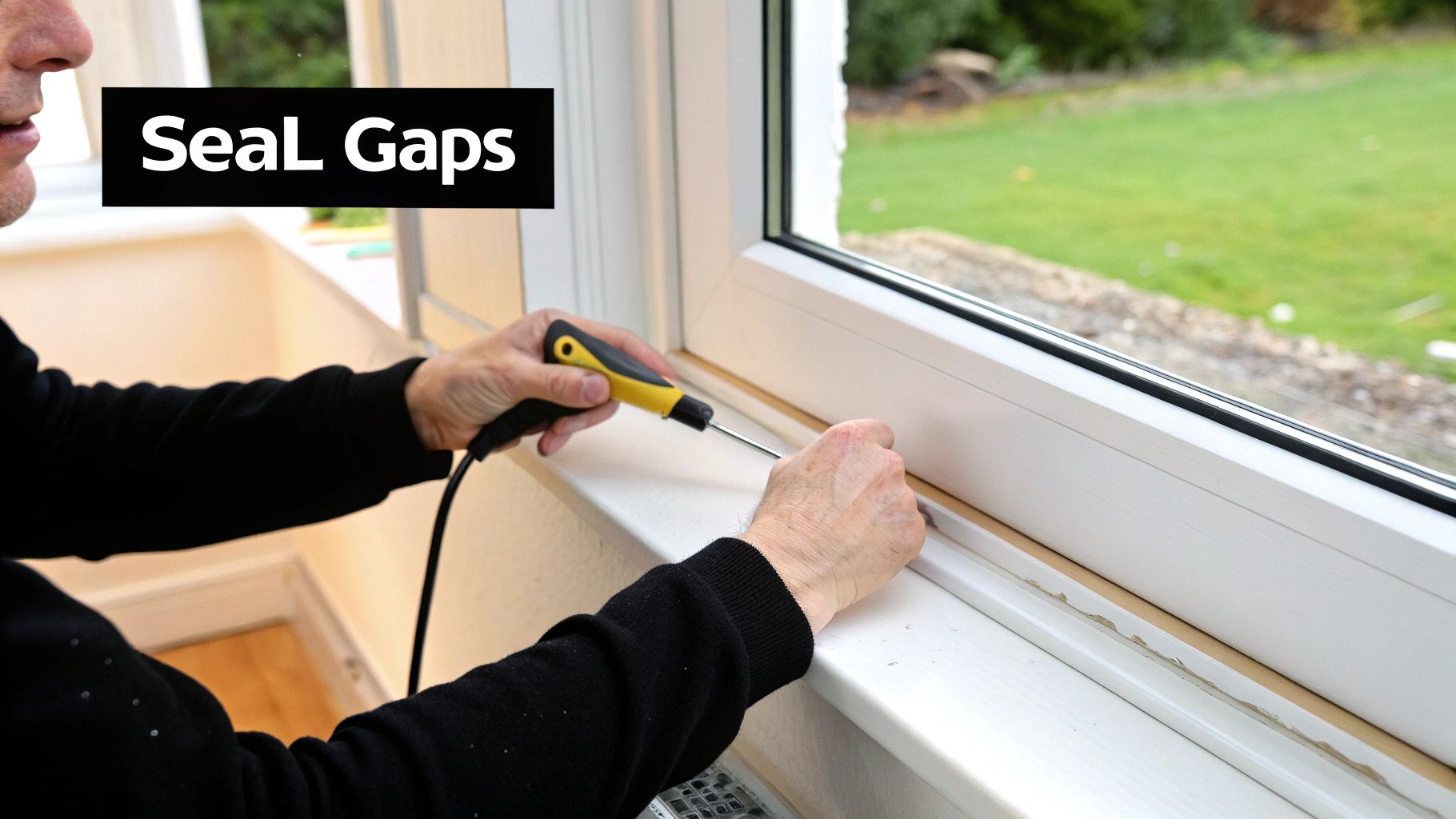
Your two best friends for this job are caulk and weatherstripping. Caulk is for stationary gaps, while weatherstripping is designed for the moving parts of your window. Using them correctly is the secret to an airtight seal.
Caulk is a flexible filler perfect for any non-moving cracks around your window frame, like the seam where the trim meets the wall. Applying it is a straightforward process that creates a durable barrier against drafts.
Before you start, ensure the surface is clean and dry. Scrape away any old, cracked caulk to give the new bead a solid surface to adhere to.
If you're exploring different materials, you might look into sustainable adhesives and sealants. They offer excellent performance and are a more environmentally conscious option.
Weatherstripping is made to seal the gap between the window sash (the moving part) and the frame. Since these parts need to slide past each other, you can’t use caulk here. This is where a compression seal like weatherstripping shines.
Insider Tip: Always measure twice and cut once. A strip of weatherstripping that's even a little too short will create a new gap, completely defeating the purpose of your hard work.
There are a few different kinds of weatherstripping, but a couple are especially good for a quick DIY project.
Properly sealing your windows is a huge win, but it’s just one piece of the puzzle. Once you've filled the gaps, you can add even more insulating power. You can learn more about how thermal curtains can block drafts to add another powerful layer of protection against the cold.
Once you've sealed up all the obvious gaps, it's time to take your draft-blocking game to the next level. This involves adding a powerful insulating layer directly to your windows, which creates a thermal barrier that slows heat from escaping through the glass. It’s a fantastic way to boost your windows' performance without the cost of a full replacement.
Two of the most effective and DIY-friendly methods are applying window insulation film and choosing the right window treatments. Both make a significant, almost immediate impact on your home's comfort and your energy bills.
Window insulation film is a thin, clear plastic sheet you apply to the inside of your window frame. After you've smoothed it on, a quick pass with a hairdryer shrinks it tight, making it virtually disappear. The real magic is the pocket of dead air it creates between the film and the chilly glass.
That trapped air acts as a surprisingly powerful insulator, dramatically cutting down on heat transfer. You can think of it as a DIY double-pane window. It's an incredibly effective fix, especially for old single-pane windows.
The right curtains or shades do more than just look good—they are a frontline defense in the fight against drafts. A bare window on a cold night is like a giant ice cube radiating cold into your room. Covering it with a good insulating treatment stops that cold transfer in its tracks.
There's a reason the global window coverings market has climbed to USD 14.39 billion. People are catching on to how great blinds and shades are at boosting energy efficiency. In fact, these treatments made up 43.2% of sales last year, driven by designs specifically made to stop drafts.
Key Takeaway: Heavy, thermal-lined curtains and cellular shades aren't just for decoration. They create a physical barrier that traps air, blocks drafts, and insulates your room from the cold surface of the window glass.
To help you decide, here’s a quick comparison of the most popular insulating window treatments.
| Treatment Type | Insulation Level | Typical Cost | Best For |
|---|---|---|---|
| Thermal Curtains | High | $$ - $$$ | Bedrooms and living rooms needing maximum draft blocking and light control. |
| Cellular Shades | Very High | $$$ - $$$$ | Rooms where energy efficiency is the top priority; offers a clean, modern look. |
| Roman Shades (Lined) | Medium | $$ - $$$$ | Spaces where style is as important as insulation; provides a soft, classic look. |
| Wood Blinds/Shutters | Medium | $$$ - $$$$$ | Adding a classic, permanent architectural element that offers decent insulation. |
Each option brings something different to the table, from top-tier insulation to aesthetic charm. Your best choice will depend on your budget, style, and how much of a draft problem you're trying to solve.
Cellular shades, also known as honeycomb shades, are arguably the most energy-efficient window treatments you can buy. Their design is genius—they're made of honeycomb-shaped pockets that trap air, creating a robust insulating barrier. This structure was engineered to stop heat from escaping in winter and keep it out in summer.
When you're trying to figure out how to block drafts from windows with a window treatment, cellular shades should be at the top of your list. They deliver high-performance insulation with a sleek, modern aesthetic. If you're curious how they stack up against other popular styles, you can explore our detailed guide on roller shades vs. cellular shades to see which is the best fit for your home.
For a more traditional feel, thermal curtains are a fantastic and effective choice. They’re built with multiple layers of thick, heavy fabric and usually have a special thermal lining. This dense construction is great at two things:
For the best results, hang your thermal curtains as close to the window frame as you can. Make sure they extend several inches beyond the frame on all sides to create a complete seal. This small adjustment really maximizes their insulating power.
DIY solutions are fantastic for common drafts, but there comes a point where caulk or weatherstripping won't cut it. Knowing when your window issues go beyond a simple air leak is key to protecting your home’s long-term health. It’s about recognizing when it's time to call in a professional.
Sometimes, a draft is just a symptom of a much bigger problem. While you can learn how to block drafts from windows with some clever fixes, these are just bandages if the root cause is more serious. Putting off a real solution can lead to bigger headaches later.
There are a few warning signs that a problem has graduated from a weekend DIY project to a job for the pros. If you spot any of these, it’s best to get a professional opinion before the damage gets worse.
Keep an eye out for these critical indicators:
This decision tree can help you figure out the right upgrade path for your situation.
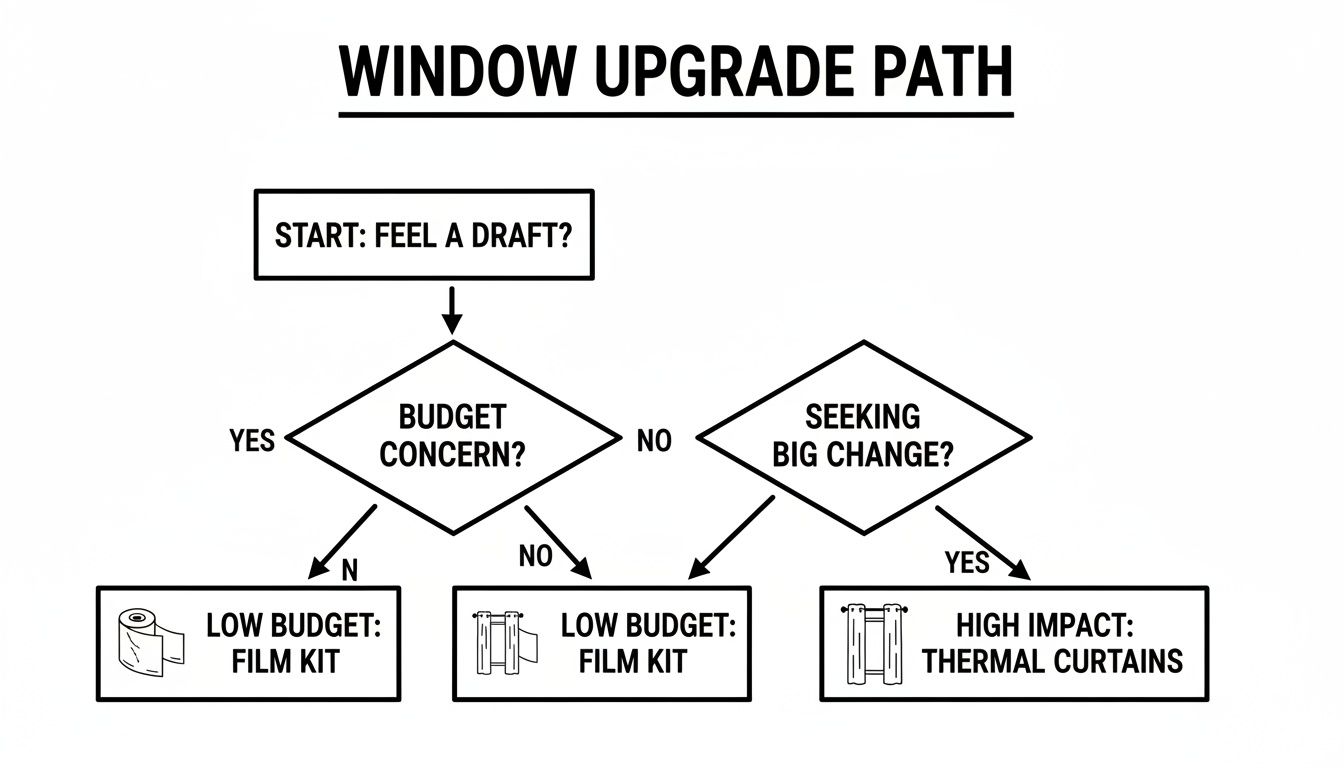
This visual guide simplifies the choice between a quick, low-cost fix like insulation film and a more impactful, stylish solution like thermal curtains.
Putting off a necessary repair or replacement can be far more expensive in the long run. Drafty windows can inflate your energy bills by a shocking amount. In fact, those pesky leaks can be responsible for 15% or more of your home's total heating costs.
Upgrading to properly sealed windows or even just adding effective coverings can lead to substantial savings, often between $54 to $79 annually for the average homeowner. Discover more insights from GreenMatch on energy savings and see for yourself.
A professional assessment not only fixes the immediate draft but also addresses underlying issues like water intrusion or poor insulation, protecting your home's value and preventing more costly repairs later.
While calling a pro involves an upfront cost, that investment pays for itself through lower energy bills, improved comfort, and genuine peace of mind. A professional can properly diagnose the problem and recommend the most effective solution, whether that’s a targeted repair or a full window replacement.
You’ve done the detective work and sealed up the obvious gaps, but you might still have a few questions. That’s perfectly normal! We’ve gathered some of the most common queries to give you clear, straightforward answers.
The short answer is: if a room is always cold or your energy bills seem too high, it's a problem worth fixing. A draft you can feel is actively hurting your comfort and wallet. The U.S. Department of Energy estimates that air leaks can account for 15-25% of a home's heating loss. A simple 'smoke test' with an incense stick can also gauge severity; if the smoke is aggressively blown sideways, the leak is substantial.
Yes, absolutely. The right curtains act as a powerful extra layer of insulation. The key is to look for "thermal" curtains, which are designed with multiple layers of thick fabric and a dense backing. When closed, they trap a layer of air between the fabric and the window, dramatically slowing heat transfer and stopping drafts in their tracks. For the best results, install curtains close to the window frame and ensure they extend several inches beyond it on all sides.
For the biggest impact on the smallest budget, your best bet is a combination of caulk and weatherstripping. For under twenty dollars, you can buy enough of both to seal multiple windows. These materials directly attack the small gaps and cracks where most cold air gets in. A simple draft snake placed on the window sill is another fantastic and extremely low-cost option for immediate relief.
Yes, many effective solutions are completely renter-friendly and won't cause damage. Here are some of the best temporary options:
At Joey'z Shopping, we believe a comfortable, stylish home should be accessible to everyone. From thermal curtains that block chilly drafts to beautiful shades that complete your room's look, we have the window treatments you need to create a cozy and energy-efficient space. Explore our collection and find the perfect solution for your home at https://joeyzshopping.com.