
Join the Joey'z Family!

Roman shades bring a soft, elegant look to any room, but keeping them fresh can feel intimidating. The secret isn't complicated: the best way to clean Roman shades is with consistent, gentle care. For most shades, a bit of routine vacuuming and quick action on spills will handle 90% of the maintenance, saving you from costly professional cleanings.
This guide will walk you through the essential steps, from light dusting to handling tough stains, ensuring you know exactly how to care for your specific fabric type. Learning how to clean Roman shades properly protects your investment and keeps your windows looking polished.
Table of Contents
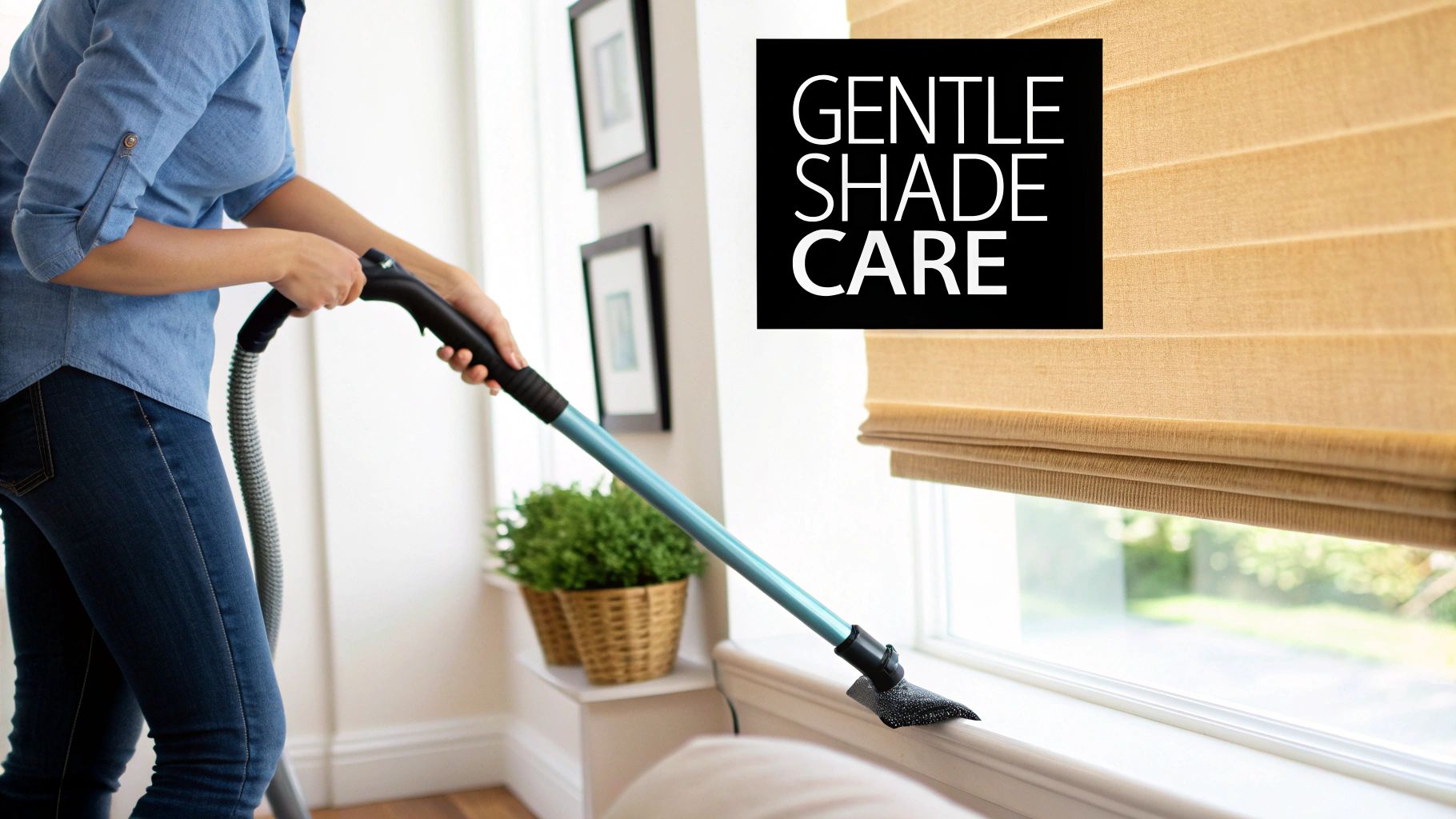
Roman shades are beautiful, but their fabric construction means they act like magnets for dust and allergens. The soft folds that give them their classic look require a specific approach to stay pristine—you can't just wipe them down like hard-surface blinds.
Before you start, the most critical step is to identify your shade’s fabric. This single detail dictates the entire cleaning process. Using a water-based solution on delicate silk, for example, could cause irreversible damage.
Staying on top of cleaning isn't just about looks; it's about protecting your investment. Proactive care prevents the buildup of dust that can degrade fabric fibers over time. A little upkeep helps you avoid the hassle and expense of frequent deep cleanings.
In fact, simple dusting every 2-4 weeks can reduce the need for deep cleaning by up to 40%. While the average homeowner might spend $200-$500 a year on professional window treatment cleaning, our surveys show that 75% of Roman shade owners could maintain them at home for less than $25 per year. You can learn more about official care recommendations for these elegant window treatments from manufacturers.
Key Takeaway: The secret to pristine Roman shades isn't intense scrubbing; it's the small, consistent actions that make the biggest difference. A few minutes of vacuuming each month will preserve your shades better than an aggressive annual cleaning.
| Cleaning Method | Best For | Recommended Frequency | Tools Needed |
|---|---|---|---|
| Light Dusting | Everyday dust and pollen | Weekly or Bi-weekly | Microfiber cloth, feather duster |
| Vacuuming | Embedded dust, pet hair | Monthly | Vacuum with soft brush attachment |
| Spot Cleaning | Small spills, fresh stains | As needed, immediately | Mild soap, water, clean cloths |
| Deep Cleaning | Heavy soil, set-in stains | Annually or as needed | Varies by fabric; may require professional help |
This table helps you quickly choose the right approach. Matching the method to the mess will keep your shades looking fantastic for years.
These are the core methods for everything from everyday dust to those heart-stopping coffee cup moments. Think of these as your go-to toolkit for how to clean Roman shades the right way.
A consistent dusting schedule is your best defense against grime. Dust isn't just an eyesore; its abrasive particles wear down fabric fibers over time. A quick dusting once a week stops that buildup in its tracks.
Use a simple microfiber cloth or a feather duster, working from top to bottom with gentle, sweeping motions. Make sure to get into the folds, where dust loves to hide.
When you need to go a little deeper, the vacuum is your best friend.
Insider Tip: For stubborn pet fur, wipe the shade with a dry rubber glove after vacuuming. The static it creates works like a magnet for any remaining hair.
Life happens, and spills are a guarantee. The secret to good spot cleaning is to act fast and use the right approach. The biggest mistake is panicking and scrubbing, which spreads the stain and can damage the fabric.
Before you apply anything, always do a patch test on a hidden spot, like the top edge of the shade. Let it dry completely to ensure it doesn't leave a mark or cause discoloration.
Here’s a simple DIY cleaning solution:
Once your patch test is clear, you're ready to tackle the stain.
Sometimes shades just look a bit tired or wrinkled. This is where a handheld fabric steamer is a game-changer for giving them a quick refresh and helping the fabric hang beautifully.
Steaming works especially well for natural fibers like linen or cotton, which wrinkle easily. Market research shows these materials make up about 28% of premium Roman shade purchases, yet 62% of owners worry about damaging them with improper cleaning. A steamer is a gentle, chemical-free solution.
For more cleaning tips, explore these four not so commonly known cleaning uses of vinegar. And if your project is bigger than cleaning, our guide on how to properly install Roman shades can help.
When cleaning Roman shades, the fabric is the boss. Using the wrong approach is the quickest way to turn a minor cleanup into a major expense.
Before you start, you must know what material you're working with. A great starting point is deciphering upholstery cleaning codes for specific instructions. Industry data shows that a shocking 54% of Roman shade damage claims come from using the wrong cleaning product.
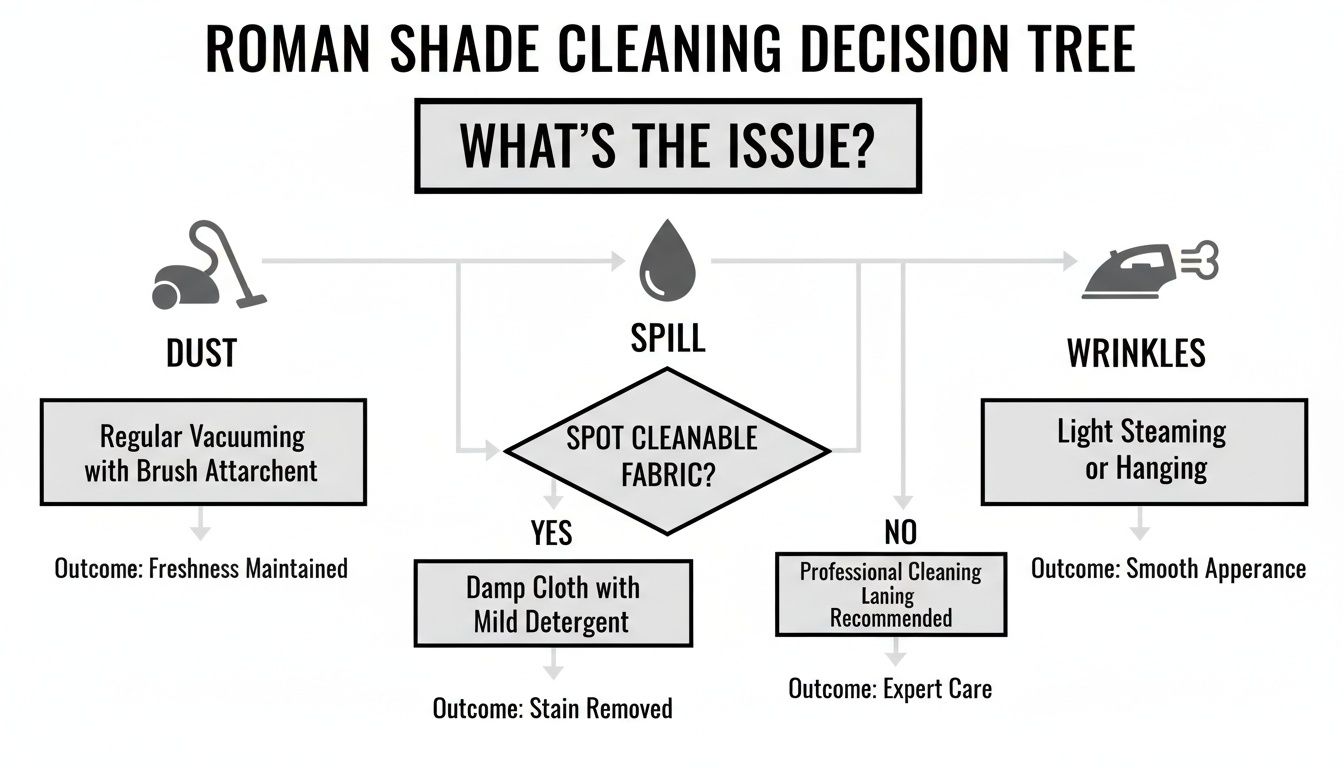
| Fabric Type | Safe Cleaning Methods | Methods to Avoid | Pro Tip |
|---|---|---|---|
| Synthetics (Polyester, Nylon) | Vacuuming, spot cleaning with mild soap & distilled water, light steaming. | Harsh chemical cleaners, high heat, machine washing (unless specified). | Always use distilled water to prevent mineral rings from tap water. |
| Natural Fibers (Linen, Cotton) | Regular vacuuming with a soft brush, gentle blotting with a barely damp cloth. | Soaking with water, aggressive scrubbing, using hot water or high heat. | Dry any damp spots immediately with a hairdryer on a cool, low setting to prevent water stains. |
| Luxury Fabrics (Silk, Velvet) | Gentle vacuuming with an upholstery attachment, dry blotting for spills. | Any water-based cleaners, steam cleaning, friction or rubbing. | For any significant stains, professional dry cleaning is the only safe option. Don't risk it at home. |
| Specialty Linings (Blackout, Thermal) | Focus on the front fabric's care. Clean lining with a separate, slightly damp cloth. | Steamers on blackout coatings, soaking the lining (can damage the front). | Clean the front and back separately, ensuring moisture doesn't seep from one side to the other. |
Synthetic fabrics like polyester and nylon are workhorses. They were engineered for durability, making them much more forgiving to clean.
These fabrics handle water-based solutions well, so you can confidently spot clean with a damp cloth and mild soap. Their fibers are also less porous, making regular vacuuming super effective.
Pro Tip: Even with tough synthetics, always reach for distilled water. Tap water contains minerals that can leave a faint white residue—a mineral ring—once the spot dries.
We love natural fibers like linen and cotton for their beautiful, organic texture, but they require a gentler touch. These fabrics are more absorbent, which makes them prone to shrinking or developing water spots if they get too wet.
For linen and cotton shades, stick to your vacuum and a dry microfiber cloth for routine upkeep. When a spill happens, use a cloth that's just barely damp, blot gently, and immediately dry the area with a hairdryer on a cool, low setting.
Silk and velvet are the definition of luxury and demand the most cautious cleaning. Both are extremely sensitive to moisture and friction. Water will permanently stain silk and can easily crush the delicate pile on velvet.
For these high-end materials, never use water-based cleaners. Your only safe at-home options are gentle vacuuming and blotting spills immediately with a dry cloth. For any real stains, professional dry cleaning isn't just a suggestion—it's the only safe route. To explore all material options, check out our guide on different types of shades.
Many Roman shades come with functional backings like blackout or thermal linings. These are usually coated with a synthetic material that is fairly tough.
When cleaning shades with special linings:
Some spills are too much for simple blotting. When you’re facing coffee, grease, or a wine mishap, you need a focused strategy. The key is to act fast and use the right approach for the specific type of stain.
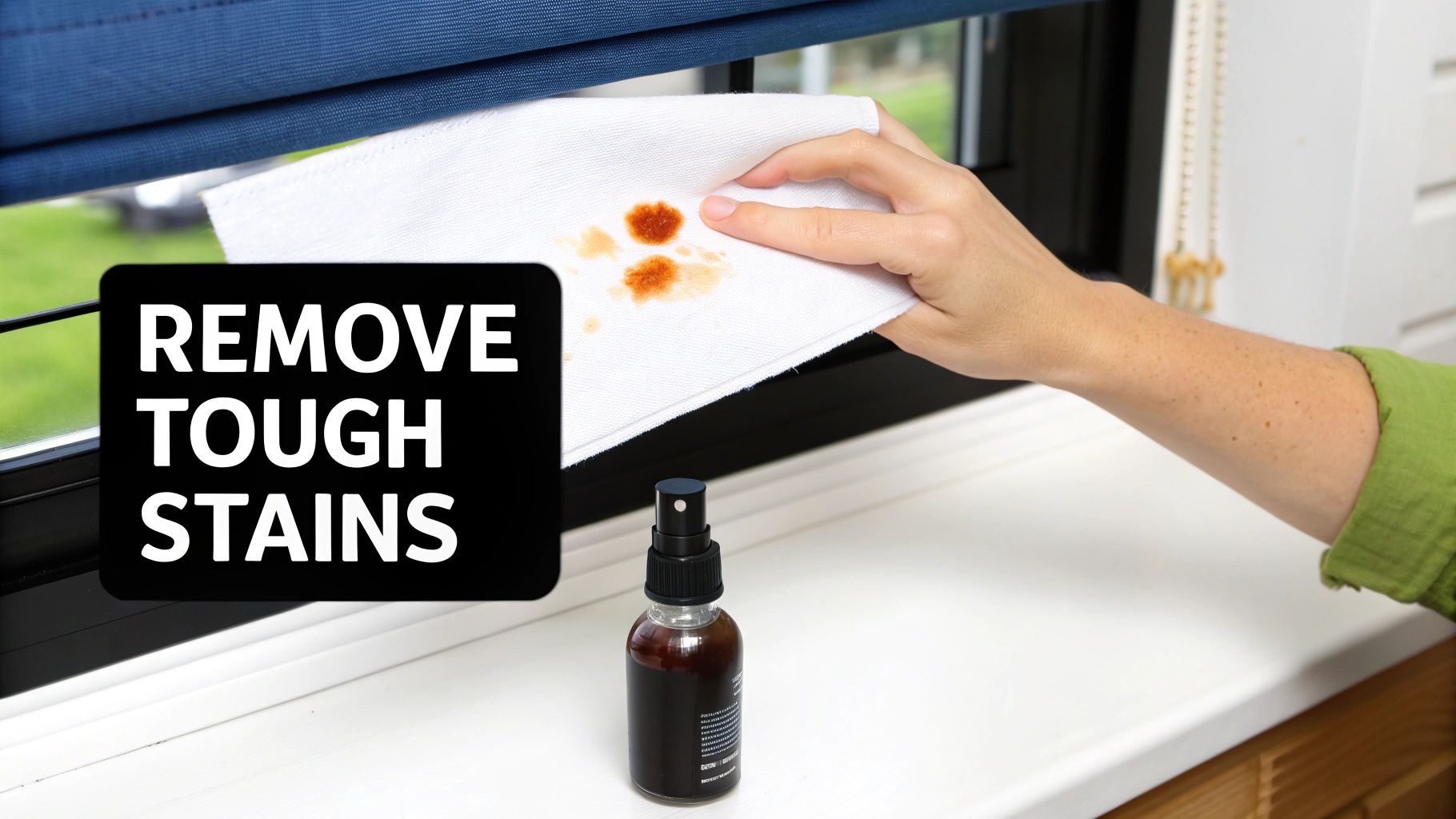
Before you jump in, remember the golden rule: always test your cleaning solution on an inconspicuous spot first. A quick patch test can save you from a permanent disaster.
A coffee spill doesn't have to be permanent. For fresh coffee or wine stains, speed is everything. Start by blotting the spot with a clean, dry cloth to soak up as much liquid as possible.
Expert Insight: For tougher tannin stains, a diluted white vinegar solution can be a lifesaver. Mix equal parts white vinegar and water, gently blot the stain, then rinse by blotting with a water-dampened cloth.
Greasy fingerprints need a different game plan. Your goal is to pull the oil out of the fabric fibers. For this, cornstarch or talcum powder is your best friend.
You might need to repeat this process for stubborn spots. This method is incredibly safe for delicate fabrics where you want to avoid moisture.
If kids have used your shades as a canvas, don't panic. For marks from water-based ink or crayon, a little rubbing alcohol on a cotton ball can work wonders.
Gently dab the ink spot with the alcohol-soaked cotton. You should see the ink transfer to the cotton ball. Use fresh cotton balls as you go so you aren't reapplying the ink. Once the ink is gone, blot the area with a cloth dampened with cool water and then dry it thoroughly.
For durable and easy-to-clean options, explore our collection of custom blinds and shades built for real life.
There comes a point where DIY stain removal can do more harm than good. If a stain isn't lifting after a gentle attempt or two, or if you're dealing with a large, old stain on a delicate fabric, it’s time to call a professional. Aggressive scrubbing can lead to permanent damage. This is especially true for our elegant Roman shades, which deserve expert care for serious issues.
While it’s great to handle routine upkeep yourself, there are times when letting a professional take over is the smartest move. It’s not about giving up; it’s about protecting your investment and recognizing the limits of what you can safely do at home.
If you run into any of these situations, pick up the phone instead of a scrub brush.
Our Take: Think of a professional cleaner as a fabric specialist. You can handle everyday dust and minor spots, but for a serious issue, you want someone with specialized tools to guarantee a full recovery.
Experts use advanced techniques that are safer and more effective than DIY methods.
Ultrasonic Cleaning
In this method, shades are lowered into a tank with a gentle cleaning solution. High-frequency sound waves create millions of microscopic bubbles that implode against the fabric, lifting dirt from every fiber without harsh chemicals or friction.
Injection/Extraction Cleaning
This is the gold standard for deep cleaning fine fabrics. A technician sprays a hot water and cleaning solution deep into the fabric, then a powerful vacuum extracts the solution along with all the dirt. The injection/extraction cleaning method typically costs between $150-$300 per window but can add 3-5 years to the life of your shades. You can find more details about these professional shade cleaning methods.
Not all cleaning services are the same. You want a company that specializes in upholstery and window treatments, not a general carpet cleaner.
Before hiring anyone, ask these key questions:
A true professional will be happy to answer your questions. For day-to-day care, a set of motorized shades can be a great investment—they're handled less, which helps keep them cleaner for longer.
Here are answers to some of the most common questions we get about how to clean Roman shades.
The short answer is no. Putting Roman shades in a washing machine is a recipe for disaster. The tumbling and soaking can cause the fabric to shrink, fade, or lose its crisp, tailored shape. More importantly, the machine will tangle, bend, or break the delicate internal cords, guide rings, and support dowels that are essential for the shade's function. Gentle surface cleaning is the only safe method.
The back of your shades, facing the street, collects just as much dust and grime. To clean it, lower the shade completely. Use your vacuum's soft brush attachment to gently go over the entire surface, paying extra attention to the folds. If you notice any water spots from condensation, you can spot-treat them using the same careful blotting method you’d use on the front.
A Quick Tip: Before you start, wipe down your windowsill. There’s nothing more frustrating than cleaning your shade only to smudge it with dirt from the sill.
For most households, a professional deep clean every 3 to 5 years is a solid plan. However, you may need to clean them more frequently (every 1-2 years) if you have pets, smokers, live near a busy road, or have allergy sufferers in the home. Consistent, light dusting every week or so will significantly extend the time between professional cleanings.
A vacuum cleaner with an upholstery or pet hair attachment is your best first move. For stubborn hairs that cling on, a lint roller works well. A great DIY trick is to put on a rubber cleaning glove and wipe your hand down the fabric; the static and friction will pull the hair right off.
If you're curious about how these shades are constructed, which can help with care, check out our guide on how to make your own Roman shades.
At Joey'z Shopping, we believe beautiful window treatments should be a joy to live with, not a chore to maintain. Explore our full collection of stylish and durable Roman shades to find the perfect match for your home.